This information is for educational purposes only. It is not intended as medical advice. Always consult a qualified healthcare professional.
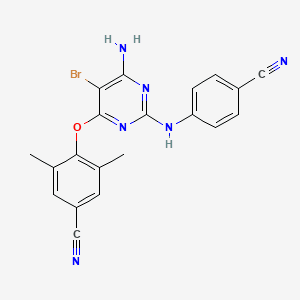
Intelence — Description, Dosage, Side Effects | PillsCard
Rx
Intelence
100 mg, Tabletki
INN: Etravirinum
Data updated: 2026-04-13
Available in:
🇨🇿🇩🇪🇬🇧🇫🇷🇵🇱🇵🇹🇸🇰🇺🇦
Form
Tabletki
Dosage
100 mg
Route
doustna
Storage
—
About This Product
User Reviews
Reviews reflect personal experiences and are not medical advice. Always consult your doctor.
Manufacturer
Janssen-Cilag International N.V. (Włochy)
Composition
Etravirinum 100 mg
ATC Code
J05AG04
Source
URPL
Pharmacotherapeutic group: Antivirals for systemic use, non-nucleoside reverse transcriptase inhibitors, ATC code: J05AG04.
Mechanism of action
Etravirine is an NNRTI of human immunodeficiency virus type 1 (HIV-1). Etravirine binds directly to reverse transcriptase (RT) and blocks the RNA-dependent and DNA-dependent DNA polymerase activities by causing a disruption of the enzyme's catalytic site.
Antiviral activity
in vitro
Etravirine exhibits activity against wild type HIV-1 in T-cell lines and primary cells with median EC
50
values ranging from 0.9 to 5.5 nM. Etravirine demonstrates activity against HIV-1 group M (subtypes A, B, C, D, E, F, and G) and HIV-1 group O primary isolates with EC
50
values ranging from 0.3 to 1.7 nM and from 11.5 to 21.7 nM, respectively. Although etravirine demonstrates
in vitro
activity against wild type HIV-2 with median EC
50
values ranging from 5.7 to 7.2 µM, treatment of HIV-2 infection with etravirine is not recommended in the absence of clinical data. Etravirine retains activity against HIV-1 viral strains resistant to nucleoside reverse transcriptase and/or protease inhibitors. In addition, etravirine demonstrates a fold change (FC) in EC
50
≤ 3 against 60% of 6,171 NNRTI-resistant clinical isolates.
Resistance
Etravirine efficacy in relation to NNRTI resistance at baseline has mainly been analysed with etravirine given in combination with darunavir/ritonavir (DUET-1 and DUET-2). Boosted protease inhibitors, like darunavir/ritonavir, show a higher barrier to resistance compared to other classes of antiretrovirals. The breakpoints for reduced efficacy with etravirine (> 2 etravirine-associated mutations at baseline, see clinical results section) applies when etravirine is given in combination with a boosted protease inhibitor. This breakpoint might be lower in antiretroviral combination therapy not including a boosted protease inhibitor.
In the Phase III trials DUET-1 and DUET-2, mutations that developed most commonly in patients with virologic failure to the etravirine containing regimen were V108I, V179F, V179I, Y181C and Y181I, which usually emerged in a background of multiple other NNRTI resistance-associated mutations (RAMs). In all the other trials conducted with etravirine in HIV-1 infected patients, the following mutations emerged most commonly: L100I, E138G, V179F, V179I, Y181C and H221Y.
Cross-resistance
Following virologic failure of an etravirine-containing regimen it is not recommended to treat patients with efavirenz and/or nevirapine.
Clinical efficacy and safety
Treatment-experienced adult patients
Pivotal studies
The evidence of efficacy of etravirine is based on 48-week data from 2 Phase III trials DUET-1 and DUET-2. These trials were identical in design and similar efficacy for etravirine was seen in each trial. The results below are pooled data from the two trials.
Trial characteristics
- Design: randomised (1:1), double-blinded, placebo-controlled.
- Treatment: Etravirine vs. placebo, in addition to a background regimen (BR) including darunavir/ritonavir (DRV/rtv), investigator-selected N(t)RTIs and optional enfuvirtide (ENF).
- Main inclusion criteria:
• HIV-1 plasma viral load > 5,000 HIV-1 RNA copies/ml at screening
• 1 or more NNRTI resistance-associated mutations (RAMs) at screening or from prior genotypic analysis (i.e., archived resistance)
• 3 or more primary PI mutations at screening
• on a stable antiretroviral regimen for at least 8 weeks.
- Stratification: Randomisation was stratified by the intended use of ENF in the BR, previous use of darunavir and screening viral load.
- Virologic response was defined as achieving a confirmed undetectable viral load (< 50 HIV-1 RNA copies/ml).
Summary of efficacy results
Table 4: DUET-1 and DUET-2 pooled 48-week data
Etravirine + BR
N = 599
Placebo + BR
N = 604
Treatment difference
(95% CI)
Baseline characteristics
Median plasma HIV-1 RNA
4.8 log
10
copies/ml
4.8 log
10
copies/ml
Median CD4 cell count
99 x 10
6
cells/l
109 x 10
6
cells/l
Outcomes
Confirmed undetectable viral load (< 50 HIV-1 RNA copies/ml)
a
n (%)
Overall
363 (60.6%)
240 (39.7%)
20.9%
(15.3%; 26.4%)
d
de novo
ENF
109 (71.2%)
93 (58.5%)
12.8%
(2.3%; 23.2%)
f
Not
de novo
ENF
254 (57.0%)
147 (33.0%)
23.9%
(17.6%; 30.3%)
f
< 400 HIV-1 RNA copies/ml
a
n (%)
428 (71.5%)
286 (47.4%)
24.1%
(18.7%; 29.5%)
d
HIV-1 RNA log
10
mean change from baseline (log
10
copies/ml)
b
-2.25
-1.49
-0.6
(-0.8; -0.5)
c
CD4 cell count mean change from baseline (x 10
6
/l)
b
+98.2
+72.9
24.4
(10.4; 38.5)
c
Any AIDS defining illness and/or death n (%)
35 (5.8%)
59 (9.8%)
-3.9%
(-6.9%; -0.9%)
e
a
Imputations according to the TLOVR algorithm (TLOVR = Time to Loss of Virologic Response).
b
Non-completer is failure (NC = F) imputation.
c
Treatment differences are based on Least Square Means from an ANCOVA model including the stratification factors. P-value < 0.0001 for mean decrease in HIV-1 RNA; P-value = 0.0006 for mean change in CD4 cell count.
d
Confidence interval around observed difference of response rates; P-value < 0.0001 from logistic regression model, including stratification factors.
e
Confidence interval around observed difference of response rates; P-value = 0.0408.
f
Confidence interval around observed difference of response rates; P-value from CMH test controlling for stratification factors = 0.0199 for
de novo
, and < 0.0001 for not
de novo
.
Since there was a significant interaction effect between treatment and ENF, the primary analysis was done for 2 ENF strata (patients reusing or not using ENF versus patients using ENF
de novo
). The week 48 results from the pooled analysis of DUET-1 and DUET-2 demonstrated that the etravirine arm was superior to the placebo arm irrespective of whether ENF was used
de novo
(p = 0.0199) or not (p < 0.0001). Results of this analysis (week 48 data) by ENF stratum are shown in table 4.
Significantly fewer patients in the etravirine arm reached a clinical endpoint (AIDS-defining illness and/or death) as compared to the placebo arm (p = 0.0408).
A subgroup analysis of the virologic response (defined as a viral load < 50 HIV-1 RNA copies/ml) at week 48 by baseline viral load and baseline CD4 count (pooled DUET data) is presented in table 5.
Table 5: DUET-1 and DUET-2 pooled data
Subgroups
Proportion of subjects with HIV-1 RNA < 50 copies/ml at week 48
Etravirine + BR
N = 599
Placebo + BR
N = 604
Baseline HIV-1 RNA
< 30,000 copies/ml
≥ 30,000 and < 100,000 copies/ml
≥ 100,000 copies/ml
75.8%
61.2%
49.1%
55.7%
38.5%
28.1%
Baseline CD4 count (x 10
6
/l)
< 50
≥ 50 and < 200
≥ 200 and < 350
≥ 350
45.1%
65.4%
73.9%
72.4%
21.5%
47.6%
52.0%
50.8%
Note: Imputations according to the TLOVR algorithm (TLOVR = Time to Loss of Virologic Response)
Baseline genotype or phenotype and virologic outcome analyses
In DUET-1 and DUET-2, the presence at baseline of 3 or more of the following mutations: V90I, A98G, L100I, K101E, K101P, V106I, V179D, V179F, Y181C, Y181I, Y181V, G190A and G190S, (etravirine RAMs) was associated with a decreased virologic response to etravirine (see table 6). These individual mutations occurred in the presence of other NNRTI RAMs. V179F was never present without Y181C.
Conclusions regarding the relevance of particular mutations or mutational patterns are subject to change with additional data, and it is recommended to always consult current interpretation systems for analysing resistance test results.
Table 6: Proportion of subjects with < 50 HIV-1 RNA copies/ml at week 48 by baseline number of etravirine RAMs in the non-viral failure excluded population of pooled DUET-1 and DUET-2 trials
Baseline number of Etravirine RAMs*
Etravirine arms
N = 549
Reused/not used ENF
de novo
ENF
All ranges
63.3% (254/401)
78.4% (109/139)
0
74.1% (117/158)
91.3% (42/46)
1
61.3% (73/119)
80.4% (41/51)
2
64.1% (41/64)
66.7% (18/27)
≥ 3
38.3% (23/60)
53.3% (8/15)
Placebo arms
N = 569
All ranges
37.1% (147/396)
64.1% (93/145)
* Etravirine RAMs = V90I, A98G, L100I, K101E/P, V106I, V179D/F, Y181C/I/V, G190A/S
Note: all patients in the DUET trials received a background regimen consisting of darunavir/rtv, investigator-selected NRTIs and optional enfuvirtide.
The presence of K103N alone, which was the most prevalent NNRTI mutation in DUET-1 and DUET-2 at baseline, was not identified as a mutation associated with resistance to etravirine. Furthermore, the presence of this mutation alone did not affect the response in the etravirine arm. Additional data is required to conclude on the influence of K103N when associated with other NNRTIs mutations.
Data from the DUET studies suggest that baseline fold change (FC) in EC
50
to etravirine was a predictive factor of virologic outcome, with gradually decreasing responses observed above FC 3 and FC 13.
FC subgroups are based on the select patient populations in DUET-1 and DUET-2 and are not meant to represent definitive clinical susceptibility breakpoints for etravirine.
Exploratory head to head comparison with protease inhibitor in protease inhibitor naïve patients (trial TMC125-C227)
TMC125-C227 was an exploratory, randomised, active-controlled open-label trial, which investigated the efficacy and safety of etravirine in a treatment regimen, which is not approved under the current indication. In the TMC125-C227 study, etravirine (N = 59) was administered with 2 investigator-selected NRTIs (i.e. without a ritonavir-boosted PI) and compared to an investigator-selected combination of a PI with 2 NRTIs (N = 57). The trial population included PI-naïve, NNRTI-experienced patients with evidence of NNRTI resistance.
At week 12, virologic response was greater in the control-PI arm (-2.2 log
10
copies/ml from baseline; n = 53) compared to the etravirine arm (-1.4 log
10
copies/ml from baseline; n = 40). This difference between treatment arms was statistically significant.
Based on these trial results, etravirine is not recommended for use in combination with N(t)RTIs only in patients who have experienced virological failure on an NNRTI- and N(t)RTI-containing regimen.
Paediatric population
Treatment-experienced paediatric patients (6 years to less than 18 years of age)
PIANO is a single-arm, Phase II trial evaluating the pharmacokinetics, safety, tolerability, and efficacy of etravirine in 101 antiretroviral treatment-experienced HIV-1 infected paediatric patients 6 years to less than 18 years of age and weighing at least 16 kg. The study enrolled patients on a stable but virologically failing antiretroviral treatment regimen, with a confirmed HIV-1 RNA plasma viral load ≥ 500 copies/ml. Sensitivity of the virus to etravirine at screening was required.
The median baseline plasma HIV-1 RNA was 3.9 log
10
copies/ml, and the median baseline CD4 cell count was 385 x 10
6
cells/l.
Table 7: Virologic responses (ITT – TLOVR), change from baseline in log
10
viral load (NC = F), and change from baseline in CD4 percentage and cell count (NC = F) at week 24 in the TMC125-C213 and pooled DUET studies
Study
Age at screening
Treatment group
TMC125-C213
6 to < 12 years
ETR
N = 41
TMC125-C213
12 to < 18 years
ETR
N = 60
TMC125-C213
6 to < 18 years
ETR
N = 101
Pooled DUET Studies
≥ 18 years
ETR
N = 599
Virologic parameters
Viral load < 50 copies/ml at week 24, n (%)
24 (58.5)
28 (46.7)
52 (51.5)
363 (60.6)
Viral load < 400 copies/ml at week 24, n (%)
28 (68.3)
38 (63.3)
66 (65.3)
445 (74.3)
≥ 1 log
10
decrease from baseline at week 24, n (%)
26 (63.4)
38 (63.3)
64 (63.4)
475 (79.3)
Change from baseline in log
10
viral load (copies/ml) at week 24, mean (SE) and median (range)
-1.62 (0.21)
-1.68 (-4.3; 0.9)
-1.44 (0.17)
-1.68 (-4.0; 0.7)
-1.51 (0.13)
-1.68 (-4.3; 0.9)
-2.37 (0.05)
-2.78 (-4.6; 1.4)
Immunologic parameters
Change from baseline in CD4 cell count (x 10
6
cells/l), mean (SE) and median (range)
125 (33.0)
124 (-410; 718)
104 (17.5)
81 (-243; 472)
112 (16.9)
108 (-410; 718)
83.5 (3.64)
77.5 (-331; 517)
Change from baseline in CD4 percentage, median (range)
4%
(-9; 20)
3%
(-4; 14)
4%
(-9; 20)
3%
(-7; 23)
N = number of subjects with data; n = number of observations.
At week 48, 53.5% of all paediatric patients had a confirmed undetectable viral load < 50 HIV-1 RNA copies/ml according to the TLOVR algorithm. The proportion of paediatric patients with < 400 HIV-1 RNA copies/ml was 63.4%. The mean change in plasma HIV-1 RNA from baseline to week 48 was -1.53 log
10
copies/ml, and the mean CD4 cell count increase from baseline was 156 x 10
6
cells/l.
Treatment-experienced paediatric patients (1 year to less than 6 years of age)
TMC125-C234/IMPAACT P1090 is a Phase I/II trial evaluating the pharmacokinetics, safety, tolerability, and efficacy of INTELENCE in 20 antiretroviral treatment-experienced HIV-1 infected pediatric patients 2 years to less than 6 years of age (Cohort I) and 6 antiretroviral treatment-experienced HIV-1 infected pediatric patients 1 year to less than 2 years of age (Cohort II). No patients have been enrolled in Cohort III (≥ 2 months to < 1 year). The study enrolled patients on a virologically failing antiretroviral treatment regimen for at least 8 weeks or on a treatment interruption of at least 4 weeks with a history of virologic failure while on an antiretroviral regimen, with a confirmed HIV-1 RNA plasma viral load greater than 1,000 copies/ml and with no evidence of phenotypic resistance to etravirine at screening.
Table 8 summarizes the virologic response results for the TMC125-C234/IMPAACT P1090 study.
Table 8: Virologic responses (ITT-FDA Snapshot*) at week 48 in the TMC125-C234/IMPAACT P1090 Study
Cohort I
≥ 2 to < 6 years
(N = 20)
Cohort II
≥ 1 to < 2 years
(N = 6)
Baseline
Plasma HIV-1 RNA
4.4 log
10
copies/ml
4.4 log
10
copies/ml
Median CD4+ cell count
Median baseline CD4+ percentage
817.5 x 10
6
cells/l
(27.6%)
1,491.5 x 10
6
cells/l
(26.9%)
Week 48
Virologic Response (plasma viral load < 400 HIV-1 RNA copies/ml)
16/20
(80.0%)
1/6
(16.7%)
Median change in plasma HIV-1 RNA from baseline to Week 48
-2.31 log
10
copies/ml
-0.665 log
10
copies/ml
Median CD4+ change from baseline
298.5 x 10
6
cells/l
(5.15%)
0 x 10
6
cells/l
(-2.2%)
N = number of subjects per treatment group.
* Intent-to-treat-FDA Snapshot approach.
Subgroup analyses showed that for subjects aged 2 to less than 6 years virologic response [HIV RNA < 400 copies/ml] was 100.0% [6/6] for subjects who swallowed the etravirine tablet whole, 100% [4/4] for subjects who took a combination of both etravirine dispersed in liquid and etravirine tablet whole and 60% [6/10] for subjects who took etravirine dispersed in liquid. Of the 4 subjects who did not show virologic response and took etravirine dispersed in liquid, 3 showed virologic failure and had adherence issues, and one discontinued prior to Week 48 for safety reasons.
The European Medicines Agency has deferred the obligation to submit the results of studies with INTELENCE in one or more subsets of the paediatric population in human immunodeficiency virus infection, as per Paediatric Investigation Plan (PIP) decision in the granted indication (see section 4.2 for information on paediatric use).
Pregnancy and postpartum
Etravirine (200 mg twice daily), evaluated in combination with other antiretroviral medicinal products in a study of 15 pregnant women during the second and third trimesters of pregnancy and postpartum, demonstrated that exposure to total etravirine was generally higher during pregnancy compared with postpartum, and less so for unbound etravirine exposure (see section 5.2). There were no new clinically relevant safety findings in the mothers or in the newborns in this trial.
⚠️ Warnings
Patients who are unable to swallow the tablet(s) whole may disperse the tablet(s) in a glass of water. The patient should be instructed to do the following:
- place the tablet(s) in 5 ml (1 teaspoon) of water, or at least enough liquid to cover the medicine,
- stir well until the water looks milky,
- if desired, add more water or alternatively orange juice or milk (patients should not place the tablets in orange juice or milk without first adding water),
- drink it immediately,
- rinse the glass several times with water, orange juice, or milk and completely swallow the rinse each time to make sure the patient takes the entire dose.
INTELENCE tablet(s) dispersed in liquid should be taken before other antiretroviral liquids that may need to be taken concomitantly.
The patient and his/her caregiver should be instructed to contact the prescribing physician if unable to swallow the entire dose when dispersed in liquid (see section 4.4).
The use of warm (> 40°C) or carbonated beverages should be avoided.
Any unused medicinal product or waste material should be disposed of in accordance with local requirements.