This information is for educational purposes only. It is not intended as medical advice. Always consult a qualified healthcare professional.
Rx
Intrarosa
6,5 mg, Globulki
INN: Prasteronum
Data updated: 2026-04-13
Available in:
🇨🇿🇩🇪🇬🇧🇵🇱🇸🇰
Form
Globulki
Dosage
6,5 mg
Route
dopochwowa
Storage
—
About This Product
Manufacturer
User Reviews
Reviews reflect personal experiences and are not medical advice. Always consult your doctor.
Endoceutics S.A. (Holandia)
Composition
Prasteronum 6,5 mg
ATC Code
G03XX01
Source
URPL
Pharmacotherapeutic group: Other sex hormones and modulators of the genital system,
ATC code: G03XX01.
Mechanism of action
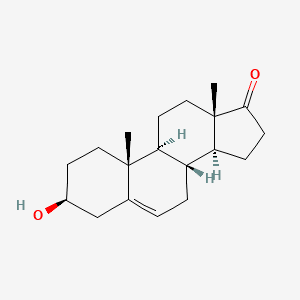
Intrarosa contains the active substance prasterone, i.e. dehydroepiandrosterone (DHEA), which is biochemically and biologically identical to the endogenous human DHEA, a precursor steroid which is inactive by itself and it is converted into oestrogens and androgens. Intrarosa is thus different from the oestrogens preparations since it delivers also androgen metabolites.
An oestrogen-mediated increase in the number of superficial and intermediate cells and decrease in the number of parabasal cells in the vaginal mucosa is noted. In addition, the vaginal pH decreased towards the normal range, thus facilitating the growth of the normal bacterial flora.
Clinical efficacy
Physiological responses (objective measures)
Efficacy data were obtained from two US and Canadian randomised, double-blind, placebo-controlled, multicentre, pivotal phase III studies (ERC-231/Study 1 and ERC-238/Study 2) performed in postmenopausal women aged 40 to 80 years (mean age = 58.6 years in Study 1 and 59.5 years in Study 2) with vulvar and vaginal atrophy (VVA ). At baseline, women had ≤ 5.0% superficial cells in the vaginal smear, a vaginal pH > 5.0 and they had identified dyspareunia (moderate to severe) as their most bothersome symptom (MBS) of VVA. After 12 weeks of daily treatment with a prasterone 6.5 mg pessary (n=81 in Study 1 and n=325 in Study 2), the change from baseline, in comparison with placebo treatment (n=77 in Study 1 and n=157 in Study 2), demonstrated significant improvements of the 3 co-primary endpoints compared to placebo in both studies, namely increase of the percentage of superficial cells (p<0.0001), decrease of the percentage of parabasal cells (p<0.0001), and decrease in the vaginal pH (p<0.0001).
Symptoms (subjective measures)
The most MBS dyspareunia (co-primary endpoint) was assessed at baseline and 12 weeks with the severity scored as follows: None=0, Mild=1, Moderate=2, Severe=3. Table 2 shows the mean change in severity score in MBS dyspareunia after 12 weeks with associated statistical testing for the difference vs. placebo for Study 1 (ERC-231) and Study 2 (ERC-238).
Table 2: Primary efficacy analysis – change from baseline to week 12 in the most bothersome symptom dyspareunia (ITT population; LOCF)
Study
Dyspareunia
Intrarosa 6.5 mg
Placebo
p-value
Study 1
-1.27
-0.87
0.0132
Study 2
-1.42
-1.06
0.0002
Table 3 shows the percentage of subjects who reported a change from baseline in their MBS dyspareunia at week 12. “Improvement” was defined as a reduction in the severity score of 1 or more. “Relief” was defined as no or only mild symptoms at week 12. “Substantial improvement” was restricted to patients who had moderate or severe MBS at baseline and changed from severe to mild or severe or moderate to none.
Table 3: Percentage of patients with improvement, relief or substantial improvement of MBS dyspareunia after 12 weeks on Intrarosa vs. placebo (ITT, LOCF)
Improvement
Relief
Substantial improvement
Intrarosa
Placebo
Intrarosa
Placebo
Intrarosa
Placebo
Study 1
(Intrarosa: n= 81)
(Placebo: n= 77)
72.8%
(p=0.0565)
58.4%
58.0%
(p=0.0813)
44.2%
43.2%
(p=0.0821)
29.9%
Study 2
(Intrarosa: n= 325)
(Placebo: n= 157)
80.3%
(p=0.0003)
65.0%
68.6%
(p=0.0003)
51.6%
47.1%
(p=0.0179)
35.7%
Clinical safety
Apart from the main two 12-week phase III clinical studies, the safety data of Intrarosa has also been obtained from one non comparative open-label safety study of one year.
Cases of breast and ovarian cancer have been reported in women treated with 6.5 mg of prasterone for 52 weeks (see section 4.4).
Cases of abnormal Pap smears either ASCUS or LSIL have been reported with a common frequency in women treated with Intrarosa for 52 weeks (see section 4.4).
Endometrial safety
On the 389 evaluable end-of-study endometrial biopsies performed after 52 weeks of treatment with Intrarosa, no histological abnormalities were reported on the biopsies.
Paediatric population
The European Medicines Agency has waived the obligation to submit the results of studies with Intrarosa in all subsets of the paediatric population.
4
*no differentiation was made between ischaemic and haemorrhagic stroke.
⚠️ Warnings
Any unused medicinal product or waste material should be disposed of in accordance with local requirements.