This information is for educational purposes only. It is not intended as medical advice. Always consult a qualified healthcare professional.
Isturisa — Description, Dosage, Side Effects | PillsCard
Rx
Isturisa
1 mg, Tabletki powlekane
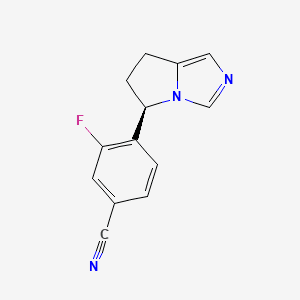
INN: Osilodrostatum
Data updated: 2026-04-13
Available in:
🇨🇿🇩🇪🇬🇧🇵🇱🇸🇰
Form
Tabletki powlekane
Dosage
1 mg
Route
doustna
Storage
—
About This Product
User Reviews
Reviews reflect personal experiences and are not medical advice. Always consult your doctor.
Manufacturer
Recordati Rare Diseases (Irlandia)
Composition
Osilodrostatum 1 mg
ATC Code
H02CA02
Source
URPL
Pharmacotherapeutic group: Anticorticosteroids, ATC code: H02CA02
Mechanism of action
Osilodrostat is a cortisol synthesis inhibitor. It potently inhibits 11β-hydroxylase (CYP11B1), the enzyme responsible for the final step of cortisol biosynthesis in the adrenal gland.
CYP11B1 inhibition is associated with the accumulation of precursors such as 11-deoxycortisol and acceleration of adrenal biosynthesis including androgens. In Cushing's disease, the fall in plasma cortisol concentration also stimulates ACTH secretion, via the feedback mechanism which accelerates steroid biosynthesis (see section 4.8).
Pharmacodynamic effects
In a thorough QT study (n=86 male and female healthy volunteers) with osilodrostat, the maximum QTcF interval duration differences to placebo were 1.73 ms (90% CI: 0.15, 3.31) at the 10 mg dose and 25.38 ms (90% CI: 23.53, 27.22) at a supratherapeutic dose of 150 mg. Based on an interpolation of these results, the mean maximum prolongation at the highest recommended dose of 30 mg is estimated to be +5.3 ms.
Clinical efficacy and safety
The efficacy and safety of osilodrostat in patients with endogenous Cushing's syndrome in adults were evaluated in two phase III multicenter studies (study C2301 and C2302).
Study C2301 is a randomised withdrawal (RW) study, and Study C2302 is, a double-blind, randomised study of osilodrostat vs placebo.
Study C2301
The study C2301 consisted of a 26-week open-label period of single-arm osilodrostat treatment period, followed by an 8-week double-blind randomised withdrawal period in which patients were randomised in 1:1 ratio to either osilodrostat or placebo and a subsequent osilodrostat 14-week open-label period.
Patients who maintained clinical benefit on osilodrostat could continue in a long-term extension period until last patient achieved week 72, in order to collect further efficacy and safety data.
The eligibility criteria included Cushing's disease (with confirmation of the pituitary source of excess adrenocorticotrophic hormone), and a mean urinary free cortisol (mUFC, derived from three 24-hour urine collections) value greater than 1.5 times the upper limit of normal (ULN) at screening.
A total of 137 adult patients were enrolled. The mean age of the patients was 41.2 years, and the majority were female (77%). Seven patients were aged 65 years or older. Prior therapy included pituitary surgery in 88% of patients and prior medical therapy in 75% of patients. The mean and median baseline mUFC levels were 1006.0 nmol/24 h (7 x ULN) and 476.4 nmol/24 h (3 x ULN), respectively (ULN: 138 nmol/24 h). Co-morbidities at baseline included hypertension (67.9% of patients), obesity (29.9%), diabetes mellitus (21.9%) and osteoporosis (27.7%).
Patients received a starting dose of 2 mg osilodrostat twice daily and the dose could be up-titrated based on individual response and tolerability during an initial 12-week period. Patients with no further dose increases during the following 12 weeks and with a mUFC ≤ULN at week 24 were randomised in a 1:1 ratio at week 26 to receive either osilodrostat or matching placebo for 8 weeks (double-blind randomised withdrawal period), followed by open-label osilodrostat for the remainder of the study. At week 26, 71 patients were randomised in a 1:1 ratio to continue receiving osilodrostat (n=36) or to switch to placebo (n=35). Patients who were not eligible for randomisation at week 24 (n=47) continued on open-label osilodrostat treatment. Nineteen patients discontinued prior to Week 26. 113 patients completed Week 48 and 106 patients entered the extension phase. An additional 8 patients discontinued between Week 48 and week 72.
The primary objective was to compare the proportion of complete responders at week 34 (the end of the 8-week randomised withdrawal period) between patients randomised to continued active treatment and placebo. For the primary endpoint, a complete response was defined as a mUFC value ≤ULN at week 34. Patients whose dose was increased during the randomised withdrawal period or who discontinued randomised treatment were considered non-responders. The key secondary endpoint was to assess the complete response rate at week 24. Patients with dose increases between weeks 12 and 24 and patients with no valid mUFC assessment at week 24 were counted as non-responders for the key secondary endpoint.
Results
The study C2301 met its primary and key secondary endpoints (Table 2).
Median mUFC levels decreased to 62.5 nmol/24 h (-84.1% change from baseline, n=125) at week 12, to 75.5 nmol/24 h (-82.3%, n=125) at week 24 and to 63.3 nmol/24 h (-87.9%, n=108) at week 48 and to 64 nmol/24h ( -86.6%, n=96) at Week 72.
Median time to first normal mUFC, with the dose escalation used in the study was 41 days.
Table 2 Key results: Phase III study in Cushing's disease patients (study C2301)
Osilodrostat
n=36
Placebo
n=34
Primary endpoint:
Proportion of responders at the end of the randomised withdrawal period (week 34) n (%) (95% CI)
31 (86.1)
(70.5, 95.3)
10 (29.4)
(15.1, 47.5)
Response rate difference (odds ratio):
osilodrostat vs. placebo
13.7 (3.7, 53.4)
2-sided p value <0.001
Secondary endpoints
All patients
N=137
Key secondary endpoint: Proportion of patients with mUFC ≤ULN at week 24
and no dose increase after week 12 (95% CI)
72 (52.6%)
(43.9, 61.1)
Complete mUFC response rate (mUFC ≤ULN) at week 48 (95% CI)
91 (66.4%)
(57.9, 74.3)
Complete mUFC response rate (mUFC ≤ULN) at week 72
(95% CI)
86 (62.8%)
(54.1, 70.9)
mUFC: mean urinary free cortisol; ULN: upper limit of normal; CI: confidence interval; response: mUFC ≤ULN.
Improvements were observed in cardiovascular and metabolic parameters (Table 3) and 85.6% of patients with available assessments showed an improvement in at least one physical feature of Cushing's disease at week 48. With the longer follow up, improvements in cardiovascular and metabolic parameters and physical features of Cushing's disease were maintained.
Table 3 Cardiovascular and metabolic parameters
Baseline
Week 24
Week 48
Systolic blood pressure
(mmHg)
132.2
124.9 (-4.1%)
121.7 (-6.8%)
Diastolic blood pressure
(mmHg)
85.3
81.0 (-3.8%)
78.9 (-6.6%)
Body weight (kg)
80.8
77.3 (-3.0%)
75.5 (-4.6%)
Waist circumference (cm)
103.4
99.1 (-2.6%)
97.4 (-4.2%)
HbA1c (%)
6.0
5.6 (-4.6%)
5.6 (-5.4%)
Osilodrostat treatment also resulted in an improvement in patient-reported outcomes. Improvements from baseline above the established minimal important difference (MID) were observed for Cushing's QoL (total score, Physical Problems subscale and Psychosocial Issues subscale), EQ-5D Utility index and BDI-II (depression) scores.
The mean Cushing QoL total score improved from 42.2 at baseline to 58.3 (+14.1; +52.4% change from baseline) at week 48. The improvements observed during the core phase were maintained during the extension phase.
Study C2302
Study C2302 used a double-blind, placebo-controlled design in 74 adult patients (of whom 73 were treated) with Cushing's disease (CD). The study was comprised of a core phase of 12 weeks of a double-blind, placebo-controlled period, followed by a 36-week open-label treatment period with osilodrostat.. The eligibility criteria included a mean urinary free cortisol value (mUFC, derived from three 24-hour urine collections) greater than 1.3 times the upper limit of normal (ULN=138 nmol/24h) at screening, and a confirmation of the pituitary source of excess Adrenocorticotropic Hormone (ACTH).
The mean age of the enrolled patients was 41.2 years, and 84% of them were female. Overall, 87.7% had undergone surgery prior to study entry and 12.3% of patients had received radiotherapy prior to study start. The following relevant comorbidities were reported in the medical history of enrolled patients: hypertension (61.6%), obesity (13.7%), diabetes mellitus (11.0%), and osteoporosis (26.0%). The median and mean baseline mUFC levels were 340.3 nmol/24h (2.5 x ULN) and 431.7 nmol/24h (3 x ULN), respectively.
At Baseline patients were randomly allocated in a 2:1 fashion to receive either osilodrostat 2 mg bid or matching-placebo; the dose could be gradually increased at 3-week intervals up to 20 mg bid. At the end of the 12-week double-blind randomised period, all patients were treated with open-label osilodrostat. The starting dose was 2 mg bid. Patients receiving daily dose <2mg bid during the 12-week double-blind randomised, placebo-controlled phase, were continued with their last dose from Period 1 regardless of treatment.
The primary objective of the study was to compare the proportion of complete responders (mUFC< ULN) at the end of the 12-week placebo-controlled period between patients randomised to osilodrostat and the ones randomised to placebo.. Patients who discontinued the randomised treatment or discontinued the study during the placebo-controlled period were considered non-responders
.
The key secondary objective was to assess the proportion of complete responders in both arms combined at Week 36 (mUFC< ULN) in patients receiving osilodrostat.. Dose reductions and temporary dose interruptions for safety reasons do not preclude patients from being counted as a complete responder for the key secondary endpoint.
Results
In study C2302 the primary efficacy endpoint (proportion of complete responders at the end of the 12-weeks placebo-controlled period) was met.
Table 4 Results of the primary endpoint - Phase III study (C2302)
Osilodrostat
n=48
Placebo
n=25
Primary endpoint:
Complete response rate at the end of 12-weeks placebo-controlled period
(95% CI*)
37 (77.1)
(70.5, 95.3)
2 (8.0)
(15.1, 47.5)
Response rate difference (odds ratio):
osilodrostat vs. placebo
43.4 (7.1, 343.2)
2-sided p-value < 0.0001
Secondary endpoints
All patients
N=73
Key secondary endpoint: Proportion of complete responder after 36-week treatment with osilodrostat in both arms combined (95% CI)
59/73 (80.8%)
(69.9, 89.1)
mUFC: mean urinary free cortisol; ULN: upper limit of normal; CI: confidence interval; response: mUFC ≤ULN.
Overall, mUFC consistently decreased during treatment with osilodrostat. Median mUFC was reduced from 342.2 nmol/24h (2.5 x ULN) at baseline to 49.2 nmol/24h (0.4xULN; change from baseline -83.6%) at Week 12 in patients treated with osilodrostat while placebo patients median mUFC went from 297.6 nmol/24h (2.2 x ULN) at baseline to 305.5 nmol/24h (2.2 x ULN; change from baseline +4.5%).
Median time to first normal mUFC, with the dose escalation used in the study was 35 days in patients treated with osilodrostat.
O
silodrostat treatment showed an improvement in cardiovascular-related clinical and metabolic parameters (e.g. fasting glucose, systolic blood pressure (SBP), diastolic blood pressure (DBP), weight, and waist circumference) associated with CD. The improvement in these parameters was already observed at the end of the placebo-controlled period (week 12) and maintained during the open-label treatment period (Week 12 to 48).
During the placebo-controlled period, there was a trend for more patients in the osilodrostat arm experiencing improvement in their physical features of CD, relative to the placebo arm. The exceptions were in the domains of facial rubor, striae, and proximal muscle atrophy.
Other causes of Cushing's syndrome (CS)
The efficacy of osilodrostat was also assessed in 9 adult Japanese patients with other causes of Cushing's syndrome (adrenal adenoma, ectopic corticotropin syndrome and ACTH independent macronodular adrenal hyperplasia; study C1201). At Week 12 (primary endpoint), a complete response (mUFC ≤ULN) was observed in 6 patients (66.7%) and a partial response (mUFC decrease by at least 50%) in one additional patient (11.1%). The median average dose used in the study was 2.6 mg/day (range 1.3-7.5 mg/day). The mean duration of treatment in this study was 24 weeks, and long-term exposure was limited
Paediatric population
The European Medicines Agency has deferred the obligation to submit the results of studies withOsilodrostat in one or more subsets of the paediatric population in adrenal cortical hyperfunction (see section 4.2 for information on paediatric use).
⚠️ Warnings
No special requirements.
Any unused medicinal product or waste material should be disposed of in accordance with local requirements.