This information is for educational purposes only. It is not intended as medical advice. Always consult a qualified healthcare professional.
Amglidia — Description, Dosage, Side Effects | PillsCard
OTC
Amglidia
0,6 mg/ml, Zawiesina doustna
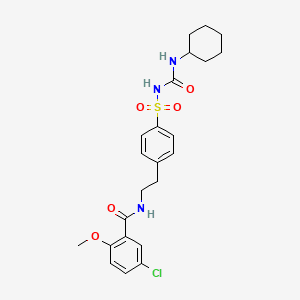
INN: Glibenclamidum
Available in:
🇨🇿🇩🇪🇬🇧🇫🇷🇵🇱🇸🇰🇺🇦
Form
Zawiesina doustna
Dosage
0,6 mg/ml
Route
doustna
Storage
—
About This Product
User Reviews
Reviews reflect personal experiences and are not medical advice. Always consult your doctor.
Manufacturer
AMMTeK (Francja)
Composition
Glibenclamide 0,6 mg/ml
ATC Code
A10BB01
Source
URPL
Pharmacotherapeutic group: Drugs used in diabetes, sulphonylureas, ATC code: A10BB01
Mechanism of action
Sulphonylureas act on pancreatic beta-cells by inhibiting ATP-sensitive potassium channels. The mechanisms of action proposed for this effect include stimulation of insulin release by beta-cells of the pancreas.
The minimum active concentration for the effect is considered to be 30-50 ng/mL glibenclamide.
Pharmacodynamic effects
Glibenclamide, a second-generation, short half-life sulphonylurea, is a hypoglycaemic agent that reduces blood-glucose by stimulating insulin release by the pancreas; this effect depends on the presence of active beta-cells or beta-cells made active by glibenclamide in the pancreatic islets in certain cases of neonatal diabetes.
Stimulation of insulin secretion by glibenclamide in response to a meal is of major significance. Administering glibenclamide to a diabetic enhances the post-prandial insulinotropic response. Post- prandial responses involving secretion of insulin and peptide-C continue to be enhanced after at least 6 months of treatment and even over many years in the case of neonatal diabetes by potassium channel disorders.
Glibenclamide has been shown to be effective in patients with mutations in the genes coding for the β- cell ATP-sensitive potassium channel and chromosome 6q24-related transient neonatal diabetes mellitus.
Clinical efficacy and safety
Treatment using sulphonylureas in neonatal diabetes linked to potassium channel disorders is supported by published studies showing measurable improvements in glycaemic control and suggesting neuro-psychomotor and neuro-psychological deficiencies, which are greater in younger patients.
From data published in the literature, treatment with sulfonylurea is reported to be successful in approximately 90% of the patients with neonatal diabetes associated with K-ATP channel mutations. The average dose reported in the literature (clinical studies and case reports) is of approximately 0.5 mg/kg/day. When limited to clinical studies or prospective data collections only, the average dose decreases to 0.2 to 0.3 mg/kg/day. Higher doses have occasionally been reported in the literature with doses as high as 2.8 mg/kg/day without undesirable effects and with full transfer off insulin.
In a phase II, single-centre, prospective, open-label, non-randomised study, acceptability, efficiency and tolerance of the switch from crushed tablets to glibenclamide suspension were measured. Ten patients (7 boys/3 girls) with KCNJ11 mutation, with median age 2.7 years (0.3 to 16.2) and median duration of glibenclamide therapy 2.3 years (6 days to 11.3 years) were treated.
Daily doses ranged from 0.1 to 0.8 mg/kg for glibenclamide tablets (median dose, 0.3 mg/kg) and from 0.1 to 0.6 mg/kg for oral suspension (median 0.1 to 0.2 mg/kg/day over the study period) given in 2 to 4 administration per day).
After switching from glibenclamide tablets to glibenclamide suspension, there was no significant change in glycaemic control as evidenced from the similar serum HbA1c (6.5 vs 6.1% at Visits M0 and M4, respectively; p=0.076) and fructosamine (283.4 vs 271.2 µmol/L at Visits M0 and M4, respectively; p=0.55) mean concentrations.
None of patients experienced deterioration in glycaemic control, defined as an increase of HbA1c by > 0.5% and exceeding 5.6% in patients with baseline HbA1c ≤ 5.6% or an increase of HbA1c by > 0.5% in patients with baseline HbA1c > 5.6%.
A large international long-term term study of treatment for neonatal diabetes due to
KCNJ11
mutations is ongoing and results were reported in 81 patients of the 90 patients originally included with a median [interquartile range] follow-up duration of 10.2 years [9.3-10.8 years]. Transfer to sulfonylureas occurred in childhood with a median [IQR] at transfer of 4.8 years [1.7 – 11.4 years]. Seventy-five patients (93%) remained on sulphonylurea alone at most recent follow-up and 6/81(7%) were on sulphonylurea and daily insulin. In patients on sulphonylurea alone, blood glucose control has been improved after transfer to sulfonylureas with median [IQR] HbA1c of 5.9% [5.4-6.5%] at 1 year vs 8.0 % [7.2-9.2 %] before transfer (p < 0.0001), and remained very well controlled after 10 years with a median [IQR] HbA1c of 6.4% [5.9-7.2 %].
The median [IQR] dose of sulfonylurea fell over the follow-up with a median [IQR] dose of 0.30 mg/kg/day [0.14-0.53] mg/kg/day at one year and of 0.23 mg/kg/day [0.12-0.41 mg/kg/day] at 10 years, p=0.03). There were no reported episodes of severe hypoglycaemia. Adverse reactions (diarrhoea/nausea/reduced appetite/abdominal pain) were reported in 10/81(12%); these were transient, and no patients discontinued sulphonylurea as a result. Microvascular complications were reported in 7/81(9%) patients; there were no macrovascular complications. Patients with complications were older at age of transfer to sulfonylurea than those without complications (median age at transfer: 20.5 v 4.1 years, p=0.0005). Oral glucose tolerance tests and intravenous glucose tolerance tests revealed good insulin response to glucose and maintained incretin effect after ten years.
Evidence exists that administration of glibenclamide might improve some neurological deficits in patients with neonatal-onset diabetes due to KCNJ11 or ABCC8 mutations like epilepsy, motor function and hypotonia, by a mechanism independent from insulin secretion.
Earlier treatment initiation might be associated with greater benefits.
⚠️ Warnings
At the first use, the bottle should be opened by unscrewing the child-resistant closure while pressing downwards. The adaptor should be inserted firmly into the bottle while holding the bottle the right way up. The screw cap should then be replaced on the bottle with the adaptor and not removed during the 30-day use. The screw cap should be retightened in order to push the adaptor well into the bottle. Any unused medicinal product or waste material should be disposed of in accordance with local requirements.