This information is for educational purposes only. It is not intended as medical advice. Always consult a qualified healthcare professional.
Rutin 1541 — Description, Dosage, Side Effects | PillsCard
OTC
Rutin 1541
50 mg, Tabletki powlekane
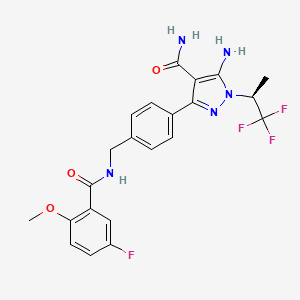
INN: Pirtobrutinibum
Data updated: 2026-04-13
Available in:
🇨🇿🇩🇪🇬🇧🇵🇱🇵🇹🇸🇰
Form
Tabletki powlekane
Dosage
50 mg
Route
doustna
Storage
—
About This Product
User Reviews
Reviews reflect personal experiences and are not medical advice. Always consult your doctor.
Manufacturer
Eli Lilly Nederland B.V. (Hiszpania)
Composition
Pirtobrutinibum 50 mg
ATC Code
L01EL05
Source
URPL
Pharmacotherapeutic group: Antineoplastic agents, protein kinase inhibitors, ATC code: L01EL05
Mechanism of action
Pirtobrutinib is a reversible, noncovalent inhibitor of BTK. BTK is a signalling protein of the B‑cell antigen receptor (BCR) and cytokine receptor pathways. In B‑cells, BTK signalling results in activation of pathways necessary for B‑cell proliferation, trafficking, chemotaxis, and adhesion. Pirtobrutinib binds to wild type BTK as well as BTK harboring C481 mutations leading to inhibition of BTK kinase activity.
Pharmacodynamic effects
Cardiac electrophysiology
The effect of a single 900 mg dose of pirtobrutinib on the corrected QT (QTc) interval was evaluated in a study with placebo and positive controls in 30 healthy subjects. The selected dose is equivalent to approximately 2 times higher than the concentrations achieved at steady state at the recommended dosage of 200 mg once daily. Pirtobrutinib had no clinically meaningful effect on the change in QT corrected for heart rate using Fridericia's formula (QTcF) interval (i.e., > 10 ms) and there was no relationship between pirtobrutinib exposure and change in QTc interval.
Clinical efficacy and safety
Mantle Cell Lymphoma
The efficacy of Jaypirca was evaluated in adult patients with MCL in a phase 1/2 multicenter, open label, single arm clinical study: Study 18001 (BRUIN). The study included two parts: a phase 1 dose escalation, in which the dose range of monotherapy pirtobrutinib of 25 mg to 300 mg once daily was investigated, and a phase 2 dose expansion. The primary objective of the phase 1 portion was to determine the recommended phase 2 dose of pirtobrutinib, which was found to be 200 mg once daily, with a maximum tolerated dose not being established. The primary objective of the phase 2 part was to assess the anti‑tumor activity of pirtobrutinib based on overall response rate as assessed by an independent review committee. Patients received Jaypirca orally daily until disease progression or unacceptable toxicity.
Study 18001 enrolled and treated a total of 164 patients with a diagnosis of MCL and the primary analysis set (PAS) for the assessment of efficacy was based on the first 90 patients with MCL enrolled who had no known central nervous system (CNS) involvement, were treated with a prior BTK inhibitor, had received one or more doses of Jaypirca and had at least 1 site of radiographically assessable disease. The median age was 70 years (range: 46 to 87 years), 80 % were male, 84.4 % were White, 67.8 % had a baseline Eastern Cooperative Oncology Group (ECOG) performance status of 0 and 31.1 % had ECOG performance status of 1. Patients had a median number of 3 prior lines of therapy (range: 1 to 8), with the reason for discontinuation from the most recent prior BTK inhibitor therapy being progression in 81.1 % of patients and intolerance in 13.3 % of patients. 95.6 % of patients received prior anti‑CD20 therapy, 87.8 % chemotherapy, 18.9 % autologous stem cell transplantation, 4.4 % allogenic stem cell transplantation, 15.6 % prior BCL2 inhibitor and 4.4 % received prior chimeric antigen receptor-modified T cells (CAR‑T) therapy. 38.9 % patients had extranodal involvement and 26.7 % had tumour bulk greater than or equal to 5 cm. The simplified MCL International Prognostic Index (sMIPI) score was low in 22.2 %, intermediate in 55.6 % and high in 22.2 % of patients.
Of the 164 patients with MCL enrolled in Study 18001, 9 patients had a dose reduction, including 6 responders that were able to remain on therapy and maintain a durable response following dose reductions to 150 mg QD (3), 100 mg QD (2), and 50 mg QD (1).
The efficacy of Jaypirca was based on a response as assessed using 2014 Lugano criteria for malignant lymphoma. Efficacy results for patients that received at least one prior BTK inhibitor and included in the PAS are summarised in Table 2. For the 90 patients in the PAS, 79 received at least 1 dose of 200 mg QD. Of these 79 patients, 77 started at 200 mg QD, 1 dose escalated from a lower dose and 1 dose reduced from a higher dose. The median time on treatment was 5.24 months (range: 0.2 to 39.6 months). Among the 51 responders, the median time to response was 1.84 months (range: 1.0 to 7.5 months).
While subgroup analyses represent a limited number of patients, clinically meaningful efficacy results were observed across important subgroups, including patients that discontinued prior BTK inhibitor therapy due to intolerance or progression and irrespective of number and type of prior therapies.
Table 2: Summary of efficacy data in Study 18001 for MCL patients who received at least one prior BTK inhibitor
Pirtobrutinib
N=90
Objective response rate (Complete response + partial response)
Rate – percent (95 % CI)
56.7 (45.8, 67.1)
CR – percent
18.9
PR – percent
37.8
Duration of response
Median - months (95 % CI)
17.61 (7.29, 27.24)
Abbreviations: CI = confidence interval, NE= not estimable, CR = complete response, PR = partial response.
Data cut-off date: 29 July 2022. The median follow‑up time for duration of response was 12.68 months.
Chronic Lymphocytic Leukaemia
The efficacy of Jaypirca in patients with BTK-inhibitor pretreated CLL was evaluated in a randomised, multicentre, international, open-label, actively-controlled trial (BRUIN CLL-321, Study 20020). The trial enrolled 238 patients with CLL/SLL who were previously treated with a BTK inhibitor. Patients were randomised in a 1:1 ratio to receive either Jaypirca given orally once daily at a dose of 200 mg until disease progression or unacceptable toxicity, or Investigator's choice:
• Idelalisib plus a rituximab product (IR): Idelalisib 150 mg orally twice daily until disease progression or unacceptable toxicity, in combination with 8 infusions of a rituximab product (375 mg/m2 intravenously on Day 1 of Cycle 1, followed by 500 mg/m2 every 2 weeks for 4 doses and then every 4 weeks for 3 doses), with a 28-day cycle length.
• Bendamustine plus a rituximab product (BR): Bendamustine 70 mg/m2 intravenously (Day 1 and 2 of each 28-day cycle), in combination with a rituximab product (375 mg/m2 intravenously on Day 1 of Cycle 1, then 500 mg/m2 on Day 1 of subsequent cycles), for up to 6 cycles.
Randomisation was stratified by 17p deletion status (yes/no) and receipt of prior venetoclax treatment (yes/no). Of the 238 patients total, 119 were assigned to Jaypirca monotherapy, 82 to IR and 37 to BR. After confirmed disease progression, patients randomised to IR or BR had the option to cross over to Jaypirca monotherapy. Baseline characteristics were similar between treatment arms. Overall, the median age was 67 years (range: 42 to 90 years), 70 % were male and 81 % were White. Baseline ECOG performance status was 0 or 1 in 93% of patients and 44% of patients had Rai stage III or IV disease. Among those patients with central testing available, 57 % (101 of 176 patients) had 17p deletion and/or TP53 mutation, 86 % (164 of 190 patients) had unmutated IGHV, and 65 % (97 of 149) had complex karyotype.
Patients received a median number of 3 prior lines of therapy (range: 1 to 13) with 57 % having at least 3 prior therapies and 51 % having had prior BCL2-inhibitor therapy. The most common prior BTK inhibitors received were ibrutinib (87 %), acalabrutinib (16 %), and zanubrutinib (7 %). 70 % of patients discontinued the most recent BTK inhibitor for refractory or progressive disease, 15 % discontinued for toxicity, and 15 % discontinued for other reasons.
Efficacy was based on progression-free survival (PFS) of pirtobrutinib monotherapy versus investigator's choice arm as assessed by an Independent Review Committee (IRC). The study met its primary endpoint at the prespecified time of final analysis for IRC-assessed PFS (29 Aug 2023 cut-off). At an updated analysis (29 Aug 2024 cut-off) with a median follow-up of 19.4 months (range 0.03 to 33.3 months) for pirtobrutinib and 17.7 months (range 0.03 to 27.9 months) for the investigator's choice arm, improved IRC-assessed PFS was observed with pirtobrutinib compared to the investigator's choice arm, consistent with the primary analysis. Clinically meaningful efficacy results in favour of pirtobrutinib were observed across important subgroups, including patients who discontinued prior BTK inhibitor therapy due to intolerance or progression and irrespective of number and type of prior therapies. Efficacy results are presented in Table 3. The Kaplan-Meier curve for PFS is shown in Figure 1.
Table 3: Efficacy Results per IRC in Patients with CLL Previously Treated with a BTK Inhibitor – ITT Population (Study 20020)
Pirtobrutinib 200 mg once daily
(N = 119)
Investigator's Choice of Idelalisib plus Rituximab or Bendamustine plus Rituximab
(N = 119)
Progression-free Survival
a
Number of Events, n
74 (62 %)
79 (66 %)
Disease Progression
60 (50 %)
66 (55 %)
Death
14 (12 %)
13 (11 %)
Median PFS (95 % CI), months
b
14.0 (11.2, 16.6)
8.7 (8.1, 10.4)
HR (95 % CI)
c
0.54 (0.39, 0.75)
P-value
d
0.0002
CI, confidence interval; HR, hazard ratio.
Data cut-off date 29 Aug 2024
a
Efficacy was assessed using the 2018 International Workshop for Chronic Lymphocytic Leukemia (iwCLL) guidelines.
b
Based on Kaplan-Meier estimation.
c
Based on stratified Cox proportional hazards model.
d
2-sided nominal p-value based on stratified log-rank test.
Figure 1: Kaplan-Meier Curve of IRC-Assessed PFS in Patients with CLL Previously Treated with a BTK Inhibitor in Study 20020
With a median overall survival (OS) follow-up time of 20.4 months for pirtobrutinib and 19.2 months in investigator's choice arm, 38 patients (32.0 %) in the pirtobrutinib arm and 32 patients (27.0 %) in the investigator's choice arm died. Median OS was 29.7 months (95 % CI: 27.1, NE) in the pirtobrutinib arm and not reached in the investigator's choice arm. The HR was 1.090 (95% CI: 0.679, 1.749; p = 0.7202). OS analysis may be confounded by the 50 out of 119 patients who crossed over from the investigator's choice arm to pirtobrutinib.
Paediatric population
The licensing authority has waived the obligation to submit the results of studies with Jaypirca in all subsets of the paediatric population in mature B‑cell malignancies (see section 4.2 for information on paediatric use).
Conditional approval
This medicinal product has been authorised under a so-called 'conditional approval' scheme. This means that further evidence on this medicinal product is awaited.
The Medicines and Healthcare products Regulatory Agency will review new information on this medicinal product at least every year and this SmPC will be updated as necessary.
⚠️ Warnings
WARNINGS In case of overdose, get medical help or contact a poison control center right away. Keep out of the reach of children. If pregnant or breastfeeding, ask a healthcare professional before use.