This information is for educational purposes only. It is not intended as medical advice. Always consult a qualified healthcare professional.
Rx
Jevtana
60 mg, Koncentrat i rozpuszczalnik do sporządzania roztworu do infuzji
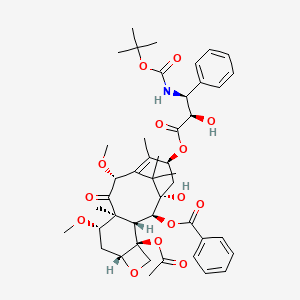
INN: Cabazitaxelum
Data updated: 2026-04-13
Available in:
🇨🇿🇬🇧🇫🇷🇵🇱🇵🇹🇸🇰🇹🇷🇺🇦
Form
Koncentrat i rozpuszczalnik do sporządzania roztworu do infuzji
Dosage
60 mg
Route
dożylna
Storage
—
User Reviews
Reviews reflect personal experiences and are not medical advice. Always consult your doctor.
About This Product
Manufacturer
Sanofi Winthrop Industrie (Niemcy)
Composition
Cabazitaxelum 60 mg
ATC Code
L01CD04
Source
URPL
Pharmacotherapeutic group: Antineoplastic agents, taxanes.
ATC Code: L01CD04
Mechanism of Action
Cabazitaxel is an antineoplastic agent that acts by disrupting the microtubular network in cells. Cabazitaxel binds to tubulin and promotes the assembly of tubulin into microtubules while simultaneously inhibiting their disassembly. This leads to the stabilisation of microtubules, which results in the inhibition of mitotic and interphase cellular functions.
Pharmacodynamic Effects
Cabazitaxel demonstrated a broad spectrum of antitumour activity against advanced human tumours xenografted in mice. Cabazitaxel is active in docetaxel-sensitive tumours. In addition, cabazitaxel demonstrated activity in tumour models insensitive to chemotherapy including docetaxel.
Clinical efficacy and safety
The efficacy and safety of cabazitaxel in combination with prednisone or prednisolone were evaluated in a randomised, open-label, international, multi-center, phase III study (EFC6193 study), in patients with metastatic castration resistant prostate cancer previously treated with a docetaxel containing regimen.
Overall survival (OS) was the primary efficacy endpoint of the study. Secondary endpoints included Progression Free Survival [PFS (defined as time from randomization to tumour progression, Prostatic Specific Antigen (PSA) progression, pain progression, or death due to any cause, whichever occurred first], Tumour Response Rate based on Response Evaluation Criteria in Solid Tumours (RECIST), PSA Progression (defined as a ≥ 25 % increase or > 50 % in PSA non-responders or responders respectively), PSA response (declines in serum PSA levels of at least 50 %), pain progression [assessed using the Present Pain Intensity (PPI) scale from the McGill-Melzack questionnaire and an Analgesic Score (AS)] and pain response (defined as 2-point greater reduction from baseline median PPI with no concomitant increase in AS, or reduction of ≥ 50 % in analgesic use from baseline mean AS with no concomitant increase in pain).
A total of 755 patients were randomised to receive either cabazitaxel 25 mg/m2 intravenously every 3 weeks for a maximum of 10 cycles with prednisone or prednisolone 10 mg orally daily (n=378), or to receive mitoxantrone 12 mg/m2 intravenously every 3 weeks for a maximum of 10 cycles with prednisone or prednisolone 10 mg orally daily (n=377).
This study included patients over 18 years of age with metastatic castration resistant prostate cancer either measurable by RECIST criteria or non-measurable disease with rising PSA levels or appearance of new lesions, and Eastern Cooperative Oncology Group (ECOG) performance status 0 to 2. Patients had to have neutrophils > 1,500/mm3, platelets > 100,000/mm3, haemoglobin > 10 g/dl, creatinine < 1.5 x ULN, total bilirubin < 1 x ULN, AST and ALT < 1.5 x ULN.
Patients with a history of congestive heart failure, or myocardial infarction within last 6 months, or patients with uncontrolled cardiac arrhythmias, angina pectoris, and/or hypertension were not included in the study.
Demographics, including age, race, and ECOG performance status (0 to 2), were balanced between the treatment arms. In the cabazitaxel group, the mean age was 68 years, range (46–92) and the racial distribution was 83.9 % Caucasian, 6.9 % Asian/Oriental, 5.3 % Black and 4 % Others.
The median number of cycles was 6 in the cabazitaxel group and 4 in the mitoxantrone group. The number of patients who completed the study treatment (10 cycles) was respectively 29.4 % and 13.5 % in the cabazitaxel group and in the comparator group.
Overall survival was significant longer with cabazitaxel compared to mitoxantrone (15.1 months versus 12.7 respectively), with a 30 % reduction in the risk of death compared to mitoxantrone (see Table 3 and Figure 1).
A sub-group of 59 patients received prior cumulative dose of docetaxel < 225 mg/m2 (29 patients in cabazitaxel arm, 30 patients in mitoxantrone arm). There was no significant difference in overall survival in this group of patients (HR (95 % CI) 0.96 (0.49–1.86)).
Table 3 - Efficacy of cabazitaxel in EFC6193 study in the treatment of patients with metastatic castration resistant prostate cancer
Cabazitaxel + prednisone
n=378
Mitoxantrone + prednisone
n=377
Overall survival
Number of patients with deaths (%)
234 (61.9%)
279 (74%)
Median survival {months} (95% Cl)
15.1 (14.1-16.3)
12.7 (11.6-13.7)
Hazard Ratio (HR)
1
(95% CI)
0.70 (0.59-0.83)
p-value
< 0.0001
1
HR estimated using Cox model; a hazard ratio of less than 1 favours cabazitaxel
Figure 1 - Kaplan Meier overall survival curves (EFC6193)
There was an improvement in PFS in the cabazitaxel arm compared to mitoxantrone arm, 2.8 (2.4–3.0) months versus 1.4 (1.4–1.7) respectively, HR (95 % CI) 0.74 (0.64–0.86), p < 0.0001.
There was a significant higher rate of tumour response of 14.4 % (95 % CI: 9.6–19.3) in patients in the cabazitaxel arm compared to 4.4 % (95 % CI: 1.6–7.2) for patients in the mitoxantrone arm, p=0.0005.
PSA secondary endpoints were positive in the cabazitaxel arm. There was a median PSA progression of 6.4 months (95 % CI: 5.1–7.3) for patients in cabazitaxel arm, compared to 3.1 months (95 % CI: 2.2–4.4) in the mitoxantrone arm, HR 0.75 months (95 % CI: 0.63– 0.90), p=0.0010. The PSA response was 39.2 % in patients on cabazitaxel arm (95 % CI: 33.9–44.5) versus 17.8 % of patients on mitoxantrone (95 % CI: 13.7–22.0), p=0.0002.
There was no statistical difference between both treatment arms in pain progression and pain response.
In a non-inferiority, multicenter, multinational, randomized, open label phase III study (EFC11785 study), 1200 patients with metastatic castration resistant prostate cancer, previously treated with a docetaxel-containing regimen, were randomized to receive either cabazitaxel 25 mg/m
2
(n=602) or 20 mg/m2 (n=598) dose. Overall survival (OS) was the primary efficacy end-point.
The study met its primary objective of demonstrating the non-inferiority of cabazitaxel 20 mg/m2 in comparison with 25 mg/m
2
(see Table 4). A statistically significantly higher percentage (p < 0.001) of patients showed a PSA response in the 25 mg/m2 group (42.9 %) compared to the 20 mg/m2 group (29.5 %). A statistically significantly higher risk of PSA progression in patients with the 20 mg/m2 dose with respect to the 25 mg/m2 dose was observed (HR 1.195 ; 95 % CI: 1.025 to 1.393). There was no statistically difference with regards to the other secondary endpoints (PFS, tumour and pain response, tumour and pain progression, and four subcategories of FACT-P).
Table 4 - Overall survival in EFC11785 study in cabazitaxel 25 mg/m
2
arm versus cabazitaxel 20 mg/m2 arm (Intent-to–treat analysis) – Efficacy primary endpoint
CBZ20+PRED
n=598
CBZ25+PRED
n=602
Overall Survival
Number of deaths, n (%)
497 (83.1%)
501 (83.2%)
Median survival (95% CI) [months]
13.4 (12.19 to 14.88)
14.5 (13.47 to 15.28)
Hazard ratio
a
Versus CBZ25+PRED
1-sided 98.89% UCI
1-sided 95% LCI
1.024
1.184
0.922
-
-
-
CBZ20: Cabazitaxel 20 mg/m
2
, CBZ25: Cabazitaxel 25 mg/m
2
, PRED: Prednisone/Prednisolone, CI: confidence interval, LCI: lower bound of the confidence interval, UCI: upper bound of the confidence interval
a
Hazard ratio is estimated using a Cox Proportional Hazards regression model. A hazard ratio < 1 indicates a lower risk of cabazitaxel 20 mg/m
2
with respect to 25 mg/m
2
.
The safety profile of cabazitaxel 25 mg/m
2
observed in study EFC11785 was qualitatively and quantitatively similar to that observed in the study EFC6193. Study EFC11785 demonstrated a better safety profile for the cabazitaxel 20 mg/m2 dose.
Table 5 - Summary of safety data for cabazitaxel 25 mg/m
2
arm versus cabazitaxel 20 mg/m2 arm in EFC11785 study
CBZ20+PRED
n=580
CBZ25+PRED
n=595
Median number of cycles/ median duration of treatment
6/ 18 weeks
7/ 21 weeks
Number of patients with dose reduction
n (%)
From 20 to 15 mg/m
2
: 58 (10.0%)
From 15 to 12 mg/m
2
: 9 (1.6%)
From 25 to 20 mg/m
2
: 128 (21.5%)
From 20 to 15 mg/m
2
: 19 (3.2%)
From 15 to 12 mg/m
2
: 1 (0.2%)
All grade adverse reactions
a
(%)
Diarrhoea
30.7
39.8
Nausea
24.5
32.1
Fatigue
24.7
27.1
Haematuria
14.1
20.8
Asthenia
15.3
19.7
Decreased appetite
13.1
18.5
Vomiting
14.5
18.2
Constipation
17.6
18.0
Back pain
11.0
13.9
Clinical neutropenia
3.1
10.9
Urinary tract infection
6.9
10.8
Peripheral sensory neuropathy
6.6
10.6
Dysgeusia
7.1
10.6
Grade ≥ 3 adverse reactions
b
(%)
Clinical neutropenia
2.4
9.6
Febrile neutropenia
2.1
9.2
Haematological abnormalities
c
(%)
Grade ≥ 3 neutropenia
41.8
73.3
Grade ≥ 3 anaemia
9.9
13.7
Grade ≥ 3 thrombocytopenia
2.6
4.2
CBZ20=Cabazitaxel 20 mg/m2, CBZ25=Cabazitaxel 25 mg/m
2
, PRED=Prednisone/Prednisolone
a All grade adverse reactions with an incidence higher than 10%
b Grade ≥ 3 adverse reactions with an incidence higher than 5%
c Based on laboratory values
In a prospective , multinational, randomized , active-controlled and open-label phase IV study (LPS14201/CARD study) 255 patients with metastatic castration resistant prostate cancer (mCRPC), previously treated in any order with a docetaxel containing regimen and with an AR-targeted agent (abiraterone or enzalutamide, with disease progression within 12 months of treatment initiation), were randomized to receive either Cabazitaxel 25 mg/m
2
every 3 week plus prednisone/prednisolone 10 mg daily (n=129) or AR-targeted agents (abiraterone 1000 mg once daily plus prednisone/prednisolone 5 mg twice daily or enzalutamide 160 mg once daily) (n=126). Radiographic progression free-survival (rPFS) as defined by Prostate Cancer Working Group-2 (PCWG2) was the primary endpoint. Secondary endpoints included overall survival, progression-free survival, PSA response and tumour response.
Demographics and disease characteristics were balanced between treatment arms. At baseline, the overall median age was 70 years, 95% of patients had an ECOG PS of 0 to 1 and median Gleason score was 8. Sixty one percent (61%) of the patients had their prior treatment with an AR-targeted agent after prior docetaxel.
The study met its primary endpoint: rPFS was significantly longer with Cabazitaxel compared to AR-targeted agent (8.0 months versus 3.7 respectively), with a 46% reduction in the risk of radiographic progression compared to AR-targeted agent (see table 6 and figure 2).
Table 6 - Efficacy of Cabazitaxel in CARD study in the treatment of patients with metastatic castration resistant prostate cancer (Intent-to–treat analysis) – Radiographic progression free-survival (rPFS)
Cabazitaxel + prednisone/prednisolone + G-CSF
n=129
AR-targeted agent:
Abiraterone + prednisone/prednisolone or Enzalutamide
n=126
Number of events at the cut-off date (%)
Median rPFS (months) (95% CI)
95 (73.6%)
101 (80.2%)
8.0 (5.7 to 9.2)
3.7 (2.8 to 5.1)
Hazard Ratio (HR) (95% CI)
p-value
1
0.54 (0.40 to 0.73)
< 0.0001
1
stratified log-rank test, significance threshold = 0.05
Figure 2 - Primary endpoint: Kaplan-Meier plot of radiographic PFS (ITT Population)
Planned subgroup analyses for rPFS based on stratification factors at randomization yielded a hazard ratio of 0.61 (95% CI: 0.39 to 0.96) in patients who received a prior AR-targeted agent before docetaxel and a hazard ratio of 0.48 (95% CI: 0.32 to 0.70) in patients who received a prior AR-targeted agent after docetaxel.
Cabazitaxel was statistically superior to the AR-targeted comparators for each of the alpha-protected key secondary endpoints including overall survival (13.6 months for Cabazitaxel arm versus 11.0 months for AR-targeted agent arm, HR 0.64, 95%CI: 0.46 to 0.89; p=0.008), progression-free survival (4.4 months for Cabazitaxel arm versus 2.7 months for AR-targeted agent arm, HR 0.52; 95%CI: 0.40 to 0.68), confirmed PSA response (36.3% for Cabazitaxel arm versus 14.3% for AR-targeted agent arm, p=0.0003) and best tumour response (36.5% for Cabazitaxel arm versus 11.5% for AR-targeted agent arm, p=0.004).
The safety profile of Cabazitaxel 25 mg/m
2
observed in CARD study was overall consistent with that observed in TROPIC and PROSELICA studies (see section 4.8). The incidence of grade ≥ 3 adverse events was 53.2% in Cabazitaxel arm versus 46.0% in the AR-targeted agent arm. The incidence of grade ≥ 3 serious adverse events were 31.7% in Cabazitaxel arm versus 37.1% in the AR-targeted agent arm. The incidence of patients who permanently discontinued study treatment due to adverse events was 19.8% in Cabazitaxel arm versus 8.1% in the AR-targeted agent arm. The incidence of patients having an adverse event leading to death was 5.6% in Cabazitaxel arm versus 10.5% in the AR-targeted agent arm.
Paediatric population
The European Medicines Agency has waived the obligation to submit the results of studies with Cabazitaxel in all subsets of the paediatric population in the indication of prostate cancer (see section 4.2 for information on paediatric use).
Cabazitaxel was evaluated in an open label, multi-center Phase 1/2 study conducted in a total of 39 paediatric patients (aged between 4 to18 years for the phase 1 part of the study and between 3 to 16 years for the phase 2 part of the study). The phase 2 part did not demonstrate efficacy of cabazitaxel as single agent in paediatric population with recurrent or refractory diffuse intrinsic pontine glioma (DIPG) and high grade glioma (HGG) treated at 30 mg/m
2
.
⚠️ Warnings
Cabazitaxel should only be prepared and administered by personnel trained in handling cytotoxic agents. Pregnant staff should not handle the product. As for any other antineoplastic agent, caution should be exercised when handling and preparing Cabazitaxel solutions, taking into account the use of containment devices, personal protective equipment (e.g. gloves), and preparation procedures. If Cabazitaxel, at any step of its handling, should come into contact with the skin, wash immediately and thoroughly with soap and water. If it should come into contact with mucous membranes, wash immediately and thoroughly with water.
DO NOT use other cabazitaxel medicinal products consisting of 2 vials (concentrate and solvent) with Cabazitaxel 20 mg/ml concentrate for solution for infusion, which contains only 1 vial with 3 ml (60 mg/3 ml).
Cabazitaxel 20 mg/ml concentrate for solution for infusion requires NO prior dilution with a solvent and is ready to add to the infusion solution.
The whole content of the vial should not be used completely without proper control of volume, i.e. extract the exact volume required from the vial for dilution to adequately control the concentration.
Step 1
If the vials are stored under refrigeration, allow the required number of vials of cabazitaxel concentrate for solution for infusion to stand at 20-25 °C for 5 minutes before use.
More than one vial of cabazitaxel 20 mg/ml concentrate for solution for infusion may be necessary to obtain the required dose for the patient. Aseptically withdraw the required amount of cabazitaxel concentrate for solution for infusion using a calibrated syringe fitted with a 21G needle.
Each ml of the medicinal product contains 20 mg cabazitaxel.
As an example, a dose of 45 mg cabazitaxel would require 2.25 ml of cabazitaxel 20 mg/ml concentrate for solution for infusion.
Step 2
The required volume of cabazitaxel concentrate for solution for infusion must be injected into a sterile PVC-free container of either 5 % glucose solution or 9 mg/ml (0.9 %) sodium chloride solution for infusion. The concentration of the infusion solution should be between 0.10 mg/ml and 0.26 mg/ml.
Step 3
Remove the syringe and mix the content of the infusion bag or bottle manually using a rocking motion.
Step 4
As with all parenteral products, the resulting infusion solution should be visually inspected prior to use. As the infusion solution is supersaturated, it may crystallise over time. In this case, the solution must not be used and should be discarded.
The infusion solution should be used immediately. However, in-use storage time can be longer under specific conditions mentioned in section 6.3.
An in-line filter of 0.22 micrometer nominal pore size (also referred to as 0.2 micrometer) is recommended during administration.
Do not use PVC infusion containers or polyurethane infusion sets for the preparation and administration of Cabazitaxel.
Cabazitaxel must not be mixed with any other medicinal products than those mentioned.
Any unused medicinal product or waste material should be disposed of in accordance with local requirements.