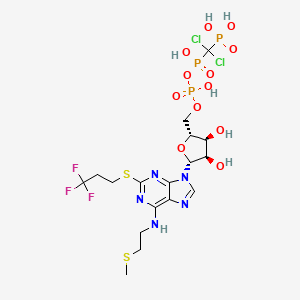
This information is for educational purposes only. It is not intended as medical advice. Always consult a qualified healthcare professional.
Rx
Kengrexal
50 mg, Proszek do sporządzania koncentratu roztworu do wstrzykiwań lub infuzji
INN: Cangrelorum
Data updated: 2026-04-13
Available in:
🇨🇿🇩🇪🇬🇧🇪🇸🇫🇷🇵🇱🇵🇹🇸🇰🇺🇦
Form
Proszek do sporządzania koncentratu roztworu do wstrzykiwań lub infuzji
Dosage
50 mg
Route
dożylna
Storage
User Reviews
Reviews reflect personal experiences and are not medical advice. Always consult your doctor.
—
About This Product
Manufacturer
Chiesi Farmaceutici S.p.A. (Irlandia)
Composition
Cangrelori tetranatricum 50 mg
ATC Code
B01AC25
Source
URPL
Pharmacotherapeutic group: Platelet aggregation inhibitors excluding heparin, ATC code: B01AC25.
Mechanism of action
Kengrexal contains cangrelor, a direct P2Y12 platelet receptor antagonist that blocks adenosine diphosphate (ADP)-induced platelet activation and aggregation
in vitro
and
ex vivo
. Cangrelor binds selectively and reversibly to the P2Y12 receptor to prevent further signalling and platelet activation.
Pharmacodynamic effects
Cangrelor exhibits inhibition of activation and aggregation of platelets as shown by aggregometry (light transmission and impedance), point-of care assays, such as the VerifyNow P2Y12test, VASP-P and flow cytometry. Onset of P2Y12 inhibition occurs rapidly upon cangrelor administration.
Following the administration of a 30 microgram/kg bolus followed by a 4 microgram/kg/min infusion, platelet inhibition is observed within two minutes. The pharmacokinetic/pharmacodynamic (PK/PD) effect of cangrelor is maintained consistently for the duration of the infusion.
Irrespective of dose, following cessation of the infusion, blood levels decrease rapidly and platelet function returns to normal within one hour.
Clinical efficacy and safety
The primary clinical evidence for the efficacy of cangrelor is derived from CHAMPION PHOENIX, a randomised, double-blind study comparing cangrelor (n=5,472) to clopidogrel (n=5,470), both given in combination with aspirin and other standard therapy, including unfractionated heparin (78%), bivalirudin (23%), LMWH (14%) or fondaparinux (2.7%). The median duration of cangrelor infusion was 129 minutes. GP IIb/IIIa inhibitors were permitted for bailout use only and were used in 2.9% of patients. Patients with coronary atherosclerosis were included who required PCI for stable angina (58%), non-ST-segment elevation acute coronary syndrome (NSTE-ACS) (26%), or ST-elevation myocardial infraction (STEMI) (16%).
Data from the CHAMPION pooled population of over 25,000 PCI patients provide additional clinical support for safety.
In CHAMPION PHOENIX, cangrelor significantly reduced (relative risk reduction 22%; absolute risk reduction 1.2%) the primary composite endpoint of all-cause mortality, MI, IDR, and ST compared to clopidogrel at 48 hours (Table 3).
Table 3: Thrombotic events at 48 hours in CHAMPION PHOENIX (mITT population)
Cangrelor vs. Clopidogrel
n (%)
Cangrelor
N=5,470
Clopidogrel
N=5,469
OR (95% CI)
p-value
Primary Endpoint
Death/MI/IDR/ST
a
257 (4.7)
322 (5.9)
0.78 (0.66,0.93)
0.005
Key Secondary Endpoint
Stent thrombosis
46 (0.8)
74 (1.4)
0.62 (0.43, 0.90)
0.010
Death
18 (0.3)
18 (0.3)
1.00 (0.52, 1.92)
>0.999
MI
207 (3.8)
255 (4.7)
0.80 (0.67, 0.97)
0.022
IDR
28 (0.5)
38 (0.7)
0.74 (0.45, 1.20)
0.217
a
Primary endpoint from logistic regression adjusted for loading dose and patient status. p-values for secondary endpoints based on Chi-squared test.
OR = odds ratio; CI = confidence interval; IDR = ischaemia-driven revascularisation; MI = myocardial infarction; mITT = modified intent-to-treat; ST = stent thrombosis.
Significant reductions in death/MI/IDR/ST and ST observed in the cangrelor group at 48 hours were maintained at 30 days (Table 4).
Table 4: Thrombotic events at 30 days in CHAMPION PHOENIX (mITT population)
Cangrelor vs. Clopidogrel
n (%)
Cangrelor
N=5,462
Clopidogrel
N=5,457
OR (95% CI)
p-value
a
Primary Endpoint
Death/MI/IDR/ST
326 (6.0)
380 (7.0)
0.85 (0.73, 0.99)
0.035
Key Secondary Endpoint
Stent thrombosis
71 (1.3)
104 (1.9)
0.68 (0.50, 0.92)
0.012
Death
60 (1.1)
55 (1.0)
1.09 (0.76, 1.58)
0.643
MI
225 (4.1)
272 (5.0)
0.82 (0.68, 0.98)
0.030
IDR
56 (1.0)
66 (1.2)
0.85 (0.59, 1.21)
0.360
a
p-values based on Chi-squared test.
OR = odds ratio; CI = confidence interval; IDR = ischaemia-driven revascularisation; MI = myocardial infarction; mITT = modified intent-to-treat; ST = stent thrombosis.
Paediatric Population
The European Medicines Agency has deferred the obligation to submit the results of studies with Kengrexal in one or more subsets of the paediatric population in the prevention of non-site specific embolism and thrombosis, for the treatment of thrombosis in paediatric patients undergoing diagnostic and / or therapeutic percutaneous vascular procedures. See section 4.2 for information on paediatric use.
In a prospective, open-label, single-arm, multi-center, Phase I study, cangrelor was evaluated at 2 dose levels of 0.5 and 0.25 micrograms/kg/min in 15 neonates ≤28 days of life with congenital heart disease requiring palliation with a systemic-to-pulmonary artery shunt, a right ventricle-to-pulmonary artery shunt, or a ductus arteriosus stent (see section 4.2). Platelet aggregation inhibition was assessed by light transmission aggregometry (LTA) in response to stimulation with 20 and 5 µM ADP. The % inhibition of maximal aggregation 45 minutes into cangrelor infusion and the number of subjects who achieved >90% of maximal platelet aggregation inhibition are summarized in the table below.
Cangrelor 0.5 mcg/kg/min
N=8
Cangrelor 0.25 mcg/kg/min
N=7
LTA method
using ADP 20 µM
using ADP 5 µM
using ADP 20 µM
using ADP 5 µM
N
6
5
7
5
% inhibition of maximal aggregation 45 minutes into the infusion,
mean (SD)
median (min; max)
89.0 (11.42)
91.2 (69.0; 100.0)
93.7 (6.45)
92.9 (84.8; 100.0)
76.3 (16.89)
69.6 (53.2; 98.3)
88.2 (13.49)
96.0 (68.1; 100.0)
Subjects who achieved >90% of maximal platelet aggregation inhibition,
n (%)
3 (50)
4 (80)
2 (28.6)
3 (60)
⚠️ Warnings
Instructions for preparation
Aseptic procedures should be used for the preparation of Kengrexal.
The vial should be reconsituted immediately prior to dilution and use. Reconstitute each 50 mg/vial by adding 5 mL of sterile water for injection. Swirl gently until all material is dissolved. Avoid vigorous mixing. Allow any foam to settle. Ensure that the contents of the vial are fully dissolved and the reconstituted material is a clear, colourless to pale yellow solution.
Do not use without dilution. Before administration, 5 mL reconstituted solution has to be withdrawn from each vial and must be diluted further with 250 mL sodium chloride 9 mg/mL (0.9%) solution for injection or glucose (5%) solution for injection. Mix the bag thoroughly.
The medicinal product should be inspected visually for particulate matter after reconstitution.
Kengrexal is administered as a weight-based regimen consisting of an initial intravenous bolus followed by an intravenous infusion. The bolus and infusion should be administered from the infusion solution.
This dilution will generate a concentration of 200 micrograms/mL and should be sufficient for at least two hours of dosing as required. Patients 100 kg and over will require a minimum of two bags.
Disposal
Any unused medicinal product or waste material should be disposed of in accordance with local requirements.