This information is for educational purposes only. It is not intended as medical advice. Always consult a qualified healthcare professional.
Kerendia — Description, Dosage, Side Effects | PillsCard
Rx
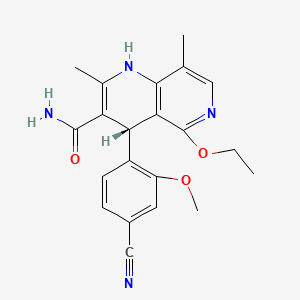
Kerendia
10 mg, Tabletki powlekane
INN: Finerenonum
Data updated: 2026-04-13
Available in:
🇨🇿🇩🇪🇬🇧🇫🇷🇵🇱🇸🇰🇺🇦
Form
Tabletki powlekane
Dosage
10 mg
Route
doustna
Storage
—
About This Product
User Reviews
Reviews reflect personal experiences and are not medical advice. Always consult your doctor.
Manufacturer
Bayer AG (Niemcy)
Composition
Finerenonum 10 mg
ATC Code
C03DA05
Source
URPL
Pharmacotherapeutic group: diuretics, aldosterone antagonists, ATC code: C03DA05
Mechanism of action
Finerenone is a nonsteroidal, selective antagonist of the mineralocorticoid receptor (MR) which is activated by aldosterone and cortisol and regulates gene transcription. Its binding to the MR leads to a specific receptor-ligand complex that blocks recruitment of transcriptional coactivators implicated in the expression of pro-inflammatory and pro-fibrotic mediators.
Pharmacodynamic effects
In FIDELIO-DKD and FIGARO-DKD, randomised, double-blind, placebo-controlled, multicentre phase III studies in adult patients with CKD and T2D, the placebo-corrected relative reduction in urinary albumin-to-creatinine ratio (UACR) in patients randomised to finerenone was 31% and 32%, respectively at month 4 and UACR remained reduced throughout both studies.
In ARTS-DN, a randomised, double-blind, placebo-controlled, multicentre phase IIb study in adult patients with CKD and T2D, the placebo-corrected relative reduction in UACR at Day 90 was 25% and 38% in patients treated with finerenone 10 mg and 20 mg once daily, respectively.
Cardiac electrophysiology
A dedicated QT study in 57 healthy participants showed that finerenone has no effect on cardiac repolarisation. There was no indication of a QT/QTc prolonging effect of finerenone after single doses of 20 mg (therapeutic) or 80 mg (supratherapeutic).
Clinical efficacy and safety
The FIDELIO-DKD and FIGARO-DKD studies investigated the effect of finerenone compared to placebo on kidney and cardiovascular (CV) outcomes in adult patients with CKD and T2D.
Patients were required to be receiving standard of care, including a maximum tolerated labelled dose of an angiotensin-converting enzyme inhibitor (ACEi) or angiotensin receptor blocker (ARB).
Patients with diagnosed heart failure with reduced ejection fraction and New York Heart Association II-IV were excluded due to the class 1A recommendation for MRA therapy.
In the FIDELIO-DKD study patients were eligible based on evidence of persistent albuminuria (> 30 mg/g to 5,000 mg/g), an eGFR of 25 to 75 mL/min/1.73 m
2
and serum potassium ≤ 4.8 mmol/L at screening.
The primary endpoint was a composite of time to first occurrence of kidney failure (defined as chronic dialysis or kidney transplantation, or a sustained decrease in eGFR to < 15 mL/min/1.73 m
2
over at least 4 weeks), a sustained decline in eGFR of 40% or more compared to baseline over at least 4 weeks, or renal death. The key secondary endpoint was a composite of time to first occurrence of CV death, non-fatal myocardial infarction (MI), non-fatal stroke or hospitalisation for heart failure.
A total of 5,674 patients were randomised to receive either finerenone (N = 2,833) or placebo (N = 2,841) and included in the analyses. The median follow-up was 2.6 years. The dose of finerenone or placebo could be adjusted between 10 mg and 20 mg once daily during the course of the study, based mainly on serum potassium concentration. At month 24, of the subjects treated with finerenone, 67% were treated with 20 mg once daily, 30% with 10 mg once daily and 3% were on a treatment interruption.
After the end of study, vital status was obtained for 99.7% of patients. The study population was 63% White, 25% Asian and 5% Black. The mean age at enrolment was 66 years and 70% of patients were male. At baseline, the mean eGFR was 44.3 mL/min/1.73 m
2
, with 55% of patients having an eGFR < 45 mL/min/1.73 m
2
, median UACR was 852 mg/g, and mean HbA1c was 7.7%, 46% had a history of atherosclerotic CV disease, 30% a history of coronary artery disease, 8% a history of cardiac failure, and the mean blood pressure was 138/76 mm Hg. The mean duration of T2D at baseline was 16.6 years and a history of diabetic retinopathy and diabetic neuropathy was reported in 47% and 26% of patients, respectively. At baseline, almost all patients were on ACEi (34%) or ARB (66%), and 97% of patients used one or more antidiabetic medications (insulin [64%], biguanides [44%], glucagon-like peptide-1 [GLP-1] receptor agonists [7%], sodium-glucose cotransporter 2 [SGLT2] inhibitors [5%]). The other most frequent medications taken at baseline were statins (74%) and calcium channel blockers (63%).
A statistically significant difference in favour of finerenone was shown for the primary composite endpoint and the key secondary composite endpoint (see figure 1/table 4 below). The treatment effect for the primary and key secondary endpoints was generally consistent across subgroups, including region, eGFR, UACR, systolic blood pressure (SBP) and HbA1c at baseline.
In the FIGARO-DKD study patients were eligible, based on evidence of persistent albuminuria having an UACR of ≥ 30 mg/g to < 300 mg/g and an eGFR of 25 to 90 mL/min/1.73 m
2
, or an UACR ≥ 300 mg/g and an eGFR ≥ 60 mL/min/1.73 m
2
at screening. Patients were required to have a serum potassium of ≤ 4.8 mmol/L at screening.
The primary endpoint was a composite of time to first occurrence of CV death, non-fatal MI, non-fatal stroke or hospitalisation for heart failure. The secondary endpoint was a composite of time to kidney failure, a sustained decline in eGFR of 40% or more compared to baseline over at least 4 weeks, or renal death.
A total of 7,352 patients were randomised to receive either finerenone (N = 3,686), or placebo (N = 3,666) and included in the analyses. The median follow-up was 3.4 years. The dose of finerenone or placebo could be adjusted between 10 mg and 20 mg once daily during the course of the study, based mainly on serum potassium concentration. At month 24, of the subjects treated with finerenone, 82% were treated with 20 mg once daily, 15% with 10 mg once daily and 3% were on a treatment interruption. After the end of study, vital status was obtained for 99.8% of patients. The study population was 72% White, 20% Asian and 4% Black. The mean age at enrolment was 64 years and 69% of patients were male. At baseline, the mean eGFR was 67.8 mL/min/1.73 m
2
, with 62% of patients having an eGFR ≥ 60 mL/min/1.73 m
2
, median UACR was 308 mg/g, and mean HbA1c was 7.7%, 45% of patients had a history of atherosclerotic CV disease, 8% had a history of cardiac failure, and the mean blood pressure was 136/77 mm Hg. The mean duration of T2D at baseline was 14.5 years and a history of diabetic retinopathy and diabetic neuropathy was reported in 31% and 28% of patients, respectively. At baseline, almost all patients were on ACEi (43%) or ARB (57%), and 98% of patients used one or more antidiabetic medications (insulin [54%], biguanides [69%], GLP-1 receptor agonists [7%], SGLT2 inhibitors [8%]). The other most frequent medication taken at baseline was statins (71 %).
A statistically significant difference in favour of finerenone was shown for the CV primary composite endpoint (see figure 2/table 5 below). The treatment effect for the primary endpoint was consistent across subgroups, including region, eGFR, UACR, SBP and HbA1c at baseline.
A lower incidence rate of the secondary composite outcome of kidney failure, sustained eGFR decline of 40% or more or renal death was observed in the finerenone group compared to placebo, however this difference did not achieve statistical significance (see table 5 below). The treatment effect for the kidney secondary composite endpoint was consistent across subgroups of eGFR at baseline, but for the subgroup of patients with UACR < 300 mg/g the HR was 1.16 (95% CI 0.91; 1.47) and for the subgroup of patients with UACR ≥ 300 mg/g the HR was 0.74 (95% CI 0.62; 0.90).
Additional prespecified secondary time-to-event endpoints are included in table 5.
Table 4
: Analysis of the primary and secondary time-to-event endpoints (and their individual components) in phase III study FIDELIO-DKD
Kerendia* (N = 2,833)
Placebo (N = 2,841)
Treatment effect
N (%)
Events/ 100-pyr
N (%)
Events/ 100-pyr
HR (95% CI)
Primary renal composite endpoint and its components
Composite of kidney failure, sustained eGFR decline ≥ 40% or renal death
504 (17.8)
7.59
600 (21.1)
9.08
0.82 (0.73; 0.93)
p = 0.0014
Kidney failure
208 (7.3)
2.99
235 (8.3)
3.39
0.87 (0.72; 1.05)
Sustained eGFR decline ≥ 40%
479 (16.9)
7.21
577 (20.3)
8.73
0.81 (0.72; 0.92)
Renal death
2 (< 0.1)
-
2 (< 0.1)
-
-
Key secondary CV composite endpoint and its components
Composite of CV death, non-fatal MI, non-fatal stroke or hospitalisation for heart failure
367 (13.0)
5.11
420 (14.8)
5.92
0.86 (0.75; 0.99)
p = 0.0339
CV death
128 (4.5)
1.69
150 (5.3)
1.99
0.86 (0.68;1.08)
Non-fatal MI
70 (2.5)
0.94
87 (3.1)
1.17
0.80 (0.58;1.09)
Non-fatal stroke
90 (3.2)
1.21
87 (3.1)
1.18
1.03 (0.76;1.38)
Hospitalisation for heart failure
139 (4.9)
1.89
162 (5.7)
2.21
0.86 (0.68;1.08)
Secondary efficacy endpoints
All-cause mortality
219 (7.7)
2.90
244 (8.6)
3.23
0.90 (0.75; 1.07)
**
All-cause hospitalisation
1,263 (44.6)
22.56
1,321 (46.5)
23.87
0.95 (0.88; 1.02)
**
Composite of kidney failure, sustained eGFR decline ≥ 57% or renal death
252 (8.9)
3.64
326 (11.5)
4.74
0.76 (0.65; 0.90)
**
* Treatment with 10 or 20 mg once daily in addition to maximum tolerated labelled doses of ACEi or ARB.
** p not statistically significant after adjustment for multiplicity
CI: Confidence interval
HR: Hazard ratio
pyr: patient-years
Figure 1
: Time to first occurrence of kidney failure, sustained decline in eGFR ≥ 40% from baseline, or renal death in the FIDELIO-DKD study
Table 5:
Analysis of the primary and secondary time-to-event endpoints (and their individual components) in phase III study FIGARO-DKD
Kerendia* (N = 3,686)
Placebo (N = 3,666)
Treatment effect
N (%)
Events/ 100-pyr
N (%)
Events/ 100-pyr
HR (95% CI)
Primary CV composite endpoint and its components
Composite of CV death, non-fatal MI, non-fatal stroke or hospitalisation for heart failure
458 (12.4)
3.87
519 (14.2)
4.45
0.87 (0.76; 0.98)
p = 0.0264
CV death
194 (5.3)
1.56
214 (5.8)
1.74
0.90 (0.74; 1.09)
Non-fatal MI
103 (2.8)
0.85
102 (2.8)
0.85
0.99 (0.76; 1.31)
Non-fatal stroke
108 (2.9)
0.89
111 (3.0)
0.92
0.97 (0.74; 1.26)
Hospitalisation for heart failure
117 (3.2)
0.96
163 (4.4)
1.36
0.71 (0.56; 0.90)
Secondary renal composite endpoint and its components
Composite of kidney failure, sustained eGFR decline ≥ 40% or renal death
350 (9.5)
3.15
395 (10.8)
3.58
0.87 (0.76; 1.01)
p = 0.0689
**
Kidney failure
46 (1.2)
0.40
62 (1.7)
0.54
0.72 (0.49;1.05)
Sustained eGFR decline ≥ 40%
338 (9.2)
3.04
385 (10.5)
3.49
0.87 (0.75; > 1.00)
Renal death
0
-
2 (< 0.1)
-
-
Secondary efficacy endpoints
All-cause mortality
333 (9.0)
2.68
370 (10.1)
3.01
0.89 (0.77; 1.04) **
All-cause hospitalisation
1,573 (42.7)
16.91
1,605 (43.8)
17.52
0.97 (0.90; 1.04) **
Composite of kidney failure, sustained eGFR decline ≥ 57% or renal death
108 (2.9)
0.95
139 (3.8)
1.23
0.77 (0.60; 0.99) **
* Treatment with 10 or 20 mg once daily in addition to maximum tolerated labelled doses of ACEi or ARB.
**
not statistically significant after adjustment for multiplicity
CI: Confidence interval
HR: Hazard ratio
pyr: patient-years
Figure 2
: Time to first occurrence of CV death, non-fatal myocardial infarction, non-fatal stroke or hospitalisation for heart failure in the FIGARO-DKD study
Paediatric population
The licensing authority has deferred the obligation to submit the results of studies with Kerendia in one or more subsets of the paediatric population in treatment of chronic kidney disease (see section 4.2 for information on paediatric use).
⚠️ Warnings
Any unused medicinal product or waste material should be disposed of in accordance with local requirements.