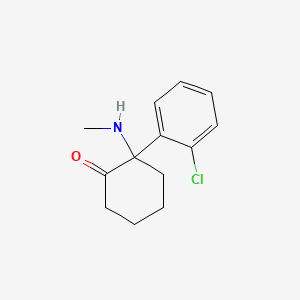
ATC Code: N01AX03, Pharmacotherapeutic group: Other general anaesthetics.
Ketamine is a rapidly acting general anaesthetic for intravenous or intramuscular use with a distinct pharmacological action. Ketamine hydrochloride produces dissociative anaesthesia characterised by catalepsy, amnesia, and marked analgesia which may persist into the recovery period. Pharyngeal-laryngeal reflexes remain normal and skeletal muscle tone may be normal or can be enhanced to varying degrees. Mild cardiac and respiratory stimulation and occasionally respiratory depression occur.
Mechanism of Action:
Ketamine induces sedation, immobility, amnesia and marked analgesia. The anaesthetic state produced by ketamine has been termed “dissociative anaesthesia” in that it appears to selectively interrupt association pathways of the brain before producing somesthetic sensory blockade. It may selectively depress the thalamoneocortical system before significantly obtunding the more ancient cerebral centres and pathways (reticular-activating and limbic systems). Numerous theories have been proposed to explain the effects of ketamine, including binding to N-methyl-D-aspartate (NMDA) receptors in the CNS, interactions with opiate receptors at central and spinal sites and interaction with norepinephrine, serotonin and muscarinic cholinergic receptors. The activity on NMDA receptors may be responsible for the analgesic as well as psychiatric (psychosis) effects of ketamine. Ketamine has sympathomimetic activity resulting in tachycardia, hypertension, increased myocardial and cerebral oxygen consumption, increased cerebral blood flow and increased intracranial and intraocular pressure. Ketamine is also a potent bronchodilator. Clinical effects observed following ketamine administration include increased blood pressure, increased muscle tone (may resemble catatonia), opening of eyes (usually accompanied by nystagmus) and increased myocardial oxygen consumption.
⚠️ Warnings
For single use only. Discard any unused product at the end of each operating session. See section 4.2.