This information is for educational purposes only. It is not intended as medical advice. Always consult a qualified healthcare professional.
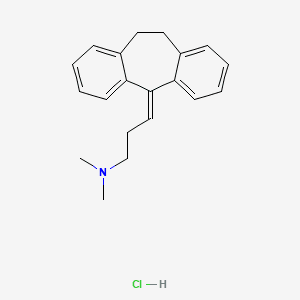
Amitriptyline is a mood-elevating active substance from the group of tricyclic antidepressants with sedative and anxiolytic properties. It is used both for the treatment of depressive disorders and for chronic pain. Its effects are based on the inhibition of the reuptake of serotonin and norepinephrine into the presynaptic neuron. Numerous precautions and drug interactions must be considered during treatment. Amitriptyline is metabolized by CYP3A4. The most common possible adverse effects include visual disturbances, weight gain, headache, dizziness, tremor, drowsiness, dry mouth, constipation, nausea, palpitations, hypotension, and increased sweating.
Amitriptyline (ATC N06AA09) has antidepressant, anxiolytic, sedative, and sleep-promoting properties. It is anticholinergic, antihistaminic, and analgesic. Its effects are based on the inhibition of the reuptake of serotonin and norepinephrine into the presynaptic neuron. Amitriptyline additionally binds to various neurotransmitter receptors. The antidepressant effects are delayed, occurring within 2 to 4 weeks.
Mechanism of action of reuptake inhibitors, click to enlarge. Illustration © PharmaWiki