This information is for educational purposes only. It is not intended as medical advice. Always consult a qualified healthcare professional.
Rx
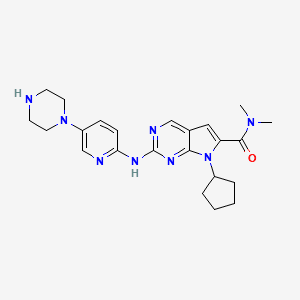
Kisqali
200 mg, Tabletki powlekane
INN: Ribociclibum
Data updated: 2026-04-13
Available in:
🇨🇿🇩🇪🇬🇧🇪🇸🇵🇱🇵🇹🇸🇰
Form
Tabletki powlekane
Dosage
200 mg
Route
doustna
Storage
—
About This Product
User Reviews
Reviews reflect personal experiences and are not medical advice. Always consult your doctor.
Manufacturer
Novartis Europharm Limited (Słowenia)
Composition
Ribociclibi succinas 200 mg
ATC Code
L01EF02
Source
URPL
Pharmacotherapeutic group: Antineoplastic agents, protein kinase inhibitors, ATC code: L01EF02
Mechanism of action
Ribociclib is a selective inhibitor of cyclin-dependent kinase (CDK) 4 and 6, resulting in 50% inhibition (IC
50
) values of 0.01 (4.3 ng/ml) and 0.039 μM (16.9 ng/ml) in biochemical assays, respectively. These kinases are activated upon binding to D-cyclins and play a crucial role in signalling pathways which lead to cell cycle progression and cellular proliferation. The cyclin D-CDK4/6 complex regulates cell cycle progression through phosphorylation of the retinoblastoma protein (pRb).
In vitro
, ribociclib decreased pRb phosphorylation, resulting in arrest in the G1 phase of the cell cycle, reduced proliferation and a senescent phenotype in breast cancer derived models.
In vivo
, treatment with single-agent ribociclib led to tumour regressions which correlated with inhibition of pRb phosphorylation.
In vivo
studies using patient-derived oestrogen receptor-positive breast cancer xenograft model combinations of ribociclib and antioestrogens (i.e. letrozole) resulted in superior tumour growth inhibition with sustained tumour regression and delayed tumour regrowth after stopping dosing compared to each substance alone. When administered to patients ribociclib can also be immunomodulatory, decreasing regulatory T-cells and relative levels of CD3+ T-cells. Additionally,
in vivo
antitumour activity of ribociclib in combination with fulvestrant was assessed in immune-deficient mice bearing the ZR751 ER+ human breast cancer xenografts and the combination with fulvestrant resulted in complete tumour growth inhibition.
When tested in a panel of breast cancer cell lines with known ER status, ribociclib demonstrated to be more efficacious in ER+ breast cancer cell lines than in the ER- ones. In the preclinical models tested so far, intact pRb was required for ribociclib activity.
Cardiac electrophysiology
Serial, triplicate ECGs were collected following a single dose and at steady state to evaluate the effect of ribociclib on the QTc interval in patients with advanced cancer. A pharmacokinetic-pharmacodynamic analysis included a total of 997 patients treated with ribociclib at doses ranging from 50 to 1 200 mg. The analysis suggested that ribociclib causes concentration-dependent increases in the QTc interval.
In patients with advanced or metastatic breast cancer the estimated QTcF mean change from baseline for 600 mg Kisqali in combination with NSAI or fulvestrant was 22.0 msec (90% CI: 20.56, 23.44) and 23.7 msec (90% CI: 22.31, 25.08), respectively at the geometric mean C
max
at steady-state compared to 34.7 msec (90% CI: 31.64, 37.78) in combination with tamoxifen (see section 4.4).
In patients with early breast cancer a similar concentration-dependent increase in the QTc interval exists. The estimated QTcF mean change from baseline is estimated to be lower in patients with early breast cancer treated with 400 mg Kisqali compared to patients with advanced or metastatic breast cancer treated with 600 mg Kisqali.
Clinical efficacy and safety
Early breast cancer
Study CLEE011O12301C (NATALEE)
Kisqali was evaluated in a randomised, open-label, multicentre phase III clinical study in the treatment of pre-/postmenopausal women, and of men, with HR-positive, HER2-negative, early breast cancer with anatomic stage II or III irrespective of nodal status at high risk of recurrence in combination with an aromatase inhibitor (AI, letrozole or anastrozole) versus AI alone that was:
• Anatomic stage group IIB-III, or
• Anatomic stage group IIA that is either:
o Node positive or
o Node negative, with:
- Histologic grade 3, or
- Histologic grade 2, with any of the following criteria:
- Ki67 ≥20%
- High risk by gene signature testing
Premenopausal women, and men, also received goserelin. Applying TNM criteria, NATALEE included patients with any lymph node involvement, or if no nodal involvement either tumour size >5 cm, or tumour size 2-5 cm with either grade 2 (and high genomic risk or Ki67 ≥20%) or grade 3.
A total of 5 101 patients, including 20 male patients, were randomised in a 1:1 ratio to receive either Kisqali 400 mg and AI (n=2 549) or AI alone (n=2 552). Randomisation to the treatment was stratified by anatomic stage (group II [n=2 154 (42.2%)] versus group III [n=2 947 (57.8%)]), prior treatment (neoadjuvant/adjuvant chemotherapy Yes [n=4 432 (86.9%)] versus No [n=669 (13.1%)]), menopausal status (premenopausal women and men [n=2 253 (44.2%)] versus postmenopausal women [n=2 848 (55.8%)]) and region (North America/Western Europe/Oceania [n=3 128 (61.3%)] versus rest of the world [n=1 973 (38.7%)]). Kisqali was given orally at a dose of 400 mg once daily for 21 consecutive days followed by 7 days off treatment in combination with letrozole 2.5 mg or anastrozole 1 mg orally once daily for 28 days. Goserelin was given at a dose of 3.6 mg as injectable subcutaneous implant administered on day 1 of each 28-day cycle. Therapy with Kisqali continued until completion of 3-year treatment from the randomisation date (approximately 39 cycles).
Patients enrolled in this study had a median age of 52 years (range 24 to 90). 15.2% patients were aged 65 years and older, including 123 patients (2.4%) aged 75 years and older. The patients included were Caucasian (73.4%), Asian (13.2%) and Black or African American (1.7%). All patients had an ECOG performance status of 0 or 1. A total of 88.2% of patients had received chemotherapy in the neoadjuvant or adjuvant setting and 71.6% had received endocrine therapy in the neoadjuvant or adjuvant setting within 12 months prior to study entry.
The primary endpoint for the study was invasive disease-free survival (iDFS) defined as the time from randomisation to the first occurrence of: local invasive breast recurrence, regional invasive recurrence, distant recurrence, death (any cause), contralateral invasive breast cancer, or second primary non-breast invasive cancer (excluding basal and squamous cell carcinomas of the skin).
The primary endpoint of the study was met at the primary analysis (11 January 2023 cut-off). A statistically significant improvement in iDFS (HR: 0.748, 95% CI: 0.618, 0.906; one-sided stratified log-rank test p-value 0.0014) was demonstrated in patients receiving Kisqali plus AI over AI alone. Consistent results were observed across sub-groups of anatomic stage, menopausal status, region, nodal status, age, race, and prior adjuvant/neo-adjuvant chemotherapy or hormonal therapies.
Data from a further analysis (21 July 2023 cut-off) is summarised in Table 8, the Kaplan-Meier curve for iDFS is provided in Figure 1. The median treatment duration at the time of the final iDFS analysis was approximately 30 months with the median follow-up time for iDFS 33.3 months across the two study arms. The overall survival (OS) remains immature. A total of 172 patients (3.5%) had died (83/2 525 in the ribociclib arm versus 89/2 442 in the AI alone arm, HR 0.892, 95% CI: 0.661, 1.203).
Table 8 NATALEE - Efficacy results (iDFS) based on investigator assessment (FAS) (21 July 2023 cut-off)
Kisqali plus AI*
N=2 549
AI
N=2 552
Invasive disease-free survival (iDFS
a
)
Number of patients with an event (n, %)
226 (8.9%)
283 (11.1%)
Hazard ratio (95% CI)
0.749 (0.628, 0.892)
p-value
b
0.0006
iDFS at 36 months (%, 95% CI)
90.7 (89.3, 91.8)
87.6 (86.1, 88.9)
CI=confidence interval; N=number of patients.
a
iDFS defined as the time from randomisation to the first occurrence of: local invasive breast recurrence, regional invasive recurrence, distant recurrence, death (any cause), contralateral invasive breast cancer, or second primary non-breast invasive cancer (excluding basal and squamous cell carcinomas of the skin)
b
nominal p-value is obtained from the one-sided stratified log-rank test.
* Letrozole or anastrozole
Figure 1 NATALEE - Kaplan-Meier plot of iDFS based on investigator assessment (21 July 2023 cut-off)
AI = aromatase inhibitor (letrozole or anastrozole)
P-value from stratified log-rank test is one-sided.
There were 204 (8.0%) distant disease-free survival (DDFS) events in the Kisqali plus AI arm compared to 256 (10%) events in the AI alone arm (HR: 0.749, 95% CI: 0.623, 0.900).
Advanced breast cancer
Study CLEE011A2301 (MONALEESA-2)
Kisqali was evaluated in a randomised, double-blind, placebo-controlled, multicentre phase III clinical study in the treatment of postmenopausal women with hormone receptor-positive, HER2-negative, advanced breast cancer who received no prior therapy for advanced disease in combination with letrozole versus letrozole alone.
A total of 668 patients were randomised in a 1:1 ratio to receive either Kisqali 600 mg and letrozole (n=334) or placebo and letrozole (n=334), stratified according to the presence of liver and/or lung metastases (Yes [n=292 (44%)]) versus No [n=376 (56%)])
.
Demographics and baseline disease characteristics were balanced and comparable between study arms. Kisqali was given orally at a dose of 600 mg daily for 21 consecutive days followed by 7 days off treatment in combination with letrozole 2.5 mg once daily for 28 days. Patients were not allowed to cross over from placebo to Kisqali during the study or after progression of disease.
Patients enrolled in this study had a median age of 62 years (range 23 to 91). 44.2% patients were aged 65 years and older, including 69 patients older than 75 years. The patients included were Caucasian (82.2%), Asian (7.6%), and Black (2.5%). All patients had an ECOG performance status of 0 or 1. In the Kisqali arm 46.6% of patients had received chemotherapy in the neoadjuvant or adjuvant setting and 51.3% had received antihormonal therapy in the neoadjuvant or adjuvant setting prior to study entry. 34.1% of patients were
de novo
. 22.0% of patients had bone-only disease and 58.8% of patients had visceral disease. Patients with prior (neo)adjuvant therapy with anastrozole or letrozole must have completed this therapy at least 12 months before study randomisation.
Primary analysis
The primary endpoint for the study was met at the planned interim analysis conducted after observing 80% of targeted progression-free survival (PFS) events using Response Evaluation Criteria in Solid Tumours (RECIST v1.1), based on the investigator assessment in the full population (all randomised patients), and confirmed by a blinded independent central radiological assessment.
The efficacy results demonstrated a statistically significant improvement in PFS in patients receiving Kisqali plus letrozole compared to patients receiving placebo plus letrozole in the full analysis set (hazard ratio of 0.556, 95% CI: 0.429, 0.720, one sided stratified log-rank test p-value 0.00000329) with clinically meaningful treatment effect.
The global health status/QoL data showed no relevant difference between the Kisqali plus letrozole arm and the placebo plus letrozole arm.
A more mature update of efficacy data (02 January 2017 cut-off) is provided in Tables 9 and 10.
Median PFS was 25.3 months (95% CI: 23.0, 30.3) for ribociclib plus letrozole treated patients and 16.0 months (95% CI: 13.4, 18.2) for patients receiving placebo plus letrozole. 54.7% of patients receiving ribociclib plus letrozole were estimated to be progression-free at 24 months compared with 35.9% in the placebo plus letrozole arm.
Table 9 MONALEESA-2- Efficacy results (PFS) based on investigator radiological assessment (02 January 2017 cut-off)
Updated analysis
Kisqali plus letrozole
N=334
Placebo plus letrozole
N=334
Progression-free survival
Median PFS [months] (95% CI)
25.3 (23.0, 30.3)
16.0 (13.4, 18.2)
Hazard ratio (95% CI)
0.568 (0.457, 0.704)
p-value
a
9.63×10
-8
CI=confidence interval; N=number of patients
a
p-value is obtained from the one-sided stratified log-rank test.
Figure 2 MONALEESA-2 - Kaplan-Meier plot of PFS based on investigator assessment (02 January 2017 cut-off)
A series of pre-specified subgroup PFS analyses was performed based on prognostic factors and baseline characteristics to investigate the internal consistency of treatment effect. A reduction in the risk of disease progression or death in favour of the Kisqali plus letrozole arm was observed in all individual patient subgroups of age, race, prior adjuvant or neoadjuvant chemotherapy or hormonal therapies, liver and/or lung involvement and bone-only metastatic disease. This was evident for patients with liver and/or lung metastases (HR of 0.561 [95% CI: 0.424, 0.743], median progression-free survival [mPFS] 24.8 months for Kisqali plus letrozole versus 13.4 months for letrozole alone), or without liver and/or lung metastases (HR of 0.597 [95% CI: 0.426, 0.837], mPFS 27.6 months versus 18.2 months).
Updated results for overall response and clinical benefit rates are displayed in Table 10.
Table 10 MONALEESA-2 - Efficacy results (ORR, CBR) based on investigator assessment
(02 January 2017 cut-off)
Analysis
Kisqali plus letrozole
(%, 95% CI)
Placebo plus letrozole
(%, 95% CI)
p-value
c
Full analysis set
N=334
N=334
Overall response rate
a
42.5 (37.2, 47.8)
28.7 (23.9, 33.6)
9.18 × 10
-5
Clinical benefit rate
b
79.9 (75.6, 84.2)
73.1 (68.3, 77.8)
0.018
Patients with measurable disease
n=257
n=245
Overall response rate
a
54.5 (48.4, 60.6)
38.8 (32.7, 44.9)
2.54 × 10
-4
Clinical benefit rate
b
80.2 (75.3, 85.0)
71.8 (66.2, 77.5)
0.018
a
ORR: Overall response rate = proportion of patients with complete response + partial response
b
CBR: Clinical benefit rate = proportion of patients with complete response + partial response (+ stable disease or non-complete response/Non-progressive disease ≥24 weeks)
c
p-values are obtained from one-sided Cochran-Mantel-Haenszel chi-square test
Final OS analysis
The results from this final OS analysis on the overall study population are provided in Table 11 and Figure 3.
Table 11 MONALEESA-2- Efficacy results (OS) (10 June 2021 cut-off)
Overall survival, overall study population
Kisqali plus letrozole
N=334
Placebo plus letrozole
N=334
Number of events – n [%]
181 (54.2)
219 (65.6)
Median OS [months] (95% CI)
63.9 (52.4, 71.0)
51.4 (47.2, 59.7)
Hazard ratio
a
(95% CI)
0.765 (0.628, 0.932)
p-value
b
0.004
OS event-free rate, (%) (95% CI)
24 months
86.6 (82.3, 89.9)
85.0 (80.5, 88.4)
60 months
52.3 (46.5, 57.7)
43.9 (38.3, 49.4)
72 months
44.2 (38.5, 49.8)
32.0 (26.8, 37.3)
CI=confidence interval
a
Hazard ratio is obtained from stratified Cox PH model
b
p value is obtained from the one-sided log rank test (p<0.0219 to claim superior efficacy). Stratification performed by lung and/or liver metastases status as per IRT
Figure 3 MONALEESA-2 - Kaplan-Meier plot of OS in overall population (10 June 2021 cut-off)
Log-rank test and Cox PH model are stratified by liver and/or lung metastasis as per IRT.
One sided P-value is obtained from stratified log rank test.
Study CLEE011E2301 (MONALEESA-7)
Kisqali was evaluated in a randomised, double-blind, placebo-controlled, multicentre phase III clinical study in the treatment of pre- and perimenopausal women with hormone receptor-positive, HER2-negative advanced breast cancer in combination with a NSAI or tamoxifen plus goserelin versus placebo in combination with a NSAI or tamoxifen plus goserelin. Patients in MONALEESA-7 had not received prior endocrine treatment in the advanced breast cancer setting.
A total of 672 patients were randomised in a 1:1 ratio to receive either Kisqali 600 mg plus NSAI/tamoxifen plus goserelin (n=335) or placebo plus NSAI/tamoxifen plus goserelin (n=337), stratified according to: the presence of liver and/or lung metastases (Yes [n=344 (51.2%)] versus No [n=328 (48.8%)]), prior chemotherapy for advanced disease (Yes [n=120 (17.9%)] versus No [n=552 (82.1%)]), and endocrine combination partner (NSAI and goserelin [n=493 (73.4%)] versus tamoxifen and goserelin [n=179 (26.6%)]). Demographics and baseline disease characteristics were balanced and comparable between study arms. Kisqali was given orally at a dose of 600 mg daily for 21 consecutive days followed by 7 days off treatment in combination with NSAI (letrozole 2.5 mg or anastrozole 1 mg) or tamoxifen (20 mg) orally once daily for 28 days, and goserelin (3.6 mg) subcutaneously every 28 days, until disease progression or unacceptable toxicity. Patients were not allowed to cross over from placebo to Kisqali during the study or after disease progression. Switching the endocrine combination partners was also not permitted.
Patients enrolled in this study had a median age of 44 years (range 25 to 58) and 27.7% of patients were younger than 40 years old. The majority of patients included were Caucasian (57.7%), Asian (29.5%) or Black (2.8%) and nearly all patients (99.0%) had a baseline ECOG performance status of 0 or 1. Prior to study entry, of these 672 patients, 14% of patients had received prior chemotherapy for metastatic disease, 32.6% of patients had received chemotherapy in the adjuvant and 18.0% in the neoadjuvant setting; 39.6% had received endocrine therapy in the adjuvant setting and 0.7% in the neoadjuvant setting. In study E2301 40.2% of patients had
de novo
metastatic disease, 23.7% had bone-only disease, and 56.7% had visceral disease.
The study met the primary endpoint at the primary analysis conducted after 318 progression-free survival (PFS) events based on the investigator assessment using RECIST v1.1 criteria in the full analysis set (all randomised patients). The primary efficacy results were supported by PFS results based on blinded independent central radiological assessment. The median follow-up time at the time of primary PFS analysis was 19.2 months.
In the overall study population, the efficacy results demonstrated a statistically significant improvement in PFS in patients receiving Kisqali plus NSAI/tamoxifen plus goserelin compared to patients receiving placebo plus NSAI/tamoxifen plus goserelin (hazard ratio of 0.553, 95% CI: 0.441, 0.694, one-sided stratified log-rank test p-value 9.83x10
-8
) with clinically meaningful treatment effect. Median PFS was 23.8 months (95% CI: 19.2, NE) for Kisqali plus NSAI/tamoxifen plus goserelin treated patients and 13.0 months (95% CI: 11.0, 16.4) for patients receiving placebo plus NSAI/tamoxifen plus goserelin.
Distribution of PFS is summarised in the Kaplan-Meier curve for PFS in Figure 4.
Figure 4 MONALEESA-7 - Kaplan-Meier plot of PFS in overall population based on investigator assessment
The results for PFS based on the blinded independent central radiological assessment of a randomly selected subset of approximately 40% of randomised patients were supportive of the primary efficacy results based on the investigator's assessment (hazard ratio of 0.427; 95% CI: 0.288, 0.633).
At the time of the primary PFS analysis overall survival data were not mature with 89 (13%) of deaths (HR 0. 916 [95% CI: 0.601, 1.396]).
Overall response rate (ORR) per investigator assessment based on RECIST v1.1 was higher in the Kisqali arm (40.9%; 95% CI: 35.6, 46.2) compared to the placebo arm (29.7%; 95% CI: 24.8, 34.6, p=0.00098). The observed clinical benefit rate (CBR) was higher in Kisqali arm (79.1%; 95% CI: 74.8:83.5) compared to placebo arm (69.7%; 95% CI: 64.8:74.6, p=0.002).
In the pre-specified subgroup analysis of 495 patients who had received Kisqali or placebo in combination with NSAI plus goserelin, the median PFS was 27.5 months (95% CI: 19.1, NE) in the Kisqali plus NSAI subgroup and 13.8 months (95% CI: 12.6, 17.4) in the placebo plus NSAI subgroup [HR: 0.569; 95% CI: 0.436, 0.743]. Efficacy results are summarised in Table 12 and the Kaplan-Meier curves for PFS are provided in Figure 5.
Table 12 MONALEESA-7 - Efficacy results (PFS) in patients who received NSAI
Kisqali plus NSAI plus goserelin
N=248
Placebo plus NSAI plus goserelin
N=247
Progression free survival
a
Median PFS [months] (95% CI)
27.5 (19.1, NE)
13.8 (12.6, 17.4)
Hazard ratio (95% CI)
0.569 (0.436, 0.743)
CI=confidence interval; N=number of patients; NE = Not estimable.
a
PFS based on investigator radiological assessment
Figure 5 MONALEESA-7 – Kaplan-Meier plot of PFS based on investigator assessment in patients who received NSAI
Efficacy results for overall response rate (ORR) and clinical benefit rate (CBR) per investigator assessment based on RECIST v1.1 are provided in Table 13.
Table 13 MONALEESA-7 - Efficacy results (ORR, CBR) based on investigator assessment in patients who received NSAI
Analysis
Kisqali plus NSAI plus goserelin
(%, 95% CI)
Placebo plus NSAI plus goserelin
(%, 95% CI)
Full analysis set
N=248
N=247
Overall response rate (ORR)
a
39.1 (33.0, 45.2)
29.1 (23.5, 34.8)
Clinical benefit rate (CBR)
b
80.2 (75.3, 85.2)
67.2 (61.4, 73.1)
Patients with measurable disease
n=192
n=199
Overall response rate
a
50.5 (43.4, 57.6)
36.2 (29.5, 42.9)
Clinical benefit rate
b
81.8 (76.3, 87.2)
63.8 (57.1, 70.5)
a
ORR: proportion of patients with complete response + partial response
b
CBR: proportion of patients with complete response + partial response + (stable disease or non-complete response/Non-progressive disease ≥24 weeks)
Results in the Kisqali plus NSAI subgroup were consistent across subgroups of age, race, prior adjuvant/ neoadjuvant chemotherapy or hormonal therapies, liver and/or lung involvement and bone-only metastatic disease.
A more mature update of overall survival data (30 November 2018 cut-off) is provided in Table 14 and Figures 6 and 7.
In the second OS analysis the study met its key secondary endpoint demonstrating a statistically significant improvement in OS.
Table 14 MONALEESA-7 – Efficacy results (OS) (30 November 2018 cut-off)
Updated analysis
Overall survival, overall study population
Kisqali 600 mg
N=335
Placebo
N=337
Number of events – n [%]
83 (24.8)
109 (32.3)
Median OS [months] (95% CI)
NE (NE, NE)
40.9 (37.8, NE)
Hazard ratio (95% CI)
0.712 (0.535, 0.948)
p-value
a
0.00973
Overall survival, NSAI subgroup
Kisqali 600 mg
n=248
Placebo
n=247
Number of events – n [%]
61 (24.6)
80 (32.4)
Median OS [months] (95% CI)
NE (NE, NE)
40.7 (37.4, NE)
Hazard ratio (95% CI)
0.699 (0.501, 0.976)
CI=confidence interval, NE=not estimable, N=number of patients;
a
p-value is obtained from the one-sided log-rank test stratified by lung and/or liver metastases, prior chemotherapy for advanced disease, and endocrine partner per IRT (interactive response technology).
Figure 6 MONALEESA-7 – Kaplan-Meier plot of final OS analysis (30 November 2018 cut-off)
Log-rank test and Cox model are stratified by lung and/or liver metastasis, prior chemotherapy for advanced disease, and endocrine combination partner per IRT
Figure 7 MONALEESA-7 – Kaplan-Meier plot of final OS analysis in patients who received NSAI (30 November 2018 cut-off)
Hazard ratio is based on unstratified Cox model.
Additionally, the probability of progression on next-line therapy or death (PFS2) in patients who received prior ribociclib in the study was lower compared to patients in the placebo arm with an HR of 0.692 (95% CI: 0.548, 0.875) in the overall study population. The median PFS2 was 32.3 months (95% CI: 27.6, 38.3) in the placebo arm and was not reached (95% CI: 39.4, NE) for the ribociclib arm. Similar results were observed for the NSAI subgroup, with an HR of 0.660 (95% CI: 0.503, 0.868) and a median PFS2 of 32.3 months (95% CI: 26.9, 38.3) in the placebo arm versus not reached (95% CI: 39.4, NE) in the ribociclib arm.
Study CLEE011F2301 (MONALEESA-3)
Kisqali was evaluated in a 2:1 randomised double-blind, placebo-controlled, multicentre phase III clinical study in 726 postmenopausal women with hormone receptor-positive, HER2-negative advanced breast cancer who had received no or only one line of prior endocrine treatment, in combination with fulvestrant versus fulvestrant alone.
Patients enrolled in this study had a median age of 63 years (range 31 to 89). 46.7% of patients were of age 65 years and older, including 13.8% patients of age 75 years and older. The patients included were Caucasian (85.3%), Asian (8.7%) or Black (0.7%) and nearly all patients (99.7%) had an ECOG performance status of 0 or 1. First and second line patients were enrolled in this study (of whom 19.1% had
de novo
metastatic disease). Prior to study entry 42.7% of patients had received chemotherapy in the adjuvant and 13.1% in the neoadjuvant setting, while 58.5% had received endocrine therapy in the adjuvant and 1.4% in the neoadjuvant setting and 21% had received prior endocrine therapy in the advanced breast cancer setting. In study F2301 21.2% had bone-only disease and 60.5% had visceral disease.
Primary analysis
The study met the primary endpoint at the primary analysis conducted after 361 progression-free survival (PFS) events based on the investigator assessment and using RECIST v1.1 criteria in the full analysis set (all randomised patients, 03 November 2017 cut-off). The median follow-up time at the time of primary PFS analysis was 20.4 months.
The primary efficacy results demonstrated a statistically significant improvement in PFS in patients receiving Kisqali plus fulvestrant compared to patients receiving placebo plus fulvestrant in the full analysis set (hazard ratio of 0.593, 95% CI: 0.480, 0.732, one-sided stratified log-rank test p-value 4.1x10
-7
), with an estimated 41% reduction in relative risk of progression or death in favour of the Kisqali plus fulvestrant arm.
The primary efficacy results were supported by a random central audit of 40% imaging subset by a blinded independent central radiological assessment (hazard ratio of 0.492; 95% CI: 0.345, 0.703).
A descriptive update of PFS was performed at the time of the second OS interim analysis, and the updated PFS results on the overall population and the subgroups based on prior endocrine therapy are summarised in Table 15 and the Kaplan-Meier curve is provided in Figure 8.
Table 15 MONALEESA-3 (F2301) - Updated PFS results based on investigator assessment
(03 June 2019 cut-off)
Kisqali plus fulvestrant
N=484
Placebo plus fulvestrant
N=242
Progression free survival overall study population
Number of events- n [%]
283 (58.5)
193 (79.8)
Median PFS [months] (95% CI)
20.6 (18.6, 24.0)
12.8 (10.9, 16.3)
Hazard ratio (95% CI)
0.587 (0.488, 0.705)
First-line setting subgroup
a
Kisqali plus fulvestrant
n=237
Placebo plus fulvestrant
n=128
Number of events- n [%]
112 (47.3)
95 (74.2)
Median PFS [months] (95% CI)
33.6 (27.1, 41.3)
19.2 (14.9, 23.6)
Hazard ratio (95% CI)
0.546 (0.415, 0.718)
Second-line setting or early relapse subgroup
b
Kisqali plus fulvestrant
n=237
Placebo plus fulvestrant
n=109
Number of events- n [%]
167 (70.5)
95 (87.2)
Median PFS [months] (95% CI)
14.6 (12.5, 18.6)
9.1 (5.8, 11.0)
Hazard ratio (95% CI)
0.571 (0.443, 0.737)
CI=confidence interval
a
patients with
de novo
advanced breast cancer with no prior endocrine therapy, and patients who relapsed after 12 months of (neo)adjuvant endocrine therapy completion.
b
patients whose disease relapsed during adjuvant therapy or within 12 months of (neo)adjuvant endocrine therapy completion, and patients who had progression after one line of endocrine therapy for advanced disease.
Figure 8 MONALEESA-3 (F2301) – Kaplan-Meier plot of PFS based on investigator assessment
(FAS) (03 June 2019 cut-off)
Efficacy results for overall response rate (ORR) and clinical benefit rate (CBR) per investigator assessment based on RECIST v1.1 are provided in Table 16.
Table 16 MONALEESA-3 - Efficacy results (ORR, CBR) based on investigator assessment
(03 November 2017 cut-off)
Analysis
Kisqali plus fulvestrant
(%, 95% CI)
Placebo plus fulvestrant
(%, 95% CI)
Full analysis set
N=484
N=242
Overall response rate (ORR)
a
32.4 (28.3, 36.6)
21.5 (16.3, 26.7)
Clinical benefit rate (CBR)
b
70.2 (66.2, 74.3)
62.8 (56.7, 68.9)
Patients with measurable disease
n=379
n=181
Overall response rate
a
40.9 (35.9, 45.8)
28.7 (22.1, 35.3)
Clinical benefit rate
b
69.4 (64.8, 74.0).
59.7 (52.5, 66.8)
a
ORR: proportion of patients with complete response + partial response
b
CBR: proportion of patients with complete response + partial response + (stable disease or non-complete response/Non-progressive disease ≥24 weeks)
Hazard ratios based on pre-specified subgroup analysis of the patients treated with Kisqali plus fulvestrant showed consistent benefit across different subgroups including age, prior treatment (early or advanced), prior adjuvant/neoadjuvant chemotherapy or hormonal therapies, liver and/or lung involvement and bone-only metastatic disease.
OS Analysis
In the second OS analysis the study met its secondary endpoint, demonstrating a statistically significant improvement in OS.
The results from this final OS analysis on the overall study population and the subgroups analysis are provided in Table 17 and Figure 9.
Table 17 MONALEESA-3 (F2301) – Efficacy results (OS)
(03 June 2019 cut-off)
Kisqali plus fulvestrant
Placebo plus fulvestrant
Overall study population
N=484
N=242
Number of events - n [%]
167 (34.5)
108 (44.6)
Median OS [months] (95% CI)
NE, (NE, NE)
40 (37, NE)
HR (95% CI)
a
0.724 (0.568, 0.924)
p value
b
0.00455
First line setting subgroup
n=237
n=128
Number of events - n [%]
63 (26.6)
47 (36.7)
HR (95% CI)
c
0.700 (0.479, 1.021)
Second-line setting or early relapse subgroup
n=237
n=109
Number of events - n [%]
102 (43.0)
60 (55.0)
HR (95% CI)
c
0.730 (0.530, 1.004)
NE = Not estimable
a
Hazard ratio is obtained from the Cox PH model stratified by lung and/or liver metastasis, previous endocrine therapy.
b
One-sided P-value is obtained from log-rank test stratified by lung and/or liver metastasis, previous endocrine therapy per IRT. P-value is one-sided and is compared against a threshold of 0.01129 as determined by the Lan-DeMets (O'Brien-Fleming) alpha-spending function for an overall significance level of 0.025.
c
Hazard ratio is obtained from the unstratified Cox PH model.
Figure 9 MONALEESA-3 (F2301) – Kaplan-Meier plot of OS (full analysis set [FAS]) (03 June 2019 cut-off)
Log-rank test and Cox model are stratified by lung and/or liver metastasis, prior chemotherapy for advanced disease, and endocrine combination partner per IRT
Time to progression on next-line therapy or death (PFS2) in patients in the Kisqali arm was longer compared to patients in the placebo arm (HR: 0.670 [95% CI: 0.542, 0.830]) in the overall study population. The median PFS2 was 39.8 months (95% CI: 32.5, NE) for the Kisqali arm and 29.4 months (95% CI: 24.1, 33.1) in the placebo arm.
Elderly patients
Of all patients who received Kisqali in studies MONALEESA-2 and MONALEESA-3, representative proportions of patients were ≥65 years and ≥75 years of age (see section 5.1). No overall differences in safety or effectiveness of Kisqali were observed between these patients and younger patients (see section 4.2).
Patients with renal impairment
In the three pivotal studies (MONALEESA-2, MONALEESA-3 and MONALEESA-7), 510 (53.8%) patients with normal renal function, 341 (36%) patients with mild renal impairment and 97 (10.2%) patients with moderate renal impairment were treated with ribociclib. No patient with severe renal impairment was enrolled. PFS results were consistent in patients with mild and moderate renal impairment who received ribociclib at the starting dose of 600 mg as compared to those with normal renal function. The safety profile was generally consistent across renal cohorts (see section 4.8).
Paediatric population
The European Medicines Agency has waived the obligation to submit the results of studies with Kisqali in all subsets of the paediatric population in breast cancer (see section 4.2 for information on paediatric use).
⚠️ Warnings
Any unused medicinal product or waste material should be disposed of in accordance with local requirements.