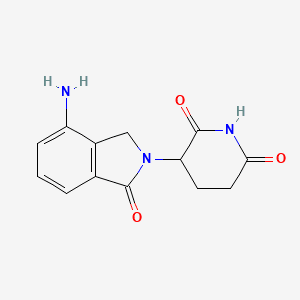
Pharmacotherapeutic group: Other immunosuppressants. ATC code: L04AX04.
Mechanism of action
Lenalidomide binds directly to cereblon, a component of a cullin ring E3 ubiquitin ligase enzyme complex that includes deoxyribonucleic acid (DNA) damage-binding protein 1(DDB1), cullin 4 (CUL4), and regulator of cullins 1 (Roc1). In haematopoietic cells, lenalidomide binding to cereblon recruits substrate proteins Aiolos and Ikaros, lymphoid transcriptional factors, leading to their ubiquitination and subsequent degradation resulting in cytotoxic and immunomodulatory effects.
Specifically, lenalidomide inhibits proliferation and enhances apoptosis of certain haematopoietic tumour cells (including MM plasma tumour cells, follicular lymphoma tumour cells and those with deletions of chromosome 5), enhances T cell- and Natural Killer (NK) cell-mediated immunity and increases the number of NK, T and NK T cells. In MDS Del (5q), lenalidomide selectively inhibits the abnormal clone by increasing the apoptosis of Del (5q) cells.
The combination of lenalidomide and rituximab increases ADCC and direct tumor apoptosis in follicular lymphoma cells.
The lenalidomide mechanism of action also includes additional activities such as anti-angiogenic and pro-erythropoietic properties. Lenalidomide inhibits angiogenesis by blocking the migration and adhesion of endothelial cells and the formation of microvessels, augments foetal haemoglobin production by CD34+ haematopoietic stem cells, and inhibits production of pro-inflammatory cytokines (e.g., TNF-α and IL-6) by monocytes.
Clinical efficacy and safety
Lenalidomide efficacy and safety have been evaluated in six phase 3 studies in newly diagnosed multiple myeloma and two phase 3 studies in relapsed refractory multiple myeloma, one phase 3 study and one phase 2 study in myelodysplastic syndromes and one phase 2 study in mantle cell lymphoma and one phase 3 and one phase 3b study in iNHL as described below.
Newly diagnosed multiple myeloma
• Lenalidomide maintenance in patients who have undergone ASCT
The efficacy and safety of lenalidomide maintenance was assessed in two phase 3 multicenter, randomised, double-blind 2-arm, parallel group, placebo-controlled studies: CALGB 100104 and IFM 2005-02.
CALGB 100104
Patients between 18 and 70 years of age with active MM requiring treatment and without prior progression after initial therapy were eligible.
Patients were randomised 1:1 within 90-100 days after ASCT to receive either lenalidomide or placebo maintenance. The maintenance dose was 10 mg once daily on days 1-28 of repeated 28-day cycles (increased up to 15 mg once daily after 3 months in the absence of dose-limiting toxicity), and treatment was continued until disease progression.
The primary efficacy endpoint in the study was progression free survival (PFS) from randomisation to the date of progression or death, whichever occurred first; the study was not powered for the overall survival endpoint. In total 460 patients were randomised: 231 patients to lenalidomide and 229 patients to placebo. The demographic and disease-related characteristics were balanced across both arms.
The study was unblinded upon the recommendations of the data monitoring committee after surpassing the threshold for a preplanned interim analysis of PFS. After unblinding, patients in the placebo arm were allowed to cross over to receive lenalidomide before disease progression.
The results of PFS at unblinding, following a preplanned interim analysis, using a cut-off of 17 December 2009 (15.5 months follow up) showed a 62% reduction in risk of disease progression or death favouring lenalidomide (HR=0.38; 95% CI 0.27, 0.54; p <0.001). The median overall PFS was 33.9 months (95% CI NE, NE) in the lenalidomide arm versus 19.0 months (95% CI 16.2, 25.6) in the placebo arm.
The PFS benefit was observed both in the subgroup of patients with CR and in the subgroup of patients who had not achieved a CR.
The results for the study, using a cut-off of 1 February 2016, are presented in Table 7.
Table 7: Summary of overall efficacy data
Lenalidomide
(N=231)
Placebo
(N=229)
Investigator-assessed PFS
Median
a
PFS time, months (95% CI)
b
56.9
(41.9, 71.7)
29,4
(20.7, 35.5)
HR [95% CI]
c
; p-value
d
0.61
(0.48, 0.76); <0.001
PFS2
e
Median
a
PFS2 time, months (95% CI)
b
80.2
(63.3, 101.8)
52.8
(41.3, 64.0)
HR [95% CI]
c
; p-value
d
0.61
(0.48, 0.78); <0.001
Overall survival
Median
a
OS time, months (95% CI)
b
111.0
(101.8, NE)
84.2
(71.0, 102.7)
8-year survival rate, % (SE)
60.9 (3.78)
44.6 (3.98)
HR [95% CI]
c
; p-value
d
0.61
(0.46, 0.81); <0.001
Follow-up
Median
f
(min, max), months: all surviving patients
81.9
(0.0, 119.8)
81.0
(4.1, 119.5)
CI=confidence interval; HR=hazard ratio; max=maximum; min=minimum; NE=not estimable; OS=overall survival; PFS=progression-free survival;
a
The median is based on the Kaplan-Meier estimate.
b
The 95% CI about the median.
c
Based on Cox proportional hazards model comparing the hazard functions associated with the indicated treatment arms.
d
The p-value is based on the unstratified log-rank test of Kaplan-Meier curve differences between the indicated treatment arms.
e
Exploratory endpoint (PFS2). Lenalidomide received by subjects in the placebo arm who crossed over prior to PD upon study unblinding was not considered as a second-line therapy.
f
Median follow-up post-ASCT for all surviving subjects.
Data cuts:
17 Dec 2009 and 01 Feb 2016
IFM 2005-02
Patients aged <65 years at diagnosis who had undergone ASCT and had achieved at least a stable disease response at the time of hematologic recovery were eligible. Patients were randomised 1:1 to receive either lenalidomide or placebo maintenance (10 mg once daily on days 1-28 of repeated 28-day cycles increased up to 15 mg once daily after 3 months in the absence of dose-limiting toxicity) following 2 courses of lenalidomide consolidation (25 mg/day, days 1-21 of a 28-day cycle). Treatment was to be continued until disease progression.
The primary endpoint was PFS defined from randomisation to the date of progression or death, whichever occurred first; the study was not powered for the overall survival endpoint. In total 614 patients were randomised: 307 patients to lenalidomide and 307 patients to placebo.
The study was unblinded upon the recommendations of the data monitoring committee after surpassing the threshold for a preplanned interim analysis of PFS. After unblinding, patients receiving placebo were not crossed over to lenalidomide therapy prior to progressive disease. The lenalidomide arm was discontinued, as a proactive safety measure, after observing an imbalance of SPMs (see section 4.4).
The results of PFS at unblinding, following a preplanned interim analysis, using a cut-off of 7 July 2010 (31.4 months follow up) showed a 48% reduction in risk of disease progression or death favouring lenalidomide (HR=0.52; 95% CI 0.41, 0.66; p <0.001). The median overall PFS was 40.1 months (95% CI 35.7, 42.4) in the lenalidomide arm versus 22.8 months (95% CI 20.7, 27.4) in the placebo arm.
The PFS benefit was less in the subgroup of patients with CR than in the subgroup of patients who had not achieved a CR.
The updated PFS, using a cut-off of 1 February 2016 (96.7 months follow up) continues to show a PFS advantage: HR=0.57 (95% CI 0.47, 0.68; p <0.001). The median overall PFS was 44.4 months (39.6, 52.0) in the lenalidomide arm versus 23.8 months (95% CI 21.2, 27.3) in the placebo arm. For PFS2, the observed HR was 0.80 (95% CI 0.66, 0.98; p=0.026) for lenalidomide versus placebo. The median overall PFS2 was 69.9 months (95% CI 58.1, 80.0) in the lenalidomide arm versus 58.4 months (95% CI 51.1, 65.0) in the placebo arm. For OS, the observed HR was 0.90: (95% CI 0.72, 1.13; p=0.355) for lenalidomide versus placebo. The median overall survival time was 105.9 months (95% CI 88.8, NE) in the lenalidomide arm versus 88.1 months (95% CI 80.7, 108.4) in the placebo arm.
• Lenalidomide in combination with bortezomib and dexamethasone in patients who are not eligible for stem cell transplantation
The SWOG S0777 study evaluated the addition of bortezomib to a foundation of lenalidomide and dexamethasone, as initial treatment, followed by continued Rd until disease progression, in patients with previously untreated multiple myeloma who are either ineligible for transplant or eligible for transplant with no plan to undertake immediate transplant.
Patients in the lenalidomide, bortezomib and dexamethasone (RVd) arm received lenalidomide 25 mg/day orally on days 1-14, intravenous bortezomib 1.3 mg/m
2
on days 1, 4, 8, and 11, and dexamethasone 20 mg/day orally on days 1, 2, 4, 5, 8, 9, 11, and 12 of repeated 21-day cycles for up to eight 21-day cycles (24 weeks). Patients in the lenalidomide and dexamethasone (Rd) arm received lenalidomide 25 mg/day orally on days 1-21, and dexamethasone 40 mg/day orally on days 1, 8, 15, and 22 of repeated 28-day cycles for up to six 28-day cycles (24 weeks). Patients in both arms took continued Rd: lenalidomide 25 mg/day orally on days 1-21 and dexamethasone 40 mg/day orally on days 1, 8, 15, and 22 of repeated 28-day cycles. Treatment was to be continued until disease progression.
The primary efficacy endpoint in the study was progression free survival (PFS). In total 523 patients were enrolled into the study, with 263 patients randomised to RVd and 260 patients randomised to Rd. The demographics and disease-related baseline characteristics of the patients were well balanced between arms.
The results of PFS, as assessed by IRAC, at the time of the primary analysis, using a cut-off of 05 November 2015 (50.6 months follow up) showed a 24% reduction in risk of disease progression or death favouring RVd (HR = 0.76; 95% CI 0.61, 0.94; p = 0.010). The median overall PFS was 42.5 months (95% CI 34.0, 54.8) in the RVd arm versus 29.9 months (95% CI 25.6, 38.2) in the Rd arm. The benefit was observed regardless of eligibility for stem cell transplant.
The results for the study, using a cut-off of 01 December 2016, where the median follow-up time for all surviving subjects was 69.0 months, are presented in Table 8. The benefit favouring RVd was observed regardless of eligibility for stem cell transplant.
Table 8. Summary of overall efficacy data
Initial treatment
RVd
(3-week cycles
X
8)
(N = 263)
Rd
(4-week cycles
X
6)
(N = 260)
IRAC-assessed PFS (months)
Median
a
PFS time, months (95% CI)
b
41.7
(33.1, 51.5)
29.7
(24.2, 37.8)
HR [95% CI]
c
; p-value
d
0.76
(0.62, 0.94); 0.010
Overall survival (months)
Median
a
OS time, months (95% CI)
b
89.
1 (76.1, NE)
67.2
(58.4, 90.8)
HR [95% CI]
c
; p-value
d
0.72
(0.56, 0.94); 0.013
Response – n (%)
Overall response: CR, VGPR, or PR
199 (75.7)
170 (65.4)
≥ VGPR
153 (58.2)
83 (31.9)
Follow-up (months)
Median
e
(min, max): all patients
61.6 (0.2, 99.4)
59.4 (0.4, 99.1)
CI = confidence interval; HR = hazard ratio; max = maximum; min = minimum; NE = not estimable; OS = overall survival; PFS = progression-free survival.
a
The median 0is based on Kaplan-Meier estimate.
b
Two-sided 95% CI about the median time.
c
Based on unstratified Cox proportional hazards model comparing hazard functions associated with treatment arms (RVd:Rd).
d
The p-value is based on unstratified log-rank test.
e
Median follow-up was calculated from the date of randomization.
Data cutoff date
= 01 Dec 2016.
Updated OS results, using a cut-off of 01 May 2018 (84.2 months median follow-up for surviving subjects) continue to show an OS advantage favouring RVd: HR = 0.73 (95% CI 0.57, 0.94; p=0.014). The proportion of subjects alive after 7 years was 54.7% in the RVd arm versus 44.7% in the Rd arm.
• Lenalidomide in combination with dexamethasone in patients who are not eligible for stem cell transplantation
The safety and efficacy of lenalidomide was assessed in a phase 3, multicenter, randomized, open-label, 3-arm study (MM-020) of patients who were at least 65 years of age or older or, if younger than 65 years of age, were not candidates for stem cell transplantation because they declined to undergo stem cell transplantation or stem cell transplantation is not available to the patient due to cost or other reason. The study (MM-020) compared lenalidomide and dexamethasone (Rd) given for 2 different durations of time (i.e., until progressive disease [Arm Rd] or for up to eighteen 28-day cycles [72 weeks, Arm Rd18]) to melphalan, prednisone and thalidomide (MPT) for a maximum of twelve 42-day cycles (72 weeks). Patients were randomized (1:1:1) to 1 of 3 treatment arms. Patients were stratified at randomization by age (≤75 versus >75 years), stage (ISS Stages I and II versus Stage III), and country.
Patients in the Rd and Rd18 arms took lenalidomide 25 mg once daily on days 1 to 21 of 28-day cycles according to protocol arm. Dexamethasone 40 mg was dosed once daily on days 1, 8, 15, and 22 of each 28-day cycle. Initial dose and regimen for Rd and Rd18 were adjusted according to age and renal function (see section 4.2). Patients >75 years received a dexamethasone dose of 20 mg once daily on days 1, 8, 15, and 22 of each 28-day cycle. All patients received prophylactic anticoagulation (low molecular weight heparin, warfarin, heparin, low-dose aspirin) during the study.
X
The primary efficacy endpoint in the study was progression free survival (PFS). In total 1623 patients were enrolled into the study, with 535 patients randomized to Rd, 541 patients randomized to Rd18 and 547 patients randomized to MPT. The demographics and disease-related baseline characteristics of the patients were well balanced in all 3 arms. In general, study subjects had advanced-stage disease: of the total study population, 41% had ISS stage III, 9% had severe renal insufficiency (creatinine clearance [CLcr] <30 mL/min). The median age was 73 in the 3 arms.
In an updated analysis of PFS, PFS2 and OS using a cut off of 3 March 2014 where the median follow up time for all surviving subjects was 45.5 months, the results of the study are presented in Table 9:
Table 9: Summary of overall efficacy data
Rd
(N=535)
Rd18
(N=541)
MPT
(N=547)
Investigator-assessed PFS - (months)
Median
a
PFS time, months (95% CI)
b
26.0 (20.7, 29.7)
21.0 (19.7, 22.4)
21.9 (19.8, 23.9)
HR [95% CI]
c
; p-value
d
Rd vs MPT
0.69 (0.59, 0.80); <0.001
Rd vs Rd18
0.71 (0.61, 0.83); <0.001
Rd18 vs MPT
0.99 (0.86, 1.14); 0.866
PFS2
e
- (months)
Median
a
PFS2 time, months (95% CI)
b
42.9 (38.1, 47.4)
40.0 (36.2, 44.2)
35.0 (30.4, 37.8)
HR [95% CI]
c
; p-value
d
Rd vs MPT
0.74 (0.63, 0.86); <0.001
Rd vs Rd18
0.92 (0.78, 1.08); 0.316
Rd18 vs MPT
0.80 (0.69, 0.93); 0.004
Overall survival (months)
Median
a
OS time, months (95% CI)
b
58.9 (56.0, NE)
56.7 (50.1, NE)
48.5 (44.2, 52.0)
HR [95% CI]
c
; p-value
d
Rd vs MPT
0.75 (0.62, 0.90); 0.002
Rd vs Rd18
0.91 (0.75, 1.09); 0.305
Rd18 vs MPT
0.83 (0.69, 0.99); 0.034
Follow-up (months)
Median
f
(min, max): all patients
40.8 (0.0, 65.9)
40.1 (0.4, 65.7)
38.7 (0.0, 64.2)
Myeloma response
g
n (%)
CR
81 (15.1)
77 (14.2)
51 (9.3)
VGPR
152 (28.4)
154 (28.5)
103 (18.8)
PR
169 (31.6)
166 (30.7)
187 (34.2)
Overall response: CR, VGPR, or PR
402 (75.1)
397 (73.4)
341 (62.3)
Duration of response - (months)
h
Median
a
(95% CI)
b
35.0 (27.9, 43.4)
22.1 (20.3, 24.0)
22.3 (20.2, 24.9)
AMT=antimyeloma therapy; CI=confidence interval; CR=complete response; d=low-dose dexamethasone; HR=hazard ratio; IMWG=International Myeloma Working Group; IRAC=Independent Response Adjudication Committee; M=melphalan; max=maximum; min=minimum; NE=not estimable; OS=overall survival; P=prednisone; PFS=progression-free survival; PR=partial response; R=lenalidomide; Rd=Rd given until documentation of progressive disease; Rd18=Rd given for ≤ 18 cycles; SE=standard error; T=thalidomide; VGPR=very good partial response; vs=versus.
a
The median is based on the Kaplan-Meier estimate.
b
The 95% CI about the median.
c
Based on Cox proportional hazards model comparing the hazard functions associated with the indicated treatment arms.
d
The p-value is based on the unstratified log-rank test of Kaplan-Meier curve differences between the indicated treatment arms.
e
Exploratory endpoint (PFS2)
f
The median is the univariate statistic without adjusting for censoring.
g
Best assessment of adjudicated response during the treatment phase of the study (for definitions of each response category, Data cut-off date=24 May 2013).
h
data cut 24 May 2013
• Lenalidomide in combination with melphalan and prednisone followed by maintenance therapy in patients who are not eligible for transplant
The safety and efficacy of lenalidomide was assessed in a phase 3 multicenter, randomized double blind 3 arm study (MM-015) of patients who were 65 years or older and had a serum creatinine <2.5 mg/dL. The study compared lenalidomide in combination with melphalan and prednisone (MPR) with or without lenalidomide maintenance therapy until disease progression, to that of melphalan and prednisone for a maximum of 9 cycles. Patients were randomized in a 1:1:1 ratio to one of 3 treatment arms. Patients were stratified at randomisation by age (≤75 vs. >75 years) and stage (ISS; Stages I and II vs. stage III).
This study investigated the use of combination therapy of MPR (melphalan 0.18 mg/kg orally on days 1 to 4 of repeated 28-day cycles; prednisone 2 mg/kg orally on days 1 to 4 of repeated 28-day cycles; and lenalidomide 10 mg/day orally on days 1 to 21 of repeated 28-day cycles) for induction therapy, up to 9 cycles. Patients who completed 9 cycles or who were unable to complete 9 cycles due to intolerance proceeded to maintenance therapy starting with lenalidomide 10 mg orally on days 1 to 21 of repeated 28-day cycles until disease progression.
The primary efficacy endpoint in the study was progression free survival (PFS). In total 459 patients were enrolled into the study, with 152 patients randomized to MPR+R, 153 patients randomized to MPR+p and 154 patients randomized to MPp+p. The demographics and disease-related baseline characteristics of the patients were well balanced in all 3 arms; notably, approximately 50% of the patients enrolled in each arm had the following characteristics; ISS Stage III, and creatinine clearance <60 mL/min. The median age was 71 in the MPR+R and MPR+p arms and 72 in the MPp+p arm.
In an analysis of PFS, PFS2, OS using a cut off of April 2013 where the median follow up time for all surviving subjects was 62.4 months, the results of the study are presented in Table 10:
Table 10: Summary of overall efficacy data
MPR+R
(N=152)
MPR+p
(N=153)
MPp +p
(N=154)
Investigator-assessed PFS - (months)
Median
a
PFS time, months (95% CI)
27.4 (21.3, 35.0)
14.3 (13.2, 15.7)
13.1 (12.0, 14.8)
HR [95% CI]; p-value
MPR+R vs MPp+p
0.37 (0.27, 0.50); <0.001
MPR+R vs MPR+p
0.47 (0.35, 0.65); <0.001
MPR+p vs MPp +p
0.78 (0.60, 1.01); 0.059
PFS2 - (months)
¤
Median
a
PFS2 time, months (95% CI)
39.7 (29.2, 48.4)
27.8 (23.1, 33.1)
28.8 (24.3, 33.8)
HR [95% CI]; p-value
MPR+R vs MPp+p
0.70 (0.54, 0.92); 0.009
MPR+R vs MPR+p
0.77 (0.59, 1.02); 0.065
MPR+p vs MPp +p
0.92 (0.71, 1.19); 0.051
Overall survival (months)
Median
a
OS time, months (95% CI)
55.9 (49.1, 67.5)
51.9 (43.1, 60.6)
53.9 (47.3, 64.2)
HR [95% CI]; p-value
MPR+R vs MPp+p
0.95 (0.70, 1.29); 0.736
MPR+R vs MPR+p
0.88 (0.65, 1.20); 0.43
MPR+p vs MPp +p
1.07 (0.79, 1.45); 0.67
Follow-up (months)
Median (min, max): all patients
48.4 (0.8, 73.8)
46.3 (0.5, 71.9)
50.4 (0.5, 73.3)
Investigator-assessed Myeloma response n (%)
CR
30 (19.7)
17 (11.1)
9 (5.8)
PR
90 (59.2)
99 (64.7)
75 (48.7)
Stable Disease (SD)
24 (15.8)
31 (20.3)
63 (40.9)
Response Not Evaluable (NE)
8 (5.3)
4 (2.6)
7 (4.5)
Investigator-assessed Duration of response (CR+PR) - (months)
Median
a
(95% CI)
26.5 (19.4, 35.8)
12.4 (11.2, 13.9)
12.0 (9.4, 14.5)
CI=confidence interval; CR=complete response; HR=Hazard Rate; M=melphalan; NE=not estimable; OS=overall survival; p=placebo; P=prednisone; PD=progressive disease; PR=partial response; R=lenalidomide; SD=stable disease; VGPR=very good partial response.
a
The median is based on the Kaplan-Meier estimate
¤
PFS2 (an exploratory endpoint) was defined for all patients (ITT) as time from randomization to start of 3rd line antimyeloma therapy (AMT) or death for all randomized patients
Supportive newly diagnosed multiple myeloma studies
An open-label, randomized, multicenter, phase 3 study (ECOG E4A03) was conducted in 445 patients with newly diagnosed multiple myeloma; 222 patients were randomized to the lenalidomide/low dose dexamethasone arm, and 223 were randomized to the lenalidomide/standard dose dexamethasone arm.
Patients randomized to the lenalidomide/standard dose dexamethasone arm received lenalidomide 25 mg/day, days 1 to 21 every 28 days plus dexamethasone 40 mg/day on days 1 to 4, 9 to 12, and 17 to 20 every 28 days for the first four cycles. Patients randomized to the lenalidomide/low dose dexamethasone arm received lenalidomide 25 mg/day, days 1 to 21 every 28 days plus low dose dexamethasone – 40 mg/day on days 1, 8, 15, and 22 every 28 days. In the lenalidomide/low dose dexamethasone group, 20 patients (9.1%) underwent at least one dose interruption compared to 65 patients (29.3%) in the lenalidomide/standard dose dexamethasone arm.
In a post-hoc analysis, lower mortality was observed in the lenalidomide/low dose dexamethasone arm 6.8% (15/220) compared to the lenalidomide/standard dose dexamethasone arm 19.3% (43/223), in the newly diagnosed multiple myeloma patient population, with a median follow up of 72.3 weeks.
However, with a longer follow-up, the difference in overall survival in favour of lenalidomide/ low dose dexamethasone tends to decrease.
Multiple myeloma with at least one prior therapy
The efficacy and safety of lenalidomide were evaluated in two phase 3 multi-centre, randomised, double-blind, placebo-controlled, parallel-group controlled studies (MM-009 and MM-010) of lenalidomide plus dexamethasone therapy versus dexamethasone alone in previously treated patients with multiple myeloma. Out of 353 patients in the MM-009 and MM-010 studies who received lenalidomide/dexamethasone, 45.6% were aged 65 or over. Of the 704 patients evaluated in the MM-009 and MM-010 studies, 44.6% were aged 65 or over.
In both studies, patients in the lenalidomide/dexamethasone (len/dex) group took 25 mg of lenalidomide orally once daily on days 1 to 21 and a matching placebo capsule once daily on days 22 to 28 of each 28-day cycle. Patients in the placebo/dexamethasone (placebo/dex) group took 1 placebo capsule on days 1 to 28 of each 28-day cycle. Patients in both treatment groups took 40 mg of dexamethasone orally once daily on days 1 to 4, 9 to 12, and 17 to 20 of each 28-day cycle for the first 4 cycles of therapy. The dose of dexamethasone was reduced to 40 mg orally once daily on days 1 to 4 of each 28-day cycle after the first 4 cycles of therapy. In both studies, treatment was to continue until disease progression. In both studies, dose adjustments were allowed based on clinical and laboratory finding.
The primary efficacy endpoint in both studies was time to progression (TTP). In total, 353 patients were evaluated in the MM-009 study; 177 in the len/dex group and 176 in the placebo/dex group and, in total, 351 patients were evaluated in the MM-010 study; 176 in the len/dex group and 175 in the placebo/dex group.
In both studies, the baseline demographic and disease-related characteristics were comparable between the len/dex and placebo/dex groups. Both patient populations presented a median age of 63 years, with a comparable male to female ratio. The ECOG performance status was comparable between both groups, as was the number and type of prior therapies.
Pre-planned interim analyses of both studies showed that len/dex was statistically significantly superior (p <0.00001) to dexamethasone alone for the primary efficacy endpoint, TTP (median follow-up duration of 98.0 weeks). Complete response and overall response rates in the len/dex arm were also significantly higher than the placebo/dex arm in both studies. Results of these analyses subsequently led to an unblinding in both studies, in order to allow patients in the placebo/dex group to receive treatment with the len/dex combination.
An extended follow-up efficacy analysis was conducted with a median follow-up of 130.7 weeks. Table 11 summarises the results of the follow-up efficacy analyses – pooled studies MM-009 and MM-010.
In this pooled extended follow-up analysis, the median TTP was 60.1 weeks (95% CI: 44.3, 73.1) in patients treated with len/dex (N=353) versus 20.1 weeks (95% CI: 17.7, 20.3) in patients treated with placebo/dex (N=351). The median progression free survival was 48.1 weeks (95% CI: 36.4, 62.1) in patients treated with len/dex versus 20.0 weeks (95% CI: 16.1, 20.1) in patients treated with placebo/dex. The median duration of treatment was 44.0 weeks (min: 0.1, max: 254.9) for len/dex and 23.1 weeks (min: 0.3, max: 238.1) for placebo/dex. Complete response (CR), partial response (PR) and overall response (CR+PR) rates in the len/dex arm remain significantly higher than in the placebo/dex arm in both studies. The median overall survival in the extended follow-up analysis of the pooled studies is 164.3 weeks (95% CI: 145.1, 192.6) in patients treated with len/dex versus 136.4 weeks (95% CI: 113.1, 161.7) in patients treated with placebo/dex. Despite the fact that 170 out of the 351 patients randomised to placebo/dex received lenalidomide after disease progression or after the studies were unblinded, the pooled analysis of overall survival demonstrated a statistically significant survival advantage for len/dex relative to placebo/dex (HR=0.833, 95% CI=[0.687, 1.009], p=0.045).
Table 11: Summary of results of efficacy analyses as of cut-off date for extended follow-up — pooled studies MM-009 and MM-010 (cut-offs 23 July 2008 and 2 March 2008, respectively)
Endpoint
len/dex
(N=353)
placebo/dex
(N=351)
Time to event
HR [95% CI], p-value
a
Time to progression
Median [95% CI], weeks
60.1
[44.3, 73.1]
20.1
[17.7, 20.3]
0.350 [0.287, 0.426],
p<0.001
Progression free survival
Median [95% CI], weeks
48.1
[36.4, 62.1]
20.0
[16.1, 20.1]
0.393 [0.326, 0.473],
p<0.001
Overall survival
Median [95% CI], weeks
1-year Overall survival rate
164.3
[145.1, 192.6]
82%
136.4
[113.1, 161.7]
75%
0.833 [0.687, 1.009]
p=0.045
Response rate
Odds ratio [95% CI], p-value
b
Overall response [n, %]
212 (60.1)
75 (21.4)
5.53 [3.97, 7.71], p<0.001
Complete response [n, %]
58 (16.4)
11 (3.1)
6.08 [3.13, 11.80], p<0.001
a
Two-tailed log rank test comparing survival curves between treatment groups.
b
Two-tailed continuity-corrected chi-square test.
Follicular lymphoma
AUGMENT - CC-5013-NHL-007
The efficacy and safety of lenalidomide in combination with rituximab versus rituximab plus placebo was evaluated in patients with relapsed/refractory iNHL including FL in a phase 3, multicentre, randomised, double- blind controlled study (CC-5013-NHL-007 [AUGMENT]).
A total of 358 patients who were at least 18 years of age with histologically confirmed MZL or Grade 1, 2 or 3a FL (CD20+ by flow cytometry or histochemistry) as assessed by the investigator or local pathologist were randomised in a 1:1 ratio. Subjects had been previously treated with at least one prior systemic chemotherapy, immunotherapy or chemoimmunotherapy.
Lenalidomide was administered orally 20 mg once daily for the first 21 days of repeating 28-day cycles for 12 cycles or until unacceptable toxicity. The dose of rituximab was 375 mg/m
2
every week in Cycle 1 (days 1, 8, 15, and 22) and on day 1 of every 28-day cycle from cycles 2 through 5. All dosage calculations for rituximab were based on the patient's body surface area (BSA), using actual patient weight.
The demographic and disease-related baseline characteristics were similar across the 2 treatment groups.
The primary objective of the study was to compare the efficacy of lenalidomide in combination with rituximab to rituximab plus placebo in subjects with relapsed/refractory FL Grade 1, 2 or 3a or MZL.
Efficacy determination was based upon PFS as the primary endpoint, as assessed by the IRC using the 2007 International Working Group (IWG) criteria but without positron emission tomography (PET).
The secondary objectives of the study were to compare the safety of lenalidomide in combination with rituximab versus rituximab plus placebo. Further secondary objectives were to compare the efficacy of rituximab plus lenalidomide versus rituximab plus placebo using the following other parameters of efficacy: Overall response rate (ORR), CR rate, and duration of response (DoR) by IWG 2007 without PET and OS.
Results from the overall population including FL and MZL showed that at a median follow up of 28.3°months, the study met its primary endpoint of PFS with a hazard ratio (HR) (95% confidence interval [CI]) of 0.45 (0.33,0.61) p-value < 0.0001. The efficacy results from the follicular lymphoma population are presented in Table 12.
Table 12: Summary of follicular lymphoma efficacy data- Study CC-5013-NHL-007
FL
(N = 295)
Lenalidomide and Rituximab
(N = 147)
Placebo and Rituximab
(N = 148)
Progression-free survival (PFS) (EMA Censoring Rules)
Median PFS
a
(95% CI) (months)
39.4
(25.1, NE)
13.8
(11.2, 16.0)
HR [95% CI]
0.40 (0.29, 0.55)
b
p-value
< 0.0001
c
Objective response
d
(CR +PR), n (%)
(
IRC, 2007
IWGRC
)
95% CI
f
118 (80.3)
(72.9, 86.4)
82 (55.4)
(47.0, 63.6)
Complete response
d
, n (%)
(IRC, 2007 IWGRC)
95 % CI
f
51 (34.7)
(27.0, 43.0)
29 (19.6)
(13.5, 26.9)
Duration of response
d
(median)
(months)
95% CI
a
36.6
(24.9, NE)
15.5
(11.2, 25.0)
Overall Survival
d,e
(OS)
OS rate at 5 years, n %
95 % CI
126 (85.9)
(78.6, 90.9)
114 (77.0)
(68.9, 83.3)
HR [95% CI]
0.49 (0.28, 0.85)
b
Follow up
Median duration of follow-up (min, max) (months)
67.81
(0.5, 89.3)
65.72
(0.6, 90.9)
ª Median estimate from Kaplan-Meier analysis
b
Hazard ratio and its confidence interval were estimated from unstratified Cox proportional hazard model.
c
P-value from log-rank test
d
Secondary and exploratory endpoints are not α-controlled
e
With a median follow up of 66.14months, there were 19 deaths in the R2 arm and 38deaths in the Control Arm.
f
Exact confidence interval for binomial distribution.
Follicular lymphoma for patients refractory to Rituximab
MAGNIFY - CC-5013-NHL-008
A total of 232 subjects who were at least 18 years of age with histologically confirmed FL (Grade 1, 2, 3a or MZL), as assessed by the investigator or local pathologist, were enrolled into the initial treatment period with 12 cycles of lenalidomide plus rituximab. Subjects who achieved CR/CRu, PR, or SD by the end of the induction treatment period were randomised to enter the maintenance treatment period. All enrolled subjects must have previously been treated with at least one prior systemic antilymphoma therapy. In contrast to study NHL-007, the NHL-008 study included patients who were refractory to rituximab (no response or relapsed within 6 months of rituximab treatment or who were double-refractory to rituximab and chemotherapy).
During the induction treatment period, lenalidomide 20 mg was given on Days 1-21 of repeated 28-day cycles for up to 12 cycles or until unacceptable toxicity, or withdrawal of consent or disease progression. The dose of rituximab was 375 mg/m
2
every week in Cycle 1 (Days 1, 8, 15, and 22) and on Day 1 of every other 28-day cycle (cycles 3, 5, 7, 9, and 11) up to 12 cycles therapy. All dosage calculations for rituximab were based on the patient body surface area (BSA) and actual weight.
The data presented are based on an interim analysis focusing on the single-arm induction treatment period. Efficacy determinations are based on ORR by best response as the primary endpoint, using a modification of the 1999 International Working Group Response Criteria (IWGRC). The secondary objective was to evaluate other parameters of efficacy, such as DoR.
Table 13: Summary of overall efficacy data (Induction Treatment Period) - Study CC-5013-NHL-008
All subjects
FL Subjects
Total
N=187
a
Rituximab
Refractory:
Yes
N=77
Rituximab
Refractory:
No
N=110
Total
N=148
Rituximab
Refractory:
Yes
N=60
Rituximab
Refractory:
No
N=88
ORR, n (%)
(CR+CRu+PR)
127 (67.9)
45 (58.4)
82 (75.2)
104 (70.3)
35 (58.3)
69 (79.3)
CRR, n (%)
(CR+Cru)
79 (42.2)
27 (35.1)
52 (47.7)
62 (41.9)
20 (33.3)
42 (48.3)
Number of Responders
N=127
N=45
N=82
N=104
N=35
N=69
% of Subjects with DoR
b
≥ 6 months (95% CI)
c
93.0
(85.1, 96.8)
90.4
(73.0, 96.8)
94.5
(83.9, 98.2)
94.3
(85.5, 97.9)
96.0
(74.8, 99.4)
93.5
(81.0, 97.9)
% of Subjects with DoR
b
≥ 12 months (95% CI)
c
79.1
(67.4, 87.0)
73.3
(51.2, 86.6)
82.4
(67.5, 90.9)
79.5
(65.5, 88.3)
73.9
(43.0, 89.8)
81.7
(64.8, 91.0)
CI = confidence interval; DOR = duration of response; FL = follicular lymphoma
a
Primary Analysis Population for this study is induction efficacy evaluable (IEE) population.
b
Duration of response is defined as the time (months) from the initial response (at least PR) to documented disease progression or death, whichever occurs first.
c
Statistics obtained from Kaplan-Meier method. 95% CI is based on Greenwood formula.
Notes: The analysis is only performed for subjects who have achieved PR or better after the first dose date of induction therapy and prior to any Maintenance Period treatment and any subsequent anti-lymphoma therapy in Induction Period. Percentage is based on the total number of responders.
Paediatric population
The European Medicines Agency has granted a product-specific waiver for Lenalidomide that applies to all subsets of the paediatric population for mature B-cell neoplasm conditions (see section 4.2 for information on paediatric use).
⚠️ Warnings
Capsules should not be opened or crushed. If powder from Lenalidomide Capsules makes contact with the skin, the skin should be washed immediately and thoroughly with soap and water. If lenalidomide makes contact with the mucous membranes, they should be thoroughly flushed with water.
Healthcare professionals and caregivers should wear disposable gloves when handling the blister or capsule.
Gloves should then be removed carefully to prevent skin exposure, placed in a sealable plastic polyethylene bag and disposed of in accordance with local requirements. Hands should then be washed thoroughly with soap and water. Women who are pregnant or suspect they may be pregnant should not handle the blister or capsule (see section 4.4).
Any unused medicinal product or waste material should be disposed of in accordance with local requirements.