This information is for educational purposes only. It is not intended as medical advice. Always consult a qualified healthcare professional.
Rx
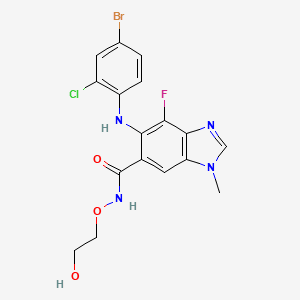
Koselugo
10 mg, Kapsułki twarde
INN: Selumetinibum
Data updated: 2026-04-13
Available in:
🇨🇿🇩🇪🇬🇧🇵🇱🇵🇹🇸🇰
Form
Kapsułki twarde
Dosage
10 mg
Route
doustna
Storage
—
About This Product
User Reviews
Reviews reflect personal experiences and are not medical advice. Always consult your doctor.
Manufacturer
AstraZeneca AB (Szwecja)
Composition
Selumetinibum 10 mg
ATC Code
L01EE04
Source
URPL
Pharmacotherapeutic group: Antineoplastic agents, protein kinase inhibitor, ATC code
:
L01EE04
Mechanism of action
Selumetinib is a selective inhibitor of mitogen activated protein kinase kinases 1 and 2 (MEK 1/2). Selumetinib blocks MEK activity and the RAF-MEK-ERK pathway. Therefore, MEK inhibition can block the proliferation and survival of tumour cells in which the RAF-MEK-ERK pathway is activated.
Clinical efficacy
The efficacy of Koselugo was evaluated in an open-label, multi-centre, single-arm study (SPRINT) Phase II Stratum 1 of 50 paediatric patients with NF1 inoperable PN that caused significant morbidity. Inoperable PN was defined as a PN that could not be surgically completely removed without risk for substantial morbidity due to encasement of, or close proximity to, vital structures, invasiveness, or high vascularity of the PN. Patients were excluded for the following ocular toxicities: any current or past history of CSR, current or past history of RVO, known intraocular pressure > 21 mmHg (or upper limit of normal adjusted by age) or uncontrolled glaucoma. Patients received 25 mg/m
2
(BSA) twice daily, for 28 days (1 treatment cycle), on a continuous dosing schedule. Treatment was discontinued if a patient was no longer deriving clinical benefit, experienced unacceptable toxicity or PN progression, or at the discretion of the investigator.
The target PN, the PN that caused relevant clinical symptoms or complications (PN-related morbidities), was evaluated for response rate using centrally read volumetric magnetic resonance imaging (MRI) analysis per Response Evaluation in Neurofibromatosis and Schwannomatosis (REiNS) criteria. Tumour response was evaluated at baseline and while on treatment after every 4 cycles for 2 years, and then every 6 cycles.
Patients had target PN MRI volumetric evaluations and clinical outcome assessments, which included functional assessments and patient reported outcomes.
At enrolment, the median age of the patients was 10.2 years (range: 3.5 to 17.4 years), 60% were male and 84% were Caucasian.
The median target PN volume at baseline was 487.5 mL (range: 5.6 - 3820 mL). PN-related morbidities that were present in ≥ 20% of patients included disfigurement, motor dysfunction, pain, airway dysfunction, visual impairment, and bladder/bowel dysfunction.
The primary efficacy endpoint was objective response rate (ORR), defined as the percentage of patients with complete response (defined as disappearance of the target PN) or confirmed partial response (defined as ≥ 20% reduction in PN volume, confirmed at a subsequent tumour assessment within 3-6 months), based on National Cancer Institute (NCI) centralised review. Duration of response (DoR) was also evaluated.
Efficacy results are provided based on a data cut-off of March 2021, unless stated otherwise.
Table 6. Efficacy results from SPRINT Phase II Stratum 1
Efficacy parameter
SPRINT
(N = 50)
Objective response rate
a, b
Objective response rate, % (95% CI)
34 (68%) (53.3 - 80.5)
Complete response
0
Confirmed partial response, n (%)
b
34(68%)
Duration of response
DoR ≥ 12 months, n (%)
31 (91.2%)
DoR ≥ 24 months, n (%)
26 (76.5%)
DoR ≥ 36 months, n (%)
21 (61.8%)
CI – confidence interval, DoR – duration of response.
a
Responses required confirmation at least 3 months after the criteria for first partial response were met.
b
Complete response: disappearance of the target lesion; partial response: decrease in target PN volume by ≥ 20% compared to baseline.
An independent centralized review of tumour response per REiNS criteria (data cut-off June 2018) resulted in an ORR of 44% (95% CI: 30.0, 58.7).
The median time to onset of response was 7.2 months (range: 3.3 months to 3.2 years). The median (min-max) time to the maximal PN shrinkage from baseline was 15.1 months (range: 3.3 months to 5.2 years). The median DoR from onset of response was not reached; at the time of data cut-off the median follow-up time was 41.3 months. The median time from treatment initiation to disease progression while on treatment was not reached.
At the time of data cut-off or last scan on treatment for patients who had discontinued treatment, 25 (50%) patients remained in confirmed partial response, 1 (2%) had unconfirmed partial responses, 12 (24%) had stable disease and 10 (20%) had progressive disease.
Paediatric population
The Licencing Authority has deferred the obligation to submit the results of studies with Koselugo in one or more subsets of the paediatric population in NF1 PN (see section 4.2 for information on paediatric use).
This medicinal product has been authorised under a so-called “conditional approval” scheme. This means that further evidence on this medicinal product is awaited. The Licencing Authority will review new information on this medicinal product at least every year and this SmPC will be updated as necessary.
⚠️ Warnings
Patients should be instructed not to remove the desiccant from the bottle.
Any unused medicinal product or waste material should be disposed of in accordance with local requirements.