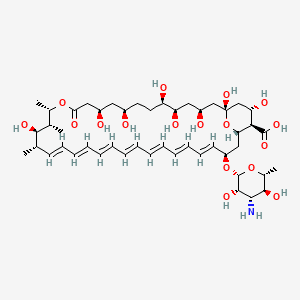
Pharmacotherapeutic group: Antimycotic antibiotics ATC code: J02AA01
Mechanism of action
Amphotericin B, the active antifungal component of Abelcet lipid complex, may be fungistatic or fungicidal depending on its concentration and on the susceptibility of the fungus. The drug probably acts by binding to ergosterol in the fungal cell membrane, thereby causing subsequent membrane damage. As a result, the cellular contents leak from the fungal cell and the cell ultimately dies.
Binding of the drug to sterols in human cell membranes may lead to toxicity, although amphotericin B has a greater affinity for ergosterol of fungal membranes than for cholesterol of human cells.
Microbiological activity
Amphotericin B is active against many fungal pathogens in vitro, including Candida sp., Cryptococcus neoformans, Aspergillus sp., Mucor sp., Sporothrix schenckii, Blastomyces dermatitidis, Coccidioides immitis, and Histoplasma capsulatum. Most strains are inhibited by amphotericin B at concentrations of 0.03–1.0 micrograms/ml. Amphotericin B has little or no activity against bacteria or viruses. The in vitro activity of Abelcet lipid complex against fungal pathogens is comparable to that of amphotericin B. However, the in vitro activity of Abelcet lipid complex may not predict efficacy in the infected host.
⚠️ Warnings
Infusion-related hypersensitivity reactions
Infusion-related reactions (such as chills and pyrexia) reported following administration of Abelcet lipid complex were generally mild to moderate in severity and were reported predominantly during the first two days of administration (see section 4.8 "Undesirable effects").
Premedication (e.g. paracetamol) may be administered to prevent infusion-related adverse reactions.
Renal impairment
As Abelcet lipid complex is a potentially nephrotoxic medicinal product, renal function should be monitored before and during treatment. This is particularly important in patients with pre-existing renal disease, in patients who have already experienced renal failure, or in patients receiving concomitant nephrotoxic medicinal products. Cases of hyperkalaemia (some of which led to cardiac arrhythmias and cardiac arrest) have been reported. Some of these occurred in patients with renal impairment or following potassium supplementation in patients who had previously developed hypokalaemia.
Abelcet lipid complex may be administered to patients undergoing renal dialysis or haemofiltration. Regular laboratory monitoring of serum electrolyte levels, particularly potassium, should be performed before and during treatment.
Hepatic impairment
Patients have been successfully treated with Abelcet lipid complex with concurrent hepatic disease with functional impairment due to infection, graft-versus-host disease, other hepatic conditions, or following administration of hepatotoxic drugs.
In cases where serum bilirubin, alkaline phosphatase, or serum aminotransferase levels were elevated, factors other than Abelcet lipid complex were implicated, including infection, hyperalimentation, concomitant hepatotoxic drugs, and graft-versus-host disease.
Systemic mycotic infections
Abelcet lipid complex should not be used for the treatment of common or superficial, clinically inapparent mycotic infections that are diagnosable only by positive skin or serological tests.
Important information about some of the ingredients of Abelcet lipid complex
This medicinal product contains 3.6 mg sodium per 1 ml of concentrate.
This corresponds to 1.56 mmol (or 36.0 mg) sodium per 10 ml vial or 3.12 mmol (or 72.0 mg) sodium per 20 ml vial.
This corresponds to 1.8% (or 3.6% respectively) of the WHO recommended maximum daily dietary intake of sodium for an adult, which is 2 g sodium.