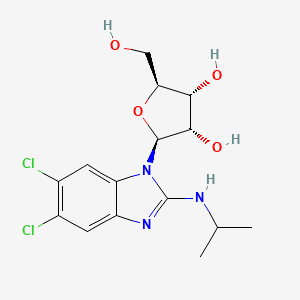
This information is for educational purposes only. It is not intended as medical advice. Always consult a qualified healthcare professional.
Rx
Livtencity
200 mg, Tabletki powlekane
INN: Maribavirum
Data updated: 2026-04-13
Available in:
🇨🇿🇩🇪🇬🇧🇫🇷🇵🇱🇵🇹🇸🇰
Form
Tabletki powlekane
Dosage
200 mg
Route
doustna
Storage
—
About This Product
User Reviews
Reviews reflect personal experiences and are not medical advice. Always consult your doctor.
Manufacturer
Takeda Pharmaceuticals International AG Ireland Branch (Irlandia)
Composition
Maribavirum 200 mg
ATC Code
J05AX10
Source
URPL
Pharmacotherapeutic group: Antivirals for systemic use, direct acting antivirals, ATC code: J05AX10.
Mechanism of action
Maribavir is a competitive inhibitor of the UL97 protein kinase. UL97 inhibition occurs at the viral DNA replication phase, inhibiting UL97 serine/threonine kinase by competitively inhibiting the binding of ATP to the kinase ATP-binding site, without affecting the concatemer maturation process, abolishing phosphotransferase inhibiting CMV DNA replication and maturation, CMV DNA encapsidation, and CMV DNA nuclear egress.
Antiviral activity
Maribavir inhibited human CMV replication in virus yield reduction, DNA hybridization, and plaque reduction assays in human lung fibroblast cell line (MRC-5), human embryonic kidney (HEK), and human foreskin fibroblast (MRHF) cells. The EC
50
values ranged from 0.03 to 2.2 µM depending on the cell line and assay endpoint. The cell culture antiviral activity of maribavir has also been evaluated against CMV clinical isolates. The median EC
50
values were 0.1 μM (n=10, range 0.03-0.13 μM) and 0.28 μM (n=10, range 0.12-0.56 μM) using DNA hybridization and plaque reduction assays, respectively. No significant difference in EC
50
values across the four human CMV glycoprotein B genotypes (N = 2, 1, 4, and 1 for gB1, gB2, gB3, and gB4, respectively) was seen.
Combination antiviral activity
When maribavir was tested in
in vitro
combination with other antiviral compounds, strong antagonism was seen with ganciclovir.
No antagonism was seen in combination with cidofovir, foscarnet and letermovir.
Viral resistance
In cell culture
Maribavir does not affect the UL54 encoded DNA polymerase that, when presenting certain mutations, confers resistance to ganciclovir/valganciclovir, foscarnet and/or cidofovir. Mutations conferring resistance to maribavir have been identified on gene UL97: L337M, F342Y, V353A, V356G, L397R, T409M, H411L/N/Y, D456N, V466G, C480F, P521L, and Y617del. These mutations confer resistance that ranges from 3.5‑fold to > 200-fold increase in EC
50
values. UL27 gene variants (R233S, W362R, W153R, L193F, A269T, V353E, L426F, E22stop, W362stop, 218delC, and 301311del) conferred only mild maribavir resistance (< 5-fold increase in EC
50
), while L335P conferred high maribavir resistance.
In clinical studies
In Phase 2 Study 202 and Study 203 evaluating maribavir in 279 HSCT or SOT recipients, post-treatment pUL97 genotyping data from 23 of 29 patients who initially achieved viraemia clearance and later experienced recurrent CMV infection while on maribavir showed 17 patients with mutations T409M or H411Y and 6 patients with mutation C480F. Among 25 patients who did not respond to > 14 days of maribavir therapy, 9 had mutations T409M or H411Y, and 5 patients had mutation C480F. Additional pUL27 genotyping was performed on 39 patients in Study 202 and 43 patients in Study 203. The only resistance-associated amino acid substitution in pUL27 that was not detected at baseline was G344D. Phenotypic analysis of pUL27 and pUL97 recombinants showed that pUL97 mutations T409M, H411Y, and C480F conferred 78-fold, 15-fold, and 224-fold increases, respectively, in maribavir EC
50
compared with the wild-type strain, whereas the pUL27 mutation G344D showed no difference in maribavir EC
50
as compared to the wild-type strain.
In Phase 3 Study 303 evaluating maribavir in patients with phenotypic resistance to valganciclovir/ganciclovir, DNA sequence analysis of the entire coding regions of pUL97 and pUL27 was performed on 134 paired sequences from maribavir-treated patients. The treatment-emergent pUL97 substitutions F342Y (4.5-fold), T409M (78-fold), H411L/N/Y (69-, 9-, and 12-fold, respectively), and/or C480F (224-fold) were detected in 60 subjects and were associated with non-response (47 subjects were on-treatment failures and 13 subjects were relapsers). One subject with the pUL27 L193F substitution (2.6-fold reduced susceptibility to maribavir) at baseline did not meet the primary endpoint. In addition, the following multiple mutations were associated with non-response; F342Y+T409M+H411N (78-fold), C480F+H411L+H411Y (224-fold), F342Y+H411Y (56-fold), T409M+C480F (224-fold), H411Y+C480F (224-fold), H411N+C480F (224‑fold), and T409M+H411Y (78‑fold).
Cross resistance
Cross-resistance has been observed between maribavir and ganciclovir/valganciclovir (vGCV/GCV) in cell culture and in clinical studies. In the Phase 3 Study 303, a total of 46 patients in the maribavir arm had a treatment emergent resistance associated substitutions (RAS) to Investigator assigned treatment (IAT). Of these 24 had treatment-emergent C480F or the F342Y RAS, both are cross-resistant to both ganciclovir/valganciclovir and maribavir. Of these 24 patients, 1 (4%) achieved the primary endpoint. Overall, only nine of these 46 patients achieved the primary endpoint.
pUL97 vGCV/GCV resistance-associated substitutions F342S/Y, K355del, V356G, D456N, V466G, C480R, P521L, and Y617del reduce susceptibility to maribavir > 4.5-fold. Other vGCV/GCV resistance pathways have not been evaluated for cross-resistance to maribavir. pUL54 DNA polymerase substitutions conferring resistance to vGCV/GCV, cidofovir, or foscarnet remained susceptible to maribavir.
Substitutions pUL97 F342Y and C480F are maribavir treatment-emergent resistance-associated substitutions that confer > 1.5-fold reduced susceptibility to vGCV/GCV, a fold reduction that is associated with phenotypic resistance to vGCV/GCV. The clinical significance of this cross-resistance to vGCV/GCV for these substitutions has not been determined. Maribavir resistant virus remained susceptible to cidofovir and foscarnet. Additionally, there are no reports of any pUL27 maribavir resistance-associated substitutions being evaluated for vGCV/GCV, cidofovir, or foscarnet cross-resistance. Given the lack of resistance-associated substitutions for these drugs mapping to pUL27, cross-resistance is not expected for pUL27 maribavir substitutions
.
Clinical efficacy
A Phase 3, multi-centre, randomised, open-label, active-controlled superiority study (Study SHP620-303) assessed the efficacy and safety of LIVTENCITY treatment compared to Investigator assigned treatment (IAT) in 352 HSCT and SOT recipients with CMV infections that were refractory to treatment with ganciclovir, valganciclovir, foscarnet, or cidofovir, including CMV infections with or without confirmed resistance to 1 or more anti-CMV agents. Refractory CMV infection was defined as documented failure to achieve > 1 log10 decrease in CMV DNA level in whole blood or plasma after a 14-day or longer treatment period with intravenous ganciclovir/oral valganciclovir, intravenous foscarnet, or intravenous cidofovir. This definition was applied to the current CMV infection and the most recently administered anti-CMV agent.
Patients were stratified by transplant type (HSCT or SOT) and screening CMV DNA levels and then randomised in a 2:1 ratio to receive LIVTENCITY 400 mg twice daily or IAT (ganciclovir, valganciclovir, foscarnet, or cidofovir) for an 8-week treatment period and a 12 week follow-up phase.
The mean age of trial subjects was 53 years and most subjects were male (61%), white (76%) and not Hispanic or Latino (83%), with similar distributions across the two treatment arms. Baseline disease characteristics are summarised in Table 3 below.
Table 3: Summary of the baseline disease characteristics of the study population in Study 303.
Characteristic
a
IAT
(N=117)
LIVTENCITY 400 mg Twice Daily
(N=235)
IAT treatment prior to randomisation, n (%)
b
Ganciclovir/ Valganciclovir
98 (84)
204 (87)
Foscarnet
18 (15)
27 (12)
Cidofovir
1 (1)
4 (2)
IAT treatment after randomisation, n (%)
Foscarnet
47 (41)
n/a
Ganciclovir/ Valganciclovir
56 (48)
n/a
Cidofovir
6 (5)
n/a
Foscarnet+ Ganciclovir/Valganciclovir
7 (6)
n/a
Transplant type, n (%)
HSCT
48 (41)
93 (40)
SOT
c
69 (59)
142 (60)
Kidney
d
32 (46)
74 (52)
Lung
d
22 (32)
40 (28)
Heart
d
9 (13)
14 (10)
Multiple
d
5 (7)
5 (4)
Liver
d
1 (1)
6 (4)
Pancreas
d
0
2 (1)
Intestine
d
0
1 (1)
CMV DNA levels category as reported by central laboratory, n (%)
e
High
7 (6)
14 (6)
Intermediate
25 (21)
68 (29)
Low
85 (73)
153 (65)
Baseline symptomatic CMV infection
f
No
109 (93)
214 (91)
Yes
f
8 (7)
21 (9)
CMV syndrome (SOT only), n (%)
d, f, g
7 (88)
10 (48)
Tissue invasive disease, n (%)
f, d, g
1 (13)
12 (57)
CMV=cytomegalovirus, DNA=deoxyribonucleic acid, HSCT=haematopoietic stem cell transplant, IAT=investigator assigned anti-CMV treatment, max=maximum, min=minimum, N=number of patients, SOT=solid organ transplant.
a
Baseline was defined as the last value on or before the first dose date of study-assigned treatment, or date of randomisation for patients who did not receive study-assigned treatment.
b
Percentages are based on the number of subjects in the randomised set within each column. Most recent anti-CMV agent, used to confirm refractory eligibility criteria.
c
The most recent transplant.
d
Percentages are based on the number of patients within the category.
e
Viral load was defined for analysis by the baseline central specialty laboratory plasma CMV DNA qPCR results as high (≥91 000 IU/mL), intermediate (≥ 9 100 and < 91 000 IU/mL), and low (< 9 100 IU/mL).
f
Confirmed by Endpoint Adjudication Committee (EAC).
g
Patients could have CMV syndrome and tissue invasive disease.
The primary efficacy endpoint was confirmed CMV viraemia clearance (plasma CMV DNA concentration below the lower limit of quantification (< LLOQ; i.e. < 137 IU/mL) at Week 8 regardless of whether either study-assigned treatment was discontinued before the end of the stipulated 8 weeks of therapy. The key secondary endpoint was CMV viraemia clearance and CMV infection symptom control at Week 8 with maintenance of this treatment effect through Study Week 16. CMV infection symptom control was defined as resolution or improvement of tissue‑invasive disease or CMV syndrome for symptomatic patients at baseline, or no new symptoms for patients who were asymptomatic at baseline.
For the primary endpoint, LIVTENCITY was superior to IAT (56% vs. 24%, respectively, p < 0.001). For the key secondary endpoint, 19% vs. 10% achieved both CMV viraemia clearance and CMV infection symptom control in the LIVTENCITY and IAT group, respectively (p=0.013) (see Table 4).
Table 4: Primary and key secondary efficacy endpoint analysis (randomised set) in Study 303
IAT
(N=117)
n (%)
LIVTENCITY 400 mg twice daily
(N=235)
n (%)
Primary endpoint: CMV viraemia clearance response at week 8
Overall
Responders
28 (24)
131 (56)
Adjusted difference in proportion of responders (95% CI)
a
32.8 (22.8, 42.7)
p-value: adjusted
a
< 0.001
Key secondary endpoint: Achievement of CMV viraemia clearance and CMV infection symptom control
b
at week 8, with maintenance through week 16
b
Overall
Responders
12 (10)
44 (19)
Adjusted difference in proportion of responders (95% CI)
a
9.45 (2.0, 16.9)
p-value: adjusted
a
0.013
CI=confidence interval; CMV=cytomegalovirus; HSCT=haematopoietic stem cell transplant; IAT=investigator-assigned anti-CMV treatment; N=number of patients; SOT=solid organ transplant.
a
Cochran-Mantel-Haenszel weighted average approach was used for the adjusted difference in proportion (maribavir-IAT), the corresponding 95% CI, and the p-value after adjusting for the transplant type and baseline plasma CMV DNA concentration.
b
CMV infection symptom control was defined as resolution or improvement of tissue-invasive disease or CMV syndrome for symptomatic patients at baseline, or no new symptoms for patients who were asymptomatic at baseline.
The treatment effect was consistent across transplant type, age group, and the presence of CMV syndrome/disease at baseline. However, LIVTENCITY was less effective against subjects with increased CMV DNA levels (≥ 50 000 IU/mL) and patients with absence of genotypic resistance (see Table 5).
Table 5: Percentage of Responders by subgroup in Study 303
IAT
(N=117)
LIVTENCITY 400 mg Twice Daily
(N=235)
n/N
%
n/N
%
Transplant type
SOT
18/69
26
79/142
56
HSCT
10/48
21
52/93
56
Baseline CMV DNA viral load
Low
21/85
25
95/153
62
Intermediate/High
7/32
22
36/82
44
Genotypic resistance to other anti-CMV agents
Yes
15/70
21
76/121
63
No
10/33
30
42/96
44
CMV syndrome/disease at baseline
Yes
1/8
13
10/21
48
No
27/109
25
121/214
57
Age Group
18 to 44 years
8/32
25
28/55
51
45 to 64 years
19/69
28
71/126
56
≥ 65 years
1/16
6
32/54
59
CMV=cytomegalovirus, DNA=deoxyribonucleic acid, HSCT=haematopoietic stem cell transplant, SOT=solid organ transplant
Recurrence
The secondary endpoint of recurrence of CMV viraemia was reported in 57% of the maribavir treated patients and in 34% of the IAT treated patients. Of these, 18% in the maribavir group had recurrence of CMV viraemia while on-treatment compared to 12% the IAT group. Recurrence of CMV viraemia during follow up was seen in 39% of patients in the maribavir group and in 22% of the patients in the IAT group.
Overall mortality: All-cause mortality was assessed for the entire study period. A similar percentage of subjects in each treatment group died during the trial (LIVTENCITY 11% [27/235]; IAT 11% [13/117]).
Paediatric population
The European Medicines Agency has deferred the obligation to submit the results of studies with LIVTENCITY in one or more subsets of the paediatric population for treatment of cytomegalovirus infection (see section 4.2).
⚠️ Warnings
Any unused medicinal product or waste material should be disposed of in accordance with local requirements.