This information is for educational purposes only. It is not intended as medical advice. Always consult a qualified healthcare professional.
Lyfnua — Description, Dosage, Side Effects | PillsCard
OTC
Lyfnua
45 mg, Tabletki powlekane
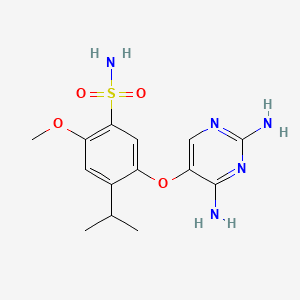
INN: Gefapixantum
Data updated: 2026-04-13
Available in:
🇨🇿🇩🇪🇬🇧🇫🇷🇵🇱🇵🇹🇸🇰🇺🇦
Form
Tabletki powlekane
Dosage
45 mg
Route
doustna
Storage
—
About This Product
User Reviews
Reviews reflect personal experiences and are not medical advice. Always consult your doctor.
Manufacturer
Merck Sharp & Dohme B.V. (Holandia)
Composition
Gefapixanti citras 45 mg
ATC Code
R05DB29
Source
URPL
Pharmacotherapeutic group: Other cough suppressants, ATC code: R05DB29
Mechanism of action
Gefapixant is a selective antagonist of the P2X3 receptor. Gefapixant also has activity against the P2X2/3 receptor subtype. P2X3 receptors are ATP-gated ion channels found on sensory C fibres of the vagus nerve in the airways. C fibres are activated in response to inflammation or chemical irritants. ATP is released from airway mucosal cells under conditions of inflammation. Binding of extracellular ATP to P2X3 receptors is sensed as a damage signal by C fibres. Activation of C fibres, which is sensed by the patient as an urge to cough, initiates a cough reflex. Blockade of ATP signalling through P2X3 receptors reduces excessive sensory-nerve activation and excessive cough induced by extracellular ATP.
Clinical efficacy and safety
Studies of refractory or unexplained chronic cough assessing objective cough frequency
The efficacy of Lyfnua for the treatment of refractory or unexplained chronic cough was studied in two 52-week, multicentre, randomised, double-blind, placebo-controlled studies of adults with either refractory or unexplained chronic cough. Refractory chronic cough (RCC) was defined as cough associated with a co-morbid condition (e.g., asthma, gastroesophageal reflux disease, or upper airway cough syndrome) that persisted despite adequate treatment of the co-morbid condition. Unexplained chronic cough (UCC) was defined as cough that was not associated with a co-morbid condition despite a thorough clinical evaluation.
The primary objective of both phase 3 studies was to assess Lyfnua efficacy in reducing 24-hour cough frequency relative to placebo. Reduction in awake cough frequency and cough-specific quality of life were secondary objectives. In both studies, patients were randomised to twice daily doses of Lyfnua 45 mg, 15 mg, or placebo. The primary efficacy period for COUGH-1 (NCT03449134) was 12 weeks followed by a blinded extension period of 40 weeks. The primary efficacy period for COUGH-2 (NCT03449147) was 24 weeks, followed by a blinded extension period of 28 weeks.
Patients enrolled in COUGH-1 and COUGH-2 were current non-smokers, not on angiotensin converting enzyme (ACE) inhibitors, diagnosed with RCC or UCC, and had chronic cough for greater than 1 year. Most patients were female (75%), white (80%), and from Europe (53%) with a mean age of 58 years (range 19 to 89) and 7% of patients were older than 75 years. A total of 61.5% of patients were diagnosed with RCC, 38.5% with UCC, and the mean duration of chronic cough was 11 years.
Cough frequency
In COUGH-1 and COUGH-2, patients treated with Lyfnua 45 mg twice daily demonstrated a significant reduction in 24-hour cough frequency compared with placebo (Table 2). The reduction in the 24-hour cough frequency was observed by Week 4 and persisted throughout the primary efficacy period (12 weeks in COUGH-1 and 24 weeks in COUGH-2; Figure 1).
The gefapixant 15 mg twice daily group did not demonstrate a significant reduction in 24-hour cough frequency in either study.
Table 2: 24-hour cough frequency results for Lyfnua 45 mg twice daily (COUGH-1 and COUGH-2)
COUGH-1
COUGH-2
Lyfnua
Placebo
Lyfnua
Placebo
N
243
243
439
435
Primary Efficacy Endpoint
24-Hour Cough Frequency (coughs per hour)
Baseline
(geometric mean)
18.24
22.83
18.55
19.48
Week 12 (COUGH-1) or Week 24 (COUGH-2)
(geometric mean)
7.05
10.33
6.83
8.34
Week 12 (COUGH-1) or Week 24 (COUGH-2)
(%-reduction from baseline)
-61.35
-54.77
-63.17
-57.19
Reduction Relative to Placebo
(%-reduction and 95% CI)
†
-18.52 (-32.76, -1.28)
-13.29 (-24.74, -0.10)
p-value
0.036
0.048
N = Number of participants included in the analysis. CI = Confidence Interval.
†
Missing baseline values were imputed based on gender and region, followed by multiple imputation of the missing data (m = 50 imputed datasets) for all follow-up visits using treatment, gender, region and the other follow-up visits as covariates. Following imputation, an analysis of covariance (ANCOVA) model was conducted at the time point of interest, adjusting for covariates of treatment, baseline, gender, and region.
Figure 1: Analysis of 24-hour cough frequency over time for Lyfnua 45
mg twice daily (COUGH-1 and COUGH-2)
Cough-specific quality of life
COUGH-2 was specifically designed to assess the impact of Lyfnua on cough-specific quality of life relative to placebo as measured by the Leicester Cough Questionnaire (LCQ) (possible score ranges from 3 to 21, with higher scores indicating a better quality of life). A ≥ 1.3 point increase from baseline in the LCQ total score was defined as clinically meaningful. In COUGH-2, the odds of having a clinically meaningful improvement in cough-specific quality of life were significantly greater in the Lyfnua 45 mg treatment group than in the placebo group as measured at Week 24 (see Table 3).
Table 3: Cough-specific quality of life for Lyfnua 45 mg twice daily (COUGH-2): proportion of patients with ≥ 1.3 point increase from baseline in LCQ total score at Week 24
Lyfnua
Placebo
N
439
435
Responders* (%)
75.7
68.1
Estimated odds ratio vs. placebo (95% CI)
†
1.46 (1.07, 1.99)
Estimated difference
†
vs. placebo (95% CI)
††
7.63 (1.34, 13.76)
p-value
†
0.016
N = Number of subjects with available data at Week 24.
* Percent responders at Week 24. Number of responders was calculated by averaging over multiple imputations; there were approximately 332 and 296 responders in Lyfnua and placebo arm, respectively.
CI = Confidence Interval. LCQ = Leicester Cough Questionnaire.
†
Missing baseline values were imputed based on gender and region, followed by multiple imputation of the missing data (m = 50 imputed dataset) for all follow-up visits using treatment, gender, region, and the other follow-up visits as covariates. Following imputation, logistic regression was conducted on the dichotomized scores at the time point of interest, adjusting for covariates of treatment, baseline LCQ total (continuous) score, gender, and region.
††
Based on the bootstrap method.
Study of refractory or unexplained chronic cough of recent onset assessing patient reported outcomes.
The efficacy of Lyfnua in adults with RCC or UCC of recent onset was assessed in a multicentre, randomised, double-blind, placebo-controlled study (NCT04193202). Recent onset is defined as having RCC or UCC for > 8 weeks but < 12 months.
The primary objective of the study was to demonstrate that Lyfnua was effective in improving cough-specific health-related quality of life, measured as change from baseline in LCQ total score at 12 weeks. Patients were randomised to twice daily doses of Lyfnua 45 mg or placebo.
Patients enrolled in the study were current non-smokers, not on ACE-inhibitors, diagnosed with RCC or UCC, had a score of ≥ 40 mm on the cough severity visual analogue scale (VAS), and had a chronic cough for < 12 months. Most patients were female (65%), white (72%), and from Europe (59%) with a mean age of 53 years (range 18 to 83 years). A total of 70.8% of patients were diagnosed with RCC, 29.2% with UCC, and the mean duration of chronic cough was 7.2 months.
Cough-specific quality of life
Patients treated with Lyfnua 45 mg twice daily had a significantly greater improvement of the LCQ total score from baseline compared to placebo at Week 12 (Table 4).
Table 4: Analysis of LCQ total score for Lyfnua 45 mg twice daily
Treatment
N
Baseline mean (SD)
Week 12 mean (SD)
Change from baseline
LS mean (95% CI)*
Placebo
199
11.30 (2.80)
14.73 (3.48)
3.59 (3.09, 4.09)
Lyfnua
199
10.82 (3.08)
15.32 (3.91)
4.34 (3.84, 4.83)
Treatment difference
Estimated difference and (95% CI)
p-value
Lyfnua vs. placebo
0.75 (0.06, 1.44)
0.034
N = Number of participants used in the analysis. CI = Confidence Interval. SD = Standard Deviation.
LCQ = Leicester Cough Questionnaire. LS = Least Square
*Calculated as (Week 12-Baseline)/Baseline and based on the longitudinal analysis of covariance model consisting of the change from baseline in LCQ total score at each post-baseline visit (up to Week 12) as response. The model includes terms for treatment, visit, the interaction of treatment by visit, gender, and the baseline LCQ total score.
Paediatric population
The European Medicines Agency has waived the obligation to submit the results of studies with Lyfnua in all subsets of the paediatric population in treatment of unexplained or chronic refractory cough (see section 4.2 for information on paediatric use).
⚠️ Warnings
Any unused medicinal product or waste material should be disposed of in accordance with local requirements.