This information is for educational purposes only. It is not intended as medical advice. Always consult a qualified healthcare professional.
Rx
NUBEQA
300 mg, Tabletki powlekane
INN: Darolutamidum
Data updated: 2026-04-13
Available in:
🇨🇿🇩🇪🇬🇧🇫🇷🇵🇱🇸🇰🇺🇦
Form
Tabletki powlekane
Dosage
300 mg
Route
doustna
Storage
—
About This Product
User Reviews
Reviews reflect personal experiences and are not medical advice. Always consult your doctor.
Manufacturer
Bayer AG (Finlandia)
Composition
Darolutamidum 300 mg
ATC Code
L02BB06
Source
URPL
Pharmacotherapeutic group: Endocrine therapy, anti‑androgens; ATC code: L02BB06
Mechanism of action
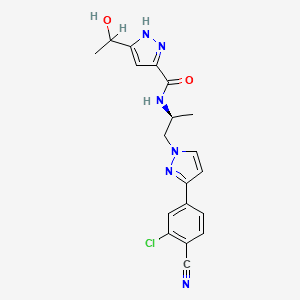
Darolutamide is an androgen receptor (AR) inhibitor with a flexible polar‑substituted pyrazole structure that binds with high affinity directly to the receptor ligand binding domain.
Darolutamide competitively inhibits androgen binding, AR nuclear translocation, and AR mediated transcription. A major metabolite, keto‑darolutamide, exhibited similar
in vitro
activity to darolutamide. Darolutamide treatment decreases prostate tumour cell proliferation leading to potent antitumour activity.
Pharmacodynamic effects
No prolongation of the mean QTcF interval (i.e., greater than 10 ms) was observed after oral administration of 600 mg darolutamide twice daily compared to placebo.
Clinical efficacy and safety
Efficacy and safety were established in three randomised placebo‑controlled multicentre phase III studies in patients with nmCRPC (ARAMIS) and mHSPC (ARANOTE and ARASENS). All patients received a luteinising hormone‑releasing hormone (LHRH) analogue concurrently or had a bilateral orchiectomy.
non‑metastatic castration resistant prostate cancer (nmCRPC)
The efficacy and safety of darolutamide was assessed in a randomised, double‑blind, placebo‑controlled multicentre phase III study (ARAMIS) in patients with non‑metastatic (as assessed by conventional imaging CT, bone scan, MRI) castration resistant prostate cancer with a prostate‑specific antigen doubling time (PSADT) of ≤ 10 months.
Patients were included in the trial if they had 3 rising prostate‑specific antigen (PSA) levels after the nadir taken at least 1 week apart during androgen deprivation therapy, PSA ≥ 2 ng/mL at screening and castrate level of serum testosterone < 1.7 nmol/L.
Patients with a medical history of seizure were allowed to enter the study. There were 12 patients (0.21%) enrolled on the darolutamide arm with a history of seizure.
Patients with uncontrolled hypertension or recent (in the past 6 months) stroke, myocardial infarction, severe/unstable angina pectoris, coronary/peripheral artery bypass graft, congestive heart failure New York Heart Association (NYHA) Class III or IV were excluded from the study.
Patients with prior treatment with second generation AR inhibitors such as enzalutamide, apalutamide and darolutamide, or CYP17 enzyme inhibitors such as abiraterone acetate as well as patients receiving systemic corticosteroid with dose greater than the equivalent 10 mg of prednisone/day within 28 days before randomisation were excluded from the study.
In total, 1509 patients were randomized 2:1 to receive either 600 mg darolutamide orally twice daily (n=955) or matching placebo (n=554).
Patients with presence of pelvic lymph nodes < 2 cm in short axis below the aortic bifurcation were allowed to enter the study. Absence or presence of metastasis was assessed by independent central radiological review. Included in these analyses were 89 patients that were retrospectively identified with metastasis at baseline. Randomization was stratified by PSADT (≤ 6 months or > 6 months) and use of osteoclast‑targeted therapy at study entry (yes or no).
The following patient demographics and disease characteristics were balanced between treatment arms. The median age was 74 years (range 48‑95) and 9% of patients were 85 years of age or older. The racial distribution was 79% White, 13% Asian, and 3% Black. A majority of patients had a Gleason score of 7 or higher at diagnosis (73%). The median PSADT was 4.5 months. Nine percent (9%) of patients had prior orchiectomy, 25% of patients had prior prostatectomy and 50% of patients had at least one prior radiotherapy. Seventy‑six percent (76%) of patients received more than one prior anti‑hormonal treatment. Patients had an Eastern Cooperative Oncology Group Performance Status (ECOG PS) score of 0 (69%) or 1 (31%) at study entry.
Treatment with darolutamide continued until radiographic disease progression as assessed by conventional imaging (CT, bone scan, MRI) by blinded central review, unacceptable toxicity or withdrawal.
The primary efficacy endpoint was metastasis free survival (MFS). Secondary endpoints were overall survival (OS), time to pain progression, time to initiation of first cytotoxic chemotherapy for prostate cancer, and time to first symptomatic skeletal events (defined as occurrence of any of the following: external beam radiotherapy to relieve skeletal symptoms, new symptomatic pathologic bone fracture, spinal cord compression, or tumour‑related orthopaedic surgical intervention).
Treatment with darolutamide resulted in an improvement in MFS compared to placebo (see Table 3 and Figure 1).
MFS results were consistent across patient subgroups regardless of PSADT, prior use of bone‑targeting agents or loco‑regional disease. Additional subgroups with consistent MFS results included PSA at baseline, Gleason score at diagnosis, age, geographical region, ECOG PS at baseline, race, and number of prior hormonal therapies.
After the primary analysis of MFS, once the study was unblinded, patients receiving placebo were offered treatment with open‑label darolutamide (cross‑over option). Among the 554 patients randomised to placebo, 170 (31%) crossed over to receive darolutamide treatment. The OS analysis was not adjusted for confounding effects of cross‑over.
At the time of the final analysis, treatment with darolutamide resulted in a statistically significant improvement in overall survival compared to placebo (median was not reached in either arm, see Table 3 and Figure 2).
Treatment with darolutamide also resulted in statistically significant delays in time to pain progression, time to initiation of first cytotoxic chemotherapy and time to first symptomatic skeletal event compared to placebo (see Table 3).
All analyses were performed in the full analysis set.
Table 3: Efficacy results from the ARAMIS study
Efficacy parameter
Number (%) of patients with events
Median (months) (95% CI)
Hazard Ratio
b
(95% Confidence Interval [CI])
p‑value
(two‑sided)
Darolutamide
(N=955)
Placebo
a
(N=554)
Darolutamide
(N=955)
Placebo
a
(N=554)
Metastasis free survival
c
221 (23.1%)
216 (39.0%)
40.4
(34.3, NR)
18.4
(15.5, 22.3)
0.41
(0.34, 0.50)
<0.000001
Overall survival
148 (15.5%)
106 (19.1%)
NR
(56.1, NR)
NR
(46.9, NR)
0.69
(0.53, 0.88)
0.003048
Time to pain progression
c, d
251 (26.3%)
178 (32.1%)
40.3
(33.2, 41.2)
25.4
(19.1, 29.6)
0.65
(0.53, 0.79)
0.000008
Time to initiation of first cytotoxic chemotherapy
127 (13.3%)
98 (17.7%)
NR
(NR, NR)
NR
(NR, NR)
0.58
(0.44, 0.76)
0.000044
Time to first symptomatic skeletal event
29 (3.0%)
28 (5.1%)
NR
(NR, NR)
NR
(NR, NR)
0.48
(0.29, 0.82)
0.005294
a
including 170 patients who crossed over to open‑label darolutamide
b
Hazard ratio < 1 favours darolutamide
c
for MFS and time to pain progression, the analysis performed at the time of primary completion is considered as the final analysis
d
Patient reported outcome as evaluated by Brief Pain Inventory‑Short Form questionnaire
NR: Not reached.
Treatment with darolutamide resulted in a longer progression free survival (PFS, median 36.8 vs 14.8 months, HR=0.38) and time to PSA progression (median 29.5 vs 7.2 months, HR=0.16). Consistency of effect was observed across all measures of survival (MFS, OS and PFS).
Figure 1: Kaplan‑Meier curves of metastasis free survival (ARAMIS)
Figure 2: Kaplan‑Meier curves of overall survival (ARAMIS)
Patients receiving darolutamide in the ARAMIS study (double‑blind period) demonstrated a significantly higher confirmed PSA response rate (defined as a ≥ 50% reduction from baseline), compared with patients receiving placebo, 84.0% vs 7.9% (difference = 76.1%).
metastatic hormone‑sensitive prostate cancer (mHSPC) – treatment with darolutamide and ADT
The efficacy and safety of darolutamide was assessed in a multicentre, double‑blind, placebo‑controlled phase III study (ARANOTE) in patients with mHSPC. In total, 669 patients were randomised (2:1) to receive 600 mg darolutamide orally twice daily (n=446) or matching placebo (n=223). Treatment with darolutamide or placebo continued until progressive disease, change of antineoplastic therapy, unacceptable toxicity, death, or withdrawal.
Presence of metastasis was assessed by independent central radiological review. Patients with regional lymph node involvement only (M0) were excluded from the study. Randomisation was stratified by presence of visceral metastasis and use of prior local therapy.
The following patient demographics and disease characteristics were balanced between treatment arms. The median age was 70 years (range 43-93) and 4.2% of patients were 85 years of age or older. The racial distribution was 56.2% White, 31.2% Asian, 9.7% Black or African American and 2.8% Other. A majority of patients had a Gleason score of 8 or higher at diagnosis (68.3%). At study entry, ECOG PS of 0, 1 and 2 were 49.8%, 47.2% and 3.0%, respectively. There were 72.5% of patients with
de novo
and 21.7% with recurrent disease. 12.0% of patients had visceral metastasis at study entry; median PSA level at baseline was 21.3 µg/L. 70.6% of patients had high-volume disease and 29.4% had low-volume disease. High-volume disease was defined as presence of visceral metastases or 4 or more bone lesions, with at least 1 metastasis beyond the vertebral column and pelvic bones. Patients with a medical history of seizure were allowed to enter the study, and 1 patient (0.2%) was enrolled on the darolutamide arm.
The primary efficacy endpoint was radiological Progression Free Survival (rPFS). Secondary endpoints were overall survival (OS), time to initiation of subsequent anticancer therapy, time to castration-resistant prostate cancer, time to PSA progression, PSA undetectable rates and time to pain progression. Pain progression was assessed using the patient reported outcome (PRO) Brief Pain Inventory-Short Form (BPI-SF), defined as at least a 2 point worsening from nadir, or inititation of short or long acting opioid use for malignant disease for ≥7 consecutive days.
Treatment with darolutamide resulted in a statistically significant improvement in rPFS compared to placebo with a p‑value of <0.0001 (see Table 4 and Figure 3). The HR was 0.541, representing a 45.9% reduction in the risk of radiological progression or death. The rPFS results were consistent across subgroups, including in high and low volume disease.
Treatment with darolutamide also resulted in a positive trend in overall survival (median was not reached in either arm at the time of the interim OS analysis, (HR=0.813, p=0.2014, see Table 4 and Figure 4). All other secondary endpoints trend in favour of darolutamide.
Table 4: Efficacy results from the ARANOTE study
Efficacy parameter
Number (%) of patients with events
Median (months) (95% CI)
Hazard Ratioa
(95% Confidence Interval [CI])
p‑value
(two‑sided)
b
Darolutamide
(N=446)
Placebo
(N=223)
Darolutamide
(N=446)
Placebo
(N=223)
a
Radiological progression free survival
128 (28.7%)
94 (42.2%)
A
(A, A)
25.0
(19.0, A)
0.541
(0.413, 0.707)
<0.0001
Overall survival
c
103 (23.1%)
60 (26.9%)
A
(A, A)
A
(33.8, A)
0.813
(0.591, 1.118)
0.2014
a.
Hazard ratio < 1 favours darolutamide
b.
based on stratified log-rank test except for PSA undetectable rates
c.
the p-value for OS did not reach the pre-defined threshold for statistical significance at the time of the interim OS analysis. Therefore (as per hierarchical methodology) a formal testing for significance of the remaining secondary endpoints was not conducted; nominal p-values (two-sided) are provided for descriptive purposes only.
A: value cannot be estimated due to censored data
Figure 3: Kaplan‑Meier curves for radiological progression free survival; mHSPC population (ARANOTE)
a
a
rPFS rate at 12 months was 83.1% (95% CI, 79.5% to 86.7%) in the darolutamide arm vs 74.1% (95% CI, 68.0% to 80.2%) in the placebo arm. rPFS rate at 24 months was 70.3% (95% CI, 65.7% to 74.9%) in the darolutamide arm vs 52.1% (95% CI, 44.7% to 59.5%) in the placebo arm.
Figure 4: Kaplan‑Meier curves for overall survival; mHSPC population (ARANOTE)
a
a
OS rate at 24 months was 79.8% (95% CI, 75.9% to 83.7%) in the darolutamide arm vs 75.5% (95% CI, 69.6% to 81.3%) in the placebo arm.
At the time of primary analysis, OS did not reach statistical significance and, as per the hierarchical testing of the SAP, none of the other secondary endpoints were tested for statistical significance All p values are nominal. In the ARANOTE study, time to initiation of subsequent anticancer therapy was longer for patients on darolutamide, with 15.2% starting subsequent treatment compared to 33.2% in the placebo group, HR 0.401 (95% CI: [0.288; 0.558]; p<0.0001). The time to castration-resistant prostate cancer was extended for those on darolutamide, with 34.5% progressing to mCRPC versus 64.1% on placebo HR 0.404 (95% CI: [0.321; 0.508]; p<0.0001). 20.9% of patients on darolutamide experienced PSA progression compared to 48.4% in the placebo group HR 0.306 (95% CI: [0.231; 0.405]; p<0.0001). 62.6% patients receiving darolutamide reached undetectable PSA levels (<0.2 ng/mL) compared to 18.5% patients in the placebo arm. The rate difference (darolutamide minus placebo) was 44.3% (95% CI: [37.4%; 51.2%]; p<0.0001). 27.8% experienced pain progression in the darolutamide arm compared to 35.4% in the placebo arm. Time to pain progression was delayed in the darolutamide arm compared with the placebo arm, with an HR of 0.721 (95% CI: [0.544; 0.957]; p=0.0115).
metastatic hormone‑sensitive prostate cancer (mHSPC) – treatment with darolutamide in combination with docetaxel
The efficacy and safety of darolutamide in combination with docetaxel was assessed in a multicentre, double‑blind, placebo‑controlled phase III study (ARASENS) in patients with mHSPC. In total, 1305 patients were randomised 1:1 to receive 600 mg darolutamide orally twice daily (n=651) or matching placebo (n=654), concomitantly with 75 mg/m
2
of docetaxel for 6 cycles. Patients must have started ADT no longer than 12 weeks prior to randomization and had to be candidates for docetaxel per investigator judgement. Treatment with darolutamide or placebo continued until symptomatic progressive disease, change of antineoplastic therapy, unacceptable toxicity, death, or withdrawal.
Presence of metastasis was assessed by independent central radiological review. Patients with regional lymph node involvement only (M0) were excluded from the study. Randomisation was stratified by extent of disease (non‑regional lymph nodes metastases only (M1a), bone metastases with or without lymph node metastases (M1b) or visceral metastases with or without lymph node metastases or with or without bone metastases (M1c)) and by alkaline phosphatase level (< or ≥ upper limit of normal) at study entry.
The following patient demographics and disease characteristics were balanced between treatment arms. The median age was 67 years (range 41‑89) and 0.5% of patients were 85 years of age or older. The racial distribution was 52% White, 36% Asian, and 4% Black. A majority of patients had a Gleason score of 8 or higher at diagnosis (78%). Seventy‑one percent (71%) of patients had an ECOG PS score of 0 and 29% of patients had an ECOG PS score of 1. There were 86.1% of patients with
de novo
and 12.9% of patients with recurrent disease. At study entry 3% of patients had M1a, 79.5% had M1b and 17.5% had M1c; alkaline phosphatase was ≥ ULN in 55.5% of patients; median PSA level at baseline was 30.3 µg/L (range 0.0 to 9219.0) and 24.2 µg/L (range 0.0 to 11947.0) for darolutamide vs the placebo group, respectively. Patients with a medical history of seizure were allowed to enter the study, and 4 patients (0.6%) were enrolled in the darolutamide+docetaxel arm.
The primary efficacy endpoint was overall survival (OS). Secondary endpoints were time to castration‑resistant prostate cancer, time to pain progression, symptomatic skeletal event free survival (SSE‑FS), time to first symptomatic skeletal event (SSE), time to initiation of subsequent antineoplastic therapy, time to worsening of disease‑related physical symptoms, and time to initiation of opioid use for ≥ 7 consecutive days. Pain progression was assessed using the patient‑reported outcome (PROs) Brief Pain Inventory‑Short Form (BPI-SF), defined as at least a 2‑point worsening from nadir observed at 2 consecutive evaluations at least 4 weeks apart, and initiation of short- or long-acting opioid use for pain for ≥7 consecutive days.
87.6% and 85.5% of patients received full 6 cycles of docetaxel and 1.5% and 2.0% of patients did not receive docetaxel in the darolutamide+docetaxel and placebo+docetaxel arm, respectively.
A statistically significant and clinically meaningful improvement in OS with a 32.5% reduction in risk of death (HR=0.68, HR 95% CI [0.57; 0.80; p<0.0001) was observed in the darolutamide+docetaxel arm compared to the placebo+docetaxel arm (see Table 5 and Figure 5). OS results were consistent across all patient subgroups, including stratification subgroups (extent of disease and alkaline phosphatase level).
Secondary efficacy endpoints that showed a statistically significant advantage in favour of darolutamide included time to pain progression and time to first symptomatic skeletal event.
Table 5: Efficacy results from the ARASENS study
Efficacy parameter
Number (%) of patients with events
Median (months) (95% CI)
Hazard Ratio
a
(95% Confidence Interval [CI])
p‑value
(two‑sided)
b
Darolutamide + docetaxel
(N=651)
Placebo + docetaxel
(N=654)
Darolutamide + docetaxel
(N=651)
Placebo + docetaxel
(N=654)
Overall survival
229 (35.2%)
304 (46.5%)
NR
(NR, NR)
48.9
(44.4, NR)
0.68
(0.57, 0.80)
<0.0001
Time to pain progression
c
222 (34.1%)
248 (37.9%)
NR
(30.5, NR)
27.5
(22.0, 36.1)
0.79
(0.66, 0.95)
0.00116
Time to first symptomatic skeletal event (SSE)
d
95 (14.6%)
108 (16.5%)
NR
(NR, NR)
NR
(NR, NR)
0.71
(0.54, 0.94)
0.0162
a
Hazard ratio <1 favours darolutamide
b
based on stratified log‑rank test
c
evaluated by BPI-SF and initiation of short‑ or long‑acting opioid use for pain for ≥7 consecutive days. Patients with opioid use within 4 weeks of randomisation were censored at randomisation (125 patients (19.2%) in the darolutamide with docetaxel and 118 patients (18%) in the placebo with docetaxel arm)
d
result was driven by the number patients with external beam radiotherapy to relieve skeletal symptoms, without additional benefit of darolutamide and docetaxel compared to placebo and docetaxel on symptomatic pathological bone fractures, spinal cord compression or orthopaedic surgical interventions
CRPC: castration‑resistant prostate cancer
NR: not reached
Figure 5: Kaplan‑Meier curves of overall survival (ARASENS)
a
a
OS rate at 36 months was 72.3% (95% CI, 68.8% to 75.8%) in the darolutamide+docetaxel arm vs 63.8% (95% CI, 60.1% to 67.6%) in the placebo+docetaxel arm.
OS rate at 48 months was 62.7% (95% CI, 58.7% to 66.7%) in the darolutamide+docetaxel arm vs 50.4% (95% CI, 46.3% to 54.6%) in the placebo+docetaxel arm.
The Health‑related Quality of life (HRQoL) was maintained while on treatment for patients in both arms, as assessed by the National Comprehensive Cancer Network/Functional Assessment of Cancer Therapy-Prostate Symptom Index 17 (NCCN‑FACT FPSI‑17) questionnaire. Time to worsening of disease related physical symptoms based on a subscale of the NCCN‑FACT FPSI‑17 questionnaire was similar in both treatment arms.
Treatment with darolutamide+docetaxel delayed the time to initiation of opioids for cancer-related pain for ≥7 consecutive days (HR=0.69, 95% CI, 0.52 to 0.91).
Patients receiving darolutamide+docetaxel had a higher relative PSA response rate (defined as a ≥50% reduction from baseline) at 12 months after randomisation compared with patients receiving placebo+docetaxel, (89.6% vs 80.4%). Darolutamide+docetaxel resulted in a median maximum percentage decline in PSA from baseline at any time of 99.7% compared to 96.3% for placebo-docetaxel.
Time to PSA progression was longer for patients was observed in the darolutamide+docetaxel arm as compared to the placebo+docetaxel arm (median not reached vs 22.4 months, HR=0.26, 95% CI, 0.21 to 0.31).
Paediatric population
The licensing authority has waived the obligation to submit the results of studies with darolutamide in all subsets of the paediatric population in prostate malignant neoplasms (see section 4.2 for information on paediatric use).
⚠️ Warnings
Any unused medicinal product or waste material should be disposed of in accordance with local requirements.