This information is for educational purposes only. It is not intended as medical advice. Always consult a qualified healthcare professional.
OTC
Nucala
100 mg, Proszek do sporządzania roztworu do wstrzykiwań
INN: Mepolizumabum
Data updated: 2026-04-08
Available in:
🇨🇿🇩🇪🇬🇧🇵🇱🇵🇹🇸🇰
Form
Proszek do sporządzania roztworu do wstrzykiwań
Dosage
100 mg
Route
—
Storage
—
About This Product
User Reviews
Reviews reflect personal experiences and are not medical advice. Always consult your doctor.
Manufacturer
GlaxoSmithKline Trading Services Limited
ATC Code
R03DX09
Source
URPL
Pharmacotherapeutic group: Drugs for obstructive airway diseases, other systemic drugs for obstructive airway diseases, ATC code: R03DX09
.
Mechanism of action
Mepolizumab is an IL-5 antagonist (IgG1 kappa) that binds to IL-5 with a dissociation constant of 100 pM, inhibiting its bioactivity by blocking its binding to the IL-5R alpha complex on the cell surface. IL‑5 is the major cytokine responsible for the growth and differentiation, recruitment, activation and survival of eosinophils. Type 2 inflammation driven by IL-5 is an important component in the pathogenesis of asthma, CRSwNP, COPD, EGPA and HES. Additional structural and inflammatory cell types also express the IL-5R alpha. In addition to the effects on eosinophils, binding IL-5 with mepolizumab inhibits the bioactivity of direct and indirect effects of IL-5 cytokine induced responses in multiple other cell types e.g., epithelial cells, mast cells, plasma cells, basophils, ILC-2 cells, T cells, smooth muscle cells, neutrophils and fibroblasts; however, the mechanism of action in these cells and across the different diseases has not been definitively established.
Pharmacodynamic effects
Severe eosinophilic asthma
In patients with severe refractory eosinophilic asthma (adults/adolescents), following a dose of 100 mg administered subcutaneously every 4 weeks for 32 weeks, blood eosinophils were reduced from a geometric mean count at baseline of 290 to 40 cells/µL at week 32 (n=182), a reduction of 84% compared to placebo. This magnitude of blood eosinophils reduction was maintained in severe refractory eosinophilic asthma patients (n=998) treated for a median of 2.8 years (range 4 weeks to 4.5 years) in open-label extension studies.
In children aged 6 to 11 years old with severe refractory eosinophilic asthma administered mepolizumab subcutaneously every 4 weeks for 52 weeks, blood eosinophils were reduced from a geometric mean count at baseline to week 52 of 306 (n=16) to 48 (n=15) following 40 mg (for a weight < 40kg) and 331 to 44 cells/µL (n=10) following 100 mg (for a weight ≥ 40 kg), a reduction from baseline of 85% and 87%, respectively.
In adults, adolescents and children, this magnitude of reduction was observed within 4 weeks of treatment.
CRSwNP
In patients with CRSwNP, following a 100 mg dose of mepolizumab administered subcutaneously every 4 weeks for 52 weeks, blood eosinophils were reduced from a geometric mean count at baseline to week 52 of 390 (n=206) to 60 cells/µL (n=126), which corresponds to a geometric mean reduction of 83% compared to placebo. This magnitude of reduction was observed within 4 weeks of treatment and was maintained throughout the treatment period of 52 weeks.
COPD
In patients with COPD, following a 100 mg dose of mepolizumab administered subcutaneously every 4 weeks for 52 (and up to 104) weeks, blood eosinophils were reduced from a geometric mean count at baseline of 480 cells/µL (n=403) to 60 cells/µL at week 52 (n=257) and week 104 (n=61), which corresponds to a geometric mean reduction of 79% at week 52 and 80% at week 104 compared to placebo. A similar magnitude of reduction was observed within 4 weeks of treatment.
EGPA
In patients with EGPA, following a 300 mg dose of mepolizumab administered subcutaneously every 4 weeks for 52 weeks, blood eosinophils were reduced from a geometric mean count at baseline of 177 (n=68) to 38 cells/µL (n=64) at week 52. There was a geometric mean reduction of 83% compared to placebo and this magnitude of reduction was observed within 4 weeks of treatment.
HES
In patients with HES (adults/adolescents), following a 300 mg dose of mepolizumab administered subcutaneously every 4 weeks for 32 weeks, blood eosinophil reduction was observed within 2 weeks of treatment. At week 32, blood eosinophils were reduced from a geometric mean count at baseline of 1460 (n=54) to 70 cells/µL (n=48) and a geometric mean reduction of 92% compared to placebo was observed. This magnitude of reduction was maintained for a further 20 weeks in patients that continued mepolizumab treatment in the open-label extension study.
Immunogenicity
Severe eosinophilic asthma, CRSwNP, COPD, EGPA and HES
Consistent with the potentially immunogenic properties of protein and peptide therapeutics, patients may develop antibodies to mepolizumab following treatment. In the placebo-controlled trials, 15/260 (6%) of adults and adolescents with severe refractory eosinophilic asthma treated with 100 mg dose, 6/196 (3%) of adults with CRSwNP treated with 100 mg dose, 9/381 (2%) of adults with COPD treated with 100 mg dose, 1/68 (<2%) of adults with EGPA treated with 300 mg dose and 1/53 (2%) of adults and adolescents with HES treated with 300 mg dose of mepolizumab subcutaneously had detectable anti-mepolizumab antibodies after having received at least one dose of mepolizumab.
The immunogenicity profile of mepolizumab in severe refractory eosinophilic asthma patients (n=998) treated for a median of 2.8 years (range 4 weeks to 4.5 years) or in HES patients (n=102) treated for 20 weeks in open-label extension studies was similar to that observed in the placebo-controlled studies. The immunogenicity data were collected in patients with CRSwNP for 68 weeks (n=68), in patients with COPD for 104 weeks (n=127) and in patients with EGPA for 60 weeks (n=65).
In children aged 6 to 11 years old with severe refractory eosinophilic asthma following either 40 mg subcutaneously (for a weight < 40kg) or 100 mg subcutaneously (for a weight ≥ 40 kg), 2/35 (6%) had detectable anti-mepolizumab antibodies after having received at least one dose of mepolizumab during the initial short phase of the study. No children had detectable anti-mepolizumab antibodies during the long-term phase of the study. Neutralising antibodies were detected in one adult patient with severe refractory eosinophilic asthma and in no patients with CRSwNP, COPD, EGPA or HES. Anti-mepolizumab antibodies did not discernibly impact the pharmacokinetics and pharmacodynamics of mepolizumab in the majority of patients and there was no evidence of a correlation between antibody titres and change in blood eosinophil level.
Clinical efficacy
Severe eosinophilic asthma
The efficacy of mepolizumab in the treatment of a targeted group of patients with severe refractory eosinophilic asthma was evaluated in 3 randomised, double-blind, parallel-group clinical studies of between 24-52 weeks duration, in patients aged 12 years and older. These patients either remained uncontrolled (at least two severe exacerbations in the previous 12 months) on their current standard of care, including at least high doses of inhaled corticosteroids (ICS) plus an additional maintenance treatment(s), or were dependent on systemic corticosteroids. Additional maintenance treatments included long-acting beta
2
-adrenergic agonists (LABA), leukotriene modifiers, long-acting muscarinic antagonists (LAMA), theophylline, and oral corticosteroids (OCS).
The two exacerbations studies MEA112997 and MEA115588 enrolled a total of 1192 patients, 60% females, with a mean age of 49 years (range 12– 82). The proportion of patients on maintenance OCS was 31% and 24%, respectively. Patients were required to have a history of two or more severe asthma exacerbations requiring oral or systemic corticosteroid treatment in the past 12 months and reduced lung function at baseline (pre-bronchodilator FEV
1
<80% in adults and <90% in adolescents). The mean number of exacerbations in the previous year was 3.6 and the mean predicted pre-bronchodilator FEV
1
was 60%. Patients continued to receive their existing asthma medicinal product during the studies
.
For the oral corticosteroid-sparing study MEA115575, a total of 135 patients were enrolled (55% were female; mean age of 50 years) who were being treated daily with OCS (5-35 mg per day), and high-dose ICS plus an additional maintenance medicinal product.
Dose-ranging efficacy MEA112997 (DREAM) study
In MEA112997, a randomised, double-blind, placebo-controlled, parallel-group, multi-centre study of 52 weeks duration in 616 patients with severe refractory eosinophilic asthma, mepolizumab significantly reduced clinically significant asthma exacerbations (defined as worsening of asthma requiring use of oral/systemic corticosteroids and/or hospitalisation and/or emergency department visits) when administered in doses of 75 mg, 250 mg or 750 mg intravenously compared to placebo (see Table 1).
Table 1: Frequency of clinically significant exacerbations at week 52 in the intent to treat population
Intravenous mepolizumab
Placebo
75mg
n=153
250mg
n=152
750mg
n=156
n= 155
Exacerbation rate/year
1.24
1.46
1.15
2.40
Percent reduction
48%
39%
52%
Rate ratio (95% CI)
0.52 (0.39, 0.69)
0.61(0.46, 0.81)
0.48 (0.36, 0.64)
p-value
<0.001
<0.001
<0.001
-
Exacerbation reduction MEA115588 (MENSA) study
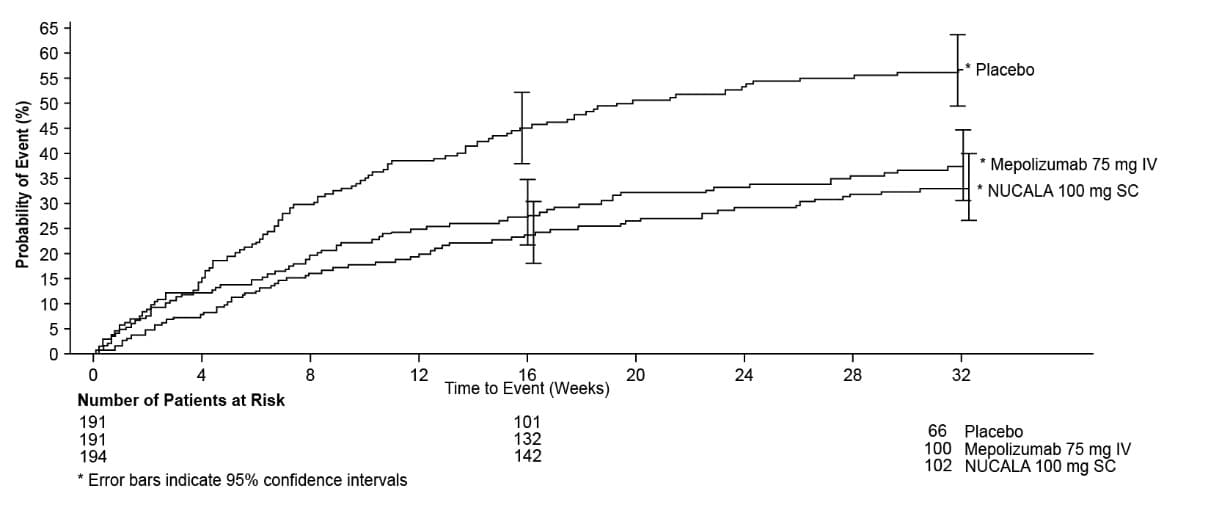
MEA115588 was a randomised, double-blind, placebo-controlled, parallel-group, multi-centre study which evaluated the efficacy and safety of mepolizumab as add-on therapy in 576 patients with severe refractory eosinophilic asthma defined as peripheral blood eosinophils greater than or equal to 150 cells/μL at initiation of treatment or greater than or equal to 300 cells/μL within the past 12 months.
Patients received mepolizumab 100 mg administered subcutaneously, mepolizumab 75 mg administered intravenously or placebo treatment once every 4 weeks over 32 weeks. The primary endpoint was the frequency of clinically significant exacerbations of asthma and the reductions for both mepolizumab treatment arms compared to placebo were statistically significant (p<0.001). Table 2 provides the results of the primary and secondary endpoints for patients treated with subcutaneous mepolizumab or placebo.
Table 2: Results of primary and secondary endpoints at week 32 in the intent to treat population (MEA115588)
Mepolizumab 100 mg
(subcutaneous)
N= 194
Placebo
N= 191
Primary endpoint
Frequency of clinically significant exacerbations
Exacerbation rate per year
0.83
1.74
Percent reduction
Rate ratio (95% CI)
53%
0.47 (0.35, 0.64)
-
p-value
<0.001
Secondary endpoints
Frequency of exacerbations requiring hospitalisations/emergency room visits
Exacerbation rate per year
0.08
0.20
Percent reduction
Rate ratio (95% CI)
61%
0.39 (0.18, 0.83)
_
p-value
0.015
Frequency of exacerbations requiring hospitalisation
Exacerbations rate per year
0.03
0.10
Percent reduction
Rate ratio (95% CI)
69%
0.31 (0.11, 0.91)
_
p-value
0.034
Pre-bronchodilator FEV
1
(mL) at week 32
Baseline (SD)
1730 (659)
1860 (631)
Mean change from baseline (SE)
183 (31)
86 (31)
Difference (mepolizumab vs. placebo)
98
95% CI
(11, 184)
p-value
0.028
St. George's Respiratory Questionnaire (SGRQ) at week 32
Baseline (SD)
47.9 (19. 5)
46.9 (19.8)
Mean change from baseline (SE)
-16.0 (1.1)
-9.0 (1.2)
Difference (mepolizumab vs. placebo)
-7.0
95% CI
(-10.2, -3.8)
p-value
<0.001
Reduction of exacerbation rate by baseline blood eosinophil count
Table 3 shows the results of a combined analysis of the two exacerbation studies (MEA112997 and MEA115588) by baseline blood eosinophil count. The rate of exacerbations in the placebo arm increased with increasing baseline blood eosinophil count. The reduction rate with mepolizumab was greater in patients with higher blood eosinophil counts.
Table 3: Combined analysis of the rate of clinically significant exacerbations by baseline blood eosinophil count in patients with severe refractory eosinophilic asthma
Mepolizumab 75 mg IV/100 mg SC
N=538
Placebo
N=346
MEA112997+MEA115588
<150 cells/μL
n
123
66
Exacerbation rate per year
1.16
1.73
Mepolizumab vs. placebo
Rate ratio (95% CI)
0.67 (0.46,0.98)
---
150 to <300 cells/μL
n
139
86
Exacerbation rate per year
1.01
1.41
Mepolizumab vs. placebo
Rate ratio (95% CI)
0.72 (0.47,1.10)
---
300 to <500 cells/μL
n
109
76
Exacerbation rate per year
1.02
1.64
Mepolizumab vs. placebo
Rate ratio (95% CI)
0.62 (0.41,0.93)
---
≥500 cells/μL
n
162
116
Exacerbation rate per year
0.67
2.49
Mepolizumab vs. placebo
Rate ratio (95% CI)
0.27 (0.19,0.37)
---
Oral corticosteroid reduction study MEA115575 (SIRIUS)
MEA115575 evaluated the effect of mepolizumab 100 mg administered subcutaneously on reducing the requirement for maintenance oral corticosteroids (OCS) while maintaining asthma control in subjects with severe refractory eosinophilic asthma. Patients had a blood eosinophil count of ≥150/μL at baseline or a blood eosinophil count of ≥300/μL in the 12 months prior to screening. Patients were administered mepolizumab or placebo treatment once every 4 weeks over the treatment period. Patients continued to receive their existing asthma medicinal product during the study with the exception of their OCS dose which was reduced every 4 weeks during the OCS reduction phase (Weeks 4-20), as long as asthma control was maintained.
A total of 135 patients were enrolled: mean age was 50 years, 55% were female, and 48% had been receiving oral steroid therapy for at least 5 years. The baseline mean prednisone equivalent dose was approximately 13 mg per day.
The primary endpoint was the percent reduction in daily OCS dose (weeks 20-24), whilst maintaining asthma control by defined dose reduction categories (see Table 4). Predefined categories included percent reductions ranging from 90-100% reduction, to no decrease in the prednisone dose from the end of the optimisation phase. The comparison between mepolizumab and placebo was statistically significant (p=0.008).
Table 4: Results of the primary and secondary endpoints in MEA115575
ITT Population
Mepolizumab
100 mg
(subcutaneous)
N= 69
Placebo
N= 66
Primary endpoint
Percent reduction in OCS from baseline (weeks 20-24)
90% - 100%
75% - <90%
50% - <75%
>0% - <50%
No decrease in OCS/lack of asthma control/ withdrawal from treatment
16 (23%)
12 (17%)
9 (13%)
7 (10%)
25 (36%)
7(11%)
5 (8%)
10 (15%)
7(11%)
37 (56%)
Odds ratio (95% CI)
2.39 (1.25, 4.56)
p-value
0.008
Secondary endpoints (weeks 20-24)
Reduction in the daily OCS dose to 0 mg/d
10 (14%)
5 (8%)
Odds ratio (95% CI)
1.67 (0.49, 5.75)
p-value
0. 414
Reduction in the daily OCS dose to ≤5mg/day
37 (54%)
21 (32%)
Odds ratio (95% CI)
2.45 (1.12, 5.37)
p-value
0.025
Median % reduction in daily OCS dose from baseline (95% CI)
50.0 (20.0, 75.0)
0.0 (-20.0, 33.3)
Median difference (95% CI)
-30.0 (-66.7, 0.0)
p-value
0.007
Open-label extension studies in severe refractory eosinophilic asthma MEA115666 (COLUMBA), MEA115661 (COSMOS) and 201312 (COSMEX)
The long-term efficacy profile of mepolizumab in severe refractory eosinophilic asthma patients (n=998) treated for a median of 2.8 years (range 4 weeks to 4.5 years) in open-label extension studies MEA115666, MEA115661 and 201312 was generally consistent with the 3 placebo-controlled studies.
Chronic rhinosinusitis with nasal polyps (CRSwNP)
Study 205687 (SYNAPSE) was a 52-week, randomised, double-blind, placebo-controlled study which evaluated 407 patients aged 18 years and older with CRSwNP.
Patients enrolled in the study were required to have a nasal obstruction VAS (Visual Analogue Scale) symptom score of >5 out of a maximum score of 10, an overall VAS symptom score >7 out of a maximum score of 10 and an endoscopic bilateral NP score of ≥5 out of a maximum score of 8 (with a minimum score of 2 in each nasal cavity). Patients must also have had a history of at least one prior surgery for nasal polyps in the previous 10 years.
Key baseline characteristics included total endoscopic NP score mean (SD) 5.5 (1.29), nasal obstruction VAS score mean (SD) 9.0 (0.83), overall VAS symptom score mean (SD) 9.1 (0.74), loss of smell VAS score mean (SD) 9.7 (0.72) and Sino-Nasal Outcome Test (SNOT-22) mean (SD) 64.1 (18.32). The geometric mean eosinophil count was 390 cells/mcL (95% CI: 360, 420). In addition, 27% of patients had aspirin-exacerbated respiratory disease (AERD) and 48% of patients had at least 1 course of OCS for CRSwNP in the past 12 months.
Patients received a 100 mg dose of mepolizumab or placebo, administered subcutaneously once every 4 weeks in addition to background intranasal corticosteroid therapy.
The co-primary endpoints were change from baseline in total endoscopic NP score at week 52 and change from baseline in mean nasal obstruction VAS score during weeks 49-52. The key secondary endpoint was the time to first NP surgery up to Week 52 (surgery was defined as any procedure involving instruments resulting in incision and removal of tissue [e.g. polypectomy] in the nasal cavity). Patients who received mepolizumab had significantly greater improvements (decreases) in total endoscopic NP score at Week 52 and in nasal obstruction VAS score during weeks 49-52 compared to placebo, and all secondary endpoints were statistically significant in favour of mepolizumab (see Table 5 and Figure 1).
Table 5: Summary of results for primary and secondary endpoints (intent to treat population)
Placebo
(N=201)
Mepolizumab
100 mg SC
(N=206)
Co-primary endpoints
Total endoscopic score at week 52
a
Median score at baseline (min, max)
6.0 (0, 8)
5.0 (2, 8)
Median change from baseline
0.0
-1.0
p-value
b
<0.001
Difference in medians (95% CI)
c
-0.73 (-1.11, -0.34)
≥1-point improvement, n (%)
57 (28)
104 (50)
≥2-point improvement, n (%)
26 (13)
74 (36)
Nasal obstruction VAS score (weeks 49 to 52)
a
Median score at baseline (min, max)
9.14 (5.31, 10.00)
9.01 (6.54, 10.00)
Median change from baseline
-0.82
-4.41
p-value
b
<0.001
Difference in medians (95% CI)
c
-3.14 (-4.09, -2.18)
>1-point improvement, n (%)
100 (50)
146 (71)
≥3-point improvement, n (%)
d
73 (36)
124 (60)
Key secondary endpoint
Time to first nasal polyps surgery
Participants with surgery
46 (23)
18 (9)
Hazard ratio (Mepolizumab/Placebo) (95% CI)
e
0.43 (0.25, 0.76)
p-value
e
0.003
Other secondary endpoints
Overall VAS score (Weeks 49-52)
a
Median score at baseline (min, max)
9.20 (7.21, 10.00)
9.12 (7.17, 10.00)
Median change from baseline
-0.90
-4.48
p-value
b
<0.001
Difference in medians (95% CI)
c
-3.18 (-4.10, -2.26)
≥2.5-point improvement (%)
f
40
64
SNOT-22 total score at week 52
a, g
n
198
205
Median score at baseline (min, max)
64.0 (19, 110)
64.0 (17, 105)
Median change from baseline
-14.0
-30.0
p-value
b
<0.001
Difference in medians (95% CI)
c
-16.49 (-23.57, -9.42)
≥28-point improvement (%)
f
32
54
Patients requiring systemic corticosteroids for nasal polyps up to Week 52
Number of patients with ≥1 course
74 (37)
52 (25)
Odds Ratio to Placebo (95% CI)
h
0.58 (0.36, 0.92)
p-value
h
0.020
Composite VAS score - nasal symptoms (Weeks 49-52)
a, i
Median score at baseline (min, max)
9.18 (6.03, 10.00)
9.11 (4.91, 10.00)
Median change from baseline
-0.89
-3.96
p-value
b
<0.001
Difference in medians (95% CI)
c
-2.68 (-3.44, -1.91)
≥2-point improvement (%)
f
40
66
Loss of smell VAS score (Weeks 49-52)
a
Median score at baseline (min, max)
9.97 (6.69, 10.00)
9.97 (0.94, 10.00)
Median change from baseline
0.00
-0.53
p-value
b
<0.001
Difference in medians (95% CI)
c
-0.37 (-0.65, -0.08)
≥3-point improvement (%)
f
19
36
a
Patients with nasal surgery/sinuplasty prior to visit assigned their worst observed score prior to nasal surgery/sinuplasty. Those who withdrew from study with no nasal surgery/sinuplasty assigned their worst observed score prior to study withdrawal.
b
Based on Wilcoxon rank-sum test.
c
Quantile regression with covariates of treatment group, geographic region, baseline score and log(e) baseline blood eosinophil count.
d
A three-point improvement in nasal obstruction VAS has been identified as a meaningful within-patient change for this assessment.
e
Estimated from a Cox Proportional Hazards Model with covariates of treatment group, geographic region, baseline total endoscopic score (centrally read), baseline nasal obstruction VAS, log(e) baseline blood eosinophil count and number of previous surgeries (1, 2, >2 as ordinal).
f
Threshold for improvement has been identified as a meaningful within-patient change for this assessment
g
Improvement seen in all 6 domains of symptoms and impact associated with CRSwNP.
h
Analysis using logistic regression model with covariates of treatment group, geographic region, number of OCS courses for NP in last 12 months (0, 1, >1 as ordinal), baseline total Endoscopic Nasal Polyps score (centrally read), baseline nasal obstruction VAS score and log(e) baseline blood eosinophil count.
i
Composite VAS score of nasal obstruction, nasal discharge, mucus in the throat and loss of smell.
Time to first NP surgery
Across the 52-week treatment period, patients in the mepolizumab group had a lower probability of undergoing NP surgery than patients in the placebo group. The risk of surgery over the treatment period was significantly lower by 57% for patients treated with mepolizumab compared with placebo (Hazard Ratio: 0.43; 95% CI 0.25, 0.76; p=0.003).
Figure 1: Kaplan Meier Curve for Time to First Nasal Polyps Surgery
A post-hoc analysis of the proportion of patients with surgery showed a 61% reduction in the odds of surgery versus placebo (OR: 0.39, 95% CI: 0.21, 0.72; p= 0.003).
CRSwNP patients with co-morbid asthma
In 289 (71%) patients with co-morbid asthma, pre-specified analyses showed improvements in the co-primary endpoints consistent with those seen in the overall population in the patients who received mepolizumab 100 mg compared with placebo. Additionally in these patients, there was a greater improvement from baseline at Week 52 in asthma control as measured by the Asthma Control Questionnaire (ACQ‑5) for mepolizumab 100 mg compared with placebo (median change [Q1, Q3] of -0.80 [-2.20, 0.00] and 0.00 [-1.10, 0.20], respectively).
Chronic obstructive pulmonary disease (COPD)
The efficacy of mepolizumab as add-on maintenance treatment for adult patients with inadequately controlled chronic obstructive pulmonary disease (COPD) of an eosinophilic phenotype was demonstrated in two pivotal randomised, double-blind, placebo-controlled, multicentre studies (MATINEE, 208657 and METREX, MEA117106).
In addition, another double-blind, randomised, placebo-controlled study (METREO, MEA117113) evaluated two dose levels of mepolizumab 100 mg and 300 mg every 4 weeks in adult patients with inadequately controlled COPD of an eosinophilic phenotype and this study showed that there was no additional benefit of using the higher dose.
The two pivotal studies enrolled a total of 1 640 adults (aged 40 years and older) who were randomised to receive mepolizumab 100 mg or placebo (in addition to standard of care) administered subcutaneously every 4 weeks for a treatment duration of 52 to 104 weeks in MATINEE or 52 weeks in METREX. While 1 640 adults were enrolled in the two clinical studies (MATINEE and METREX), the efficacy population consisted of 1 266 adults.
Both studies enrolled patients with a diagnosis of COPD with moderate to very severe airflow limitation (post-bronchodilator FEV
1
/FVC ratio <0.7 and post-bronchodilator FEV
1
of 20% to 80% predicted) and at least 2 moderate or 1 severe COPD exacerbation in the previous year despite receiving triple inhaled therapy.
In MATINEE, patients were required to have a minimum blood eosinophil count of 300 cells/mcL at screening. In METREX, there was no minimum blood eosinophil count requirement, but randomisation was stratified by baseline blood eosinophil count: ≥150 cells/mcL at screening or ≥300 cells/mcL in the previous 12 months, or blood eosinophil count <150 cells/mcL at screening with no evidence of blood eosinophil count ≥300 cell/mcL in the previous 12 months. There was insufficient data from METREX to support the efficacy of mepolizumab in patients with COPD with blood eosinophil count <150 cells/mcL at screening with no evidence of blood eosinophil count ≥300 cells/mcL in the previous 12 months. Thus, the efficacy population (N = 1 266) included patients from MATINEE (n = 804) and patients from METREX who had a blood eosinophil count ≥150 cells/mcL at screening or ≥300 cells/mcL in the previous 12 months (n = 462).
The demographic and baseline characteristics of the MATINEE and METREX efficacy population are provided in Table 6.
Table 6: Demographics and baseline characteristics in the MATINEE (mITT) and METREX studies
MATINEE
METREX
a
(N=804)
(N=462)
Age (y) of patients, mean (SD)
66 (8.0)
65 (8.4)
Female, n (%)
253 (31)
163 (35)
White, n (%)
673 (84)
391 (85)
Asian, n (%)
112 (14)
5 (1)
Black or African American, n (%)
10 (1)
6 (1)
Other/Multiple, n (%)
9 (1)
60 (13)
Hispanic/Latino, n (%)
189 (24)
75 (16)
Current smokers, n (%)
222 (28)
134 (29)
Average smoking history (pack-years), mean (SD)
43.0 (24.9)
44 (25.8)
Duration of COPD (y), mean (SD)
10.0 (6.28)
9.5 (6.52)
mMRC score ≥2 (range 0-4), n (%)
611 (76)
371 (80)
Symptoms of chronic bronchitis (SGRQ assessed),
n (%)
b
544 (68)
274 (59)
Moderate airflow limitation: ≥50% to <80% predicted FEV
1
, n (%)
349 (43)
144 (31)
Severe airflow limitation: ≥30% to <50% predicted FEV
1
, n (%)
340 (42)
234 (51)
Very severe airflow limitation: <30% predicted FEV
1
, n (%)
110 (14)
79 (17)
Post-bronchodilator % predicted FEV
1,
mean (SD)
48 (15.8)
44 (14.8)
Post-bronchodilator FEV
1
/FVC ratio, mean (SD)
0.5 (0.12)
0.5 (0.12)
Number of moderate
c
or severe
d
exacerbations in previous year, mean (SD)
2.3 (0.94)
2.5 (1.29)
Number of severe
d
exacerbations in previous year,
mean (SD)
0.3 (0.67)
0.5 (0.89)
Background COPD treatment at randomisation: ICS/LAMA/LABA, n (%)
793 (99)
454 (98)
SGRQ score, mean (SD)
55 (17.8)
55 (16.7)
Geometric mean eosinophil count at screening, cells/mcL (95% CI)
480 (470, 490)
260 (250, 280)
mITT = modified Intent-to-Treat, SD = standard deviation, mMRC = modified Medical Research Council, SGRQ = St. George's Respiratory Questionnaire, FEV
1
= forced expiratory volume in 1 second, FVC = forced vital capacity, ICS = inhaled corticosteroids, LAMA = long-acting muscarinic antagonist, LABA = long-acting beta agonist, CI = confidence interval.
a
Patients with blood eosinophil count ≥150 cells/mcL at screening or ≥300 cells/mcL in the previous 12 months only.
b
In MATINEE patients had the following COPD types by investigator assessment, n (%); chronic bronchitis only 338 (42%), emphysema only 252 (31%), emphysema and chronic bronchitis 143 (18%). These were not assessed in METREX.
c
Exacerbations treated with either systemic corticosteroids with or without antibiotics.
d
Exacerbations requiring hospitalisation.
The primary objective of the MATINEE and METREX studies was to evaluate the efficacy of mepolizumab on the annualised rate of moderate (defined as worsening of COPD symptoms requiring treatment with oral/systemic corticosteroids and/or antibiotics) or severe exacerbations (defined as requiring hospitalisation or resulting in death).
In both studies, mepolizumab demonstrated a statistically significant reduction in the annualised rate of moderate or severe exacerbations compared with placebo (see Table 7).
Table 7. Results of the primary endpoint in the MATINEE (mITT) and METREX studies
MATINEE
METREX
a
Mepolizumab
N = 403
Placebo
N = 401
Mepolizumab
N = 233
Placebo
N = 229
Rate of moderate
b
or severe
c
exacerbations
Exacerbation rate per year
0.80
1.01
1.40
1.71
Percent rate reduction
Rate ratio vs. placebo
(95% CI)
21%
0.79
(0.66, 0.94)
18%
0.82
(0.68, 0.98)
p-value
0.011
0.036
CI = confidence interval.
a
Patients with baseline eosinophils ≥150 cells/mcL at screening or ≥300 cells/mcL in the previous 12 months.
b
Exacerbations treated with either systemic corticosteroids or antibiotics.
c
Exacerbations requiring hospitalisation or resulting in death.
In MATINEE, mepolizumab also reduced the annualised rate of exacerbations requiring emergency department visit and/or hospitalisation by 35% compared with placebo (rate ratio [RR] of 0.65; 95% CI: 0.43, 0.96) but this reduction was not statistically significant after a break in the hierarchy. In METREX, mepolizumab did not have an effect on exacerbations requiring emergency department visit and/or hospitalisation, which was the next secondary endpoint in the pre-specified hierarchy.
The cumulative incidence of moderate or severe exacerbations was lower for patients receiving mepolizumab 100 mg compared to placebo in the MATINEE and METREX efficacy population (Figures 2 and 3).
Figure 2: Cumulative incidence of moderate or severe exacerbations in the MATINEE (mITT) study
Figure 3: Cumulative incidence of moderate or severe exacerbations in the METREX study
Secondary Endpoints
In both studies, mepolizumab demonstrated a statistically significant lower risk of moderate/severe exacerbation compared with placebo (see Table 8).
Table 8. Time to first moderate or severe exacerbation in the MATINEE (mITT) and METREX studies
MATINEE
METREX
a
Mepolizumab
N = 403
Placebo
N = 401
Mepolizumab
N = 233
Placebo
N = 229
Time to first moderate or severe exacerbation
Median time to first
Exacerbation
b
(days)
419
321
192
141
Percent risk reduction
Hazard ratio vs. placebo
(95% CI)
23%
0.77
(0.64, 0.93)
25%
0.75
(0.60, 0.94)
p-value
0.009
0.036
CI = confidence interval.
a
Patients with baseline eosinophils >150 cells/mcL at screening or ≥300 cells/mcL in the previous 12 months.
b
Kaplan Meier estimate
In MATINEE, the results of the health-related quality of life COPD Assessment Test (CAT) responder score (next endpoint in the hierarchy) were not statistically significant.
Health-related quality of life assessment
In MATINEE, the SGRQ responder rate (defined as a reduction in score of 4 or more from baseline) at Week 52 was 50% for mepolizumab 100 mg compared with 46% for placebo (Odds Ratio: 1.17; 95% CI: 0.87, 1.57). In the METREX efficacy population, the responder rate at Week 52 was 42% for mepolizumab 100 mg compared with 40% for placebo (N = 451, Odds Ratio: 1.08; 95% CI: 0.74, 1.59).
Other Endpoints
In MATINEE, changes from baseline in pre-bronchodilator FEV
1
over time were similar between the mepolizumab and placebo groups. Similarily, in METREX there was no improvement in lung function for mepolizumab compared with placebo, based on pre-bronchodilator FEV
1
.
Eosinophilic granulomatosis with polyangiitis (EGPA)
MEA115921 was a randomised, double-blind, placebo-controlled, 52-week study which evaluated 136 adult patients with EGPA, who had a history of relapsing or refractory disease, and who were on stable oral corticosteroid therapy (OCS; ≥7.5 to ≤50 mg/day prednisolone/prednisone), with or without stable immunosuppressant therapy (excluding cyclophosphamide). Other background standard of care therapy was allowed during the study. Fifty-three percent (n=72) were also on concomitant stable immunosuppressant therapy. Patients with organ threatening or life- threatening EGPA were excluded from study MEA115921.
Patients either received a 300 mg dose of mepolizumab or placebo administered subcutaneously once every 4 weeks in addition to their background prednisolone/prednisone with or without immunosuppressive therapy. The OCS dose was tapered at the discretion of the investigator.
Remission
The co- primary endpoints were the total accrued duration of remission, defined as a Birmingham Vasculitis Activity Score (BVAS) =0 plus prednisolone/prednisone dose ≤4 mg/day, and the proportion of patients in remission at both 36 and 48 weeks of treatment. BVAS=0 represents no active vasculitis.
Compared with placebo, patients receiving mepolizumab 300 mg achieved a significantly greater accrued time in remission. Additionally, compared to placebo, a significantly higher proportion of patients receiving mepolizumab 300 mg achieved remission at both Week 36 and Week 48 (Table 9).
For both co-primary endpoints, compared with placebo, the beneficial effect observed following mepolizumab 300 mg treatment was present irrespective of if patients were receiving immunosuppressant therapy in addition to background corticosteroids.
Using the secondary endpoint remission definition of BVAS=0 plus prednisolone/prednisone ≤7.5 mg/day, patients receiving mepolizumab 300 mg also achieved significantly greater accrued time in remission (p<0.001), and a higher proportion of patients were in remission at both Week 36 and Week 48 (p<0.001), compared to placebo.
Table 9: Analyses of Co-Primary Endpoints
Number (%) of patients
Placebo
N=68
Mepolizumab 300mg
N=68
Accrued Duration of Remission Over 52 Weeks
0
55 (81)
32 (47)
>0 to <12 weeks
8 (12)
8 (12)
12 to <24 weeks
3 (4)
9 (13)
24 to <36 weeks
0
10 (15)
≥36 weeks
2 (3)
9 (13)
Odds ratio (mepolizumab/placebo)
5.91
95% CI
---
2.68, 13.03
p-value
---
<0.001
Patients in remission at Weeks 36 and 48
2 (3)
22 (32)
Odds ratio (mepolizumab/placebo)
16.74
95% CI
---
3.61, 77.56
p-value
---
<0.001
An odds ratio >1 favours Nucala. Remission: BVAS=0 and OCS dose ≤ 4mg / day.
Relapse
Compared with placebo, the time to first relapse was significantly longer for patients receiving mepolizumab 300 mg (p<0.001). Additionally, patients receiving mepolizumab had a 50% reduction in annualised relapse rate compared with placebo: 1.14 vs 2.27, respectively.
Oral corticosteroid reduction
Patients treated with mepolizumab had a significantly lower average daily OCS during Weeks 48-52 compared with patients who received placebo. During Weeks 48 to 52, 59% and 44% of patients treated with mepolizumab achieved an average daily OCS dose of ≤ 7.5 mg and ≤ 4 mg respectively compared with 33% and 7% in the placebo group. 18% of patients in the mepolizumab group were able to taper off OCS completely compared with 3% in the placebo group.
Asthma Control Questionnaire – 6 (ACQ-6)
Patients treated with mepolizumab had significant improvements in mean ACQ 6 score during Weeks 49-52 compared with patients who received placebo.
Hypereosinophilic syndrome (HES)
Study 200622 was a randomised, double-blind, placebo-controlled, 32-week study which evaluated 108 patients ≥12 years old with HES. Patients received 300 mg of mepolizumab, or placebo administered subcutaneously once every 4 weeks while continuing their HES therapy. In study 200622, HES therapy included but was not limited to OCS, immunosuppressive, cytotoxic therapy or other symptomatic therapies associated with HES such as omeprazole.
Patients entering the study had experienced at least two HES flares within the past 12 months and had a blood eosinophil count ≥1000 cells/μL during screening. Patients who were FIP1L1-PDGFRα kinase-positive were excluded from the study.
The primary endpoint of study 200622 was the proportion of patients who experienced a HES flare during the 32-week treatment period. A HES flare was defined as worsening of clinical signs and symptoms of HES resulting in the need to increase OCS or increase/add cytotoxic or immunosuppressive HES therapy or receiving blinded active OCS due to increased blood eosinophils (on ≥ 2 occasions).
The primary analysis compared patients who experienced a HES flare or withdrew from the study in the mepolizumab and placebo treatment groups. Over the 32-week treatment period, 50% fewer patients experienced a HES flare or withdrew from the study when treated with 300 mg mepolizumab compared with placebo; 28% versus 56% respectively (OR 0.28, 95% CI: 0.12, 0.64) (see Table 10).
Secondary endpoints were time to first HES flare, proportion of patients who experienced a HES flare during Week 20 through Week 32, rate of HES flares and change from baseline in fatigue severity. All secondary endpoints were statistically significant and provided support for the primary endpoint (see Figure 3 and Table 11).
Table 10: Results of primary endpoint/analysis in the Intent to Treat population (Study 200622)
Mepolizumab
300 mg
N= 54
Placebo
N= 54
Proportion of patients who experienced a HES flare
Patients with ≥1 HES flare or who withdrew from study (%)
15 (28)
30 (56)
Patients with ≥1 HES flare (%)
14 (26)
28 (52)
Patients with no HES flare who withdrew (%)
1 (2)
2 (4)
Odds ratio (95% CI)
0.28 (0.12, 0.64)
CMH p-value
0.002
CMH =Cochran-Mantel-Haenszel
Time to first flare
Patients who received 300 mg mepolizumab had a significant increase in the time to first HES flare compared with placebo. The risk of first HES flare over the treatment period was 66 % lower for patients treated with Nucala compared with placebo (Hazard Ratio: 0.34; 95 % CI 0.18, 0.67; p=0.002).
Figure 3: Kaplan Meier Curve for Time to First HES Flare
Table 11: Results of other secondary endpoints in the Intent to Treat population (Study 200622)
Mepolizumab
300 mg
N= 54
Placebo
N= 54
HES flares during week 20 and up to and including week 32
Patients with ≥1 HES flare or who withdrew from study (%)
9 (17)
19 (35)
Odds ratio (95% CI)
0.33 (0.13, 0.85)
CMH p-value
0.02
Rate of HES flares
Estimated mean rate/year
0.50
1.46
Rate ratio (95% CI)
a
0.34 (0.19, 0.63)
Wilcoxon Rank Sum Test p-value
0.002
Change from baseline in fatigue severity based on Brief Fatigue Inventory (BFI) Item 3 (worst level of fatigue during past 24 hours) at week 32
b
Median change in BFI item 3
-0.66
0.32
Comparison (mepolizumab vs. placebo) Wilcoxon Rank Sum Test p-value
0.036
a
rate ratio <1 favours mepolizumab.
b
patients with missing data included with worst observed value. BFI item 3 scale: 0 = no fatigue to 10 = as bad as you can imagine
CMH =Cochran-Mantel-Haenszel
Open-label extension (OLE)
Study 205203 was a 20-week open-label extension of Study 200622. HES therapy was allowed to be adjusted per local standard of care while maintaining mepolizumab 300 mg treatment starting at Week 4. In this study the effect of treatment with mepolizumab on the reduction of HES flares reported during Study 200622 was sustained for patients who continued mepolizumab treatment in study 205203, in which 94% (47/50) of patients did not experience a flare.
In the 72 patients requiring OCS during Weeks 0 to 4 of the OLE, 28% of patients achieved a mean daily dose OCS dose reduction of ≥50% during Weeks 16 to 20.
Paediatric population
Severe refractory eosinophilic
asthma
In MEA115588 and in the double-blind placebo-controlled study 200862, there were 34 adolescents (12 to 17 years old). Of these 34 subjects: 12 received placebo, 9 received mepolizumab 75 mg intravenously, and 13 received 100 mg subcutaneously. In a combined analysis of these studies, a 40% reduction in clinically significant exacerbations was observed in adolescents following mepolizumab treatment compared to placebo (rate ratio 0.60; 95% CI: 0.17, 2.10).
Eosinophilic granulomatosis with polyangiitis (EGPA)
The are no clinical data available in children and adolescents aged 6 to 17 years old.
HES
Four adolescents (12 to 17 years old) were enrolled in study 200622; one adolescent received mepolizumab 300 mg, and 3 adolescents received placebo for 32 weeks. The one adolescent treated with mepolizumab in the 32-week Study 200622 did not have a HES flare. All 4 adolescents that completed study 200622 continued into a 20-week open-label extension study 205203 in which one of the 4 adolescents experienced one HES flare.
⚠️ Warnings
Reconstitution must be carried out under aseptic conditions.
Instructions for reconstitution for each vial
1.
Reconstitute the contents of the vial with 1.2 mL of sterile water for injections
preferably using a 2 to 3 mL syringe and a 21 gauge needle. The stream of sterile water should be directed vertically, onto the centre of the lyophilised cake. Allow the vial to sit at room temperature during reconstitution, gently swirling the vial for 10 seconds with circular motion at 15-second intervals until the powder is dissolved.
Note: The reconstituted solution
must not be shaken
during the procedure as this may lead to product foaming or precipitation. Reconstitution is typically complete within 5 minutes after the sterile water has been added, but it may take additional time.
2. If a mechanical reconstitution device (swirler) is used to reconstitute Nucala, reconstitution can be accomplished by swirling at 450 rpm for no longer than 10 minutes. Alternatively, swirling at 1000 rpm for no longer than 5 minutes is acceptable.
3. Following reconstitution, Nucala must be visually inspected for particulate matter and clarity prior to use. The solution must be clear to opalescent, and colourless to pale yellow or pale brown, free of visible particles. Small air bubbles, however, are expected and acceptable. If particulate matter remains in the solution or if the solution appears cloudy or milky, the solution must not be used.
4. The reconstituted solution, if not used immediately must be:
• Protected from sunlight
• Stored below 30°C, not frozen
• Discarded if not used within 8 hours of reconstitution
Instructions for administration of 100 mg dose
1. For subcutaneous administration, a 1 mL polypropylene syringe fitted with a disposable needle 21 gauge to 27 gauge x 0.5 inch (13 mm) is recommended to be used.
2. Just prior to administration, remove 1 mL of reconstituted Nucala. Do not shake the reconstituted solution during the procedure as this could lead to product foaming or precipitation.
3. Administer the 1 mL injection (equivalent to 100 mg mepolizumab) subcutaneously into the upper arm, thigh, or abdomen.
If more than one vial is required for administration of the prescribed dosage, repeat steps 1 to 3. It is recommended that individual injection sites are separated by at least 5 cm.
Instructions for administration of 40 mg dose
1. For subcutaneous administration, a 1 mL polypropylene syringe fitted with a disposable needle 21 gauge to 27 gauge x 0.5 inch (13 mm) is recommended to be used.
2. Just prior to administration, remove 0.4mL of reconstituted Nucala. Do not shake the reconstituted solution during the procedure as this could lead to product foaming or precipitation. Dispose of the remaining solution.
3. Administer the 0.4mL injection (equivalent to 40 mg mepolizumab) subcutaneously into the upper arm, thigh, or abdomen.
Disposal
Any unused medicinal product or waste material should be disposed of in accordance with local requirements.