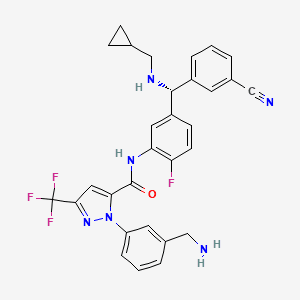
This information is for educational purposes only. It is not intended as medical advice. Always consult a qualified healthcare professional.
Rx
Orladeyo
150 mg, Kapsułki twarde
INN: Berotralstatum
Data updated: 2026-04-13
Available in:
🇨🇿🇩🇪🇬🇧🇫🇷🇵🇱🇸🇰🇺🇦
Form
Kapsułki twarde
Dosage
150 mg
Route
doustna
Storage
—
About This Product
User Reviews
Reviews reflect personal experiences and are not medical advice. Always consult your doctor.
Manufacturer
Biocryst Ireland Limited (Irlandia)
Composition
Berotralstatum 150 mg
ATC Code
B06AC06
Source
URPL
Pharmacotherapeutic group: Other haematological agents, drugs used in hereditary angioedema, ATC code: B06AC06
Mechanism of action
Berotralstat is an inhibitor of plasma kallikrein. Plasma kallikrein is a serine protease that cleaves high-molecular-weight-kininogen (HMWK), releasing bradykinin, a potent vasodilator that increases vascular permeability. In patients with HAE due to C1-INH deficiency or dysfunction, normal regulation of plasma kallikrein activity is impaired, which leads to uncontrolled increases in plasma kallikrein activity and bradykinin release, resulting in HAE attacks consisting of swelling (angioedema).
Cardiac electrophysiology
At the steady state C
max
of berotralstat at the recommended dose of 150 mg once daily, the mean corrected QT interval increased by 3.4 msec (90% upper CI bound of 6.8 msec), which is below the 10 msec threshold for concern. At a supratherapeutic dose of 450 mg once daily, steady state exposures were 4-fold higher than at the recommended 150 mg dose, and the corrected QT interval increased by a mean of 21.9 msec.
Clinical efficacy and safety
Efficacy of berotralstat was studied in a multicentre, randomised, double-blind, placebo-controlled, parallel-group study NCT 03485911.
Study NCT 03485911
This study included 120 patients (114 adults and 6 children 12 years and over) with type I or II HAE who experienced at least two investigator-confirmed attacks within the first 8 weeks of the run-in period and took at least one dose of study treatment. Nine patients were aged ≥ 65 years. Patients were randomised into 1 of 3 parallel treatment arms, stratified by baseline attack rate, in a 1:1:1 ratio (berotralstat 110 mg, berotralstat 150 mg or placebo by oral administration once daily, with food) for the 24-week treatment period.
A total of 81 patients received at least one dose of berotralstat in the 24-week treatment period. Overall, 66% of patients were female and 93% of patients were Caucasian with a mean age of 41.6 years. A history of laryngeal angioedema attacks was reported in 74% of patients and 75% reported prior use of long-term prophylaxis. The median attack rate during the prospective run-in period (baseline attack rate) was 2.9 per month. Of patients enrolled, 70% had a baseline attack rate of ≥ 2 attacks per month.
Patients discontinued other prophylactic HAE medicinal products prior to entering the study; however, all patients were allowed to use rescue medicinal products for treatment of breakthrough HAE attacks.
In berotralstat-treated patients, 51.4% of breakthrough attacks were treated with C1- INH (see section 4.4). Concomitant use of C1-INH and berotralstat did not result in any identifiable adverse reactions.
Orladeyo 150 mg produced a statistically significant and clinically meaningful reduction in the rate of HAE attacks compared to placebo through 24 weeks in the primary endpoint Intent-to-Treat (ITT) population as shown in Table 2. The percent reduction in HAE attack rate was greater with Orladeyo 150 mg compared to placebo, regardless of attack rate during the run-in period.
Table 2: Reduction in HAE attack rate in the berotralstat 150 mg ITT population
Outcome
Berotralstat 150 mg
(n=40)
Placebo
(n=40
a)
Rate per 28 days
Percent reduction from placebo
(95% CI)
p-value
Rate per 28 days
HAE attack rate
1.31
44.2% (23.0, 59.5)
< 0.001
2.35
a
One patient in the ITT analysis was randomised to placebo but was not treated.
Reduction in attack rates was sustained through 24 weeks, as shown in Figure 1.
Figure 1: HAE attack rate per month through 24 weeks treatment with berotralstat 150 mg (n=40) or placebo (n=40)
SEM: standard error of the mean
Of patients receiving 150 mg berotralstat, 58% had a ≥ 50% reduction in their HAE attack rates compared to baseline versus 25% of placebo patients.
Orladeyo 150 mg reduced the rate of HAE attacks requiring treatment with standard of care acute attack treatments by 49.2% (95% CI: 25.5%, 65.4%) compared to placebo (rate per 28 days: 1.04 vs. 2.05).
Health-related quality of life
Patients receiving berotralstat 150 mg experienced an improvement in Angioedema Quality of Life Questionnaire (AE-QoL) total score and domain scores (functioning, fatigue/mood, fear/shame and nutrition) compared to the placebo group as shown in Table 3. A reduction of 6 points is considered a clinically meaningful improvement. The largest improvement was observed in the functioning score.
Table 3: Change in AE-QoL score*- berotralstat compared to placebo at week 24
LS mean change (SE) from baseline at week 24
LS mean difference from placebo
(95% CI)
Berotralstat 150 mg
Placebo
AE-QoL total score
-14.6 (2.6)
-9.7 (2.6)
-4.90
(-12.23, 2.43)
Functioning score
-19.5 (3.4)
-10.4 (3.4)
-9.10
(-18.58, 0.38)
Fatigue/Mood score
-11.3 (3.2)
-9.2 (3.3)
-2.16
(-11.35, 7.03)
Fear/Shame score
-15.4 (3.2)
-10.5 (3.3)
-4.96
(-14.05, 4.13)
Nutrition score
-8.8 (3.0)
-6.1 (3.1)
-2.68
(-11.27, 5.92)
AE-QoL=Angioedema Quality of Life Questionnaire; CI=confidence interval; LS=least squares; SE=standard error
*
Lower scores indicate improved quality of life (lower impairment)
Paediatric population
The safety and effectiveness of Orladeyo were evaluated in 28 adolescent patients aged 12 to < 18 years across both studies. The safety profile and attack rate on study were similar to those observed in adults.
The safety and efficacy of berotralstat in paediatric patients under 12 years have not been established.
The European Medicines Agency has deferred the obligation to submit the results of studies with Orladeyo in one or more subsets of the paediatric population in the treatment of hereditary angioedema for the prevention of attacks in patients with hereditary angioedema (see section 4.2 for information on paediatric use).
⚠️ Warnings
Any unused medicinal product or waste material should be disposed of in accordance with local requirements.