Reviews reflect personal experiences and are not medical advice. Always consult your doctor.
About This Product
Manufacturer
ViiV Healthcare BV (Hiszpania)
Composition
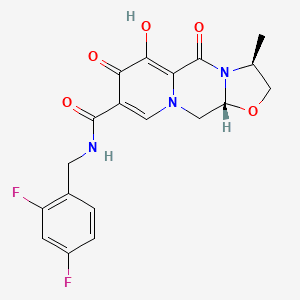
Cabotegravirum 30 mg
ATC Code
J05AJ04
Source
URPL
Pharmacotherapeutic group: Antiviral for systemic use, integrase inhibitor, ATC code: J05AJ04
Mechanism of action
Cabotegravir inhibits HIV integrase by binding to the integrase active site and blocking the strand transfer step of retroviral deoxyribonucleic acid (DNA) integration which is essential for the HIV replication cycle.
Pharmacodynamic effects
Antiviral activity in cell culture
Cabotegravir exhibited antiviral activity against laboratory strains of wild-type HIV-1 with mean concentration of cabotegravir necessary to reduce viral replication by 50 percent (EC
50
) values of 0.22 nM in peripheral blood mononuclear cells (PBMCs), 0.74 nM in 293T cells and 0.57 nM in MT-4 cells. Cabotegravir demonstrated antiviral activity in cell culture against a panel of 24 HIV-1 clinical isolates (three in each group of M clades A, B, C, D, E, F, and G, and 3 in group O) with EC
50
values ranging from 0.02 nM to 1.06 nM for HIV-1. Cabotegravir EC
50
values against three HIV-2 clinical isolates ranged from 0.10 nM to 0.14 nM.
Antiviral Activity in combination with other antiviral medicinal products
No medicinal products with inherent anti-HIV activity were antagonistic to cabotegravir's antiretroviral activity (
in vitro
assessments were conducted in combination with rilpivirine, lamivudine, tenofovir and emtricitabine).
Resistance in vitro
Isolation from wild-type HIV-1 and activity against resistant strains: Viruses with > 10-fold increase in cabotegravir EC
50
were not observed during the 112-day passage of strain IIIB. The following integrase (IN) mutations emerged after passaging wild type HIV-1 (with T124A polymorphism) in the presence of cabotegravir: Q146L (fold-change range 1.3-4.6), S153Y (fold-change range 2.8-8.4), and I162M (fold-change = 2.8). As noted above, the detection of T124A is selection of a pre-existing minority variant that does not have differential susceptibility to cabotegravir. No amino acid substitutions in the integrase region were selected when passaging the wild-type HIV-1 NL-432 in the presence of 6.4 nM of cabotegravir through Day 56.
Among the multiple mutants, the highest fold-change was observed with mutants containing Q148K or Q148R. E138K/Q148H resulted in a 0.92-fold decrease in susceptibility to cabotegravir but E138K/Q148R resulted in a 12-fold decrease in susceptibility and E138K/Q148K resulted in an 81-fold decrease in susceptibility to cabotegravir. G140C/Q148R and G140S/Q148R resulted in a 22- and 12-fold decrease in susceptibility to cabotegravir, respectively. While N155H did not alter susceptibility to cabotegravir, N155H/Q148R resulted in a 61-fold decrease in susceptibility to cabotegravir. Other multiple mutants, which resulted in a FC between 5 and 10, are: T66K/L74M (FC=6.3), G140S/Q148K (FC=5.6), G140S/Q148H (FC=6.1) and E92Q/N155H (FC=5.3).
Resistance in vivo
HPTN 083
In the primary analysis of the HPTN 083 study, there were 13 incident infections on the cabotegravir arm and 39 incident infections on the tenofovir disoproxil fumarate (TDF)/emtricitabine (FTC) arm. In the cabotegravir arm, 5 incident infections occurred when receiving cabotegravir PrEP injections, of which 4 participants received on-time injections and 1 participant had one injection off-schedule. Five incident infections occurred ≥ 6 months after the last dose of cabotegravir PrEP. Three incident infections occurred during the oral lead-in period.
HIV genotyping and phenotyping were attempted at the first visit where HIV viral load was > 500 copies/mL. Of the 13 incident infections in the cabotegravir arm, 4 participants had INSTI resistance mutations. In the TDF/FTC arm, the 4 participants with NRTI resistance (including 3 who had multi-class resistance) included 3 with M184V/I and one with K65R.
None of the 5 participants who were infected after prolonged interruption from cabotegravir administration had INSTI resistance mutations. Neither genotype nor phenotype could be generated for one of the 5 participants, with just 770 copies/mL HIV-1 RNA. Integrase phenotype could not be generated for one of the remaining 4 participants. The remaining 3 participants retained susceptibility to all INSTIs.
Three participants became infected during the oral lead-in phase, prior to receiving cabotegravir injections. One participant with undetectable plasma cabotegravir levels had no INSTI resistance mutations and was susceptible to all INSTIs. Two participants with detectable plasma cabotegravir concentrations had INSTI resistance mutations. The first participant had INSTI resistant mutations E138E/K, G140G/S, Q148R and E157Q. Integrase phenotype could not be generated. The second participant had INSTI resistance mutations E138A and Q148R. This virus was resistant to cabotegravir (fold-change =5.92) but susceptible to dolutegravir (fold-change=1.69).
Five participants acquired HIV-1, despite on time cabotegravir injections for 4 participants and one off-schedule injection for one participant. Two participants had viral loads too low to analyse. The third participant had no INSTI resistance mutations at the first viraemic visit (Week 17) but had R263K at 112 and 117 days later. While phenotype could not be determined 112 days later, day 117 phenotype showed this virus to be susceptible to both cabotegravir (fold-change= 2.32) and dolutegravir (fold-change=2.29). The fourth participant had INSTI resistance mutations G140A and Q148R. Phenotype showed resistance to cabotegravir (fold-change=13) but susceptibility to dolutegravir (fold-change=2.09). The fifth participant had no INSTI resistance mutations.
In addition to the 13 incident infections, one further participant was HIV-1 infected at enrolment and had no INSTI resistance mutations at that time, however, 60 days later, INSTI resistance mutation E138K and Q148K were detected. Phenotype could not be generated.
Following the primary analysis, extended retrospective virologic testing was performed to better characterise the timing of HIV infections. As a result, one of the 13 incident infections in a participant receiving on time cabotegravir injections was determined to be a prevalent infection.
HPTN 084
In the primary analysis of the HPTN 084 study, there were 4 incident infections on the cabotegravir arm and 36 incident infections on the TDF/FTC arm.
In the cabotegravir arm, 2 incident infections occurred while receiving injections; one participant had 3 delayed cabotegravir injections and both had been non-adherent to oral cabotegravir.
Two incident infections occurred after the last dose of oral cabotegravir; both participants were non-adherent to oral cabotegravir. The first HIV positive visit occurred approx. 11 weeks after enrolment for one participant and 57 weeks after enrolment for the other.
HIV genotyping was attempted at the first visit where HIV viral load was > 500 c/mL (first viraemic visit). HIV genotyping results were available for 3 of the 4 cabotegravir arm participants. No major INSTI resistance mutations were detected.
HIV genotyping results were available for 33 of the 36 incident infections in the TDF/FTC group. One participant had a major NRTI mutation (M184V); this participant also had NNRTI resistance with the mutation K103N. Nine other participants had NNRTI resistance (7 had K103N, alone or with E138A or P225H; 1 had K101E alone; 1 had E138K alone).
Following the primary analysis, extended retrospective virologic testing was performed to better characterise the timing of HIV-1 infections. As a result, 1 of the 4 HIV-1 incident infections in participants receiving cabotegravir was determined to be a prevalent infection.
HPTN 083-01 and HPTN 084-01
In studies HPTN 083-01 and HPTN 084-01, there were no incident infections observed among 64 at-risk adolescents (weighing ≥ 35 kg) receiving cabotegravir for HIV-1 PrEP.
Clinical efficacy and safety
The efficacy of cabotegravir for PrEP has been evaluated in two randomised (1:1), double blind, multi-site, two-arm, controlled studies. The efficacy of cabotegravir was compared with daily oral tenofovir disoproxil fumarate (TDF)/emtricitabine (FTC).
Participants randomised to receive cabotegravir initiated oral lead-in dosing with one 30 mg cabotegravir tablet and a placebo daily, for up to 5 weeks, followed by cabotegravir intramuscular (IM) injection (single 600 mg injection, at months 1, 2 and every 2 months thereafter and a daily placebo tablet. Participants randomised to receive TDF/FTC initiated oral TDF 300 mg/FTC 200 mg and placebo for up to 5 weeks, followed by oral TDF 300 mg/FTC 200 mg daily and placebo (IM) injection (3 mL, 20% lipid injectable emulsion at months 1, 2 and every 2 months thereafter).
HPTN 083
In HPTN 083, a non-inferiority study, 4566 cisgender men and transgender women who have sex with men, were randomised 1:1 and received either cabotegravir (n=2281) or TDF/FTC (n=2285) as blinded study medicinal products up to Week 153.
At baseline, the median age of participants was 26 years, 12% were transgender women, 72% were non-white, 67% were < 30 years and < 1% were over 60 years.
The primary endpoint was the rate of incident HIV infections among participants randomised to oral cabotegravir and cabotegravir injections compared to oral TDF/FTC (corrected for early stopping). The primary analysis demonstrated the superiority of cabotegravir compared to TDF/FTC with a 66% reduction in the risk of acquiring incident HIV infection, hazard ratio (95% CI) 0.34 (0.18, 0.62); further testing revealed one of the infections on cabotegravir to be prevalent then yielding a 69% reduction in the risk of incident infection relative to TDF/FTC (see Table 4).
Table 4 Primary Efficacy Endpoint: Comparison of Rates of Incident HIV Infections during Randomized Phase in HPTN 083 (mITT, extended retrospective virologic testing)
Cabotegravir
(N=2278)
TDF/FTC
(N=2281)
Superiority P-Value
Person years
3211
3193
HIV-1 incident infections (incidence rate per 100 person years)
12
1
(0.37)
39 (1.22)
Hazard ratio (95% CI)
0.31 (0.16, 0.58)
p=0.0003
1
Following the primary analysis, extended retrospective virologic testing was performed to better characterise the timing of HIV infections. As a result, one of the 13 incident infections on cabotegravir was determined to be a prevalent infection. The original hazard ratio (95% CI) from the primary analysis is 0.34 (0.18, 0.62).
Findings from all subgroup analyses were consistent with the overall protective effect, with a lower rate of incident HIV-1 infections observed for participants randomised to the cabotegravir group compared with participants randomised to the TDF/FTC group (see Table 5).
Table 5 Rate of incident HIV-1infection by subgroup in HPTN 083 (mITT, extended retrospective virologic testing)
Subgroup
Cabotegravir incidence per 100 person years
Cabotegravir person years
TDF/FTC incidence per 100 person years
TDF/FTC person years)
HR (95% CI)
Age
< 30 years
0.47
2110
1.66
1987
0.29 (0.15, 0.59)
≥ 30 years
0.18
1101
0.50
1206
0.39 (0.08, 1.84)
Gender
MSM
0.35
2836
1.14
2803
0.32 (0.16, 0.64)
TGW
0.54
371
1.80
389
0.34 (0.08, 1.56)
Race (US)
Black
0.58
691
2.28
703
0.26 (0.09, 0.76)
Non-Black
0.00
836
0.50
801
0.11 (0.00, 2.80)
Region
US
0.26
1528
1.33
1504
0.21 (0.07, 0.60)
Latin America
0.49
1020
1.09
1011
0.47 (0.17, 1.35)
Asia
0.35
570
1.03
581
0.39 (0.08, 1.82)
Africa
1.08
93
2.07
97
0.63 (0.06, 6.50)
MSM= cisgender men who have sex with men
TGW = Transgender women who have sex with men
HPTN 084
In HPTN 084, a superiority study, 3224 cisgender women were randomised 1:1 and received either cabotegravir (n=1614) or TDF/FTC (n=1610) as blinded study medicinal products up to Week 153.
At baseline, the median age of participants was 25 years, > 99% were non-white, > 99% were cisgender women and 49% were < 25 years of age, with a maximum age of 45 years.
The primary endpoint was the rate of incident HIV infections among participants randomised to oral cabotegravir and cabotegravir injections compared to oral TDF/FTC (corrected for early stopping). The primary analysis demonstrated the superiority of cabotegravir compared to TDF/FTC with an 88% reduction in the risk of acquiring incident HIV-1 infection hazard ratio (95% CI) 0.12 (0.05, 0.31); further testing revealed 1 of the infections on cabotegravir to be prevalent then yielding a 90% reduction in the risk of HIV-1 incident infection relative to TDF/FTC (see Table 6).
Table 6 Primary Efficacy Endpoint in HPTN 084: Comparison of Rates of Incident HIV Infections during Randomised Phase (mITT, extended retrospective virologic testing)
Cabotegravir
(N=1613)
TDF/FTC
(N=1610)
Superiority P-Value
Person years
1960
1946
HIV-1 incident infections (incidence rate per 100 person years)
3
1
(0.15)
36 (1.85)
Hazard ratio (95% CI)
0.10 (0.04, 0.27)
p< 0.0001
1
Following the primary analysis, extended retrospective virologic testing was performed to better characterise the timing of HIV-1 infections. As a result, 1 of the 4 HIV-1 incident infections in participants receiving cabotegravir was determined to be a prevalent infection. The original hazard ratio corrected for early stopping (95% CI) from the primary analysis is 0.12 (0.05, 0.31).
Findings from pre-planned subgroup analyses were consistent with the overall protective effect, with a lower rate of incident HIV-1 infections observed for participants randomised to the cabotegravir group compared with participants randomised to the TDF/FTC group (see Table 7).
Table 7 Rate of incident HIV-1infection by subgroup in HPTN 084 (mITT, extended retrospective virologic testing)
Subgroup
Cabotegravir incidence per 100 person years
Cabotegravir person years
TDF/FTC incidence per 100 person years
TDF/FTC person years)
HR (95% CI)
Age
< 25 years
0.23
868
2.34
853
0.12 (0.03, 0.46)
≥ 25 years
0.09
1093
1.46
1093
0.09 (0.02, 0.49)
BMI
< 30
0.22
1385
1.88
1435
0.12 (0.04, 0.38)
≥ 30
0.00
575
1.76
511
0.04 (0.00, 0.93)
Paediatric population
The European Medicines Agency has waived the obligation to submit the results of studies with Apretude tablets in children under the age of 12 years, in the prevention of HIV-1 infection.
⚠️ Warnings
Any unused medicinal product or waste material should be disposed of in accordance with local requirements.