Reviews reflect personal experiences and are not medical advice. Always consult your doctor.
Manufacturer
Bioprojet Pharma (Francja)
Composition
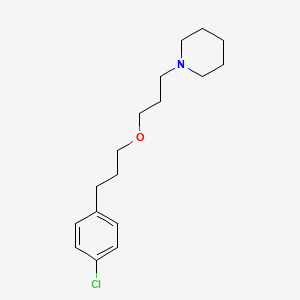
Pitolisantum 4,5 mg
ATC Code
N07XX11
Source
URPL
Pharmacotherapeutic group: Other nervous system drugs, ATC code: N07XX11.
Mechanism of action
Pitolisant is a potent, orally active histamine H3-receptor antagonist/inverse agonist which, via its blockade of histamine auto-receptors enhances the activity of brain histaminergic neurons, a major arousal system with widespread projections to the whole brain. Pitolisant also modulates various neurotransmitter systems, increasing acetylcholine, noradrenaline and dopamine release in the brain. However no increase in dopamine release in the striatal complex including nucleus accumbens was evidenced for pitolisant.
Pharmacodynamic effects
In narcoleptic patients with or without cataplexy, pitolisant improves the level and duration of wakefulness and daytime alertness assessed by objective measures of ability to sustain wakefulness (e.g. Maintenance of Wakefulness Test (MWT)) and attention (e.g. Sustained Attention to Response Task (SART)).
Clinical efficacy and safety
Adult population
Narcolepsy (with or without cataplexy) is a chronic condition. The effectiveness of pitolisant up to 36 mg once a day, for the treatment of narcolepsy with or without cataplexy was established in two main, 8 weeks, multicenter, randomized, double-blind, placebo-controlled, parallel group trials (Harmony I and Harmony CTP). Harmony Ibis, study with a similar design, was limited to 18 mg once a day. Long-term safety data of Wakix in this indication are available in the open label long-term study HARMONY III
The pivotal study (Harmony 1), double-blind, randomized, vs placebo and modafinil (400 mg/day), parallel group studies with flexible dose adaptation, included 94 patients (31 patients treated with pitolisant, 30 with placebo and 33 with modafinil). Dosage was initiated at 9 mg once a day and was increased, according to efficacy response and tolerance to 18 mg or 36 mg once a day per 1-week interval. Most patients (60%) reached the 36 mg once a day dosage. To assess the efficacy of pitolisant on Excessive Daytime Sleepiness (EDS), Epworth Sleepiness Scale (ESS) score was used as primary efficacy criterion. The results with pitolisant were significantly superior to those in the placebo group (mean difference: -3.33; 95%CI [-5.83 to -0.83]; p < 0.05) but did not differ significantly from the results in the modafinil group (mean difference: 0.12; 95%CI [-2.5 to 2.7]). The waking effect of the two active substances was established at similar rates (Figure 1).
Figure 1: Changes in Epworth Sleepiness Scale Score (ESS) (mean ± SEM) from Baseline to week 8 in Harmony 1 study
The effect on Epworth was supported in two laboratory tests of vigilance and attention (Maintenance of Wakefulness Test (MWT) (p=0.044) and Sustained Attention to Response (SART) (p=0.053, almost but not significant)).
Cataplexy attacks frequency in patients displaying this symptom was decreased significantly (p=0.034) with pitolisant (-65%) compared to placebo (-10%). The daily cataplexy rate (geometric means) was 0.52 at baseline and 0.18 at final visit for pitolisant and 0.43 at baseline and 0.39 at final visit for placebo, with a rate ratio rR=0.38 [0.16 ; 0.93] (p=0.034).
The second pivotal study (Harmony Ibis) included 165 patients (67 treated with pitolisant, 33 with placebo and 65 with modafinil). The study design was similar to study Harmony I except that the maximum dose for pitolisant reached by 75% of patients was 18 mg once a day instead of 36 mg in Harmony I. As an important unbalance led to comparison of results with or without cluster grouping of sites, the most conservative approach showed non-significant ESS score decrease with pitolisant compared to placebo (pitolisant-placebo=-1.94 with p=0.065). Results from cataplexy rate at 18 mg once a day were not consistent with those of the first pivotal study (36 mg once a day).
Improvement of the two objective tests of wakefulness and attention, MWT and SART, with pitolisant was significant versus placebo (p=0.009 and p=0.002 respectively) and non-significant versus modafinil (p=0.713 and p=0.294 respectively).
Harmony CTP, a supportive double blind, randomized, parallel group study of pitolisant versus placebo, was designed to establish pitolisant efficacy in patients with high frequency cataplexy in narcolepsy. The primary efficacy endpoint was the change in the average number of cataplexy attacks per week between the 2 weeks of baseline and the 4 weeks of stable treatment period at the end of study. 105 narcoleptic patients with high frequency weekly cataplexy rates at baseline were included (54 patients treated with pitolisant and 51 with placebo). Dosage was initiated at 4.5 mg once a day and was increased, according to efficacy response and tolerance to 9 mg, 18 mg or 36 mg once a day per 1-week interval. Most patients (65%) reached the 36 mg once a day dosage.
On the primary efficacy endpoint, Weekly Rate of Cataplexy episodes (WRC), the results with pitolisant were significantly superior to those in the placebo group (p < 0.0001), with a progressive 64% decrease from baseline to end of treatment (Figure 2). At baseline, the geometric mean of WRC was 7.31 (median=6.5 [4.5; 12]) and 9.15 (median=8.5 [5.5; 15.5]) in the placebo and pitolisant groups respectively. During the stable period (until the end of treatment), geometric mean WRC decreased to 6.79 (median=6 [3; 15]) and 3.28 (median=3 [1.3; 6]) in the placebo and pitolisant groups respectively in patients who had experienced at least one episode of cataplexy. The observed WRC in pitolisant group was about half of WRC in the placebo group: the effect size of pitolisant compared with placebo was summarized by the ratio rate rR(Pt/Pb), rR=0.512; 95%CI [0.435 to 0.603]; p < 0.0001). The effect size of pitolisant compared with placebo based on a model for WRC based on BOCF with centre as a fixed effect was 0.581, 95%CI [0.493 to 0.686]; p<0.0001.
Figure 2: Changes in weekly cataplexy episodes (geometric mean) from Baseline to week 7 in Harmony CTP study
The effect of pitolisant on EDS was also assessed in this population using the ESS score. In the pitolisant group, ESS decreased significantly between baseline and the end of treatment compared to placebo with an observed mean change of -1.9 ± 4.3 and -5.4 ± 4.3 (mean ± sd) for placebo and pitolisant respectively, (p<0.0001) (Figure 3). This effect on EDS was confirmed by the results on Maintenance of Wakefulness Test (MWT). The geometric mean of the ratios (MWT
Final
/MWT
Baseline
) was 1.8 (95%CI 1.19; 2.71, p=0.005). The MWT value in the pitolisant group was 80% higher than in the placebo group.
Figure 3: Changes in Epworth Sleepiness Scale Score (ESS) (mean ± SEM) from Baseline to week 7 in Harmony CTP study
The open-label, long-term Phase III study (HARMONY III) assessed the long term safety of pitolisant in patients suffering from narcolepsy (with or without cataplexy) over 12 months and with an extension of up to 5 years. 102 narcoleptic patients with or without cataplexy were included in the 12 months follow-up period. 68 patients completed the first 12 months period. 45, 38, 34 and 14 patients completed the 2, 3, 4 and 5 year follow-up periods, respectively.
The maximal dose received during the study was 36 mg / day in 85% of patients. After 12 months of treatment, improvements in EDS assessed by ESS score of remaining patients is of same magnitude as those observed in the other trials conducted in narcoleptic patients. The decrease in mean ESS score (SD) was -3.62 (4.63) after 1 year.
After 12 months of treatment with pitolisant, frequency of symptoms such as sleep attacks, sleep paralysis, cataplexy and hallucinations has been improved.
No major safety concern was identified. The safety results observed were similar to those reported in previous trials where pitolisant at 36 mg once daily was given for up to 3 months only.
The efficacy of pitolisant in the treatment of Excessive Daytime Sleepiness (EDS) in patients with Obstructive Sleep Apnoea (OSA) has been studied in two pivotal clinical trials: HAROSA I and HAROSA II.
HAROSA I studied the efficacy and safety of pitolisant in the treatment of Excessive Daytime Sleepiness in patients with Obstructive Sleep Apnoea syndrome (OSA) and treated by Continuous Positive Airway Pressure (CPAP), but still complaining of Excessive Daytime Sleepiness (EDS). This was a prospective, multicentre, randomized, double-blind study of pitolisant versus placebo, 12-week double-blind phase. 244 patients were analysed (183 pitolisant, 61 placebo), 83% male, average of 53 years old, 12% over 65 years. Patients had excessive daytime sleepiness (an Epworth Sleepiness Scale [ESS] score greater than or equal to 12) and were submitted to nCPAP therapy for a minimum period of 3 months and still complaining of Excessive Daytime Sleepiness despite the efforts made beforehand to obtain an efficient nCPAP.
The primary efficacy variable was the change in Epworth Scale Score (ESS) between baseline and end of treatment. During the double-blind phase, the maximum dose prescribed was 18 mg for 79.8% of the patient in the active treatment group and for 88.5% of the patients in the placebo group. The maximum dose is reached after a three-week titration, starting with 4.5 mg.
After 12 weeks DB treatment, a significant improvement of the ESS was reported with pitolisant compared to placebo (table 1).
Table 1: overview of Efficacy results after 12 weeks in HAROSA I
Parameters
Treatment group (n)
Baseline score (at V2)
Final score (at V6)
Change
Difference from placebo
95% CI
P-value
ESS (SD)
Placebo (61)
14.6 (2.8)
12.1 (6.4)
-2.75
2.6[-3.9;-1.4]
P<0.001
Pitolisant (183)
14.9 (2.7)
9 (4.8)
-5.52
Figure 4 Changes in Epworth sleepiness scale (ESS) score in P09-08 study
Double-Blind Phase - ITT Population (N=244)
HAROSA II studied the efficacy and safety of pitolisant in the treatment of Excessive Daytime Sleepiness in patients with Obstructive Sleep Apnoea syndrome (OSA) refusing the Continuous Positive Airway Pressure (CPAP) therapy. This was a prospective, multicentre, randomized, double-blind study of pitolisant versus placebo, 12-week double-blind phase followed by a 40-week open-label extension phase. 268 patients were analysed (201 pitolisant, 67 placebo), 75% male, average of 52 years, 12% over 65 years. Patients had an Epworth Sleepiness Scale [ESS] score greater than or equal to 12 and were refusing to be treated by nCPAP therapy, and still complaining of Excessive Daytime Sleepiness.
The primary efficacy variable was the change in Epworth Scale Score (ESS) between baseline and end of treatment. During the double-blind phase, the maximum dose prescribed was 18 mg for 82.5% of the patient in the active treatment group and for 86.6% of the patients in the placebo group.
After 12 weeks DB treatment, a significant improvement of the ESS was reported with pitolisant compared to placebo (ANCOVA model adjusting for ESS and BMI at V2 and study center as random effect) (Table 2).
Table 2: overview of Efficacy results after 12 weeks in HAROSA II
Parameters
Treatment group (n)
Baseline score (at V2)
Final score (at V6)
Change
Difference from placebo
95% CI
P-value
ESS (SD)
Placebo (67)
15.7 (3.6)
12.2 (6.1)
-3.6
-2.8 [-4.0;-1.5]
P<0.001
Pitolisant (201)
15.7 (3.1)
9.1 (4.7)
-6.3
Figure 5 Changes in Epworth sleepiness scale (ESS) score in P09-09 study
Double-Blind Phase - ITT Population (N=268)
In an extended analysis the two HAROSA trials were compared and combined, showing significant improvements by pitolisant compared with placebo on the main parameters (ESS, OSleR test, Pichot Fatigue Scale and CGI).
Table 3: Main efficacy results in pooled analysis HAROSA I – HAROSA II
Mean
95% CI
p
OSleR Test
(1)
1.18
1.02, 1.35
P=0.022
Pichot fatigue scale
(2)
-1.27
-2.30, -0.23
P=0.017
CGI
(3)
-0.63
-0.84, -0.47
P<0.001
1) mean ratio P20/placebo
2) treatment effect
3) difference P20-placebo
Open-label data
Patients who participated in the double-blind 12 weeks period of HAROSA I and HAROSA II studies, could participate in the 40 week open-label phase. The primary objective of the open-label phase was long-term safety and effectiveness of pitolisant up to 18 mg/day. Maintenance of effect of pitolisant in EDS in OSA patients has not been established in blinded, placebo-controlled trials. In HAROSA I, 1.5% of patients discontinued study participation during the open-label phase, due to lack of efficacy and 4.0% due to adverse events. In HAROSA II, 1.3% of patients discontinued study participation during the open-label phase due to lack of efficacy and 2.5% due to adverse events.
Paediatric population
The effectiveness of pitolisant up to 36 mg once a day has been studied for the treatment of narcolepsy with or without cataplexy in children from 6 to less than 18 years old in an 8-week, multicentre, randomised, double-blind, placebo-controlled, parallel group trial. It included 110 patients (72 patients in the pitolisant group, 38 in the placebo group). Dosage was initiated at 4.5 mg once a day and was increased, according to efficacy response and tolerance to 18 mg or 36 mg once a day per 1-week interval. Patients weighing less than 40 kg remained at a maximum dose of 18 mg. Most patients (60%) reached the 36 mg once a day dosage. 35 patients (31.8%) were aged 6 to 11 years and 75 patients (68.2%) were aged 12 to less than 18 years. To assess the efficacy of pitolisant on EDS and cataplexy (CTP), the Ullanlinna Narcolepsy Scale (UNS) total score was used as primary efficacy criterion, assessed as the change from baseline to the end of double-blind period. The estimate LS means difference (SE) [95% CI] of UNS between treatment groups (pitolisant minus placebo) was ‑3.69 (1.37) [‑6.38; ‑0.99], p=0.0073. Secondary endpoints included the paediatric daytime sleepiness scale (PDSS), the UNS-CTP subscore, and the weekly rate of cataplexy (WRC). The estimate LS means difference (SE) [95% CI] of the PDSS total score between treatment groups (pitolisant minus placebo) was -3.41 (1.07) [-5.52; -1.31], p=0.0015. In the subgroup of patients with type 1 narcolepsy, who had no minimum level of cataplexy required at inclusion (N=61 in the pitolisant group; N=29 in the placebo group), the estimate LS means difference (SE) [95% CI] of the UNS-CTP subscore between treatment groups (pitolisant minus placebo) was -1.77 (0.78) [-3.29; -0.24], p=0.0229, and the rate ratio between the WRC in the pitolisant group and the WRC in the placebo group, adjusted for baseline, was in favor of pitolisant (0.42 [95% CI: 0.18; 1.01], p=0.0540).
Table 4: overview of efficacy results after 8 weeks in phase 3 paediatric study
Placebo (n= 38)
Pitolisant (n= 72)
Ullanlinna Narcolepsy Scale (UNS)
Total score
Baseline mean (SD)
End of treatment mean (SD)
LS mean (SE) – change from baseline
Estimate, 95% CI
p-value
23.68 (9.08)
21.77 (9.25)
-2.60 (1.35)
24.63 (7.80)
18.23 (8.14)
-6.29 (1.14)
-3.69 (-6.38; -0.99)
0.0073
Paediatric Daytime Sleepiness Score
Baseline mean (SD)
End of treatment mean (SD)
LS mean (SE) – change from baseline
Estimate, 95% CI
p-value
20.00 (3.49)
17.96 (5.60)
-2.11 (0.89)
20.16 (3.64)
14.57 (5.37)
-5.53 (0.66)
-3.41 (-5.52; -1.31)
0.0015
Placebo (
n= 29)
Pitolisant (n= 61)
UNS-Cataplexy Subscore*
Baseline mean (SD)
End of treatment mean (SD)
LS mean (SE) – change from baseline
Estimate, 95% CI
p-value
9.03 (4.33)
8.07 (4.62)
-1.12 (0.64)
8.93 (3.96)
6.02 (4.00)
-2.88 (0.44)
-1.77 (-3.29; -0.24)
0.0229
Weekly cataplexy rate*
Baseline mean (SD)
LS mean (SE)
Estimate, 95% CI
p-value
13.44 (26.92)
5.05 (0.37)
8.63 (17.73)
2.14 (0.27)
0.42 (0.18; 1.01)
0.0540
*only measured in patients with type I narcolepsy
Figure 6 Change in the Mean Ullanlinna Narcolepsy Scale Total Score (mean ± SEM) from Baseline to the End of Treatment (Full Analysis Set)
Baseline=[V1 score (D-14) + V2 score (D0)]/2
End of treatment=[V6 score (D49) + V7 score (D56)]/2
SEM=standard error of the mean