This information is for educational purposes only. It is not intended as medical advice. Always consult a qualified healthcare professional.
Allopurinol — Description, Dosage, Side Effects | PillsCard
Rx
Allopurinol
100 mg, Tabletki
INN: Allopurinolum
Data updated: 2026-04-13
Available in:
🇨🇿🇩🇪🇬🇧🇫🇷🇵🇱🇸🇰🇺🇦
Form
Tabletki
Dosage
100 mg
Route
doustna
Storage
Store at 20° to 25°C (68° to 77°F). [See USP Controlled Room Temperature] DISPENSE IN TIGHT, LIGHT-RESISTANT CONTAINER. Distributed by: Sun Pharmaceutical Industries, Inc. Cranbury, NJ 08512 Repackaged by: Proficient Rx LP Thousand Oaks, CA 91320 Rev 04, December 2018
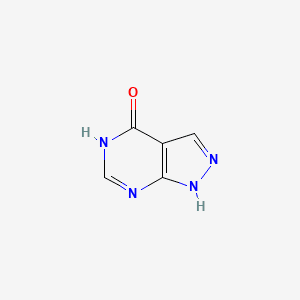
11 DESCRIPTION Allopurinol, USP is a xanthine oxidase inhibitor. It has the following structural formula: Allopurinol, USP is known chemically as 1, 5-dihydro-4 H -pyrazolo [3, 4- d ]pyrimidin-4-one and it has a molecular weight of 136.1 g/mol. Soluble in solutions of potassium and sodium hydroxides, very slightly soluble in water and in alcohol; practically insoluble in chloroform and in ether. It is a xanthine oxidase inhibitor which is administered orally. Each scored white round-shaped tablet contains 100 mg allopurinol and the inactive ingredients colloidal silicon dioxide, lactose monohydrate, magnesium stearate, microcrystalline cellulose, sodium starch glycolate. Each scored orange round-shaped tablet contains 300 mg allopurinol and the inactive ingredients colloidal silicon dioxide, FD&C Yellow No. 6 Lake, lactose monohydrate, magnesium stearate, microcrystalline cellulose, sodium starch glycolate.
⚠️ Warnings
WARNINGS ALLOPURINOL TABLETS, USP SHOULD BE DISCONTINUED AT THE FIRST APPEARANCE OF SKIN RASH OR OTHER SIGNS WHICH MAY INDICATE AN ALLERGIC REACTION. In some instances a skin rash may be followed by more severe hypersensitivity reactions such as exfoliative, urticarial, and purpuric lesions, as well as Stevens-Johnson syndrome (erythema multiforme exudativum), Drug Rash with Eosinophilia and Systemic Symptoms (DRESS) and/or generalized vasculitis, irreversible hepatotoxicity, and, on rare occasions, death (see ADVERSE REACTIONS ). In patients receiving PURINETHOL ® (mercaptopurine) or IMURAN ® (azathioprine), the concomitant administration of 300 to 600 mg of allopurinol per day will require a reduction in dose to approximately one-third to one-fourth of the usual dose of mercaptopurine or azathioprine. Subsequent adjustment of doses of mercaptopurine or azathioprine should be made on the basis of therapeutic response and the appearance of toxic effects (see CLINICAL PHARMACOLOGY ). A few cases of reversible clinical hepatotoxicity have been noted in patients taking allopurinol, and in some patients, asymptomatic rises in serum alkaline phosphatase or serum transaminase have been observed. If anorexia, weight loss, or pruritus develop in patients on allopurinol, evaluation of liver function should be part of their diagnostic workup. In patients with pre-existing liver disease, periodic liver function tests are recommended during the early stages of therapy. Due to the occasional occurrence of drowsiness, patients should be alerted to the need for due precaution when engaging in activities where alertness is mandatory. The occurrence of hypersensitivity reactions to allopurinol may be increased in patients with decreased renal function receiving thiazides and allopurinol concurrently. For this reason, in this clinical setting, such combinations should be administered with caution and patients should be observed closely.