This information is for educational purposes only. It is not intended as medical advice. Always consult a qualified healthcare professional.
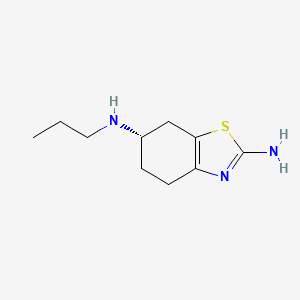
Pramipexole Teva — Description, Dosage, Side Effects | PillsCard
Rx
Pramipexole Teva
0,18 mg, Tabletki
INN: Pramipexolum
Available in:
🇨🇿🇩🇪🇬🇧🇯🇵🇵🇱🇵🇹🇸🇰
Form
Tabletki
Dosage
0,18 mg
Route
doustna
Storage
—
About This Product
Manufacturer
User Reviews
Reviews reflect personal experiences and are not medical advice. Always consult your doctor.
Teva B.V. (Bułgaria)
Composition
Pramipexolum 0,18 mg
ATC Code
N04BC05
Source
URPL
Pharmacotherapeutic group: anti-Parkinson drugs, dopamine agonists, ATC code: N04BC05.
Mechanism of action
Pramipexole is a dopamine agonist that binds with high selectivity and specificity to the D2 subfamily of dopamine receptors of which it has a preferential affinity to D3 receptors, and has full intrinsic activity.
Pramipexole alleviates parkinsonian motor deficits by stimulation of dopamine receptors in the striatum. Animal studies have shown that pramipexole inhibits dopamine synthesis, release, and turnover.
The mechanism of action of pramipexole as treatment for Restless Legs Syndrome is unknown. Neuropharmacological evidence suggests primary dopaminergic system involvement.
Pharmacodynamic effects
In human volunteers, a dose-dependent decrease in prolactin was observed. In a clinical trial with healthy volunteers, where MIRAPEXIN prolonged-release tablets were titrated faster (every 3 days) than recommended up to 3.15 mg pramipexole base (4.5 mg of salt) per day, an increase in blood pressure and heart rate was observed. Such effect was not observed in patient studies.
Clinical efficacy and safety in Parkinson's disease
In patients pramipexole alleviates signs and symptoms of idiopathic Parkinson's disease. Placebo-controlled clinical trials included approximately 1 800 patients of Hoehn and Yahr stages I-V treated with pramipexole. Out of these, approximately 1 000 were in more advanced stages, received concomitant levodopa therapy, and suffered from motor complications.
In early and advanced Parkinson's disease, efficacy of pramipexole in controlled clinical trials was maintained for approximately six months. In open continuation trials lasting for more than three years there were no signs of decreasing efficacy.
In a controlled double blind clinical trial of 2 year duration, initial treatment with pramipexole significantly delayed the onset of motor complications, and reduced their occurrence compared to initial treatment with levodopa. This delay in motor complications with pramipexole should be balanced against a greater improvement in motor function with levodopa (as measured by the mean change in UPDRS-score). The overall incidence of hallucinations and somnolence was generally higher in the escalation phase with the pramipexole group. However, there was no significant difference during the maintenance phase. These points should be considered when initiating pramipexole treatment in patients with Parkinson's disease.
Paediatric population
The European Medicines Agency has waived the obligation to submit the results of studies with MIRAPEXIN in all subsets of the paediatric population in Parkinson's Disease (see section 4.2 for information on paediatric use).
Clinical efficacy and safety in Restless Legs Syndrome
The efficacy of pramipexole was evaluated in four placebo-controlled clinical trials in approximately 1 000 patients with moderate to very severe idiopathic Restless Legs Syndrome.
The mean change from baseline in the Restless Legs Syndrome Rating Scale (IRLS) and the Clinical Global Impression-Improvement (CGI-I) were the primary efficacy outcome measures. For both primary endpoints statistically significant differences have been observed for the pramipexole dose groups 0.25 mg, 0.5 mg and 0.75 mg pramipexole salt in comparison to placebo. After 12 weeks of treatment the baseline IRLS score improved from 23.5 to 14.1 points for placebo and from 23.4 to 9.4 points for pramipexole (doses combined). The adjusted mean difference was -4.3 points (CI 95% -6.4; -2.1 points, p-value < 0.0001). CGI-I responder rates (improved, very much improved) were 51.2% and 72.0% for placebo and pramipexole, respectively (difference 20% CI 95%: 8.1%; 31.8%, p < 0.0005). Efficacy was observed with 0.088 mg of base (0.125 mg of salt) per day after the first week of treatment.
In a placebo-controlled polysomnography study over 3 weeks MIRAPEXIN significantly reduced the number of periodic limb movements during time in bed.
Longer term efficacy was evaluated in a placebo-controlled clinical trial. After 26 weeks of treatment, there was an adjusted mean reduction in IRLS total score of 13.7 and 11.1 points in the pramipexole and placebo group, respectively, with a statistically significant (p = 0.008) mean treatment difference of -2.6. CGI-I responder rates (much improved, very much improved) were 50.3% (80/159) and 68.5% (111/162) for placebo and pramipexole, respectively (p = 0.001), corresponding to a number needed to treat (NNT) of 6 patients (95% CI: 3.5, 13.4).
Paediatric population
The European Medicines Agency has deferred the obligation to submit the results of studies with MIRAPEXIN in one or more subsets of the paediatric population in Restless Legs Syndrome (see section 4.2 for information on paediatric use).
Clinical efficacy and safety in Tourette Disorder
The efficacy of pramipexole (0.0625-0.5 mg/day) with paediatric patients aged 6-17 years with Tourette Disorder was evaluated in a 6-week, double-blind, randomised, placebo-controlled flexible dose study. A total of 63 patients were randomised (43 on pramipexole, 20 on placebo). The primary endpoint was change from baseline on the Total Tic Score (TTS) of the Yale Global Tic Severity Scale (YGTSS). No difference was observed for pramipexole as compared to placebo for either the primary endpoint or for any of the secondary efficacy endpoints including YGTSS total score, Patient Global Impression of Improvement (PGI-I), Clinical Global Impression of Improvement (CGI-I), or Clinical Global Impressions of Severity of Illness (CGI-S). Adverse events occurring in at least 5% of patients in the pramipexole group and more common in the pramipexole-treated patients than in patients on placebo were: headache (27.9%, placebo 25.0%), somnolence (7.0%, placebo 5.0%), nausea (18.6%, placebo 10.0%), vomiting (11.6%, placebo 0.0%), upper abdominal pain (7.0%, placebo 5.0%), orthostatic hypotension (9.3%, placebo 5.0%), myalgia (9.3%, placebo 5.0%), sleep disorder (7.0%, placebo 0.0%), dyspnoea (7.0%, placebo 0.0%) and upper respiratory tract infection (7.0%, placebo 5.0%). Other significant adverse events leading to discontinuation of study medication for patients receiving pramipexole were confusional state, speech disorder and aggravated condition (see section 4.2).