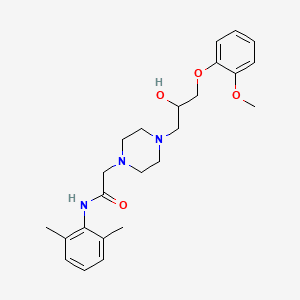
Pharmacotherapeutic group: Other cardiac preparations, ATC code: C01EB18
Mechanism of action
: The mechanism of action of ranolazine is largely unknown. Ranolazine may have some antianginal effects by inhibition of the late sodium current in cardiac cells. This reduces intracellular sodium accumulation and consequently decreases intracellular calcium overload. Ranolazine, via its action to decrease the late sodium current, is considered to reduce these intracellular ionic imbalances during ischaemia. This reduction in cellular calcium overload is expected to improve myocardial relaxation and thereby decrease left ventricular diastolic stiffness. Clinical evidence of inhibition of the late sodium current by ranolazine is provided by a significant shortening of the QTc interval and an improvement in diastolic relaxation in an open-label study of 5 patients with a long QT syndrome (LQT3 having the SCN5A ∆KPQ gene mutation).
These effects do not depend upon changes in heart rate, blood pressure, or vasodilation.
Pharmacodynamic effects
Haemodynamic effects
: Minimal decreases in mean heart rate (< 2 beats per minute) and mean systolic blood pressure (< 3 mm Hg) were observed in patients treated with ranolazine either alone or in combination with other antianginal medicinal products in controlled studies.
Electrocardiographic effects
: Dose and plasma concentration-related increases in the QTc interval (about 6 msec at 1000 mg twice daily), reductions in T wave amplitude, and in some cases notched T waves, have been observed in patients treated with Ranexa. These effects of ranolazine on the surface electrocardiogram are believed to result from inhibition of the fast-rectifying potassium current, which prolongs the ventricular action potential, and from inhibition of the late sodium current, which shortens the ventricular action potential. A population analysis of combined data from 1,308 patients and healthy volunteers demonstrated a mean increase in QTc from baseline of 2.4 msec per 1000 ng/ml ranolazine plasma concentration. This value is consistent with data from pivotal clinical studies, where mean changes from baseline in QTcF (Fridericia's correction) after doses of 500 and 750 mg twice daily were 1.9 and 4.9 msec, respectively. The slope is higher in patients with clinically significant hepatic impairment.
In a large outcome study (MERLIN-TIMI 36) in 6,560 patients with UA/NSTEMI ACS, there was no difference between Ranexa and placebo in the risk of all-cause mortality (relative risk ranolazine:placebo 0.99), sudden cardiac death (relative risk ranolazine:placebo 0.87), or the frequency of symptomatic documented arrhythmias (3.0% versus 3.1%).
No proarrhythmic effects were observed in 3,162 patients treated with Ranexa based on 7-day Holter monitoring in the MERLIN-TIMI 36 study. There was a significantly lower incidence of arrhythmias in patients treated with Ranexa (80%) versus placebo (87%), including ventricular tachycardia ≥ 8 beats (5% versus 8%).
Clinical efficacy and safety
: Clinical studies have demonstrated the efficacy and safety of Ranexa in the treatment of patients with chronic angina, either alone or when the benefit from other antianginal medicinal products was sub-optimal.
In the pivotal study, CARISA, Ranexa was added to treatment with atenolol 50 mg once daily, amlodipine 5 mg once daily, or diltiazem 180 mg once daily. Eight-hundred and twenty-three patients (23% women) were randomised to receive 12 weeks of treatment with Ranexa 750 mg twice daily, 1000 mg twice daily, or placebo. Ranexa demonstrated greater efficacy than placebo in prolonging exercise time at trough at 12 weeks for both doses studied when used as an add-on therapy. However, there was no difference in exercise duration between the two doses (24 seconds compared to placebo; p ≤ 0.03).
Ranexa resulted in significant decreases in the number of angina attacks per week and consumption of short-acting nitroglycerin compared to placebo. Tolerance to ranolazine did not develop during treatment and a rebound increase in angina attacks was not observed following abrupt discontinuation.
The improvement in exercise duration in women was about 33% of the improvement in men at the 1000 mg twice-daily dose level. However, men and women had similar reductions in frequency of angina attacks and nitroglycerin consumption. Given the dose-dependent side effects and similar efficacy at 750 and 1000 mg twice daily, a maximum dose of 750 mg twice daily is recommended.
In a second study, ERICA, Ranexa was added to treatment with amlodipine 10 mg once daily (the maximum labelled dose). Five-hundred and sixty-five patients were randomised to receive an initial dose of Ranexa 500 mg twice daily or placebo for 1 week, followed by 6 weeks of treatment with Ranexa 1000 mg twice daily or placebo, in addition to concomitant treatment with amlodipine 10 mg once daily. Additionally, 45% of the study population also received long-acting nitrates. Ranexa resulted in significant decreases in the number of angina attacks per week (p = 0.028) and consumption of short-acting nitroglycerin (p = 0.014) compared to placebo. Both the average number of angina attacks and nitroglycerin tablets consumed decreased by approximately one per week.
In the main dose-finding study, MARISA, ranolazine was used as monotherapy. One-hundred and ninety-one patients were randomised to treatment with Ranexa 500 mg twice daily, 1000 mg twice daily, 1500 mg twice daily, and matching placebo, each for 1 week in a crossover design. Ranexa was significantly superior to placebo in prolonging exercise time, time to angina, and time to 1 mm ST segment depression at all doses studied with an observed dose-response relationship. Improvement of exercise duration was statistically significant compared to placebo for all three doses of ranolazine from 24 seconds at 500 mg twice daily to 46 seconds at 1500 mg twice daily, showing a dose-related response. In this study, exercise duration was longest in the 1500 mg group; however, there was a disproportional increase in side effects, and the 1500 mg dose was not studied further.
In a large outcome study (MERLIN-TIMI 36) in 6,560 patients with UA/NSTEMI ACS, there was no difference in the risk of all-cause mortality (relative risk ranolazine:placebo 0.99), sudden cardiac death (relative risk ranolazine:placebo 0.87), or the frequency of symptomatic documented arrhythmias (3.0% versus 3.1%) between Ranexa and placebo when added to standard medical therapy (including beta-blockers, calcium channel blockers, nitrates, anti-platelet agents, lipid-lowering medicinal products, and ACE inhibitors). Approximately one-half of the patients in MERLIN-TIMI 36 had a history of angina. The results showed that exercise duration was 31 seconds longer in ranolazine patients versus placebo patients (p = 0.002). The Seattle Angina Questionnaire showed significant effects on several dimensions, including angina frequency (p < 0.001), compared to placebo-treated patients.
A small proportion of non-Caucasians was included in the controlled clinical studies; therefore, no conclusions can be drawn regarding the effect and safety in non-Caucasians.
In a phase 3, double-blind, placebo-controlled, event-driven trial (RIVER-PCI) in 2604 patients aged ≥18 years with a history of chronic angina and incomplete revascularisation after percutaneous coronary intervention (PCI) patients were up-titrated to 1000 mg twice daily (dosage not approved in the current SmPC). No significant difference occurred in the composite primary endpoint (time to first occurrence of ischaemia-driven revascularisation or ischaemia-driven hospitalisation without revascularisation) in the ranolazine group (26.2%) versus the placebo group (28.3%), hazard ratio 0.95, 95% CI 0.82-1.10 p= 0.48. The risk of all cause mortality, CV death or major adverse cardiovascular events (MACE) and heart failure hospitalisation was similar between treatment groups in the overall population; however, MACE were reported more frequently in patients ≥ 75 years treated with ranolazine compared with placebo (17.0%
vs
11.3%, respectively); in addition there was a numerical increase in all cause mortality in patients ≥ 75 years (9.2% vs. 5.1%, p = 0.074).