Reviews reflect personal experiences and are not medical advice. Always consult your doctor.
Manufacturer
Janssen-Cilag International N.V. (Belgia)
Composition
Rilpivirinum 600 mg
ATC Code
J05AG05
Source
URPL
Pharmacotherapeutic group: Antiviral for systemic use, non-nucleoside reverse transcriptase inhibitors, ATC code: J05AG05.
Mechanism of action
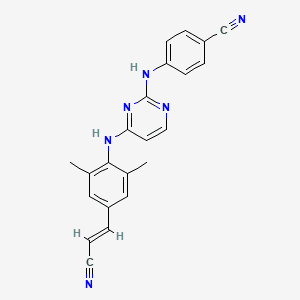
Rilpivirine is a diarylpyrimidine NNRTI of HIV-1. Rilpivirine activity is mediated by non-competitive inhibition of HIV-1 reverse transcriptase (RT). Rilpivirine does not inhibit the human cellular DNA polymerases α, β and γ.
Antiviral activity
in vitro
Rilpivirine exhibited activity against laboratory strains of wild-type HIV-1 in an acutely infected T-cell line with a median EC
50
value for HIV-1/IIIB of 0.73 nM (0.27 ng/ml). Although rilpivirine demonstrated limited
in vitro
activity against HIV-2 with EC
50
values ranging from 2,510 to 10,830 nM (920 to 3,970 ng/ml), treatment of HIV-2 infection with rilpivirine is not recommended in the absence of clinical data.
Rilpivirine also demonstrated antiviral activity against a broad panel of HIV-1 group M (subtype A, B, C, D, F, G, H) primary isolates with EC
50
values ranging from 0.07 to 1.01 nM (0.03 to 0.37 ng/ml) and group O primary isolates with EC
50
values ranging from 2.88 to 8.45 nM (1.06 to 3.10 ng/ml).
Resistance
In cell culture
Rilpivirine-resistant strains were selected in cell culture starting from wild-type HIV-1 of different origins and subtypes as well as NNRTI resistant HIV-1. The most commonly observed resistance-associated mutations that emerged included L100I, K101E, V108I, E138K, V179F, Y181C, H221Y, F227C and M230I.
Resistance to rilpivirine was determined as a fold change in EC
50
value (FC) above the biological cut-off (BCO) of the assay.
In treatment-naïve adult subjects
For the resistance analysis, a broader definition of virologic failure was used than in the primary efficacy analysis. In the week 48 pooled resistance analysis from the phase 3 trials, 62 (of a total of 72) virologic failures in the rilpivirine arm had resistance data at baseline and time of failure. In this analysis, the resistance-associated mutations (RAMs) associated with NNRTI resistance that developed in at least 2 rilpivirine virologic failures were: V90I, K101E, E138K, E138Q, V179I, Y181C, V189I, H221Y, and F227C. In the trials, the presence of the mutations V90I and V189I, at baseline, did not affect response. The E138K substitution emerged most frequently during rilpivirine treatment, commonly in combination with the M184I substitution. In the week 48 analysis, 31 out of 62 of rilpivirine virologic failures had concomitant NNRTI and NRTI RAMs; 17 of those 31 had the combination of E138K and M184I. The most common mutations were the same in the week 48 and week 96 analyses.
In the week 96 pooled resistance analysis, lower rates of virologic failure were observed in the second 48 weeks than in the first 48 weeks of treatment. From the week 48 to the week 96 analysis, 24 (3.5%) and 14 (2.1%) additional virologic failures occurred in the rilpivirine and efavirenz arm, respectively. Of these virologic failures, 9 out of 24 and 4 out of 14 were in subjects with a baseline viral load < 100,000 copies/ml, respectively.
In treatment-naïve paediatric subjects 12 to less than 18 years
In the week 240 resistance analysis of TMC278-C213 Cohort 1, rilpivirine resistance-associated mutations (RAMs) were observed in 46.7% (7/15) of subjects with virologic failure and post-baseline genotypic data. All subjects with rilpivirine RAMs also had at least 1 treatment-emergent NRTI RAM at the last post-baseline time point with genotypic data.
In treatment-naïve paediatric subjects 6 to less than 12 years of age
In the final resistance analysis of the TMC278-C213 Cohort 2, rilpivirine RAMs were observed in 83.3% (5/6) of subjects with post-baseline genotypic data; of these, 2/6 occurred within the first 48 weeks and 4 subjects with rilpivirine RAMs also had at least 1 treatment-emergent NRTI RAM at the last post-baseline time point with genotypic data.
In virologically suppressed paediatric subjects 2 to less than 12 years of age
In the TMC278HTX2002 trial, no subjects experienced virologic failure and no treatment-emergent resistance was observed.
Considering all of the available
in vitro
and
in vivo
data in treatment-naïve subjects, the following resistance-associated mutations, when present at baseline, may affect the activity of rilpivirine: K101E, K101P, E138A, E138G, E138K, E138R, E138Q, V179L, Y181C, Y181I, Y181V, Y188L, H221Y, F227C, M230I, and M230L. These rilpivirine resistance-associated mutations should only guide the use of EDURANT in the treatment-naïve population. These resistance-associated mutations were derived from
in vivo
data involving treatment-naïve subjects only and therefore cannot be used to predict the activity of rilpivirine in subjects who have virologically failed an antiretroviral-containing regimen.
As with other antiretroviral medicinal products, resistance testing should guide the use of EDURANT.
Cross-resistance
Site-directed NNRTI mutant virus
In a panel of 67 HIV-1 recombinant laboratory strains with one resistance-associated mutation at RT positions associated with NNRTI resistance, including the most commonly found K103N and Y181C, rilpivirine showed antiviral activity against 64 (96%) of these strains. The single resistance-associated mutations associated with a loss of susceptibility to rilpivirine were: K101P, Y181I and Y181V. The K103N substitution did not result in reduced susceptibility to rilpivirine by itself, but the combination of K103N and L100I resulted in a 7-fold reduced susceptibility to rilpivirine.
Recombinant clinical isolates
Rilpivirine retained sensitivity (FC ≤ BCO) against 62% of 4,786 HIV-1 recombinant clinical isolates resistant to efavirenz and/or nevirapine.
Treatment-naïve HIV
-
1 infected adult patients
In the week 96 pooled resistance analysis of the phase 3 trials (ECHO and THRIVE), 42 out of 86 subjects with virologic failure on rilpivirine showed treatment-emergent resistance to rilpivirine (genotypic analysis). In these patients, phenotypic cross-resistance to other NNRTIs was noted as follows: etravirine 32/42, efavirenz 30/42, and nevirapine 16/42. In patients with a baseline viral load ≤ 100,000 copies/ml, 9 out of 27 patients with virologic failure on rilpivirine showed treatment-emergent resistance to rilpivirine (genotypic analysis), with the following frequency of phenotypic cross-resistance: etravirine 4/9, efavirenz 3/9, and nevirapine 1/9.
Effects on electrocardiogram
The effect of rilpivirine at the recommended dose of 25 mg once daily on the QTcF interval was evaluated in a randomised, placebo and active (moxifloxacin 400 mg once daily) controlled crossover study in 60 healthy adults, with 13 measurements over 24 hours at steady-state. EDURANT at the recommended dose of 25 mg once daily is not associated with a clinically relevant effect on QTc.
When supratherapeutic doses of 75 mg once daily and 300 mg once daily of rilpivirine were studied in healthy adults, the maximum mean time-matched (95% upper confidence bound) differences in QTcF interval from placebo after baseline correction were 10.7 (15.3) and 23.3 (28.4) ms, respectively. Steady-state administration of rilpivirine 75 mg once daily and 300 mg once daily resulted in a mean C
max
approximately 2.6-fold and 6.7-fold, respectively, higher than the mean steady-state C
max
observed with the recommended 25 mg once daily dose of rilpivirine.
Clinical efficacy and safety
Adult population
Treatment-naïve adult subjects
The evidence of efficacy of rilpivirine is based on the analysis of 96 week data from 2 randomised, double-blinded, active-controlled, phase 3 trials TMC278-C209 (ECHO) and TMC278-C215 (THRIVE). The trials were identical in design, with the exception of the background regimen (BR). In the week 96 efficacy analysis, the virologic response rate [confirmed undetectable viral load (< 50 HIV-1 RNA copies/ml)] was evaluated in patients receiving rilpivirine 25 mg once daily in addition to a BR versus patients receiving efavirenz 600 mg once daily in addition to a BR. Similar efficacy for rilpivirine was seen in each trial demonstrating non-inferiority to efavirenz.
Antiretroviral treatment-naïve HIV-1 infected patients were enroled who had a plasma HIV-1 RNA ≥ 5,000 copies/ml and were screened for susceptibility to N(t)RTIs and for absence of specific NNRTI resistance-associated mutations. In ECHO, the BR was fixed to the N(t)RTIs, tenofovir disoproxil fumarate plus emtricitabine. In THRIVE, the BR consisted of 2 investigator-selected N(t)RTIs: tenofovir disoproxil fumarate plus emtricitabine
or
zidovudine plus lamivudine
or
abacavir plus lamivudine. In ECHO, randomisation was stratified by screening viral load. In THRIVE, randomisation was stratified by screening viral load and by N(t)RTI BR.
This analysis included 690 patients in ECHO and 678 patients in THRIVE who had completed 96 weeks of treatment or discontinued earlier.
In the pooled analysis for ECHO and THRIVE, demographics and baseline characteristics were balanced between the rilpivirine arm and the efavirenz arm. Table 3 displays selected baseline disease characteristics of the patients in the rilpivirine and efavirenz arms.
Table 3: Baseline disease characteristics of antiretroviral treatment-naïve HIV-1 infected adult subjects in the ECHO and THRIVE trials (pooled analysis)
Pooled data from the ECHO and THRIVE trials
Rilpivirine + BR
N=686
Efavirenz + BR
N=682
Baseline disease characteristics
Median baseline plasma HIV-1 RNA (range), log
10
copies/ml
5.0
(2-7)
5.0
(3-7)
Median baseline CD4+ cell count (range), x 10
6
cells/l
249
(1-888)
260
(1-1,137)
Percentage of subjects with:
hepatitis B/C virus co-infection
7.3%
9.5%
Percentage of patients with the following background regimens:
tenofovir disoproxil fumarate plus emtricitabine
zidovudine plus lamivudine
abacavir plus lamivudine
80.2%
14.7%
5.1%
80.1%
15.1%
4.8%
BR=background regimen
Table 4 below shows the results of the week 48 and the week 96 efficacy analysis for patients treated with rilpivirine and patients treated with efavirenz from the pooled data from the ECHO and THRIVE trials. The response rate (confirmed undetectable viral load < 50 HIV-1 RNA copies/ml) at week 96 was comparable between the rilpivirine arm and the efavirenz arm. The incidence of virologic failure was higher in the rilpivirine arm than the efavirenz arm at week 96; however, most of the virologic failures occurred within the first 48 weeks of treatment. Discontinuations due to adverse events were higher in the efavirenz arm at week 96 than the rilpivirine arm. Most of these discontinuations occurred in the first 48 weeks of treatment.
Table 4: Virologic outcome in adult subjects in the ECHO and THRIVE trials
(pooled data in the week 48 (primary) and week 96 analysis; ITT-TLOVR*)
Outcome in the week 48 analysis
Outcome in the week 96 analysis
Rilpivirine + BR
N=686
Efavirenz + BR
N=682
Observed difference (95% CI)
±
Rilpivirine + BR
N=686
Efavirenz + BR
N=682
Observed difference (95% CI)
±
Response (confirmed < 50 HIV-1 RNA copies/ml)
§#
84.3%
(578/686)
82.3%
(561/682)
2.0
(-2.0; 6.0)
77.6%
(532/686)
77.6%
(529/682)
0
(-4.4; 4.4)
Non-response
Virologic failure
†
Overall
9.0%
(62/686)
4.8%
(33/682)
ND
11.5%
(79/686)
5.9%
(40/682)
ND
≤ 100,000
3.8%
(14/368)
3.3%
(11/330)
ND
5.7%
(21/368)
3.6%
(12/329)
ND
> 100,000
15.1%
(48/318)
6.3%
(22/352)
ND
18.2%
(58/318)
7.9%
(28/353)
ND
Death
0.1%
(1/686)
0.4%
(3/682)
ND
0.1%
(1/686)
0.9%
(6/682)
ND
Discontinued due to adverse event (AE)
2.0%
(14/686)
6.7%
(46/682)
ND
3.8%
(26/682)
7.6%
(52/682)
ND
Discontinued for non-AE reason
¶
4.5%
(31/686)
5.7%
(39/682)
ND
7.0%
(48/682)
8.1%
(55/682)
ND
Response by subcategory
By background NRTI
Tenofovir/ emtricitabine
83.5%
(459/550)
82.4%
(450/546)
1.0
(-3.4; 5.5)
76.9%
(423/550)
77.3%
(422/546)
-0.4%
(-5.4; 4.6)
Zidovudine/ lamivudine
87.1%
(88/101)
80.6%
(83/103)
6.5
(-3.6; 16.7)
81.2%
(82/101)
76.7%
(79/103)
4.5%
(-6.8; 15.7)
Abacavir/ lamivudine
88.6%
(31/35)
84.8%
(28/33)
3.7
(-12.7; 20.1)
77.1%
(27/35)
84.8%
(28/33)
-7.7%
(-26.7; 11.3)
By baseline viral load (copies/ml)
≤ 100,000
90.2%
(332/368)
83.6%
(276/330)
6.6
(1.6; 11.5)
84.0%
(309/368)
79.9%
(263/329)
4.0
(-1.7; 9.7)
> 100,000
77.4%
(246/318)
81.0%
(285/352)
-3.6
(-9.8; 2.5)
70.1%
(223/318)
75.4%
(266/353)
-5.2
(-12.0;1.5)
By baseline CD4 count (× 10
6
cells/l)
< 50
58.8%
(20/34)
80.6%
(29/36)
-21.7
(-43.0; -0.5)
55.9%
(19/34)
69.4%
(25/36)
-13.6
(-36.4; 9.3)
≥ 50-< 200
80.4%
(156/194)
81.7%
(143/175)
-1.3
(-9.3; 6.7)
71.1%
(138/194)
74.9%
(131/175)
-3.7
(-12.8; 5.4)
≥ 200-< 350
86.9%
(272/313)
82.4%
(253/307)
4.5
(-1.2; 10.2)
80.5%
(252/313)
79.5%
(244/307)
1.0
(-5.3; 7.3)
≥ 350
90.3%
(130/144)
82.9%
(136/164)
7.4
(-0.3; 15.0)
85.4%
(123/144)
78.7%
(129/164)
6.8
(-1.9; 15.4)
BR=background regimen; CI=confidence interval; N=number of subjects per treatment group; ND=not determined.
* Intent-to-treat time to loss of virologic response.
±
Based on normal approximation.
§
Subjects achieved virologic response (two consecutive viral loads < 50 copies/ml) and maintained it through week 48/96.
#
Predicted difference of response rates (95% CI) for the week 48 analysis: 1.6% (-2.2%; 5.3%) and for the week 96 analysis: -0.4% (-4.6%; 3.8%); both p-value < 0.0001 (non-inferiority at 12% margin) from logistic regression model, including stratification factors and study.
†
Virologic failure in pooled efficacy analysis: includes subjects who were rebounder (confirmed viral load ≥ 50 copies/ml after being responder) or who were never suppressed (no confirmed viral load < 50 copies/ml, either ongoing or discontinued due to lack or loss of efficacy).
¶
e.g., lost to follow-up, non-compliance, withdrew consent.
At week 96, the mean change from baseline in CD4+ cell count was +228 × 10
6
cells/l in the rilpivirine arm and +219 × 10
6
cells/l in the efavirenz arm in the pooled analysis of the ECHO and THRIVE trials [estimated treatment difference (95% CI): 11.3 (-6.8; 29.4)].
From the week 96 pooled resistance analysis, the resistance outcome for patients with protocol defined virological failure, and paired genotypes (baseline and failure) is shown in Table 5.
Table 5: Resistance outcome by background NRTI regimen used
(pooled data from the ECHO and THRIVE trials in the week 96 resistance analysis)
tenofovir/ emtricitabine
zidovudine/ lamivudine
abacavir/ lamivudine
All*
Rilpivirine-treated
Resistance
#
to emtricitabine/lamivudine % (n/N)
6.9 (38/550)
3.0 (3/101)
8.6 (3/35)
6.4 (44/686)
Resistance to rilpivirine
% (n/N)
6.5 (36/550)
3.0 (3/101)
8.6 (3/35)
6.1 (42/686)
Efavirenz-treated
Resistance to emtricitabine/lamivudine
% (n/N)
1.1 (6/546)
1.9 (2/103)
3.0 (1/33)
1.3 (9/682)
Resistance to efavirenz
% (n/N)
2.4 (13/546)
2.9 (3/103)
3.0 (1/33)
2.5 (17/682)
* The number of patients with virologic failure and paired genotypes (baseline and failure) were 71, 11, and 4 for rilpivirine and 30, 10, and 2 for efavirenz, for the tenofovir/emtricitabine, zidovudine/lamivudine, and abacavir/lamivudine regimens, respectively.
#
Resistance was defined as the emergence of any resistance-associated mutation at failure.
For those patients failing therapy with rilpivirine and who developed resistance to rilpivirine, cross-resistance to other approved NNRTIs (etravirine, efavirenz, nevirapine) was generally seen.
Study TMC278-C204 was a randomised, active-controlled, phase 2b trial in antiretroviral treatment-naïve HIV-1 infected adult patients consisting of 2 parts: an initial partially blinded dose-finding part [(rilpivirine) doses blinded] up to 96 weeks, followed by a long-term, open-label part. In the open-label part of the trial, patients originally randomised to one of the three doses of rilpivirine were all treated with rilpivirine 25 mg once daily in addition to a BR, once the dose for the phase 3 studies was selected. Patients in the control arm received efavirenz 600 mg once daily in addition to a BR in both parts of the study. The BR consisted of 2 investigator-selected N(t)RTIs: zidovudine plus lamivudine
or
tenofovir disoproxil fumarate plus emtricitabine.
Study TMC278-C204 enroled 368 HIV-1 infected treatment-naïve adult patients who had a plasma HIV-1 RNA ≥ 5,000 copies/ml, previously received ≤ 2 weeks of treatment with an N(t)RTI or protease inhibitor, had no prior use of NNRTIs and were screened for susceptibility to N(t)RTI and for absence of specific NNRTI resistance-associated mutations.
At 96 weeks, the proportion of patients with < 50 HIV-1 RNA copies/ml receiving rilpivirine 25 mg (N=93) compared to patients receiving efavirenz (N=89) was 76% and 71%, respectively. The mean increase from baseline in CD4+ counts was 146 × 10
6
cells/l in patients receiving rilpivirine 25 mg and 160 × 10
6
cells/l in patients receiving efavirenz.
Of those patients who were responders at week 96, 74% of patients receiving rilpivirine remained with undetectable viral load (< 50 HIV-1 RNA copies/ml) at week 240 compared to 81% of patients receiving efavirenz. There were no safety concerns identified in the week 240 analyses.
Paediatric population
In treatment-naïve paediatric subjects 12 to less than 18 years
The pharmacokinetics, safety, tolerability and efficacy of rilpivirine 25 mg once daily, in combination with an investigator-selected BR containing two NRTIs, was evaluated in trial TMC278-C213 Cohort 1, a single-arm, open-label phase 2 trial in antiretroviral treatment-naïve HIV-1 infected adolescent subjects weighing at least 32 kg. This analysis included 36 patients who had completed at least 48 weeks of treatment or discontinued earlier.
The 36 subjects had a median age of 14.5 years (range: 12 to 17 years), and were 55.6% female, 88.9% Black and 11.1% Asian. The median baseline plasma HIV-1 RNA was 4.8 log
10
copies per ml, and the median baseline CD4+ cell count was 414 × 10
6
cells/l (range: 25 to 983 × 10
6
cells/l).
Table 6 summarises the week 48 and week 240 virologic outcome results for trial TMC278-C213 Cohort 1. Six subjects discontinued due to virological failure up to week 48 and 3 subjects discontinued beyond week 48. One subject discontinued due to an adverse event at week 48, and no additional subjects discontinued due to adverse events in the week 240 analysis.
Table 6: Virologic outcome in adolescent subjects in TMC278-C213
Cohort 1
– week 48 and week 240 analysis; ITT-TLOVR*
Week 48
N=36
Week 240
N=32
Response (confirmed < 50 HIV-1 RNA copies/ml)
§
72.2%
(26/36)
43.8%
(14/32)
≤ 100,000
78.6%
(22/28)
48%
(12/25)
> 100,000
50%
(4/8)
28.6%
(2/7)
Non-response
Virologic failure
±
Overall
22.2%
(8/36)
50%
(16/32)
≤ 100,000
17.9%
(5/28)
48%
(12/25)
> 100,000
37.5%
(3/8)
57.1%
(4/7)
Increase in CD4+ cell count (mean)
201.2 × 10
6
cells/l
113.6 × 10
6
cells/l
N=number of subjects per treatment group.
* Intent-to-treat time to loss of virologic response.
§
Subjects achieved virologic response (two consecutive viral loads < 50 copies/ml) and maintained it through week 48 and week 240.
±
Virologic failure in efficacy analysis: includes subjects who were rebounder (confirmed viral load ≥ 50 copies/ml after being responder) or who were never suppressed (no confirmed viral load < 50 copies/ml, either ongoing or discontinued due to lack or loss of efficacy).
Treatment-naïve paediatric subjects ≥6 to less than 12 years of age
The pharmacokinetics, safety, tolerability and efficacy of rilpivirine weight-adjusted doses 12, 15 and 25 mg once daily, in combination with an investigator-selected BR containing two NRTIs, was evaluated in trial TMC278-C213 Cohort 2, a single-arm, open-label phase 2 trial in antiretroviral treatment-naïve HIV-1 infected paediatric subjects 6 to less than 12 years of age and weighing at least 17 kg. The week 48 analysis included 18 subjects, 17 (94.4%) subjects completed the 48-week treatment period, and 1 (5.6%) subject discontinued the study early due to reaching a virologic endpoint. The 18 subjects had a median age of 9.0 years (range 6 to 11 years) and the median weight at baseline was 25 kg (range 17 to 51 kg). 88.9 % were Black and 38.9% were female. The median baseline plasma viral load was 55 400 (range 567-149 000) copies/ml, and the median absolute baseline CD4
+
cell count was 432.5 × 10
6
cells/l (range 12-2 068 × 10
6
cells/l).
The number of subjects with HIV-1 RNA <50 copies/ ml at week 48 was 13/18 (72.2%), while 3/18 (16.7%) subjects had HIV-1 RNA≥50 copies/ml at week 48. Two subjects had missing viral load data at week 48 but remained on study. The viral load for these 2 subjects was <50 copies/ml, post-week 48. The median increase in CD4+ from baseline was 220 × 10
6
cells/l (range -520 to 635 x 10
6
cells/l) at week 48.
Virologically suppressed paediatric subjects 2 to less than 12 years of age
The pharmacokinetics, safety, tolerability and efficacy of rilpivirine weight-adjusted doses 12.5, 15 and 25 mg, in combination with an investigator-selected BR, was evaluated in TMC278HTX2002, a single-arm, open-label phase 2 trial in virologically suppressed HIV-1 infected paediatric subjects 2 to less than 12 years of age and weighing at least 10 kg. All participants completed the 48-week treatment.
The 26 subjects had a median age of 9.9 years, 61.5% male, 50% Black, 26.9% Asian and 23.1% White. The median weight at baseline was 28.1 kg (range 16 to 60 kg). Baseline plasma HIV-1 viral load was undetectable (<50 copies/ml) in 25 (96.2%) subjects and 1 (3.8%) subject had a baseline plasma viral load ≥50 copies/ml (125 copies/ml).The median absolute baseline CD4+ cell count was 881.5 × 10
6
cells/l (range 458 to 1327 × 10
6
cells/l).
All 26 subjects treated with rilpivirine (in combination with BR) were virologically suppressed (plasma viral load <50 copies/ml) at week 48. The median change in CD4+ cell count from baseline was - 27.5 × 10
6
cells/l (range -257 to 279× 10
6
cells/l) at week 48.
Pregnancy
Rilpivirine in combination with a background regimen was evaluated in a clinical trial of 19 pregnant women during the second and third trimesters, and postpartum. The pharmacokinetic data demonstrate that total exposure (AUC) to rilpivirine as a part of an antiretroviral regimen was approximately 30% lower during pregnancy compared with postpartum (6-12 weeks). The virologic response was generally preserved throughout the study: of the 12 subjects that completed the study, 10 subjects were suppressed at the end of the study; in the other 2 subjects an increase in viral load was observed only postpartum, for at least 1 subject due to suspected suboptimal adherence. No mother to child transmission occurred in all 10 infants born to the mothers who completed the trial and for whom the HIV status was available. Rilpivirine was well tolerated during pregnancy and postpartum. There were no new safety findings compared with the known safety profile of rilpivirine in HIV-1 infected adults (see sections 4.2, 4.4 and 5.2).
⚠️ Warnings
Any unused medicinal product or waste material should be disposed of in accordance with local requirements.