This information is for educational purposes only. It is not intended as medical advice. Always consult a qualified healthcare professional.
OTC
Senshio
60 mg, Tabletki powlekane
INN: Ospemifenum
Data updated: 2026-04-13
Available in:
🇨🇿🇩🇪🇬🇧🇵🇱🇵🇹🇸🇰
Form
Tabletki powlekane
Dosage
60 mg
Route
doustna
Storage
—
About This Product
User Reviews
Reviews reflect personal experiences and are not medical advice. Always consult your doctor.
Manufacturer
Shionogi B.V. (Holandia)
Composition
Ospemifenum 60 mg
ATC Code
G03XC05
Source
URPL
Pharmacotherapeutic group: Sex hormones and modulators of the genital system, selective oestrogen receptor modulators, ATC code: G03XC05.
Pharmacodynamic effects
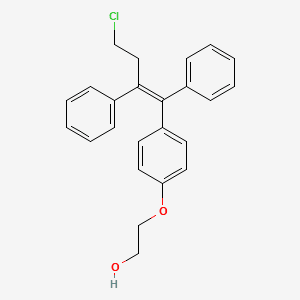
Ospemifene is a nonsteroidal selective oestrogen receptor modulator.
Decreases in oestrogen levels that occur after the menopause lead to VVA, characterised by decreased maturation of vaginal epithelial cells, a progressive decrease in the vascularity of the vaginal tissues, and decreased lubrication. The glycogen content of vaginal epithelial cells also decreases, resulting in reduced colonisation by lactobacilli and increased vaginal pH. These changes result in clinical signs which include vaginal dryness, redness, petechiae, pallor, and friability in the mucosa. In addition, these changes can result in chronic symptoms associated with VVA, the most common of which are vaginal dryness and dyspareunia.
The biological actions of ospemifene are mediated through the binding of ospemifene and its major metabolite to oestrogen receptors. The relative contribution of the metabolite to the pharmacological effect is estimated to be approximately 40%. This binding results in activation of some oestrogenic pathways (agonism) and blockade of other oestrogenic pathways (antagonism). The biological activity profile in humans is predominantly due to the parent compound.
Non-clinical findings show that ospemifene and its major metabolite have an oestrogen like effect in the vagina increasing the cellular maturation and mucification of the vaginal epithelium. In the mammary gland, they have a predominantly oestrogen antagonist effect. In bone, ospemifene has agonist-like activity. In the uterus ospemifene and its major metabolite have weak partial agonist/antagonist effects. These non-clinical findings are consistent with findings from clinical trials, in which ospemifene demonstrated benefits on vaginal physiology without apparent oestrogen-like effects on breast tissue (see subheading 'Clinical efficacy and safety').
Clinical efficacy and safety
The clinical efficacy and safety of ospemifene was determined primarily from two multi-centre, placebo-controlled trials of 12 weeks duration (trials 15-50310 and 15-50821) and a third long-term safety trial of 52 weeks duration (trial 15-50718) in post-menopausal patients with VVA. In those trials, a total of 1,102 subjects received 60 mg of ospemifene and 787 subjects received placebo.
In the two 12 weeks studies (trials 15-50310 and 15-50821), 739 patients received ospemifene and 724 patients received placebo. All patients received non-hormonal vaginal lubricant for use as needed; therefore, the effects on efficacy endpoints in the ospemifene treatment group were in addition to those achieved with lubricant use alone. The study population consisted of generally healthy post-menopausal women between 41 to 80 years of age (mean age = 59 years), who at baseline had ≤ 5.0% superficial cells in the vaginal smear, a vaginal pH >5.0 and were required to have at least one moderate or severe VVA symptom, where patients had to choose the symptom that was the most bothersome (MBS). There were four co-primary endpoints for which change from baseline was assessed: percentage parabasal cells and superficial cells in the vaginal smear, vaginal pH, and MBS of VVA (dryness or dyspareunia).
The long-term study (trial 15-50718) was a 52-week, randomised, double-blind, placebo-controlled safety and efficacy study in 426 post-menopausal women with an intact uterus. Of the 426 subjects enrolled in the study, 363 (85.2%) subjects were randomised to once-daily oral doses of ospemifene 60 mg and 63 (14.8%) subjects were randomised to placebo. The mean age of participants was 61.7 years in the ospemifene 60 mg group and 62.9 years in the placebo group.
Clinical efficacy
Physiological responses (objective measures)
Ospemifene (OSP) improved post-menopausal physiologic changes. In two separate 12 week pivotal trials (trials 15-50310 and 15-50821), ospemifene was associated with a statistically significant mean decrease from baseline in the percentage of parabasal cells and vaginal pH and a statistically significant mean increase from baseline in the percentage of superficial cells, compared with placebo (P<0.001 for each parameter) at weeks 4 and 12. This improvement in objective measures (superficial and parabasal cells and pH) were sustained in ospemifene treated women in a long-term study of up to 52 weeks. The magnitude of effect was similar in all three trials (trials 15-50310 and 15-50821 and 15-50718).
Symptoms (subjective measures)
The most bothersome symptom (MBS) was assessed at baseline, 4 and 12 weeks with the severity scored as follows: None=0, Mild=1, Moderate=2, Severe=3. Table 2 shows the mean change in severity score in MBS after 12 weeks with the associated statistical testing for the difference vs. placebo for trials 15-50310 and 15-50821.
Table 2: Primary efficacy analysis - change from baseline to week 12 in most bothersome symptom (ITT, LOCF)
Study
Dryness
Dyspareunia
60 mg OSP
Placebo
p-value
(P)
60 mg OSP
Placebo
p-value
(P)
Trial 15-50310
-1.26
-0.84
0.021
-1.19
-0.89
0.023
Trial 15-50821
-1.3
-1.1
0.0803
-1.5
-1.2
0.0001
Table 3 shows the percentage of subjects who reported a change in their MBS at week 12.
“Improvement” was defined as a reduction in the severity score of 1 or more.
“Relief” was defined as no or only mild symptoms at week 12.
“Substantial improvement” was restricted to patients who had moderate or severe MBS at baseline and changed from severe to mild or severe or moderate to none.
Table 3. Percentage of patients with improvement, relief or substantial improvement of MBS after 12 weeks on ospemifene vs. placebo (ITT, LOCF)
Improvement
Relief
Substantial improvement
60 mg OSP
Placebo
60 mg OSP
Placebo
60 mg OSP
Placebo
Trial 15-50310
Dryness
74.6%
57.7%
66.1%
49.0%
42.4%
26.9%
P=0.0101
P=0.0140
P=0.0172
Trial 15-50821
Dryness
70.6%
68.2%
61.9%
53.2%
46.3%
34.3%
P=0.7134
P=0.1380
P=0.0385
Trial 15-50310
Dyspareunia
68.3%
54.1%
57.5%
41.8%
40.8%
29.5%
P=0.0255
P=0.0205
P=0.0799
Trial 15-50821
Dyspareunia
79.9%
63.9%
63.0%
47.4%
52.8%
38.7%
P=0.0000
P=0.0001
P=0.0006
A trend was observed in both trials in the improvement of MBS from baseline to week 4 in favour of ospemifene compared to placebo, although the difference was not statistically significant.
Clinical safety
Across all placebo-controlled clinical trials of ospemifene, deep vein thrombosis occurred at a frequency of approximately 3.65 cases per 1000 patient years on 60 mg ospemifene (95% confidence interval of 0.44 to 13.19) versus 3.66 cases per 1000 patient years for placebo (95% confidence interval of 0.09 to 20.41; relative risk is 1.0).
Endometrial safety in women was assessed at baseline and 12 weeks in the two 12-week phase 3 studies (trials 15-50310 and 15-50821: ospemifene, n=302; placebo, n=301). For subjects completing the trial 15-50310 extension study (ospemifene, n=41; placebo, n=18) and for subjects in the long-term 52-week safety study (trial 15-50718: ospemifene, n=276; placebo, n=46), endometrial safety was assessed by endometrial biopsy at baseline and at 12 months
.
In total, there were 317 subjects on ospemifene and 64 subjects on placebo who had a baseline as well as a week 52 biopsy. No cases of endometrial hyperplasia were reported at either time point.
There was a single subject (0.3%) who developed endometrial hyperplasia in the ospemifene group (simple hyperplasia without atypia) 88 days after the last dose of study drug. No subjects in either group developed endometrial cancer or breast cancer during the trials. Across all placebo-controlled clinical trials, there was no significant difference in breast related adverse events between ospemifene and placebo. The incidence of abnormal, but not clinically significant, findings on breast palpation and mammography decreased in the ospemifene 60 mg population during the 1-year study (trial 15-50718) from 1.6% to 0.6% and from 11.8% to 8.1% respectively. In contrast, abnormal, not clinically significant, findings on mammography increased in the placebo population from 6.5% to 8.3%. There were no abnormal breast palpation findings in the placebo group at baseline or at study end.
Paediatric population
The European Medicines Agency has waived the obligation to submit the results of studies with ospemifene in all subsets of the paediatric population in VVA (see section 4.2 for information on paediatric use).
⚠️ Warnings
Any unused medicinal product or waste material should be disposed of in accordance with local requirements.