This information is for educational purposes only. It is not intended as medical advice. Always consult a qualified healthcare professional.
Signifor — Description, Dosage, Side Effects | PillsCard
Rx
Signifor
20 mg, Proszek i rozpuszczalnik do sporządzania zawiesiny do wstrzykiwań
INN: Pasireotidum
Data updated: 2026-04-13
Available in:
🇨🇿🇩🇪🇬🇧🇵🇱🇸🇰
Form
Proszek i rozpuszczalnik do sporządzania zawiesiny do wstrzykiwań
Dosage
20 mg
Route
domięśniowa
Storage
—
About This Product
User Reviews
Reviews reflect personal experiences and are not medical advice. Always consult your doctor.
Manufacturer
Recordati Rare Diseases (Francja)
Composition
Pasireotidum 20 mg
ATC Code
H01CB05
Source
URPL
Pharmacotherapeutic group: Pituitary and hypothalamic hormones and analogues, somatostatin and analogues, ATC code: H01CB05
Mechanism of action
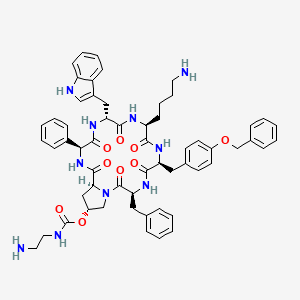
Pasireotide is a novel cyclohexapeptide, injectable somatostatin analogue. Like the natural peptide hormones somatostatin-14 and somatostatin-28 (also known as somatotropin release inhibiting factor [SRIF]) and other somatostatin analogues, pasireotide exerts its pharmacological activity via binding to somatostatin receptors. Five human somatostatin receptor subtypes are known: hsst1, 2, 3, 4, and 5. These receptor subtypes are expressed in different tissues under normal physiological conditions. Somatostatin analogues bind to hsst receptors with different potencies (see Table 2). Pasireotide binds with high affinity to four of the five hssts.
Table 2 Binding affinities of somatostatin (SRIF-14), pasireotide, octreotide and lanreotide to the five human somatostatin receptor subtypes (hsst1-5)
Compound
hsst1
hsst2
hsst3
hsst4
hsst5
Somatostatin (SRIF-14)
0.93±0.12
0.15±0.02
0.56±0.17
1.5±0.4
0.29±0.04
Pasireotide
9.3±0.1
1.0±0.1
1.5±0.3
>1,000
0.16±0.01
Octreotide
280±80
0.38±0.08
7.1±1.4
>1,000
6.3±1.0
Lanreotide
180±20
0.54±0.08
14±9
230±40
17±5
Results are the mean±SEM of IC
50
values expressed as nmol/l.
Pharmacodynamic effects
Somatostatin receptors are expressed in many tissues, especially in neuroendocrine tumours in which hormones are excessively secreted, including ACTH in Cushing's disease.
In vitro
studies have shown that corticotroph tumour cells from Cushing's disease patients display a high expression of hsst5, whereas the other receptor subtypes either are not expressed or are expressed at lower levels. Pasireotide binds and activates four of the five hssts, especially hsst5, in corticotrophs of ACTH-producing adenomas, resulting in inhibition of ACTH secretion.
Clinical efficacy and safety
A phase III, multicentre, randomised study was conducted to evaluate the safety and efficacy of different dose levels of Signifor over a twelve-month treatment period in Cushing's disease patients with persistent or recurrent disease or
de novo
patients for whom surgery was not indicated or who refused surgery.
The study enrolled 162 patients with a baseline UFC >1.5 x ULN who were randomised in a 1:1 ratio to receive a subcutaneous dose of either 0.6 mg or 0.9 mg Signifor twice daily. After three months of treatment, patients with a mean 24-hour UFC ≤2 x ULN and below or equal to their baseline value continued blinded treatment at the randomised dose until month 6. Patients who did not meet these criteria were unblinded and the dose was increased by 0.3 mg twice daily. After the initial 6 months in the study, patients entered an additional 6-month open-label treatment period. If response was not achieved at month 6 or if the response was not maintained during the open-label treatment period, dosage could be increased by 0.3 mg twice daily. The dose could be reduced by decrements of 0.3 mg twice daily at any time during the study for reasons of intolerability.
The primary efficacy end-point was the proportion of patients in each arm who achieved normalisation of mean 24-hour UFC levels (UFC ≤ULN) after 6 months of treatment and who did not have a dose increase (relative to randomised dose) during this period. Secondary end-points included, among others, changes from baseline in: 24-hour UFC, plasma ACTH, serum cortisol levels, and clinical signs and symptoms of Cushing's disease. All analyses were conducted based on the randomised dose groups.
Baseline demographics were well balanced between the two randomised dose groups and consistent with the epidemiology of the disease. The mean age of patients was approximately 40 years and the majority of patients (77.8%) were female. Most patients (83.3%) had persistent or recurrent Cushing's disease and few (≤5%) in either treatment group had received previous pituitary irradiation.
Baseline characteristics were balanced between the two randomised dose groups, except for marked differences in the mean value of baseline 24-hour UFC (1156 nmol/24 h for the 0.6 mg twice daily group and 782 nmol/24 h for the 0.9 mg twice daily group; normal range 30-145 nmol/24 h).
Results
At month 6, normalisation of mean UFC levels was observed in 14.6% (95% CI 7.0-22.3) and 26.3% (95% CI 16.6-35.9) of patients randomised to pasireotide 0.6 mg and 0.9 mg twice daily, respectively. The study met the primary efficacy objective for the 0.9 mg twice-daily group as the lower limit of the 95% CI is greater than the pre-specified 15% boundary. The response in the 0.9 mg dose arm seemed to be higher for patients with lower mean UFC at baseline. The responder rate at month 12 was comparable to month 6, with 13.4% and 25.0% in the 0.6 mg and 0.9 mg twice-daily groups, respectively.
A supportive efficacy analysis was conducted in which patients were further classified into 3 response categories regardless of up-titration at month 3: Fully controlled (UFC ≤1.0 x ULN), partially controlled (UFC >1.0 x ULN but with a reduction in UFC ≥50% compared to baseline) or uncontrolled (reduction in UFC <50%). The total proportion of patients with either full or partial mean UFC control at month 6 was 34% and 41% of the randomised patients to the 0.6 mg and 0.9 mg dose, respectively. Patients uncontrolled at both month 1 and month 2 are likely (90%) to remain uncontrolled at months 6 and 12.
In both dose groups, Signifor resulted in a decrease in mean UFC after 1 month of treatment which was maintained over time.
Decreases were also demonstrated by the overall percentage of change in mean and median UFC levels at month 6 and 12 as compared to baseline values (see Table 3). Reductions in plasma ACTH levels were also observed at each time point for each dose group.
Table 3 Percentage change in mean and median UFC levels per randomised dose group at month 6 and month 12 compared to baseline values
Pasireotide 0.6 mg twice daily
% change (n)
Pasireotide 0.9 mg twice daily
% change (n)
Mean change in UFC
(% from baseline)
Month 6
Month 12
-27.5* (52)
-41.3 (37)
-48.4 (51)
-54.5 (35)
Median change in UFC
(% from baseline)
Month 6
Month 12
-47.9 (52)
-67.6 (37)
-47.9 (51)
-62.4 (35)
Month 12
-67.6 (37)
-62.4 (35)
*Includes one patient with significant outlying results who had a percent change from baseline of +542.2%.
Decreases in sitting systolic and diastolic blood pressure, body mass index (BMI) and total cholesterol were observed in both dose groups at month 6. Overall reductions in these parameters were observed in patients with full and partial mean UFC control but tended to be greater in patients with normalised UFC. Similar trends were observed at month 12.
Paediatric population
The European Medicines Agency has waived the obligation to submit the results of studies with Signifor in all subsets of the paediatric population in pituitary-dependant Cushing's disease, overproduction of pituitary ACTH and pituitary dependant hyperadrenocorticism (see section 4.2 for information on paediatric use).
⚠️ Warnings
Signifor solution for injection should be free of visible particles, clear and colourless. Do not use Signifor if the solution is not clear or contains particles.
For information on the instructions for use, please see the end of the package leaflet “How to inject Signifor”.
Any unused medicinal product or waste material should be disposed of in accordance with local requirements.