This information is for educational purposes only. It is not intended as medical advice. Always consult a qualified healthcare professional.
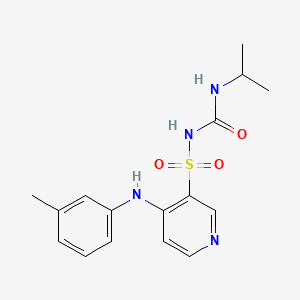
Torasemide is a diuretic agent belonging to the loop diuretics class, used for the treatment of hypertension, edema, and renal insufficiency. Its effects are based on the inhibition of sodium, potassium, and chloride reabsorption in the thick ascending limb of the loop of Henle in the nephron. The tablets are generally taken once daily in the morning, regardless of meals. The most common possible adverse effects include gastrointestinal disturbances, headache, dizziness, and fatigue. Torasemide may cause metabolic side effects and disturbances in fluid and electrolyte balance.
Torasemide (ATC C03CA04) has diuretic, antihypertensive, and anti-edematous properties. Its effects are based on the inhibition of the Na+/K+/2Cl− cotransporter in the thick ascending limb of the loop of Henle in the nephron. This leads to increased urinary excretion of sodium, potassium, chloride, and water. Torasemide exerts its effects from the luminal side of the renal tubules. It has a duration of action of up to twelve hours. Torasemide has a longer half-life and higher bioavailability than furosemide.
Mechanism of action of loop diuretics, click to enlarge. Illustration © PharmaWiki