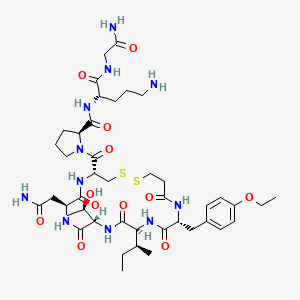
The mechanism of action of the active substance is based on its role as an antagonist of human oxytocin at the receptor level. As a result, there is a reduction in uterine muscle tone as well as in the frequency of uterine contractions. In summary, uterine quiescence is induced.
Pharmacokinetic studies have shown that in women who received the active substance by infusion (300 μg/min) for 6–12 hours, mean steady-state plasma concentrations of 442 ng/ml were achieved within 1 hour.
Atosiban is 46–48% bound to plasma proteins. The mean volume of distribution was approximately 18.3 ± 6.8 litres. The active substance does not penetrate into red blood cells.
There are two metabolites of the active substance, formed by cleavage of the peptide bond between ornithine and proline. The larger fragment retains activity as an oxytocin receptor antagonist but is 10 times less potent than the parent compound.
Small amounts of atosiban are found in urine, while a 50-fold greater amount is present as metabolite. The amount of drug excreted in faeces is unknown.
⚠️ Warnings
The active substance has not been studied for safety and efficacy in women with renal or hepatic impairment or with abnormal placental positioning. Clinical data on the use of the compound in multiple pregnancies and in women with a gestational age of 24 to 27 weeks are very limited. During treatment with the active substance, monitoring of foetal heart rate and uterine contractile activity is recommended. It is recommended to monitor post-partum blood loss, although clinical experience does not indicate that the uterus contracts abnormally after delivery following the use of atosiban.