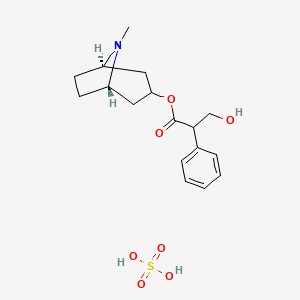
Atropine is a naturally occurring alkaloid found in various plants of the nightshade family (Solanaceae), including deadly nightshade (Atropa belladonna), henbane (Hyoscyamus niger), and jimsonweed (Datura stramonium). It has parasympatholytic effects and is used in the treatment of various ocular and cardiac conditions. Possible adverse effects include irritability, mental confusion, tachycardia, cardiac arrhythmias, dry mouth, inhibition of sweat secretion, constipation, facial flushing, elevated body temperature, increased intraocular pressure, prolonged pupil dilation, photophobia, and delirium.
Atropine (ATC A03BA01, ATC S01FA01) has parasympatholytic (anticholinergic) properties. Its effects are based on competitive antagonism at muscarinic acetylcholine receptors. This produces mydriasis (pupil dilation), cycloplegia (paralysis of accommodation), and mild vasoconstriction.
Through parasympathetic inhibition, lacrimal, salivary, sweat, bronchial, and gastric acid secretion are reduced. At higher doses, the nicotinic effects of acetylcholine at ganglia and the neuromuscular junction are also inhibited. Atropine can cross the blood-brain barrier and produce central nervous system effects.
Mechanism of action of parasympatholytics at the muscarinic receptor, click to enlarge. Illustration © PharmaWiki