This information is for educational purposes only. It is not intended as medical advice. Always consult a qualified healthcare professional.
AUGTYRO 160MG Hard capsule — Description, Dosage, Side Effects | PillsCard
OTC
AUGTYRO 160MG Hard capsule
160 mg, Kapsułki twarde
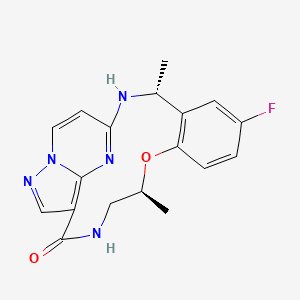
INN: Repotrectinibum
Data updated: 2026-04-24
Available in:
🇨🇿🇬🇧🇵🇱
Form
Kapsułki twarde
Dosage
160 mg
Route
doustna
Storage
—
About This Product
Manufacturer
User Reviews
Reviews reflect personal experiences and are not medical advice. Always consult your doctor.
Bristol-Myers Squibb Pharma EEIG (Irlandia)
Composition
Repotrectinibum 160 mg
ATC Code
L01EX
Source
URPL
Pharmacotherapeutic group: antineoplastic agents, protein kinase inhibitors, ATC code: L01EX28 Mechanism of action
Repotrectinib is an inhibitor of the proto-oncogene tyrosine kinase ROS1, an inhibitor of the tropomyosin receptor kinase (TRK) TRKA, TRKB, TRKC, and anaplastic lymphoma kinase (ALK) with IC50 values ranging from 0.05 to 1.04 nM.
Fusion proteins containing ROS1 or TRK domains can lead to uncontrolled cell proliferation through hyperactivation of downstream signalling pathways, thereby increasing tumorigenic potential.
Repotrectinib has demonstrated in vitro and in vivo inhibition of cell lines expressing target fusion oncogenes ROS1, TRKA, TRKB, TRKC and corresponding mutations (ROS1 G2032R, ROS1 D2033N, TRKA G595R, TRKB G639R, TRKC G623R). Repotrectinib binds within the boundary of the ATP-binding pocket and avoids steric interference with both solvent-front mutations and gatekeeper mutations.
Cardiac electrophysiology
Analysis of ECG data from 334 patients who received AUGTYRO at the recommended dose (unknown prandial state) in the phase 2 TRIDENT-1 study demonstrated that the upper bound of the 90% confidence interval (CI) of the mean change from baseline in QTcF (ΔQTcF) exceeded 10 milliseconds (ms) for several timepoint estimates but remained < 20 ms.
Patients at increased risk of QTc interval prolongation were not enrolled in the TRIDENT-1 study. Clinical efficacy and safety
The efficacy of repotrectinib was evaluated in adult patients with solid tumours harbouring ROS1 or NTRK1-3 gene rearrangements in a multicentre, single-arm, multi-cohort, open-label phase I/II clinical study (TRIDENT-1). Patients received repotrectinib at various doses and schedules (156 [91%] received repotrectinib 160 mg orally once daily for the first 14 days of treatment followed by 160 mg orally twice daily until disease progression or unacceptable toxicity).
The primary efficacy endpoint was overall response rate (ORR) based on blinded independent central review (BICR) according to Response Evaluation Criteria in Solid Tumours (RECIST) v1.1. Secondary endpoints included duration of response (DOR), progression-free survival (PFS) by BICR per RECIST v1.1, and overall survival (OS). Intracranial response was assessed by BICR using modified RECIST v1.1 criteria. Tumour assessment by imaging was performed at least every 8 weeks.
ROS1-positive NSCLC
The efficacy of repotrectinib was evaluated in a subset of adult patients with locally advanced or metastatic ROS1-positive NSCLC pooled from the phase I/II TRIDENT-1 study. Patients were required to have an ECOG performance status ≤ 1, measurable disease per RECIST v1.1, and follow-up of ≥ 8 months from the first dose. Identification of ROS1 fusions in tumour samples was prospectively performed at local laboratories using next-generation sequencing (NGS), polymerase chain reaction (PCR), or fluorescence in situ hybridisation (FISH). All ROS1-positive tumours based on local FISH testing were required to be confirmed by a central laboratory using an analytically validated NGS assay. ROS1 fusions were identified by NGS in 57% of patients, by FISH in 22% of patients, and by PCR in 21% of patients. All patients were assessed for CNS lesions at baseline.
Among 121 ROS1 TKI-naïve patients, the median age was 57 years (range: 28–93), 23% were aged 65 years or older, and 5% were aged 75 years or older. The majority were female (56%), Asian (60%) or White (30%), and never-smokers (63%). Baseline ECOG performance status was 0 (38%) and 1 (62%). At study entry, 92% of patients had metastatic disease, 25% of patients had CNS metastases per BICR, 97% of patients had adenocarcinoma; 26% of patients had received prior platinum-based chemotherapy for locally advanced or metastatic disease.
Among 107 patients who previously received 1 ROS1 TKI (crizotinib 77%, entrectinib 21%, and ceritinib 3%) without prior platinum-based chemotherapy, the median age was 57 years (range: 33–81), 29% were aged 65 years or older, and 8% were aged 75 years or older. The majority were female (74%), Asian (42%) or White (49%); never-smokers (68%); baseline ECOG performance status was 0 (34%) and 1 (66%). At study entry, 98% of patients had metastatic disease, 40% of patients had CNS metastases per BICR, and 96% of patients had adenocarcinoma.
Efficacy results are summarised in Table 5.
Table 5: Efficacy results in patients with ROS1-positive NSCLC per BICR
Efficacy parameters
ROS1 TKI-naïve patients (n = 121)
ROS1 TKI-pretreated patients (n = 107)
Confirmed overall response rate, %
77
49
(95% CI)
(68, 84)
(39, 59)
Complete response, n (%)
15 (12)
8 (8)
Partial response, n (%)
78 (65)
44 (41)
Median duration of response (mDOR)
33.6
14.8
in months (95% CI)
(25.5; NE)
(7.6; NE)
Range (months)
1.4+–49.7+
1.8+–31.4
response lasting 12 months % (95% CI)
77 (68, 86)
53 (38, 68)
response lasting 18 months % (95% CI)
70 (60, 80)
44 (27, 61)
response lasting 24 months % (95% CI)
64 (52, 75)
38 (19, 56)
DOR milestones are based on K-M estimates. Minimum follow-up was 7 months.
+ denotes ongoing response. NE: Not estimated
The median time to response was 1.84 (range 1.5; 7.4) months in TKI-naïve patients and 1.84 (range 1.6; 22.1) months in TKI-pretreated patients.
Of 121 TKI-naïve patients, 14 had measurable CNS metastases at baseline per BICR (4 patients had a CNS intervention within 60 days of the first study treatment dose) and an intracranial response was observed in 12 of them (3 CR and 9 PR), with an intracranial ORR of 86% (95% CI: 57; 98). Of 107 TKI-pretreated patients without prior platinum-based chemotherapy, 23 had measurable CNS metastases at baseline per BICR (7 patients had a CNS intervention within 60 days of the first study treatment dose) and an intracranial response was observed in 10 of them (2 CR and 8 PR) with an intracranial ORR of 44% (95% CI: 23; 66).
In 35 ROS1 TKI-pretreated patients with a solvent-front mutation, the ORR was 51.4% (95% CI: 34.0; 68.6).
Solid tumours with positive NTRK gene fusion
The efficacy of repotrectinib was evaluated in a pooled population of patients from the phase I/II study with locally advanced (unsuitable for surgery, radiation, or multimodal treatment) or metastatic solid tumours with positive NTRK gene fusion. Patients were required to have an ECOG performance status ≤ 1, measurable disease per RECIST v1.1, and follow-up of ≥ 8 months from the first dose. Identification of NTRK gene fusions in tumour samples was prospectively performed at local laboratories using NGS, PCR, or FISH assays. All tumours positive for NTRK 1-3 gene fusions based on local FISH testing were required to be confirmed by a central laboratory using an analytically validated NGS assay. NTRK fusions were identified by NGS in 96% of patients, by FISH in 2.5% of patients, and by PCR in 1.7% of patients. All patients were assessed for CNS lesions at baseline.
In phase I/II, among 51 TKI-naïve patients, the median age was 61 years (range: 25–84); 41% were aged 65 years or older, and 12% were aged 75 years or older. The majority were female (53%), Asian (51%) or White (25%). Baseline ECOG performance status was 0 (45%) and 1 (55%). At study entry, per BICR, 96% of patients had metastatic disease and 20% of patients had CNS metastases. The most common tumour types were NSCLC (53%), thyroid carcinoma (12%), salivary gland carcinoma (10%), and soft tissue sarcoma (6%).
Of 69 TKI-pretreated patients in phase I/II, 17% had received 2 prior lines of TKI therapy, 52% of patients had received larotrectinib and 46% entrectinib; the median age was 56 years (range: 18–81); 36% were aged 65 years or older and 7% were aged 75 years or older. Patients were female (48%), Asian (30%) or White (58%). Baseline ECOG performance status was 0 (39%) and 1 (61%). At study entry, per BICR, 91% of patients had metastatic disease and 23% of patients had CNS metastases. The most common tumour types were NSCLC (25%), salivary gland carcinoma (17%), soft tissue sarcoma (15%), and thyroid carcinoma (10%).
ORR and DOR were assessed by BICR per RECIST v1.1. Intracranial response per modified RECIST v1.1 was assessed by BICR. Tumour assessment by imaging was performed at least every 8 weeks. The primary efficacy population included 51 TKI-naïve patients and 69 patients pretreated with one TKI. Efficacy results with a minimum follow-up of 8 months are summarised in Table 6.
Table 6: Overall efficacy per BICR in adult patients with NTRK gene fusion-positive tumours
Efficacy parameters
TKI-naïve patients (n = 51)
TKI-pretreated patients (n = 69)
Confirmed overall response rate, %
59
(95% CI)
(44, 72)
48 (36, 60)
Complete response n (%)
8 (16)
2 (3)
Partial response n (%)
22 (43)
31 (45)
Median duration of response
NE
9.8
in months (95% CI)
(NE, NE)
(7.36; 12.98)
Range (months)
0.0+; 43.9+
1.8; 26.5+
response lasting 6 months % (95% CI)
92.9 (83.3; 100.0)
72.7 (57.5; 87.9)
response lasting 9 months % (95% CI)
89.1 (77.5; 100.0)
62.8 (46.0; 79.6)
response lasting 12 months % (95% CI)
89.1 (77.5; 100.0)
41.6 (23.8; 59.3)
95% CIs are based on the Kaplan-Meier method using Greenwood variance estimation DOR milestones are based on K-M estimates
Minimum follow-up was 8 months
+ denotes ongoing response NE: Not estimated
The median time to response was 1.8 (range 1.6; 7.3) months in TKI-naïve patients and 1.9 (range 1.7; 3.7) months in TKI-pretreated patients.
In 30 NTRK TKI-pretreated patients with a solvent-front mutation at baseline, the ORR was 53% (95% CI: 34.3; 71.7).
ORR and DOR by tumour type in adult patients with NTRK gene fusion-positive solid tumours are presented in Table 7 below.
Table 7: Efficacy results in TKI-naïve NTRK gene fusion-positive solid tumours
Tumour type
Patients (n = 51)
ORR
DOR
n (%)
95% CI
Range (months)
NSCLC
27
17 (63.0)
42.4; 80.6
0.0+; 31.3+
Thyroid carcinoma
6
6 (100.0)
54.1; 100.0
4.7; 43.9+
Salivary gland carcinoma
5
4 (80.0)
28.4; 99.5
12.9+; 31.4+
Soft tissue sarcoma
3
1 (33.3)
0.8; 90.6
14.7+
Other*
3
SD, SD, SD
NA
NA
Colorectal carcinoma
2
CR, SD
NA
7.5+
Breast carcinoma
2
PD, PD
NA
NA
Glioblastoma
1
SD
NA
NA
Cholangiocarcinoma
1
PD
NA
NA
Malignant peripheral nerve sheath tumour
1
PR
NA
23.0+
* Includes oesophageal carcinoma, prostate carcinoma, and head and neck carcinoma
PD: progressive disease, PR: partial response, SD: stable disease, NA: not applicable
+ denotes ongoing response
Table 8: Efficacy results in TKI-pretreated NTRK gene fusion-positive solid tumours
Tumour type
Patients (n = 69)
ORR
DOR
n (%)
95% CI
Range (months)
NSCLC
17
9 (52.9)
27.8; 77.0
1.9; 23.0+
Salivary gland carcinoma
12
9 (75.0)
42.8; 94.5
3.7; 26.5+
Soft tissue sarcoma
10
1 (10.0)
0.3; 44.5
5.6
Thyroid carcinoma
7
2 (28.6)
3.7; 71.0
2.0; 9.6
Other*
5
2 (40.0)
5.3; 85.3
11.0+; 14.8+
Colorectal carcinoma
4
2 (50.0)
6.8; 93.2
9.2; 17.5
Glioblastoma
3
1 (33.3)
0.8; 90.6
23.5
Neuroendocrine carcinoma
3
3 (100.0)
29.2; 100.0
5.5; 9.1
Pancreatic carcinoma
3
PD, PD, SD
NA
NA
Cholangiocarcinoma
2
PR, PD
NA
1.8
Malignant peripheral nerve sheath tumour
2
PR, PR
NA
5.5; 11.1
Breast carcinoma
1
PR
NA
15.6+
* Includes gallbladder carcinoma, cervical carcinoma, gastrointestinal stromal tumour, mucoepidermoid carcinoma, and carcinoma of unknown primary
PD: progressive disease, PR: partial response, SD: stable disease, NA: not applicable
+ denotes ongoing response
Due to the rarity of NTRK gene fusion-positive tumours, patients with various tumour types were studied, with limited patient numbers for some tumour types, resulting in uncertainty in the ORR estimate for individual tumour types. The ORR in the overall population may not reflect the expected response for a specific tumour type.
AUGTYRO was evaluated in paediatric patients with locally advanced or metastatic tumours harbouring NTRK alterations in an open-label, multicentre, single-arm, multi-cohort phase I/II study CARE. Efficacy was assessed in patients who received AUGTYRO orally, either 160 mg once daily for 14 days followed by 160 mg twice daily, or at a dose equivalent to the adult dose, until disease progression or unacceptable toxicity.
Patients were required to have a Lansky score (< 16 years) or Karnofsky score (≥ 16 years) of at least 50 and measurable disease per RECIST v1.1 or Response Assessment in Neuro-Oncology Criteria (RANO). Patients with primary CNS tumours or CNS metastases were required to be neurologically stable and on a stable or decreasing dose of corticosteroids for at least 14 days prior to enrolment.
Identification of NTRK1-3 gene fusions in tumour samples was prospectively performed at local laboratories using NGS, PCR, or FISH assays. All tumours positive for NTRK gene fusions based on local FISH testing were required to be retrospectively confirmed by a central laboratory using an analytically validated NGS assay.
The primary efficacy endpoints were ORR per BICR according to RECIST v1.1 or RANO criteria, and secondary efficacy endpoints were DOR and PFS per BICR according to RECIST v1.1 or RANO criteria, and OS. Tumour assessment by imaging was performed at least every 8 weeks.
Thirteen NTRK-positive paediatric patients (age range: 1 year to 15 years; 5 aged 12–17 years) had measurable disease at baseline per BICR in the CARE study and had at least one post-baseline scan assessed. Five (5) of them were TKI-naïve for NTRK (3 CNS tumours and 2 solid tumours) and 8 had previously received TKI therapy (3 CNS tumours and 5 solid tumours).
Of 5 TKI-naïve patients, 1 complete response and 2 partial responses were observed. In 8 TKI-pretreated patients, 2 partial responses were observed. Conditional approval
This medicinal product has been authorised under a so-called conditional approval procedure. This means that further evidence on the benefits of this medicinal product is expected. The European Medicines Agency will review new information on this medicinal product at least annually, and this summary of product characteristics will be updated as necessary.
Paediatric population
The European Medicines Agency has deferred the obligation to submit the results of studies with AUGTYRO in one or more subsets of the paediatric population for the treatment of locally advanced or metastatic NTRK gene fusion-positive solid tumours (see section 4.2 for information on paediatric use).
⚠️ Warnings
Efficacy by tumour types
The benefit of AUGTYRO was established in single-arm studies enrolling adult patients (n = 88) whose tumours harboured NTRK gene fusions. The favourable effects of AUGTYRO were demonstrated based on overall response rate and duration of response in a limited number of tumour types. The effect may be quantitatively different depending on tumour type and concomitant genomic alterations (see section 5.1).
Central nervous system (CNS)
A broad spectrum of CNS-affecting adverse reactions have been reported in patients treated with AUGTYRO, including dizziness, ataxia, and cognitive disorders (see section 4.8).
Patients taking AUGTYRO should be advised of these risks, as these effects may impair the ability to drive and use machines. Patients should be advised that if they experience CNS-affecting adverse reactions, they must not drive or use machines (see section 4.7). Depending on the severity of adverse reactions, AUGTYRO should be withheld and then resumed at the same or reduced dose upon improvement, or permanently discontinued (see section 4.2).
Interstitial lung disease (ILD) / pneumonitis
Patients should be advised to report symptoms of ILD/pneumonitis, which include dyspnoea, cough, wheezing, chest pain or tightness, and haemoptysis. Patients should be monitored for new or worsening pulmonary symptoms indicative of ILD/pneumonitis. AUGTYRO should be withheld in patients with suspected ILD/pneumonitis. If ILD/pneumonitis is confirmed, AUGTYRO should be permanently discontinued (see section 4.2).
Bone fractures
Bone fractures have been reported in adult and paediatric patients treated with AUGTYRO across clinical studies. In both adult and paediatric patients, some fractures occurred following a fall or other injury to the affected area. In some patients, radiological abnormalities were reported that may have been indicative of tumour involvement. In both adult and paediatric patients, fractures most commonly affected the lower extremities (e.g. fibula, tibia, or foot). Patients with signs or symptoms of fractures (e.g. pain, changes in mobility, deformity) should be promptly evaluated.
Hepatotoxicity
Drug-induced hepatotoxicity has been reported in patients treated with AUGTYRO (see section 4.8). Liver function tests including ALT, AST, and bilirubin should be performed as clinically indicated. Hepatic impairment
Administration of AUGTYRO to patients with moderate or severe hepatic impairment has not been studied. AUGTYRO should not be administered to patients with moderate or severe hepatic impairment due to the risk of excessive exposure and increased risk of adverse reactions (see sections 4.2 and 5.2).
Contraception in females and males
AUGTYRO may cause foetal harm when administered to a pregnant woman (see section 5.3).
Females of reproductive potential must undergo a medically supervised pregnancy test prior to initiating treatment with AUGTYRO. Females of reproductive potential must use highly effective contraception during treatment with AUGTYRO and for 2 months after the last dose.
AUGTYRO may reduce the effectiveness of systemic hormonal contraceptives including oral contraceptives (see sections 4.5 and 4.6).
Male patients with female partners of reproductive potential must use condoms during treatment with AUGTYRO and for 4 months after the last dose (see sections 4.6 and 5.3).
Paediatric population
Long-term safety data on the administration of AUGTYRO to paediatric patients aged 12 years and older are not available. Drug interactions
Concomitant administration of AUGTYRO with a strong or moderate CYP3A/P-gp inhibitor increases repotrectinib plasma concentrations (see section 4.5), which may increase the risk of adverse reactions. Concomitant administration of AUGTYRO with strong or moderate CYP3A/P-gp inhibitors must be avoided.
Consumption of grapefruit and grapefruit products must be avoided during treatment with AUGTYRO.
Concomitant administration of AUGTYRO with a strong or moderate CYP3A/P-gp inducer decreases repotrectinib concentrations (see section 4.5), which may reduce the efficacy of AUGTYRO, and should be avoided.
Excipients
AUGTYRO contains less than 1 mmol (23 mg) sodium per capsule, that is to say essentially 'sodium-free'.