This information is for educational purposes only. It is not intended as medical advice. Always consult a qualified healthcare professional.
Toviaz — Description, Dosage, Side Effects | PillsCard
Rx
Toviaz
4 mg, Tabletki o przedłużonym uwalnianiu
INN: Fesoterodinum
Data updated: 2026-04-13
Available in:
🇨🇿🇩🇪🇬🇧🇫🇷🇵🇱🇵🇹🇸🇰🇹🇷🇺🇦
Form
Tabletki o przedłużonym uwalnianiu
Dosage
4 mg
Route
doustna
Storage
—
User Reviews
Reviews reflect personal experiences and are not medical advice. Always consult your doctor.
About This Product
Manufacturer
Pfizer Europe MA EEIG (Niemcy)
Composition
Fesoterodinum 4 mg
ATC Code
G04BD11
Source
URPL
Pharmacotherapeutic group: Urologicals, Urinary antispasmodics, ATC code: G04BD11.
Mechanism of action
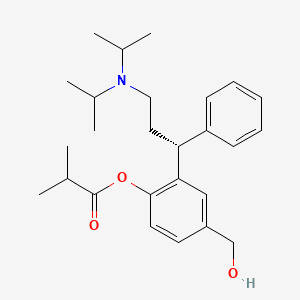
Fesoterodine is a competitive, specific muscarinic receptor antagonist. It is rapidly and extensively hydrolysed by non-specific plasma esterases to the 5-hydroxymethyl derivative, its primary active metabolite, which is the main active pharmacological principle of fesoterodine.
Clinical efficacy and safety
The efficacy of fixed doses of fesoterodine 4 mg and 8 mg was evaluated in two Phase 3 randomised, double-blind, placebo-controlled, 12-week studies. Female (79%) and male (21%) patients with a mean age of 58 years (range 19-91 years) were included. A total of 33% of patients were ≥65 years of age and 11% were ≥75 years of age.
Fesoterodine treated patients had statistically significant mean reductions in the number of micturitions per 24 hours and in the number of urge incontinence episodes per 24 hours at the end of treatment compared to placebo. Likewise, the response rate (% of patients reporting that their condition has been “greatly improved” or “improved” using a 4-point Treatment Benefit Scale) was significantly greater with fesoterodine compared to placebo. Furthermore, fesoterodine improved the mean change in the voided volume per micturition, and the mean change in the number of continent days per week (see Table 1 below).
Table 1: Mean changes from Baseline to end of treatment for primary and selected secondary endpoints
Study 1
Study 2
Parameter
Placebo
Fesoterodine 4 mg
Fesoterodine 8 mg
Active comparator
Placebo
Fesoterodine 4 mg
Fesoterodine 8 mg
Number of micturitions per 24 hours#
N=279
N=265
N=276
N=283
N=266
N=267
N=267
Baseline
12.0
11.6
11.9
11.5
12.2
12.9
12.0
Change from baseline
-1.02
-1.74
-1.94
-1.69
-1.02
-1.86
-1.94
p-value
<0.001
<0.001
0.032
<0.001
Responder rate (treatment response)#
N=279
N=265
N=276
N=283
N=266
N=267
N=267
Responder rate
53.4%
74.7%
79.0%
72.4%
45.1%
63.7%
74.2%
p-value
<0.001
<0.001
<0.001
<0.001
Number of urge incontinence episodes per 24 hours
N=211
N=199
N=223
N=223
N=205
N=228
N=218
Baseline
3.7
3.8
3.7
3.8
3.7
3.9
3.9
Change from baseline
-1.20
-2.06
-2.27
-1.83
-1.00
-1.77
-2.42
p-value
0.001
<0.001
0.003
<0.001
Number of continent days per week
N=211
N=199
N=223
N=223
N=205
N=228
N=218
Baseline
0.8
0.8
0.6
0.6
0.6
0.7
0.7
Change from baseline
2.1
2.8
3.4
2.5
1.4
2.4
2.8
p-value
0.007
<0.001
<0.001
<0.001
Voided volume per micturition (ml)
N=279
N=265
N=276
N=283
N=266
N=267
N=267
Baseline
150
160
154
154
159
152
156
Change from baseline
10
27
33
24
8
17
33
p-value
<0.001
<0.001
0.150
<0.001
# primary end points
Cardiac electrophysiology
The effect of fesoterodine 4 mg and 28 mg on the QT interval was thoroughly evaluated in a double- blind, randomised, placebo- and positive-controlled (moxifloxacin 400 mg) parallel group study with once-daily treatment over a period of 3 days in 261 male and female subjects aged 45 to 65 years. Change from baseline in QTc based on the Fridericia correction method did not show any differences between the active treatment and placebo group.
Paediatric population
Fesoterodine was evaluated in a randomised, open-label study consisting of a 12-week efficacy phase study followed by a 12-week safety extension phase in paediatric patients from 6 years to 17 years of age with neurogenic detrusor overactivity. Two cohorts were studied. In the Cohort 1, 124 patients weighing > 25 kg received a fixed dose of fesoterodine 4 mg or 8 mg tablets once-daily or active comparator oxybutynin XL tablets. In the safety extension phase, patients randomised to active comparator tablets were switched to fesoterodine 4 mg or 8 mg tablets (allocated by the investigator). In the Cohort 2, 57 patients weighing ≤ 25 kg received a fixed dose of fesoterodine 2 mg or 4 mg investigational beads-in-capsule (BIC) formulation once daily. In the safety extension phase, patients continued on the dose of fesoterodine to which they had been randomised. For study inclusion, patients were required to have stable neurological disease and clinically or urodynamically-demonstrated neurogenic detrusor overactivity (see section 4.2).
The primary efficacy endpoint for both Cohorts was the mean change from baseline in maximum cystometric bladder capacity (MCBC) at Week 12. Treatment with fesoterodine 4 mg or 8 mg tablets resulted in improvements from baseline to Week 12 in the primary efficacy endpoint, MCBC, for paediatric patients in Cohort 1, with numerically higher changes from baseline for fesoterodine 8 mg tablets than for fesoterodine 4 mg tablets. Treatment with fesoterodine 2 mg and 4 mg BIC resulted in improvements from baseline to Week 12 in the primary efficacy endpoint, MCBC, for paediatric patients in Cohort 2, with numerically higher changes from baseline for fesoterodine 4 mg BIC than for fesoterodine 2 mg BIC.
Table 2: Mean baseline and change from baseline to week 12 maximum cystometric bladder capacity (mL)
Cohort 1 (body weight > 25 kg)
Cohort 2 (body weight
≤
25 kg
Feso 4 mg tablet
Feso 8 mg tablet
Oxybutynin XL
Feso 2 mg BIC
Feso 4 mg BIC
N = 41
N = 41
N = 38
N = 25
N = 28
Baseline
195.1
173.3
164.1
131.4
126.7
Change from baseline
(95% CI)
a
58.12
(28.84, 87.39)
83.36
(54.22,112.49)
87.17
(56.82,117.53)
23.49
(3.03, 43.95)
40.17
(20.84, 59.50)
p-value vs. baseline
a
0.0001
<.0001
<.0001
--
b
--
b
Abbreviations: BIC = beads-in-capsule; CI = confidence interval; Feso = fesoterodine, N = number of patients with a non-missing baseline measurement; vs. = versus.
Baseline is defined as the last available measurement prior to the start of treatment.
a. Based on an analysis of covariance model with terms for treatment group, baseline maximum cystometric bladder capacity and baseline weight. Last observation carried forward/baseline observation was used for imputing missing values.
b. No hypothesis testing was planned for Cohort 2; therefore, no p-values are presented.
Secondary endpoints
Treatment with fesoterodine 4 mg or 8 mg tablets resulted in statistically significant improvements in the urodynamic measure secondary endpoint bladder volume at first involuntary detrusor contraction. The most commonly reported adverse reactions in the efficacy phase were diarrhoea, dry mouth, constipation, abdominal pain (including upper abdominal pain) and headache. These mild to moderate adverse reactions are consistent with the pharmacological, antimuscarinic properties of fesoterodine. Increases in heart rate were observed in patients who received Fesoterodine which were not associated with clinical symptoms. Overall, the safety profile in paediatric patients with neurogenic detrusor overactivity was similar to that observed in adults with overactive bladder syndrome.
⚠️ Warnings
Any unused medicinal product or waste material should be disposed of in accordance with local requirements.