This information is for educational purposes only. It is not intended as medical advice. Always consult a qualified healthcare professional.
Trevicta — Description, Dosage, Side Effects | PillsCard
Rx
Trevicta
175 mg (200 mg/ml), Zawiesina do wstrzykiwań o przedłużonym uwalnianiu
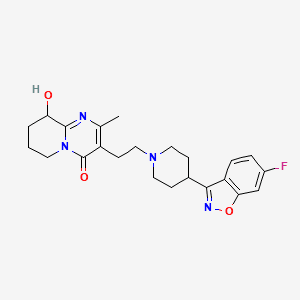
INN: Paliperidonum
Data updated: 2026-04-13
Available in:
🇨🇿🇬🇧🇵🇱🇸🇰
Form
Zawiesina do wstrzykiwań o przedłużonym uwalnianiu
Dosage
175 mg (200 mg/ml)
Route
domięśniowa
Storage
—
About This Product
User Reviews
Reviews reflect personal experiences and are not medical advice. Always consult your doctor.
Manufacturer
Janssen-Cilag International N.V. (Belgia)
Composition
Paliperidonum 200 mg/ml
ATC Code
N05AX13
Source
URPL
Pharmacotherapeutic group: Psycholeptics, other antipsychotics. ATC code: N05AX13
BYANNLI contains a racemic mixture of (+)- and (-)-paliperidone.
Mechanism of action
Paliperidone is a selective blocking agent of monoamine effects, whose pharmacological properties are different from that of traditional neuroleptics. Paliperidone binds strongly to serotonergic 5-HT2- and dopaminergic D2-receptors. Paliperidone also blocks alpha 1-adrenergic receptors and slightly less, H1-histaminergic and alpha 2-adrenergic receptors. The pharmacological activity of the (+)- and (-)-paliperidone enantiomers are qualitatively and quantitatively similar.
Paliperidone is not bound to cholinergic receptors. Even though paliperidone is a strong D2-antagonist, which is believed to relieve the symptoms of schizophrenia, it causes less catalepsy and decreases motor functions less than traditional neuroleptics. Dominating central serotonin antagonism may reduce the tendency of paliperidone to cause extrapyramidal side effects.
Clinical efficacy
The efficacy of BYANNLI for the treatment of schizophrenia in patients who had previously been adequately treated with either 1-monthly paliperidone palmitate injection for at least 4 months or 3-monthly paliperidone palmitate injectable for at least one 3-month injection cycle was evaluated in a Phase 3, randomised, double-blind, active-controlled, interventional, parallel-group, multicentre, non-inferiority study in adult patients. The primary outcome was time to relapse.
The study consisted of an open-label phase which included screening, transition and maintenance phases, followed by a 12-month double-blind phase in which patients were randomised to receive either BYANNLI or 3-monthly paliperidone palmitate injectable. 702 adequately treated patients were randomised in a 2:1 ratio to receive BYANNLI (478 patients) or 3-monthly paliperidone palmitate injectable (224 patients). Patients received either 2 injection cycles of BYANNLI (4 injections in total; BYANNLI with alternating placebo) or 4 injections of 3-monthly paliperidone palmitate injection every 3 months with regular scheduled visits between injections over the 12-month study duration. Dose adjustment was not permitted during the double-blind phase. Patients remained in this phase until they experienced a relapse event, met discontinuation/withdrawal criteria, or study conclusion.
7.5% of patients in the BYANNLI treatment group and 4.9% of patients in the 3-monthly paliperidone palmitate injectable treatment group experienced a relapse event in the 12-month double-blind Phase with the Kaplan-Meier estimated difference (BYANNLI – 3-monthly paliperidone palmitate injection) of 2.9% (95% CI: -1.1% to 6.8%). The Kaplan-Meier plot (with 95% pointwise confidence bands) of time from randomisation to impending relapse during the 12-month double-blind, active-controlled Phase for BYANNLI 700 and 1 000 mg and 3-monthly paliperidone palmitate injectable 350 mg and 525 mg is shown in Figure 1.
Figure 1: Kaplan-Meier Plot (with 95% pointwise confidence bands) of percentage of subjects without relapse
The efficacy results were consistent across population subgroups (gender, age, and race) in both treatment arms.
It was determined that the efficacy of BYANNLI was noninferior to the efficacy of 3-monthly paliperidone palmitate injection in adults with a DSM-5 diagnosis of schizophrenia. The upper bound of the 95% CI (6.8%) was less than 10%, the prespecified non-inferiority margin.
Paediatric population
The European Medicines Agency has waived the obligation to submit the results of studies with BYANNLI in all subsets of the paediatric population in schizophrenia (see section 4.2 for information on paediatric use).
⚠️ Warnings
Ship and store this product in a horizontal orientation to improve the ability to resuspend this highly concentrated product and prevent clogging of the needle. Shake the syringe very fast for at least 15 seconds, rest briefly, then shake again for 15 seconds. The suspension should be visually inspected before injection. When mixed well the product is uniform, thick and milky white. Full instructions for use and handling of BYANNLI are provided in the package leaflet (See
Information intended for healthcare professionals
).
Any unused medicinal product or waste material should be disposed of in accordance with local requirements.