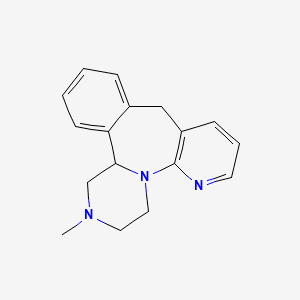
Pharmacotherapeutic group: other antidepressants, ATC code: N06AX11
Mechanism of action/pharmacodynamic effects
Mirtazapine is a centrally active presynaptic α2-antagonist, which increases central noradrenergic and serotonergic neurotransmission. The enhancement of serotonergic neurotransmission is specifically mediated via 5-HT1 receptors, because 5-HT2 and 5-HT3 receptors are blocked by mirtazapine. Both enantiomers of mirtazapine are presumed to contribute to the antidepressant activity, the S(+) enantiomer by blocking α2 and 5-HT2 receptors and the R(-) enantiomer by blocking 5-HT3 receptors.
Clinical efficacy and safety
The histamine H1-antagonistic activity of mirtazapine is associated with its sedative properties. It has practically no anticholinergic activity and, at therapeutic doses, has only limited effects (e.g. orthostatic hypotension) on the cardiovascular system.
The effect of Mirtazapine (mirtazapine) on QTc interval was assessed in a randomized, placebo and moxifloxacin controlled clinical trial involving 54 healthy volunteers using a regular dose of 45 mg and a supra-therapeutic dose of 75 mg. Linear e-max modelling suggested that prolongation of QTc intervals remained below the threshold for clinically meaningful prolongation (see section 4.4).
Paediatric population
Two randomised, double-blind, placebo-controlled trials in children aged between 7 and 18 years with major depressive disorder (n=259) using a flexible dose for the first 4 weeks (15-45 mg mirtazapine) followed by a fixed dose (15, 30 or 45 mg mirtazapine) for another 4 weeks failed to demonstrate significant differences between mirtazapine and placebo on the primary and all secondary endpoints. Significant weight gain (≥7 %) was observed in 48.8 % of the Mirtazapine treated subjects compared to 5.7 % in the placebo arm. Urticaria (11.8 % vs. 6.8 %) and hypertriglyceridaemia (2.9% vs. 0 %) were also commonly observed.