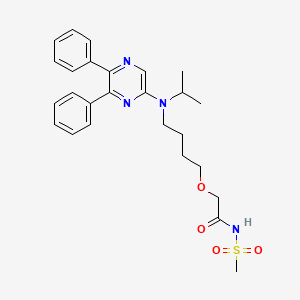
This information is for educational purposes only. It is not intended as medical advice. Always consult a qualified healthcare professional.
Rx
Uptravi
200 mcg, Tabletki powlekane
INN: Selexipagum
Data updated: 2026-04-13
Available in:
🇨🇿🇩🇪🇬🇧🇵🇱🇵🇹🇸🇰
Form
Tabletki powlekane
Dosage
200 mcg
Route
doustna
Storage
—
About This Product
User Reviews
Reviews reflect personal experiences and are not medical advice. Always consult your doctor.
Manufacturer
Janssen-Cilag International N.V. (Belgia)
Composition
Selexipagum 200 mcg
ATC Code
B01AC27
Source
URPL
Pharmacotherapeutic group: Antithrombotic agents, platelet aggregation inhibitors excluding heparin, ATC code: B01AC27
Mechanism of action
Selexipag is a selective IP receptor agonist distinct from prostacyclin and its analogues. Selexipag is hydrolysed by carboxylesterases to yield its active metabolite, which is approximately 37‑fold more potent than selexipag. Selexipag and the active metabolite are high‑affinity IP receptor agonists with a high selectivity for the IP receptor versus other prostanoid receptors (EP
1
–EP
4
, DP, FP, and TP). Selectivity against EP
1
, EP
3
, FP, and TP is important because these are well‑described contractile receptors in the gastro‑intestinal tract and blood vessels. Selectivity against EP
2
, EP
4
, and DP
1
is important because these receptors mediate immune depressive effects.
Stimulation of the IP receptor by selexipag and the active metabolite leads to vasodilatory as well as anti‑proliferative and anti‑fibrotic effects. Selexipag prevents cardiac and pulmonary remodelling in a rat model of PAH and causes proportional decreases in pulmonary and peripheral pressures, indicating that peripheral vasodilation reflects pulmonary pharmacodynamic efficacy. Selexipag does not cause IP receptor desensitisation
in vitro
nor tachyphylaxis in a rat model.
Pharmacodynamic effects
Cardiac electrophysiology
In a thorough QT study in healthy adult subjects, repeated doses of 800 and 1 600 micrograms of selexipag twice daily did not show an effect on cardiac repolarisation (QT
c
interval) or conduction (PR and QRS intervals) and had a mild accelerating effect on heart rate (the placebo‑corrected, baseline‑adjusted increase in heart rate reached 6–7 bpm at 1.5 to 3 h after dosing with 800 micrograms selexipag and 9‑10 bpm at the same timepoints after 1 600 micrograms selexipag).
Coagulation factors
In phase 1 and 2 studies a slight decrease in plasma levels of von Willebrand factor (vWF) was observed with selexipag; the vWF values remained above the lower limit of the normal range.
Pulmonary haemodynamics
A phase 2 double‑blind, placebo‑controlled clinical study assessed haemodynamic variables after 17 weeks of treatment in adult patients with PAH WHO FC II–III and concomitantly receiving ERAs and/or PDE‑5 inhibitors. Patients titrating selexipag to an individually tolerated dose (200 micrograms twice daily increments up to 800 micrograms twice daily; N = 33) achieved a statistically significant mean reduction in pulmonary vascular resistance of 30.3% (95% confidence interval [CI]: -44.7%, -12.2%; p = 0.0045) and an increase in cardiac index (mean treatment effect) of 0.48 L/min/m
2
(95% CI: 0.13, 0.83) compared to placebo (N = 10).
Clinical efficacy and safety
Efficacy in adult patients with PAH (GRIPHON)
The effect of selexipag on progression of PAH was demonstrated in a multi‑centre, long‑term (maximum duration of exposure approximately 4.2 years), double‑blind, placebo‑controlled, parallel‑group, event‑driven phase 3 study (GRIPHON) in 1 156 patients with symptomatic (WHO FC I–IV) PAH. Patients were randomised to either placebo (N = 582) or selexipag (N = 574) twice daily. The dose was increased at weekly intervals by increments of 200 micrograms given twice daily to determine the individualised maintenance dose (200–1 600 micrograms twice daily).
The primary study endpoint was the time to first occurrence of a morbidity or mortality event up to end of treatment, defined as a composite of death (all causes); or hospitalisation for PAH; or progression of PAH resulting in need for lung transplantation or balloon atrial septostomy; or initiation of parenteral prostanoid therapy or chronic oxygen therapy; or other disease‑progression events (patients in WHO FC II or III at baseline) confirmed by a decrease in 6‑minute walk distance (6MWD) from baseline (≥ 15%) and worsening of WHO FC or (patients in WHO FC III or IV at baseline) confirmed by a decrease in 6MWD from baseline (≥ 15%) and need for additional PAH‑specific therapy.
All events were confirmed by an independent adjudication committee, blinded to treatment allocation.
The mean age was 48.1 years (range 18–80 years of age), with the majority of subjects being Caucasian (65.0%) and female (79.8%). 17.9% of patients were ≥ 65 and 1.1% ≥ 75 years of age. Approximately 1%, 46%, 53%, and 1% of patients were in WHO FC I, II, III and IV, respectively, at baseline.
Idiopathic or heritable PAH was the most common aetiology in the study population (58%) followed by PAH due to connective tissue disorders (29%), PAH associated with simple corrected congenital heart disease (10%), and PAH associated with other aetiologies (drugs and toxins [2%] and HIV [1%]).
At baseline, the majority of enrolled patients (80%) were being treated with a stable dose of a specific therapy for PAH, either an ERA (15%) or a PDE‑5 inhibitor (32%) or both an ERA and a PDE‑5 inhibitor (33%).
The overall median double‑blind treatment duration was 63.7 weeks for the placebo group and 70.7 weeks for the selexipag group. 23% of patients on selexipag achieved maintenance doses in the range of 200–400 micrograms, 31% achieved doses in the range of 600–1 000 micrograms, and 43% achieved doses in the range of 1 200–1 600 micrograms.
Treatment with selexipag 200–1 600 micrograms twice daily resulted in a 40% reduction (hazard ratio [HR] 0.60; 99% CI: 0.46, 0.78; one‑sided log‑rank p value < 0.0001) of the occurrence of morbidity or mortality events up to 7 days after last dose compared to placebo (Figure 1). The beneficial effect of selexipag was primarily attributable to a reduction in hospitalisation for PAH and a reduction in other disease‑progression events (Table 1).
Figure 1
Kaplan‑Meier estimates of the first morbidity‑mortality event
Table 1 Summary of outcome events
Endpoints & statistics
Patients with an event
Treatment comparison: selexipag vs placebo
Placebo
(N=582)
Selexipag
(N=574)
Absolute risk reduction
Relative risk reduction
(99% CI)
HR
(99% CI)
p-value
Morbidity-mortality event
a
58.3%
41.8%
16.5%
40%
(22%; 54%)
0.60
(0.46; 0.78)
< 0.0001
Hospitalisation due to PAH
b
n (%)
109
(18.7%)
78
(13.6%)
5.1%
33%
(2%; 54%)
0.67
(0.46; 0.98)
0.04
Disease progression
b
n (%)
100
(17.2%)
38
(6.6%)
10.6%
64%
(41%; 78%)
0.36
(0.22; 0.59)
< 0.0001
i.v./s.c.
Prostanoid initiation or oxygen therapy
b,c
n (%)
15
(2.6%)
11
(1.9%)
0.7%
32%
(-90%; 76%)
0.68
(0.24; 1.90)
0.53
Death up to EOT + 7
days
d
n (%)
37
(6.4%)
46
(8.0%)
-1.7%
-17%
(-107%; 34%)
1.17
(0.66; 2.07)
0.77
Death up to study closure
d
n (%)
105
(18.0%)
100
(17.4%)
0.6%
3%
(-39%; 32%)
0.97
(0.68; 1.39)
0.42
CI = confidence interval; EOT = end of treatment; HR = hazard ratio; i.v. = intravenous; PAH = pulmonary arterial hypertension; s.c. = subcutaneous.
a
% of patients with an event at 36 months = 100 × (1 – Kaplan‑Meier estimate); hazard ratio estimated using Cox's proportional hazard model; unstratified one‑sided log‑rank p‑value
b
% of patients with an event as part of the primary endpoint up to EOT + 7 days; hazard ratio estimated using Aalen Johansen method; 2‑sided p‑value using Gray's test
c
Includes 'Need for lung transplantation or atrial septostomy' (1 patient on selexipag and 2 on placebo)
d
% of patients with an event up to EOT + 7 days or up to study closure; hazard ratio estimated using Cox's proportional hazard model; unstratified one‑sided log‑rank p‑value
The numerical increase in deaths up to end of treatment + 7 days but not up to study closure was further investigated by mathematical modelling, showing that the imbalance in deaths is consistent with the assumption of a neutral effect on PAH mortality and reduction of non-fatal events.
The observed effect of selexipag versus placebo on the primary endpoint was consistent across individualised maintenance dose as shown by the hazard ratio for the three pre‑defined categories (0.60 for 200–400 micrograms twice daily, 0.53 for 600–1 000 micrograms twice daily, and 0.64 for 1 200–1 600 micrograms twice daily), which was consistent with the overall treatment effect (0.60).
The efficacy of selexipag on the primary endpoint was consistent across subgroups of age, sex, race, aetiology, geographical region, WHO FC, and as monotherapy or in combination with an ERA or a PDE‑5 inhibitor or triple combination with both an ERA and a PDE‑5 inhibitor.
Time to PAH‑related death or hospitalisation for PAH was assessed as a secondary endpoint. The risk of an event for this endpoint was reduced by 30% in patients receiving selexipag compared to placebo (HR 0.70, 99% CI: 0.50, 0.98; one‑sided log‑rank p = 0.0031). The percentages of patients with an event at Month 36 were 28.9% and 41.3% in the selexipag and placebo groups, respectively, with an absolute risk reduction of 12.4%.
The number of patients who experienced, as a first event, death due to PAH or hospitalisation for PAH up to end of treatment was 102 (17.8%) in the selexipag group and 137 (23.5%) in the placebo group. Death due to PAH as a component of the endpoint was observed in 16 (2.8%) patients on selexipag and 14 (2.4%) on placebo. Hospitalisation for PAH was observed in 86 (15.0%) patients on selexipag and 123 (21.1%) patients on placebo. Selexipag reduced the risk of hospitalisation for PAH as a first outcome event compared to placebo (HR 0.67, 99% CI: 0.46, 0.98; one‑sided log‑rank p = 0.04).
The total number of deaths of all causes up to study closure was 100 (17.4%) for the selexipag group and 105 (18.0%) for the placebo group (HR 0.97, 99% CI: 0.68, 1.39). The number of deaths due to PAH up to study closure was 70 (12.2%) for the selexipag group and 83 (14.3%) for the placebo group.
Symptomatic endpoints
Exercise capacity was evaluated as a secondary endpoint. Median 6MWD at baseline was 376 m (range: 90–482 m) and 369 m (range: 50–515 m) in selexipag patients and placebo patients, respectively. Treatment with selexipag resulted in a placebo‑corrected median effect on 6MWD measured at trough (i.e., approximately 12 h post‑dose) of 12 m at Week 26 (99% CI: 1, 24 m; one‑sided p value = 0.0027). In patients without concurrent PAH‑specific therapy, the placebo‑corrected treatment effect measured at trough was 34 m (99% CI: 10, 63 m).
Quality of life was assessed in a subset of patients in the GRIPHON study using the Cambridge Pulmonary Hypertension Outcome Review (CAMPHOR) questionnaire. There was no significant treatment effect from baseline to Week 26.
Long-term data in PAH
Patients enrolled into the pivotal study (GRIPHON) were eligible to enter a long-term open-label extension study. A total of 574 patients were treated with selexipag in the GRIPHON study; of these, 330 patients continued selexipag treatment in the open-label extension study. The median follow-up duration was 4.5 years and the median exposure to selexipag was 3 years. During the follow-up, at least one other PAH -medicinal product was added to selexipag in 28.4% of the patients. However, most of the treatment exposure (86.3%) in all of the 574 patients was accumulated without addition of any new PAH medicinal product. Kaplan-Meier estimates of survival of these 574 patients across the GRIPHON and the long-term extension study at 1, 2, 5 and 7 years were 92%, 85%, 71%, and 63%, respectively. Survival at 1, 2, 5, and 7 years for 273 patients of WHO FC II at baseline of the pivotal study were 97%, 91%, 80% and 70%, respectively, and for 294 patients of WHO FC III at baseline were 88%, 80%, 62% and 56%, respectively. Given that additional PAH treatment was initiated in a small proportion of patients and that there was no control group in the extension study, the survival benefit of selexipag cannot be confirmed from these data.
Initial triple combination treatment with selexipag, macitentan and tadalafil in newly diagnosed PAH patients
In a double blind, placebo-controlled study, a total of 247 newly diagnosed PAH patients were randomised to evaluate the treatment effect of initial triple (selexipag, macitentan and tadalafil) (N = 123) versus initial double (placebo, macitentan and tadalafil) (N = 124) therapy.
The primary endpoint, change from baseline in pulmonary vascular resistance (PVR) at Week 26, did not show a statistically significant difference between the groups, while showing an improvement from baseline in both treatment groups (relative reduction by 54% in the initial triple therapy group vs 52% in the initial double therapy group).
Over a median follow-up of 2 years, 4 (3.4%) patients in the triple therapy group and 12 (9.4%) patients in the double therapy group died.
Paediatric population
Interim efficacy and safety in paediatric patients with PAH (SALTO)
The efficacy and safety in paediatric patients aged ≥ 2 to < 18 years with PAH was evaluated in a descriptive manner in a multi‑centre, randomised, double‑blind, placebo‑controlled, parallel‑group, phase 3 study (SALTO). A total of 138 patients were randomised 1:1 to receive either selexipag (N = 69) or placebo (N = 69) twice daily. Selexipag doses of 100, 150 or 200 micrograms were up‑titrated to 800, 1 200 or 1 600 micrograms twice daily based on the weight category and tolerability (see section 5.2). The interim analysis was performed when 92 patients reached 24 weeks of treatment.
The primary study endpoint was the time to first Clinical Events Committee (CEC) confirmed disease progression up to 7 days after the last dose of study treatment. Secondary and exploratory endpoints included safety and tolerability, change in 6MWD, WHO FC and in N-terminal prohormone of brain natriuretic peptide (NT-proBNP) data, echocardiography, physical activity, and quality of life measurements.
Overall, median treatment duration was 50 weeks and approximately 50% of patients reached 12 months of treatment. The majority of patients had idiopathic PAH (55.8%), were on background combination therapy (74.6%) and were WHO FC II (76.8%). The mean age was 11.8 years (range 3–18 years).
CEC-confirmed disease progression events were reported in 16 (23.2%) patients in the selexipag group and 11 (15.9%) in the placebo group.
The nature of adverse events reported was consistent with the known safety profile of selexipag (predominantly characterised by prostacyclin‑like associated adverse reactions; see section 4.8) and with the expected events in a PAH patient population including adverse events associated with PAH disease progression. During the titration period, the adverse reaction vomiting was reported with a higher frequency (19 [27.5%] in the selexipag group and 5 [7.2%] in the placebo group) as compared to adults (see section 4.8). PAH disease progression was the most frequently reported serious adverse event in 8 (11.6%) patients in the selexipag group compared to 4 (5.8%) in the placebo group. The total number of deaths of all causes was 7 (10.1%) in the selexipag group and 5 (7.2%) in the placebo group, of which 5 (7.2%) and 3 (4.3%) occurred during treatment on selexipag and placebo, respectively. All deaths, except for one, were associated with PAH.