This information is for educational purposes only. It is not intended as medical advice. Always consult a qualified healthcare professional.
Vaniqa — Description, Dosage, Side Effects | PillsCard
Rx
Vaniqa
11,5% (115 mg/g), Krem
INN: Eflornithinum
Data updated: 2026-04-13
Available in:
🇨🇿🇩🇪🇬🇧🇫🇷🇵🇱🇸🇰🇺🇦
Form
Krem
Dosage
11,5% (115 mg/g)
Route
na skórę
Storage
—
About This Product
User Reviews
Reviews reflect personal experiences and are not medical advice. Always consult your doctor.
Manufacturer
Almirall, S.A. (Niemcy)
Composition
Eflornithinum 11,5 %
ATC Code
D11AX16
Source
URPL
Pharmacotherapeutic group: other dermatological preparations, ATC code: D11AX16.
Mechanism of action
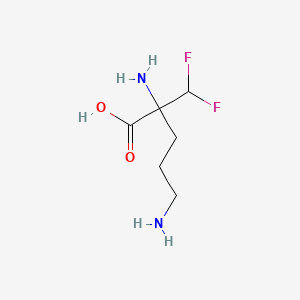
Eflornithine irreversibly inhibits ornithine decarboxylase, an enzyme involved in the production of the hair shaft by the hair follicle. Vaniqa has been shown to reduce the rate of hair growth.
Clinical efficacy and safety
The safety and efficacy of Vaniqa was evaluated in two double-blind, randomised, vehicle-controlled clinical trials involving 596 women of skin types I-VI (395 on Vaniqa, 201 on vehicle) treated for up to 24 weeks. Physicians assessed the change from baseline on a 4-point scale, 48 hours after women had shaved the treated areas of the affected areas of the face and under the chin, considering parameters such as hair length and density, and darkening of the skin associated with the presence of terminal hair. Improvement was seen as early as 8 weeks after initiation of treatment.
The combined results of these two trials are presented below:
Outcome*
Vaniqa 11.5% cream
Vehicle
Clear / almost clear
Marked improvement
Improved
No improvement / worse
6%
29%
35%
30%
0%
9%
33%
58%
* At end of therapy (Week 24). For patients who discontinued therapy during the trial last observations were carried forward to Week 24.
Statistically significant (p ≤ 0.001) improvement for Vaniqa versus vehicle was seen in each of these studies for women with marked improvement and clear/almost clear responses. These improvements resulted in a corresponding reduction in the darkening appearance of the facial skin associated with the presence of terminal hair. Subgroup analysis revealed a difference in treatment success where 27% of non-white women and 39% of white women showed a marked or better improvement. Subgroup analysis also showed that 29% of obese women (BMI ≥ 30) and 43% of normal weight women (BMI < 30) showed a marked or better improvement. About 12% of women in the clinical trials were postmenopausal. Significant improvement (p < 0.001) versus vehicle was seen in postmenopausal women.
Patient self-assessments demonstrated a significantly reduced psychological discomfort with the condition, as measured by responses to 6 questions on a visual analogue scale. Vaniqa significantly reduced how bothered patients felt by their facial hair and by the time spent removing, treating, or concealing facial hair. Patient comfort in various social and work settings was also improved. Patient self-assessments were found to correlate with physician observations of efficacy. These patient-observable differences were seen 8 weeks after initiating treatment.
The condition returned to pre-treatment levels within eight weeks after discontinuation of treatment.
⚠️ Warnings
Any unused medicinal product or waste material should be disposed of in accordance with local requirements.