This information is for educational purposes only. It is not intended as medical advice. Always consult a qualified healthcare professional.
OTC
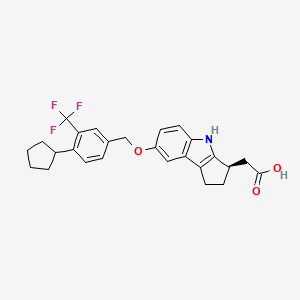
Velsipity
2 mg, Tabletki powlekane
INN: Etrasimodum
Data updated: 2026-04-13
Available in:
🇨🇿🇩🇪🇬🇧🇫🇷🇵🇱🇵🇹🇸🇰🇺🇦
Form
Tabletki powlekane
Dosage
2 mg
Route
doustna
Storage
—
About This Product
User Reviews
Reviews reflect personal experiences and are not medical advice. Always consult your doctor.
Manufacturer
Pfizer Europe MA EEIG (Irlandia)
Composition
Etrasimodum 2 mg
ATC Code
L04AE05
Source
URPL
Pharmacotherapeutic group: Immunosuppressants, sphingosine 1-phosphate (S1P) receptor modulators, etrasimod ATC code: L04AE05
Mechanism of action
Etrasimod is a sphingosine-1-phosphate (S1P) receptor modulator that binds to S1P receptors 1, 4 and 5 (S1P
1,4,5
) and is a balanced G-protein and beta-arrestin agonist at S1P
1
. Etrasimod has minimal activity on S1P
3
and no activity on S1P
2
. Etrasimod partially and reversibly blocks the capacity of lymphocytes to egress from lymphoid organs, reducing the number of lymphocytes in peripheral blood thereby lowering the number of activated lymphocytes in the tissue.
The mechanism by which etrasimod exerts therapeutic effects in UC is unknown but may involve the reduction of lymphocyte migration into sites of inflammation. The etrasimod-induced reduction of lymphocytes in the peripheral circulation has differential effects on leucocyte subpopulations, with greater decreases in cells involved in the adaptive immune response known to be involved in driving UC pathology. Etrasimod has minimal impact on cells involved in innate immune response, which contribute to immunosurveillance.
Pharmacodynamic effects
Heart rate and rhythm
Etrasimod may result in a transient decrease in heart rate and AV conduction upon treatment initiation (see sections 4.4 and 4.8). On Day 1, in UC patients from ELEVATE UC 52 and ELEVATE UC 12, 33% of subjects had bradycardia (nadir HR below 60 bpm within the first 4 hours), or significant bradycardia in 2.5% (HR nadir below 50 bpm). No patients had HR < 40 bpm following the first dose. The greatest mean decrease in heart rate was observed at Hour 2 or 3 post dose. On Day 1, the mean (SD) change in PR interval from predose to 4 hours post dose with etrasimod was 5.5 msec (18.84). PR interval prolongation > 200 msec was recorded on ECG in 5.1% and higher degree prolongation (> 230 msec) in 1.8% of subjects.
Reduction in blood lymphocyte and neutrophil counts
In controlled clinical studies, mean lymphocyte counts decreased to approximately 50% of baseline at 2 weeks (approximate mean blood lymphocyte counts 0.9 x 10
9
/L) consistent with the mechanism of action, and lowered lymphocyte counts were maintained during once daily treatment with etrasimod.
A reduction in neutrophil counts was observed in controlled clinical studies with etrasimod, mean neutrophil counts were generally in the normal range during etrasimod treatment. Lowered neutrophil counts were maintained on etrasimod treatment and were reversible upon treatment discontinuation.
Peripheral blood B cells [CD19
+
] and T cells [CD3
+
], T-helper [CD3
+
CD4
+
], and T-cytotoxic [CD3
+
CD8
+
] cell subsets were all reduced, while natural killer cells and monocytes were not. T-helper cells were more sensitive to the effects of etrasimod than T-cytotoxic cells.
Peripheral blood absolute lymphocyte counts returned to the normal range in 90% of patients within 1 to 2 weeks of stopping therapy based on a population pharmacokinetic/pharmacodynamic model.
Clinical efficacy and safety
The efficacy of etrasimod were evaluated in 2 randomised, double-blind, placebo-controlled clinical studies (ELEVATE UC 52 and ELEVATE UC 12) in patients 16 to 80 years of age with moderately to severely active ulcerative colitis.
Both studies included patients who had an inadequate response, loss of response, or intolerance to one or more of the following treatment options: oral aminosalicylates, corticosteroids, thiopurines, Janus kinase (JAK) inhibitors, or a biologic (e.g., TNF blocker, anti-integrin, anti-IL12/23). Enrolled patients had UC confirmed by endoscopy and histopathology with the extent of disease being ≥ 10 cm from the anal verge. Patients with isolated proctitis were also included in the study provided they met all other inclusion criteria.
Enrolled patients had a modified Mayo score (mMS) of 4 to 9 with an endoscopy score (ES) ≥ 2 and rectal bleeding (RB) subscore ≥ 1. The primary evaluation was based on the population with a mMS of 5 to 9. Patients enrolled across the two studies had a mean age of 40 years with 3 (0.4%) patients less than 18 years of age and 45 (6%) patients 65 years of age or higher; 57% were male, 82% were White, and 13% were Asian.
Patients in these studies may have received the following concomitant UC therapies: stable daily doses of oral aminosalicylates and/or oral corticosteroids (≤ 20 mg prednisone, ≤ 9 mg budesonide, or equivalent steroid). Concomitant treatment with immunomodulators, biologic therapies, rectal 5-ASA, or rectal corticosteroids was not permitted.
ELEVATE UC 52
ELEVATE UC 52 was a “treat-through” study, with a total of 433 patients randomised to receive etrasimod 2 mg or placebo at a 2:1 ratio administered orally once daily. Patients remained on their assigned treatment for the duration of the study.
At baseline, enrolled patients had a median mMS of 7, 8% of enrolled patients presented with isolated proctitis. A total of 30% of patients had prior exposure to biologic/JAK inhibitors; a total of 14% of patients had exposure to > 1 biologic/JAK inhibitor and 11% of patients had prior exposure to anti-integrins. At baseline, 77% of patients were receiving oral aminosalicylates and 31% of patients were receiving oral corticosteroids.
The co-primary endpoints were the proportion of patients achieving clinical remission at Week 12 and at Week 52, with clinical remission defined as stool frequency (SF) subscore of 0 (or 1 with a ≥ 1-point decrease from baseline), RB subscore of 0, and ES ≤ 1 (excluding friability). The secondary endpoints included the proportion of patients achieving endoscopic improvement, symptomatic remission, mucosal healing, clinical response, corticosteroid-free clinical remission, and sustained clinical remission. The primary analysis was conducted at Week 12 and at Week 52 in patients with moderately to severely active disease, defined as mMS 5 to 9 (see Table 2).
Of the 433 patients randomised, 91.7% and 86.1% of the patients completed Week 12 in the etrasimod and placebo group, respectively. Beginning with Week 12, patients with no improvement from baseline or who met disease worsening criteria could discontinue per the discretion of the investigator and could continue in the open label extension study. In this treat-through study 55.7% and 31.9% completed Week 52 treatment in the etrasimod and placebo group, respectively.
A significantly greater proportion of patients treated with etrasimod achieved clinical remission, endoscopic improvement, symptomatic remission, and mucosal healing at Week 12 and at Week 52, corticosteroid-free clinical remission and sustained clinical remission at Week 52, compared to placebo (see Table 2).
Table 2: Proportion of patients meeting efficacy endpoints at Week 12 and at Week 52 in ELEVATE UC 52
Placebo
N = 135
Etrasimod 2
mg
N = 274
Treatment difference
(95% CI)
a
n
%
n
%
Week 12 endpoints
Clinical remission
b
10
7%
74
27%
20%
(13%, 27%)
l
No prior biologic/JAK inhibitor exposure
9/93
10%
60/194
31%
Prior biologic/JAK inhibitor exposure
1/42
2%
14/80
18%
Endoscopic improvement
c
19
14%
96
35%
21%
(13%, 29%)
l
No prior biologic/JAK inhibitor exposure
17/93
18%
76/194
39%
Prior biologic/JAK inhibitor exposure
2/42
5%
20/80
25%
Symptomatic remission
d
29
22%
126
46%
25%
(15%, 34%)
l
No prior biologic/JAK inhibitor exposure
22/93
24%
101/194
52%
Prior biologic/JAK inhibitor exposure
7/42
17%
25/80
31%
Mucosal healing
e
6
4%
58
21%
17%
(11%, 23%)
l
No prior biologic/JAK inhibitor exposure
6/93
7%
47/194
24%
Prior biologic/JAK inhibitor exposure
0/42
0%
11/80
14%
Clinical response
f
46
34%
171
62%
28%
(19%, 38%)
l
No prior biologic/JAK inhibitor exposure
35/93
38%
132/194
68%
Prior biologic/JAK inhibitor exposure
11/42
26%
39/80
49%
Week 52 endpoints
Clinical remission
b
9
7%
88
32%
25%
(18%, 32%)
l
No prior biologic/JAK inhibitor exposure
7/93
8%
71/194
37%
Prior biologic/JAK inhibitor exposure
2/42
5%
17/80
21%
Endoscopic improvement
c
14
10%
102
37%
27%
(19%, 34%)
l
No prior biologic/JAK inhibitor exposure
12/93
13%
78/194
40%
Prior biologic/JAK inhibitor exposure
2/42
5%
24/80
30%
Symptomatic remission
d
25
19%
119
43%
25%
(16%, 34%)
l
No prior biologic/JAK inhibitor exposure
19/93
20%
97/194
50%
Prior biologic/JAK inhibitor exposure
6/42
14%
22/80
28%
Mucosal healing
e
11
8%
73
27%
18%
(11%, 25%)
l
No prior biologic/JAK inhibitor exposure
10/93
11%
55/194
28%
Prior biologic/JAK inhibitor exposure
1/42
2%
18/80
23%
Clinical response
f
31
23%
132
48%
25%
(16%, 34%)
l
No prior biologic/JAK inhibitor exposure
25/93
27%
103/194
53%
Prior biologic/JAK inhibitor exposure
6/42
14%
29/80
36%
Sustained clinical remission
g
3
2%
49
18%
16%
(11%, 21%)
l
No prior biologic/JAK inhibitor exposure
2/93
2%
41/194
21%
Prior biologic/JAK inhibitor exposure
1/42
2%
8/80
10%
Corticosteroid-free clinical remission
h
9
7%
88
32%
25%
(18%, 32%)
l
No prior biologic/JAK inhibitor exposure
7/93
8%
71/194
37%
Prior biologic/JAK inhibitor exposure
2/42
5%
17/80
21%
Corticosteroid-free clinical remission among patients treated with corticosteroids at baseline
i
3/40
8%
27/87
31%
23%
(10%, 36%)
l
No prior biologic/JAK inhibitor exposure
2/26
8%
22/59
37%
Prior biologic/JAK inhibitor exposure
1/14
7%
5/28
18%
Corticosteroid-free symptomatic remission
j
25
19%
119
43%
25%
(16%, 34%)
l
No prior biologic/JAK inhibitor exposure
19/93
20%
97/194
50%
Prior biologic/JAK inhibitor exposure
6/42
14%
22/80
28%
Corticosteroid-free endoscopic improvement
k
14
10%
101
37%
26%
(19%, 34%)
l
No prior biologic/JAK inhibitor exposure
12/93
13%
78/194
40%
Prior biologic/JAK inhibitor exposure
2/42
5%
23/80
29%
a
Treatment difference (adjusted for stratification factors of prior biologic/JAK inhibitor exposure, corticosteroid use at baseline, and baseline mMS group).
b
Clinical remission was defined as SF subscore of 0 (or 1 with a ≥ 1-point decrease from baseline), RB subscore of 0, and ES ≤ 1 (excluding friability).
c
Endoscopic improvement was defined as ES ≤ 1 (excluding friability).
d
Symptomatic remission was defined as SF subscore of 0 (or 1 with a ≥ 1-point decrease from baseline) and RB subscore of 0.
e
Mucosal healing was defined as ES ≤ 1 (excluding friability) with histologic remission (Geboes Index score < 2.0, indicating no neutrophils in the epithelial crypts or lamina propria, no increase in eosinophils, and no crypt destruction, erosions, ulcerations, or granulation tissue).
f
Clinical response was defined as a ≥ 2-point and ≥ 30% decrease from baseline in mMS, and a ≥ 1-point decrease from baseline in RB subscore or an absolute RB subscore ≤ 1.
g
Sustained clinical remission was defined as clinical remission at both Week 12 and Week 52.
h
Corticosteroid-free clinical remission was defined as clinical remission at Week 52 without receiving corticosteroids for at least 12 weeks immediately prior to Week 52.
i
Corticosteroid-free clinical remission among patients treated with corticosteroids at baseline was defined as clinical remission at Week 52 without receiving corticosteroids for at least 12 weeks immediately prior to Week 52 among patients treated with corticosteroids at baseline.
j
Corticosteroid-free symptomatic remission was defined as SF subscore of 0 (or 1 with a ≥ 1-point decrease from baseline) and RB subscore of 0 for at least 12 weeks immediately prior to Week 52.
k
Corticosteroid-free endoscopic improvement was defined as ES ≤ 1 (excluding friability) for at least 12 weeks immediately prior to Week 52.
l
p < 0.001.
Supplementary analysis of mMS 4
The efficacy results in patients with mMS of 4 (including ES ≥ 2 and RB subscore ≥ 1) were consistent with those of the primary analysis.
Isolated proctitis
A greater proportion of patients with isolated proctitis at baseline treated with etrasimod compared to placebo achieved clinical remission at Week 12 (46% vs 29%) and Week 52 (42% vs 14%).
Early onset of symptomatic improvement
At Week 2 (first study visit), a greater proportion of patients treated with etrasimod compared to placebo achieved symptomatic remission (16% vs 11%). At Week 4, a greater proportion of patients treated with etrasimod compared to placebo achieved complete symptomatic remission (11% vs 4%) defined as a SF subscore of 0 and RB subscore of 0.
Endoscopic and histologic assessment
Normalisation of the endoscopic appearance of the mucosa (endoscopic remission) was defined as ES of 0. A greater proportion of patients treated with etrasimod compared to placebo achieved endoscopic remission by Week 12 (15% vs 4%), Week 52 (26% vs 6%), and both Week 12 and Week 52 (11% vs 2%).
Endoscopic remission and Geboes histologic score < 2.0 (indicating no neutrophils in crypts or lamina propria and no increase in eosinophil, no crypt destruction, and no erosions, ulcerations, or granulation tissue) were achieved by a greater proportion of patients treated with etrasimod compared to placebo at Week 12 (11% vs 2%) and at Week 52 (18% vs 5%).
Abdominal pain and bowel urgency
At Week 12, a greater proportion of patients treated with etrasimod compared to placebo had absence of abdominal pain (27% vs 13%) and absence of bowel urgency (19% vs 7%). At Week 52, a greater proportion of patients treated with etrasimod compared to placebo had absence of abdominal pain (22% vs 7%) and absence of bowel urgency (19% vs 8%).
Inflammatory bowel disease questionnaire (IBDQ)
Patients treated with etrasimod compared to placebo demonstrated greater improvement from baseline in the total IBDQ score. Changes in IBDQ total score at Week 12 from baseline with etrasimod compared to placebo were 42.8 and 27.4, respectively and changes in IBDQ total score at Week 52 from baseline with etrasimod compared to placebo were 55.8 and 38.1, respectively.
ELEVATE UC 12
In ELEVATE UC 12, a total of 354 patients were randomised to receive etrasimod 2 mg or placebo at a 2:1 ratio administered orally once daily.
At baseline, enrolled patients had a median mMS of 7, with 5.6% of patients having mMS of 4, and 67% having mMS 5 to 7 (moderately active disease), and 27.4% having mMS > 7 (severely active disease). 8% of enrolled patients presented with isolated proctitis. A total of 33% of patients had prior exposure to biologic/JAK inhibitors; a total of 18% of patients had exposure to > 1 biologic/JAK inhibitor and 12% of patients had prior exposure to anti-integrins. At baseline, 83% of patients were receiving oral aminosalicylates and 28% of patients were receiving oral corticosteroids.
Of the 354 patients randomised, 89.5% and 88.8% of the patients completed Week 12 in the etrasimod and placebo group, respectively.
The primary endpoint was the proportion of patients achieving clinical remission at Week 12. The secondary endpoints included the proportion of patients achieving endoscopic improvement, symptomatic remission, mucosal healing, and clinical response at Week 12. The primary analysis was conducted at Week 12 in patients with moderately to severely active disease, defined as mMS 5 to 9 (see Table 3).
A significantly greater proportion of patients treated with etrasimod achieved clinical remission, endoscopic improvement, symptomatic remission, and mucosal healing at Week 12, compared to placebo (see Table 3).
Table 3: Proportion of patients meeting efficacy endpoints at Week 12 in ELEVATE UC 12
Endpoints
Placebo
N = 112
Etrasimod 2
mg
N = 222
Treatment difference
(95% CI)
a
n
%
n
%
Clinical remission
b
17
15%
55
25%
10%
(1%, 18%)
g
No prior biologic/JAK inhibitor exposure
12/74
16%
41/148
28%
Prior biologic/JAK inhibitor exposure
5/38
13%
14/74
19%
Endoscopic improvement
c
21
19%
68
31%
12%
(3%, 21%)
g
No prior biologic/JAK inhibitor exposure
14/74
19%
51/148
35%
Prior biologic/JAK inhibitor exposure
7/38
18%
17/74
23%
Symptomatic remission
d
33
30%
104
47%
17%
(7%, 28%)
g
No prior biologic/JAK inhibitor exposure
23/74
31%
73/148
49%
Prior biologic/JAK inhibitor exposure
10/38
26%
31/74
42%
Mucosal healing
e
10
9%
36
16%
7%
(1%, 14%)
g
No prior biologic/JAK inhibitor exposure
8/74
11%
28/148
19%
Prior biologic/JAK inhibitor exposure
2/38
5%
8/74
11%
Clinical response
f
46
41%
138
62%
21%
(10%, 32%)
h
No prior biologic/JAK inhibitor exposure
32/74
43%
97/148
66%
Prior biologic/JAK inhibitor exposure
14/38
37%
41/74
55%
a
Treatment difference (adjusted for stratification factors of prior biologic/JAK inhibitor exposure, corticosteroid use at baseline, and baseline mMS group).
b
Clinical remission was defined as SF subscore of 0 (or 1 with a ≥ 1-point decrease from baseline), RB subscore of 0, and ES ≤ 1 (excluding friability).
c
Endoscopic improvement was defined as ES ≤ 1 (excluding friability).
d
Symptomatic remission was defined as SF subscore of 0 (or 1 with a ≥ 1-point decrease from baseline) and RB subscore of 0.
e
Mucosal healing was defined as ES ≤ 1 (excluding friability) with histologic remission (Geboes Index score < 2.0, indicating no neutrophils in the epithelial crypts or lamina propria, no increase in eosinophils, and no crypt destruction, erosions, ulcerations, or granulation tissue).
f
Clinical response was defined as a ≥ 2-point and ≥ 30% decrease from baseline in mMS, and a ≥ 1-point decrease from baseline in RB subscore or an absolute RB subscore ≤ 1.
g
p < 0.05.
h
p < 0.001.
Supplementary analysis of mMS 4
The efficacy results in patients with mMS of 4 (including ES ≥ 2 and RB subscore ≥ 1) were consistent with those of the primary analysis.
Isolated proctitis
A greater proportion of patients with isolated proctitis at baseline treated with etrasimod compared to placebo achieved clinical remission at Week 12 (39% vs 8%).
Early onset of symptomatic improvement
At Week 4, a greater proportion of patients treated with etrasimod compared to placebo achieved symptomatic remission (28% vs 16%) and complete symptomatic remission (12% vs 4%) defined as a SF subscore of 0 and RB subscore of 0.
Endoscopic and histologic assessment
Normalisation of the endoscopic appearance of the mucosa (endoscopic remission) was defined as ES of 0. A greater proportion of patients treated with etrasimod compared to placebo achieved endoscopic remission by Week 12 (17% vs 8%).
Endoscopic remission and Geboes histologic score < 2.0 (indicating no neutrophils in crypts or lamina propria and no increase in eosinophil, no crypt destruction, and no erosions, ulcerations, or granulation tissue) were achieved by a greater proportion of patients treated with etrasimod compared to placebo at Week 12 (10% vs 5%).
Abdominal pain and bowel urgency
At Week 12, a greater proportion of patients treated with etrasimod compared to placebo had absence of abdominal pain (32% vs 18%) and absence of bowel urgency (21% vs 12%).
Inflammatory bowel disease questionnaire (IBDQ)
Patients treated with etrasimod compared to placebo demonstrated greater improvement from baseline in the total IBDQ score. Changes in IBDQ total score at Week 12 from baseline with etrasimod compared to placebo were 47.5 and 30.2, respectively.
Paediatric population
The MHRA has deferred the obligation to submit the results of studies with etrasimod in one or more subsets of the paediatric population in UC (see section 4.2 for information on paediatric use).
⚠️ Warnings
Any unused medicinal product or waste material should be disposed of in accordance with local requirements.