Reference images only. Packaging and labels vary by country and batch. Always consult the leaflet supplied with your product.
Available in:
🇨🇿🇩🇪🇬🇧🇫🇷🇵🇱🇸🇰🇺🇦
Form
Krem
Dosage
10 mg/g
Route
na skórę
Storage
—
About This Product
Manufacturer
Cassiopea S.p.A. (Włochy)
Composition
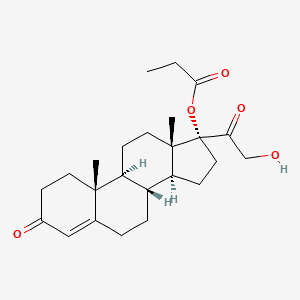
Clascoteronum 10 mg/g
ATC Code
D10AX06
Source
URPL
Pharmacotherapeutic group: other anti-acne preparations for topical use, ATC code: D10AX06
Mechanism of action
Clascoterone is an androgen receptor inhibitor. When applied topically to the skin, clascoterone acts locally, influencing multiple cellular and molecular acnegenic pathways with minimal systemic exposure. However, the exact mechanism of action of clascoterone for the topical treatment of acne vulgaris is not fully characterised.
Pharmacodynamic effects
Hypothalamic-Pituitary-Adrenal (HPA) Axis Suppression
HPA axis suppression was evaluated in adult (n=20) and adolescent (n=22) subjects with acne vulgaris following twice daily application of clascoterone for 2 weeks in the pharmacokinetic study described in section 5.2. HPA axis suppression indicated by 30-minute post-stimulation serum cortisol level of ≤ 18 µg/dL was observed in 1/20 (5%) of adult subjects and 2/22 (9%) of adolescent subjects at Day 14. All subjects returned to normal HPA axis function at follow-up 4 weeks after the end of treatment. No subject experienced clinical signs and symptoms of adrenal suppression or associated complications.
Potassium
Overall, shifts from normal to elevated potassium levels were observed in 3.6% (17/468) of clascoterone-treated patients and 3.9% (4/103) of vehicle-treated patients (age range: 12 to 64). In a Phase 2 maximum use clinical study with Winlevi administered above the recommended daily dose for up to 2 weeks, an increase in plasma potassium levels (hyperkalemia) was observed in 9/27 (33%) subjects aged 9 to <12.
Cardiac Electrophysiology
At approximately 2-times the systemic exposure observed with the maximum dose, clascoterone does not prolong the QT interval to any clinically relevant extent.
Clinical efficacy and safety
The safety and efficacy of clascoterone applied twice daily for 12 weeks for the treatment of acne vulgaris were assessed in two identically-designed, multicenter, randomised, double-blind, vehicle- controlled clinical trials (CB-03-01/25 and CB-03-01/26) enrolling in total 1,440 subjects with facial acne vulgaris. The trials enrolled subjects 9 years or older with Investigator's Global Assessment (IGA) of moderate or severe facial acne vulgaris (score of 3 or 4), 30 to 75 inflammatory lesions (papules, pustules and nodules), and 30 to 100 non-inflammatory lesions (open and closed comedones). Patients with 2 facial nodules or nodulocystic acne were excluded. Concurrent acne treatment was not allowed.
A total of 1,421 subjects 12 years and older with facial acne vulgaris were enrolled and randomized. The treatment groups in each study were well-balanced with similar demographic and baseline characteristics in the intent-to-treat (ITT) population, both within and between Trial 1 and Trial 2. Of these subjects, 641 (45%) were 12 to <18 years of age, and 780 (55%) were 18 years of age or older. In addition, 62.1% of the subjects were female and 90.6% were Caucasian. At baseline, subjects had a mean inflammatory lesion count of 42.4 and a mean non-inflammatory lesion count of 61.4.
Additionally, approximately 83% of subjects had an IGA score of 3 (“moderate”), and 16.7% had an IGA score of 4 (“severe”).
Efficacy was assessed at Week 12 by the proportion of subjects in each treatment group with at least a 2-point reduction in IGA compared to baseline and an IGA score of 0 (clear) or 1 (almost clear), absolute change and percent change from baseline in non-inflammatory (NILC) and inflammatory lesions (ILC). Secondary efficacy endpoints included absolute and percent change from baseline in total lesion count (TLC); percent change from baseline in non-inflammatory and inflammatory lesion count.
The IGA success rate and mean absolute and percent reduction from baseline in acne lesion counts after 12 weeks of treatment for subjects 12 years of age and older are presented in Table 3.
Table 3 Clinical efficacy of Clascoterone Cream in subjects with acne vulgaris at week 12
Trial 1
Trial 2
Winlevi
N = 342
Vehicle
N = 350
Winlevi
N = 367
Vehicle
N = 362
IGA Success
a
18.8%
8.7%
20.9%
6.6%
Difference from vehicle
(95% CI)
10.1%
(4.1%, 16.0%)
14.3%
(8.9%, 19.7%)
Non-inflammatory lesions
Mean absolute reduction
20.4
13.0
19.5
10.8
Difference from vehicle
(95% CI)
7.3
(3.5, 11.1)
8.7
(4.5, 12.4)
Mean percent reduction
32.6%
21.8%
29.6%
15.7%
Difference from vehicle
(95% CI)
10.8%
(3.9%, 17.6%)
13.8%
(7.5%, 20.1%)
Inflammatory lesions
Mean absolute reduction
19.3
15.4
20.1
12.6
Difference from vehicle
(95% CI)
3.9
(1.3, 6.5)
7.5
(5.2, 9.9)
Mean percent reduction
44.6%
36.3%
47.1%
29.7%
Difference from vehicle
(95% CI)
8.3%
(2.2%, 14.4%)
17.5%
(11.8%, 23.1%)
a
Investigator Global Assessment (IGA) success was defined as at least a 2-point reduction in IGA compared to baseline and an IGA score of 0 (clear) or 1 (almost clear).
The results for the secondary endpoints were similar between the 2 studies. The results were statistically significant compared to vehicle in both studies (Table 4).
Table 4 - Results of Secondary Endpoints for Trial 1 and Trial 2 in Patients with
acne vulgaris
Aged 12 and older at Week 12 (ITT)
Secondary Endpoints
Trial 1
Trial 2
Winlevi
N=342
Vehicle
N=350
Winlevi
N=367
Vehicle
N=362
Absolute change from baseline in Total Lesion Count
LS means
a
-40.0
-28.6
-40.5
-23.6
Difference between treatments
(95% CI), p-value
a
-11.4
(-16.8, -6.0), p < 0.0001
-16.9
(-22.4, -11.4), p < 0.0001
Percent change from baseline Total Lesion Count
LS means
a
-38.1
-28.3
-38.0
-22.1
Difference between treatments
(95% CI), p-value
a
-9.8
(-15.2, -4.4), p = 0.0004
-15.9
(-21.2, -10.6), p < 0.0001
Percent change from baseline in Non-inflammatory Lesion Count
LS means
a
-32.6
-21.8
-29.6
-15.7
Difference between treatments
(95% CI), p-value
a
-10.8
(-17.6, -3.9), p = 0.0021
-13.8
(-20.2, -7.5), p < 0.0001
Percent change from baseline in Inflammatory Lesion Count
LS means
a
-44.6
-36.3
-47.1
-29.7
Difference between treatments
(95% CI), p-value
a
-8.3
(-14.4, -2.2), p = 0.0080
-17.5
(-23.1, -11.8), p < 0.0001
a
LS = Least square; Least square mean and p-value are based on analysis of covariance with treatment and analysis center as fixed effects, and baseline value as a covariate
⚠️ Warnings
This medicinal product may pose a risk to the environment (see section 5.3). Any unused medicinal product or waste material should be disposed of in accordance with local requirements.
👨⚕️
Verified by medical editor
Dr. Ozarchuk, PharmD · April 2026
User Reviews
Reviews reflect personal experiences and are not medical advice. Always consult your doctor.