This information is for educational purposes only. It is not intended as medical advice. Always consult a qualified healthcare professional.
AYVAKYT — Description, Dosage, Side Effects | PillsCard
Rx
AYVAKYT
50 mg, Tabletki powlekane
INN: Avapritinibum
Data updated: 2026-04-24
Available in:
🇨🇿🇬🇧🇫🇷🇵🇱
Form
Tabletki powlekane
Dosage
50 mg
Route
doustna
Storage
—
About This Product
Manufacturer
User Reviews
Reviews reflect personal experiences and are not medical advice. Always consult your doctor.
Blueprint Medicines (Netherlands) B.V. (Holandia)
Composition
Avapritinibum 50 mg
ATC Code
L01EX18
Source
URPL
Pharmacotherapeutic group: antineoplastic agents, protein kinase inhibitor, ATC code: L01EX18.
Mechanism of action
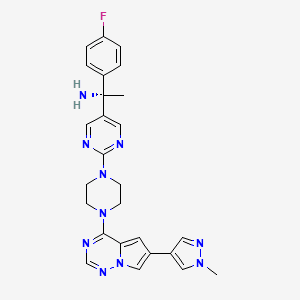
Avapritinib is a Type 1 kinase inhibitor that has demonstrated biochemical
in vitro
activity on the PDGFRA D842V and KIT D816V mutants associated with resistance to imatinib, sunitinib and regorafenib with half maximal inhibitory concentrations (IC
50
) of 0.24 nM and 0.27 nM, respectively, and greater potency against clinically relevant KIT exon 11 and KIT exon 17 mutants than against the KIT wild-type enzyme.
In cellular assays avapritinib inhibited the proliferation in KIT mutant cell lines, including a murine mastocytoma cell line and a human mast cell leukaemia cell line. Avapritinib also showed growth inhibitory activity in a xenograft model of murine mastocytoma with KIT exon 17 mutations.
Pharmacodynamic effects
Potential to prolong the QT interval
The ability of avapritinib to prolong the QT interval was assessed in 27 patients administered avapritinib at doses of 300/400 mg once daily in an open-label, single-arm study in patients with GIST. The estimated mean change from baseline in QTcF was 6.55 ms (90% confidence interval [CI]: 1.80 to 11.29) at the observed steady state geometric mean C
max
of 899 ng/mL. No effect on heart rate or cardiac conduction (PR, QRS, and RR intervals) was observed.
Clinical efficacy and safety
Clinical studies in unresectable or metastatic GIST
The efficacy and safety of avapritinib was assessed in a multi-centre, single-arm, open-label clinical study (BLU-285-1101; NAVIGATOR). Patients with a confirmed diagnosis of GIST and an Eastern Clinical Oncology Group (ECOG) performance status (PS) of 0 to 2 (58% and 3% of patients had ECOG status 1 and 2, respectively) were included in the study. A total of 217 patients received a starting dose of either 300 mg or 400 mg once daily.
Efficacy was assessed on the basis of overall response rate (ORR) according to Response Evaluation Criteria In Solid Tumours (RECIST) v1.1 modified for patients with unresectable or metastatic GIST (mRECIST v1.1) and duration of response (DOR), as evaluated by a Blinded Independent Central Review (BICR).
In addition, a total of 239 patients have received treatment with avapritinib at the relevant starting dose in an ongoing open-label, randomised phase 3 study (BLU-285-1303; VOYAGER) in which PFS is the primary endpoint. Ninety six additional patients received avapritinib in this study after disease progression on the regorafenib control treatment (crossover). As of the last data cut-off date, 9th March 2020, the median treatment duration was 8.9 months in patients with GIST harbouring the PDGFRA D842V mutation included in this study, which provides some preliminary comparative safety data.
PDGFRA D842V mutation
A total of 38 patients with unresectable or metastatic GIST harbouring the PDGFRA D842V mutation were enrolled and treated with avapritinib at a starting dose of either 300 mg or 400 mg once daily. In the NAVIGATOR study 71% of patients with unresectable or metastatic GIST harbouring the PDGFRA D842V mutation had dose reductions to 200 mg or 100 mg once daily during the course of therapy. Median time to dose reduction was 12 weeks. The GIST patients were required to have unresectable or metastatic disease and have a documented PDGFRA D842V mutation determined by a locally available diagnostic test. At 12 months, 27 patients were still on avapritinib with 22% receiving 300 mg once daily, 37% receiving 200 mg once daily and 41% receiving 100 mg once daily.
Baseline demographics and disease characteristics were median age of 64 years (range: 29 to 90 years), 66% male, 66% white, ECOG PS of 0-2 (61% and 5% of patients had ECOG status 1 and 2, respectively), 97% had metastatic disease, largest target lesion was >5 cm for 58%, 90% had prior surgical resection, and median number of prior lines of tyrosine kinase inhibitors of 1 (range: 0 to 5).
Efficacy results from study BLU-285-1101 (NAVIGATOR) for GIST patients harbouring the PDGFRA D842V mutation are summarised in Table 5. The data represent a median duration of follow-up of 26 months across all patients with PDGFRA D842V mutations who were alive, the median OS had not been reached with 74% of patients alive. The median progression free survival was 24 months. Radiographic tumour reductions were observed in 98% of patients.
Table 5. Efficacy results for PDGFRA D842V-Mutation in GIST patients (NAVIGATOR study)
Efficacy Parameter
N = 38
mRECIST 1.1 ORR
1
, (%) (95% CI)
CR
PR
95 (82.3, 99.4)
13
82
DOR (months), median (CI)
22.1 (14.1, NE)
Abbreviations: CI=confidence interval; CR=complete response; DOR=duration of response; mRECIST 1.1=Response Evaluation Criteria In Solid Tumours v1.1 modified for patients with unresectable or metastatic GIST; N=number of patients; NE=not estimable; ORR=overall response rate; PR=partial response
1
ORR is defined as patients who achieved a CR or PR (CR + PR)
In patients with PDGFRA D842V-mutant GIST treated at starting doses of 300 or 400 mg once daily the ORR based on central radiology review by mRECIST v1.1 criteria was 95%.
Based on preliminary results from the ongoing phase 3 study BLU-285-1303 (VOYAGER) in a subset of 13 patients with PDGFRA D842V mutations, partial response was reported in 3 out of 7 patients in the avapritinib group (43% ORR) and none of the 6 patients in the regorafenib group (0% ORR). The median PFS there was not estimable in patients with PDGFRA D842V mutations randomized to avapritinib (95% CI: 9.7, NE) compared to 4.5 months in patients receiving regorafenib (95% CI: 1.7, NE).
Clinical studies in advanced systemic mastocytosis
The efficacy and safety of avapritinib was assessed in BLU-285-2202 (PATHFINDER), a multi-centre, single-arm, open-label Phase 2 clinical study. Eligible patients were required to have an ECOG PS of 0 to 3. Patients with high and very high risk AHNs such as AML or high risk MDS, and Philadelphia chromosome-positive malignancies were excluded. Palliative and supportive care medications were allowed. Response-evaluable patients included those with a confirmed diagnosis of AdvSM per the World Health Organisation (WHO) and deemed evaluable by modified IWG-MRT-ECNM criteria at baseline as adjudicated by an independent central committee, who received at least 1 dose of avapritinib, had at least 2 post-baseline bone marrow assessments and had been on study for at least 24 weeks, or had an end of study visit.
In PATHFINDER, patients were enrolled at the starting dose of 200 mg orally once daily. The primary efficacy outcome measure was ORR according to modified IWG-MRT-ECNM criteria as evaluated by the central committee in 72 patients treated with avapritinib starting dose of 200 mg daily. Additional efficacy outcome measures were duration of response (DOR), time to response, overall survival (OS) and changes in individual measures of mast cell burden.
The assessment of the primary efficacy endpoint, the ORR, was based on a total of 72 patients with AdvSM, enrolled in PATHFINDER, who were evaluable for response. The median duration of follow up for these patients was 14.3 months (95% confidence interval 11.2 to 16.9 months).
The study population characteristics were: median age of 68 years (range: 31 to 88 years), 58% male, 85% white, 75% had an ECOG PS of 0-1, 25% had an ECOG PS of 2-3, 33% had ongoing corticosteroid therapy use for systemic mastocytosis at baseline, 90% of patients had a detectable KIT D816V mutation, 64% had prior antineoplastic therapy and 53% had received prior midostaurin. Before initiation of avapritinib treatment, the median bone marrow mast cell infiltrate was 50%, the median serum tryptase level was 259.20 ng/mL, and the median KIT D816V mutant allele fraction (MAF) was 15%.
Efficacy results in patients with AdvSM enrolled in the PATHFINDER study, who were treated with a starting dose of 200 mg once daily is summarized in Table 6.
Table 6. Efficacy results for patients with advanced systemic mastocytosis in PATHFINDER per modified IWG-MRT-ECNM criteria
Efficacy Parameter
Overall
ASM
SM-AHN
MCL
ORR, (%) (95% CI)
a
CR
CRh
CR+CRh
PR
Clinical improvement
N = 72
68
(56, 78.6)
4
14
18
43
7
N = 12
67
(34.9, 90.1)
0
25
25
42
0
N = 48
77
(62.7, 88)
6
15
21
48
8
N = 12
33
(9.9, 65.1)
0
0
0
25
8
Median DOR
b
(months), (CI)
KM Estimate at 12 months, %
KM Estimate at 24 months, %
N = 49
NE
(NE, NE)
100
85.6
N = 8
NE
(NE, NE)
100
-
N = 37
NE
(NE, NE)
100
83
N = 4
NE
(NE, NE)
100
-
Time to response CR/CRh/PR/Clinical improvement (months), median
N = 49
1.94
N = 8
2
N = 37
1.94
N =4
3.60
Time to response CR/CRh (months), median
N = 13
5.55
N = 3
2.10
N = 10
5.83
N = 0
0
Time to CR/CRh/PR (months), median
N = 44
3.19
N = 8
2.20
N = 33
3.65
N = 3
5.59
Median OS (months), (CI)
NE
(NE, NE)
NE
(NE, NE)
NE
(13.5, NE)
NE
(NE, NE)
Abbreviations: CI=confidence interval; CR=complete response; CRh = complete remission with partial recovery of peripheral blood counts; DOR=duration of response; NE=not estimable; ORR=overall response rate; PR=partial response
a
ORR is defined as patients who achieved a CR, CRh, PR or clinical improvement
b
DOR is defined as duration of response for patients who achieve a CR, CRh, PR or clinical improvement, DOR is estimated from Kaplan-Meyer analysis
The assessment of the following secondary efficacy endpoints was based on AdvSM patients with baseline and post baseline values for mast cell burden. 83.5% of patients had a decrease in bone marrow infiltration that exceeded 50% with 60.2% patients having complete elimination of bone marrow mast cell aggregates; 90.5% had a decrease in serum tryptase levels that exceeded 50%, with 53.3% reducing serum tryptase <20 ng/mL; and 76.2% of patients had a decrease in KIT D816V variant allele fraction in blood that exceeded 50% with decrease to <1% in 45.7% of patients and 62.1% of patients had a reduction of ≥35% in spleen volume, which correlates with a 50% decrease by palpation.
Among the 35 patients receiving 200 mg orally daily with baseline corticosteroid use in the AdvSM population, 51% of patients reduced their corticosteroid use or discontinued corticosteroids completely.
SM symptoms were a secondary endpoint in the PATHFINDER study and were measured using the AdvSM-Symptom Assessment Form (AdvSM-SAF) questionnaire. The AdvSM-SAF is a 10-item questionnaire to assess 8 symptoms (abdominal pain, nausea, vomiting, diarrhoea, spots on skin, itching, flushing, fatigue) and 2 functional domains (GI and skin) specific to AdvSM. Total symptom score (TSS) is the sum of all 8 symptoms (scored 0 to 80). The assessment of the following secondary efficacy endpoints was based on AdvSM patients with a baseline value for the respected symptom/domain/TSS. In patients on treatment for > 10 cycles, mean change in AdvSM-SAF TSS from baseline to C11D1 was statistically significant (p value< 0.001). The mean reduction from baseline was −6.70 points (95% confidence interval: −9.30 to −4.11).
In a supportive multi-center, single-arm, open-label Phase 1 study BLU-285-2101 (EXPLORER), the ORR according to the mIWG-MRT-ECNM criteria was 68.8% (95% confidence interval: 41.3, 89.0) for 16 AdvSM patients who received a starting dose of 200 mg avapritinib once daily.
Elderly population
Unresectable or metastatic GIST
Forty-two percent of the patients who received avapritinib at a starting dose of 300 mg and 400 mg once daily in NAVIGATOR were 65 years or older. No overall differences in efficacy were observed in comparison with younger patients. Only limited data are available from the use of avapritinib in patients aged 75 years or older (8% (3 out of 38)).
Advanced systemic mastocytosis
Of the 126 patients with AdvSM who received avapritinib at a starting dose of 200 mg once daily in EXPLORER and in PATHFINDER 63% were 65 years or older. No overall differences in efficacy were observed in comparison with younger patients.
Paediatric population
The Medicines and Healthcare products Regulatory Agency (MHRA) has deferred the obligation to submit the results of studies with AYVAKYT in one or more subsets of the paediatric population with a relapsed/refractory solid tumour harbouring mutations in either KIT or PDGFRA (see section 4.2 for information on paediatric use).
The Medicines and Healthcare products Regulatory Agency (MHRA) has waived the obligation to submit the results of studies with AYVAKYT in all subsets of the paediatric population with mastocytosis (see section 4.2 for information on paediatric use).
This medicinal product has been authorised under a so-called 'conditional approval' scheme.
This means that further evidence on this medicinal product is awaited.
The Medicines and Healthcare products Regulatory Agency (MHRA) will review new information on this medicinal product at least every year and this SmPC will be updated as necessary.
⚠️ Warnings
Any unused medicinal product or waste material should be disposed of in accordance with local requirements.