This information is for educational purposes only. It is not intended as medical advice. Always consult a qualified healthcare professional.
Yselty — Description, Dosage, Side Effects | PillsCard
Rx
Yselty
100 mg, Tabletki powlekane
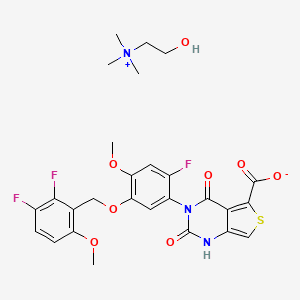
INN: linzagolix choline
Data updated: 2026-04-13
Available in:
🇨🇿🇩🇪🇬🇧🇵🇱🇵🇹🇸🇰🇺🇦
Form
Tabletki powlekane
Dosage
100 mg
Route
doustna
Storage
—
About This Product
User Reviews
Reviews reflect personal experiences and are not medical advice. Always consult your doctor.
Manufacturer
Theramex Ireland Limited (Polska)
Composition
Linzagolixum cholini 100 mg
ATC Code
H01CC04
Source
URPL
Pharmacotherapeutic group: Anti-gonadotropin-releasing hormones, ATC code:H01CC04.
Mechanism of action
Linzagolix is a selective, non-peptide gonadotropin-releasing hormone (GnRH) receptor antagonist that inhibits endogenous GnRH signalling by binding competitively to GnRH receptors in the pituitary gland, thereby modulating the hypothalamic-pituitary-gonadal axis.
Pharmacodynamic effects
Effects on pituitary and ovarian hormones
Administration of linzagolix results in dose-dependent suppression of luteinizing hormone and follicle-stimulating hormone, leading to decreased blood concentrations of estradiol and progesterone.
Uterine fibroid-treated population:
In the phase 3 studies, full suppression of serum estradiol (median < 20 pg/mL) was observed with linzagolix 200 mg from 4 to 24 weeks. Partial suppression was observed with linzagolix 100 mg, 100 mg with concomitant ABT (referred to as “with ABT”) and 200 mg with ABT from 4 to 52 weeks, with median serum estradiol levels in the range of 20 to 60 pg/mL. Progesterone levels were maintained ≤ 3.1 ng/mL in 83% of women receiving linzagolix 200 mg for 24 weeks and 68% of women receiving linzagolix 100 mg for 52 weeks, and about 90% of women receiving linzagolix 100 mg with ABT or 200 mg with ABT for 52 weeks.
Endometriosis treated population:
Median serum estradiol levels for subjects receiving 200 mg with concomitant ABT were in the range of 20 to 60 pg/mL
Cardiac electrophysiology
One randomised, placebo- and positive-controlled, open-label, single-dose, crossover thorough-QTc study evaluated the effect of linzagolix on the QTc interval. Forty-eight healthy women received a 200 mg dose of linzagolix (therapeutic target exposure), a 700 mg dose of linzagolix (supratherapeutic target exposure), a 400 mg dose of moxifloxacin (positive control), or placebo with an appropriate washout. A marginal effect with linzagolix 200 mg and 700 mg doses on the prolongation of the heart-rate corrected QT interval was identified, with a maximum observed mean at 3 hours post dose of 8.34 msec (90% CI 6.44 - 10.23) and 9.92 msec (90% CI 8.03 - 11.81), respectively. Based on the magnitude of the QTc prolongation, subsequent concentration effect modelling and QT subinterval (JTpeakc), the observed effects are not considered clinically relevant. The highest anticipated steady state concentration in the QT study was estimated in healthy subjects, not accounting for increases in unbound linzagolix exposure due to existing disorders (see section 5.2).
Changes in lipid parameters
Fasting lipid levels (HDL, LDL and total cholesterol, and triglycerides) were assessed every three months from start of linzagolix treatment up to 3 months post treatment. There were increases in LDL cholesterol, HDL cholesterol, and triglycerides across all linzagolix arms (typically less than 15% in the case of LDL, and less than 20% in the case of triglycerides) and generally increases were higher for the linzagolix only regimes. These increases were evident from week 12 and lipid parameters had generally stabilised after 52 weeks of treatment. After stopping linzagolix, lipid levels showed signs of returning towards baseline by 12 weeks after stopping treatment, but still remained slightly elevated relative to baseline (see section 4.4).
Clinical efficacy and safety
Uterine fibroid-treated population:
The efficacy of Yselty was evaluated in two phase 3, randomised, double-blind and placebo-controlled studies, PRIMROSE 1 and PRIMROSE 2, including 511 and 501 women, respectively. PRIMROSE 1 was conducted in the US and PRIMROSE 2 was conducted primarily in Europe with about 10% of subjects being from the US. The studies had essentially replicate design with 52 weeks of treatment and 24 weeks post treatment follow-up. There are no on-treatment efficacy or safety data beyond 52 weeks.
Eligible patients had heavy menstrual bleeding (HMB: > 80 mL menstrual blood loss [MBL]/cycle) and a myomatous uterus with at least one fibroid ≥ 2 cm confirmed by ultrasound and no myoma > 12 cm. MBL was measured using the alkaline haematin method.
The mean age of women was 42 years (range 20 to 58), and mean body mass index was 29.9 kg/m
2
(range 16.8 to 58.6). Approximately 34.5% of women were Black, 63.5% were White and 2% were of other races. The most commonly reported symptoms, in addition to HMB, were abdominal pain (67.9% of women), abdominal pressure (52.5%), menstruation lasting longer than usual (50.4%), lower back pain (50.2%), increased urinary frequency (34.5%) and pain during intercourse (27.7%). The median uterine volume was 241 cm
3
(range 32 to 2075 cm
3
) and the median fibroid volume was 53 cm
3
(range 0 to 1142 cm
3
). Almost all women (99.7%) had at least one fibroid ≥ 2 cm long and 97.5% had FIGO classification from 1 to 6.
Subjects were randomised to one of 5 treatments: placebo, Yselty 100 mg, Yselty 200 mg, Yselty 100 mg with concomitant ABT (estradiol 1 mg/ norethisterone acetate 0.5 mg, referred to as “with ABT”) or Yselty 200 mg with ABT, all taken once daily. Subjects randomised to placebo or Yselty 200 mg were switched to Yselty 200 mg with ABT after 24 weeks except in PRIMROSE 1, in which 50% of placebo subjects continued placebo until 52 weeks.
The primary efficacy endpoint was a response, defined as having an MBL of ≤ 80 mL and ≥ 50% reduction from baseline over the last 28 days before week 24. Treatment with Yselty with or without ABT resulted in a higher proportion of women with reduced MBL at week 24 compared to placebo. The percentage of responders was 56.4%, 66.4%, 71.4% and 75.5% with Yselty 100 mg, 100 mg with ABT, 200 mg and 200 mg with ABT, respectively in PRIMROSE 1 and 56.7%, 77.2%, 77.7% and 93.9% respectively in PRIMROSE 2 (Table 3). At week 52, the percentage of responders was 57.4%, 79.9% and 87.9% with Yselty 100 mg, 100 mg with ABT and 200 mg with ABT, respectively, in PRIMROSE 1 and 53.2%, 91.3% and 91.6%, respectively, in PRIMROSE 2.
Table 3: Responders (women with reduced menstrual blood loss) at 24 weeks
Study
PRIMROSE 1
PRIMROSE 2
Treatment
Placebo
Yselty
Placebo
Yselty
100 mg
100 mg + ABT
200 mg
200 mg + ABT
100 mg
100 mg + ABT
200 mg
200 mg + ABT
N
103
94
107
105
102
102
97
101
103
98
Percentage (95% CI) of responders
1, 2
35.0
(25.8, 45.0)
56.4
(45.8, 66.6)
66.4
(56.6, 75.2)
71.4
(61.8, 79.8)
75.5
(66.0, 83.5)
29.4
(20.8, 39.3)
56.7
(46.3, 66.7)
77.2
(67.8, 85.0)
77.7
(68.4, 85.3)
93.9
(87.1, 97.7)
1
Responders were women with ≤ 80 mL MBL and ≥ 50% reduction from baseline
2
Clopper-Pearson 95% CI. p-values ≤0.003 for odds-ratio to placebo from a Cochran-Mantel-Haenszel test with race as stratification factor.
ABT: estradiol 1 mg/norethisterone acetate 0.5 mg
The mean percentage reduction in MBL over time is shown in Figure 1. Treatment with Yselty 100 mg achieved a maximal effect of about 60% reduction in MBL by 4 weeks. Treatment with Yselty 100 mg with ABT or 200 mg with or without ABT, reached a maximal effect of about 80 to 95% reduction in MBL by 8 weeks. These reductions were maintained up to 52 weeks.
Figure 1: Mean percentage change in menstrual blood loss for each 28-day period up to week 52
In both pivotal phase 3 studies, improvements were observed in secondary endpoints after 24 weeks in the Yselty dose groups compared to placebo (Table 4), including an increased proportion of women achieving amenorrhea, reduced pain scores, higher haemoglobin levels in anaemic patients (< 12 g/dL at baseline) and increased health-related quality of life scores. These improvements were more pronounced with Yselty 200 mg (with or without ABT) and Yselty 100 mg with ABT as compared to Yselty 100 mg.
Improvements in secondary endpoints at 24 weeks were generally maintained after 52 weeks in the Yselty 100 mg with and without ABT and Yselty 200 mg with ABT groups. Uterine and fibroid volumes were markedly and consistently reduced after 24 weeks, only in the Yselty 200 mg without ABT group. In PRIMROSE 1 and 2, respectively, uterine volumes were reduced by 31% and 43%, and fibroid volumes were reduced by 43% and 49%. Mean uterine and fibroid volumes increased toward baseline volumes when ABT was added after 6 months of treatment with Yselty 200 mg without ABT.
Table 4: Secondary endpoints at 24 weeks
Study
PRIMROSE 1
PRIMROSE 2
Treatment
Placebo
Yselty
Placebo
Yselty
100 mg
100 mg + ABT
200 mg
200 mg + ABT
100 mg
100 mg + ABT
200 mg
200 mg + ABT
N
103
94
107
105
102
102
97
101
103
98
Percentage of women with amenorrhea (95% CI)
1
21.4
(13.9, 30.5)
38.3
(28.5, 48.9)
42.1
(32.6, 52.0)
60.0
(50.0, 69.4)
57.8
(47.7, 67.6)
11.8
(6.2, 19.6)
34.0
(24.7, 44.3)
63.4
(53.2, 72.7)
70.9
(61.1, 79.4)
80.6
(71.4, 87.9)
Mean change from baseline in haemoglobin levels - g/dL (SD, n)
2
0.30
(1.57, 45)
1.36
(1.82, 42)
1.87
(1.57, 52)
2.22
(1.58, 53)
2.00
(1.60, 50)
0.38
(1.69, 43)
1.36
(1.50, 49)
1.88
(1.58, 45)
2.10
(1.77, 46)
2.27
(1.43, 47)
Estimated mean change from baseline in pain score (95% CI)
3
-1.06
(-1.74, -0.37)
-2.70
(-3.38, -2.02)
-3.11
(-3.81, -2.41)
-3.85
(-4.47, -3.23)
-3.68
(-4.34, -3.01)
-0.44
(-1.14, 0.27)
-1.61
(-2.35, -0.88)
-1.91
(-2.64, -1.18)
-2.55
(-3.25, -1.84)
-2.27
(-3.00, -1.55)
Estimated mean ratio to baseline in uterine volume (95% CI)
1.02
(0.91, 1.15)
0.83
(0.74, 0.94)
1.06
(0.94, 1.20)
0.69
(0.62, 0.77)
0.92
(0.82, 1.03)
1.04
(0.92, 1.17)
0.85
(0.75, 0.96)
0.88
(0.77, 0.99)
0.57
(0.50, 0.64)
0.80
(0.71, 0.91)
Estimated mean ratio to baseline in fibroid volume (95% CI)
0.95
(0.75, 1.19)
0.75
(0.60, 0.94)
0.98
(0.77, 1.24)
0.57
(0.46, 0.70)
0.88
(0.70, 1.09)
1.04
(0.84, 1.29)
0.85
(0.68, 1.06)
0.93
(0.75, 1.17)
0.51
(0.41, 0.63)
0.79
(0.63, 0.99)
Estimated mean change from baseline in HRQL score (95% CI)
4
15.5
(9.4, 21.6)
26.1
(20.0, 32.2)
37.2
31.0, 43.5)
35.5
(29.8, 41.1)
34.2
(28.3, 40.1)
10.3
(4.0, 16.6)
20.6
(14.1, 27.2)
22.9
(16.4, 29.5)
30.2
(23.9, 36.5)
30.7
(24.2, 37.1)
1
Amenorrhea was defined as no menstrual blood detected by the alkaline hematin method (not including spotting or MBL < 1 to 3 mL) for 35 days and until the end of the treatment up to 24 weeks
2
In women with baseline anaemia (haemoglobin < 12 g/dL). n represents the number of women with non-missing data at 24 weeks
3
Pain was assessed using a 0 to 10 numerical rating scale (NRS).
4
The Health-Related Quality of Life (HRQL) score is a part of the validated Uterine Fibroid Symptoms - Quality of Life (UFS-QoL) questionnaire. The score is from 0 to 100 with a higher score indicating better health-related quality of life. The baseline score was about 40.
ABT estradiol 1 mg/norethisterone acetate 0.5 mg; SD standard Deviation; CI confidence interval
Bone mineral density
BMD was assessed using DXA scan at baseline, during treatment (Weeks 24 and 52) and 6 months after the end of treatment (Week 76). Subjects at significant risk of osteoporosis, with a history of or known osteoporosis or other metabolic bone disease were excluded from PRIMROSE 1 and PRIMROSE 2 trials.
Mean percentage BMD decreases observed at 24 and 52 weeks were dose- and time-dependent and attenuated by concomitant ABT (Table 5).
At 24 weeks, the change in BMD was most pronounced in women who had full estradiol suppression with Yselty 200 mg (‑3.70%). This regimen was not continued for more than 6 months (see section 4.2). The changes were less pronounced in women who received other regimens: ‑1.99% with Yselty 100 mg, ‑0.96% Yselty 100 mg with ABT and ‑1.13% with Yselty 200 mg with ABT.
At 52 weeks, the mean percentage changes from baseline indicated a reduced rate of BMD loss: ‑2.36% with Yselty 100 mg, ‑0.93% with Yselty 100 mg with ABT and ‑1.61% with Yselty 200 mg with ABT.
The level of treatment induced BMD loss in this population considered to be clinically meaningful is not well established and will depend on the individual woman, but in general BMD losses of approximately 3% or more should be reviewed and monitored carefully. It is important to consider the individual woman's baseline BMD, age and overall osteoporosis risk profile when assessing an individual woman's BMD loss, and the benefit-risk of continuing treatment.
At 24 weeks after stopping treatment, most patients had full or partial recovery of lumbar spine BMD: 53%, 52% and 64% for Yselty 100 mg, 100 mg with ABT and 200 mg with ABT, respectively in PRIMROSE 1 and 59%, 80% and 67% for Yselty 100 mg, 100 mg with ABT and 200 mg with ABT in PRIMROSE 2.
The extent and rate of BMD loss when treating women beyond 12 months is currently unknown.
Table 5: Mean percent change from baseline (CfB) in lumbar spine BMD after 24 and 52 weeks of treatment in PRIMROSE 1 and 2
Placebo
Yselty
100 mg
Yselty
100 mg+ABT
Yselty
200 mg*
Yselty
200 mg+ABT
24 weeks of treatment
Number of subjects
130
121
122
138
127
Mean percent CfB
0.46
-1.99
-0.96
-3.70
-1.13
95% CI
0.06; 0.85
-2.47; -1.50
-1.45; -0.48
-4.18; -3.22
-1.60; -0.66
52 weeks of treatment
Number of subjects
19
93
84
-
97
Mean percent CfB
-0.83 **
-2.36
-0.93
-
-1.61
95% CI
-2.08; 0.42
-3.10; -1.63
-1.40; -0.47
-
-2.22; -0.99
* Yselty 200 mg was studied up to 6 months.
** Placebo was used up to 12 months in PRIMROSE 1.
Endometriosis-treated population:
The efficacy of Yselty was evaluated in one phase 3, randomised, double-blind and placebo-controlled study, Edelweiss 3, including 484 women treated for up to 6 months. Amongst them, 356 women continued into the Edelweiss 6 extension study for an additional 6 months of treatment. A 6-month drug-free post-treatment follow-up evaluated the persistence of efficacy under long-term treatment.
This study was conducted primarily in Europe with about 10% of subjects being from US.
Eligible patients consisted in premenopausal women, aged 18 to 49 (inclusive) with surgical confirmed pelvic endometriosis and with moderate to severe endometriosis associated pain (EAP).
Women had a mean age of 34.9 years and mean body mass index was 24.27 kg/m2 (range 17.4 to 52.8). Approximately 98.6% of participating women were White.
The mean (SD) time since medical diagnosis of endometriosis was 5.20 (4.24) years. The most commonly reported symptoms, besides pelvic pain, were dyspareunia (88.0%), dyschezia (51.0%) and dysuria (26%). At baseline, 30% of patients presented adenomyosis and 18.2 % rectovaginal endometriosis nodes.
The majority of the study population of EDELWEISS 3 reported having undergone previous surgeries/procedures for endometriosis treatment before inclusion into the EDELWEISS studies. Previous medical treatments consisted of analgesics for pelvic pain, including opioids. The most frequently reported other pharmacotherapies for endometriosis treatment included dienogest, hormonal oral contraceptives and GnRH agonists.
Subjects were randomised to one of 3 treatments: placebo (N=162), Yselty 75 mg (N=160), Yselty 200 mg with concomitant ABT (estradiol 1 mg/ norethisterone acetate 0.5 mg, referred to as “with ABT”) (N=162), all taken once daily. Subjects starting the extension study for additional 6 months stay on the same treatment regimen for 75mg and 200mg with ABT groups but subjects randomised to placebo were re-randomised 1/1 to Yselty 75 mg or Yselty 200 mg with ABT. Subsequently, all subjects underwent additional 6-month post-treatment drug-free period of follow-up to evaluate the persistence of efficacy under long-term treatment.
The two co-primary efficacy endpoints were clinically meaningful reduction of dysmenorrhea (DYS) and non menstrual pelvic pain (NMPP) over the last 28 days of randomized treatment up to the Month 3 visit along with a stable or decreased use of analgesics. These were defined as a reduction of 1.10 or greater from baseline pain for dysmenorrhea and a reduction of 0.80 or greater from baseline pain for non-menstrual pelvic pain , both measured on a 0 (no pain) to 3 (severe pain) verbal rating scale (VRS) using an electronic diary.
Treatment with Yselty 200 mg with ABT demonstrated statistically significant reductions in both co-primary endpoints of DYS and NMPP with a stable or decreased use of analgesics (see Table 6).
Table 6:
Reduction of DYS and NMPP (VRS) at Months 3, 6 and 12 - responder analysis (Edelweiss 3, FAS and Edelweiss 6, TEAS)
Study
EDELWEISS 3
EDELWEISS 6
Month 3
Month 6
Month 12
Treatment
Placebo
LGX 200 mg + ABT
Placebo
LGX 200 mg + ABT
LGX 200 mg + ABT
Nobs
159
156
115
122
111
Responders for DYS
Percentage of responders
23.5
72.9
23.5
80.0
91.0
OR vs placebo
-
8.80
-
12.98
-
97.5% CI
-
4.86; 15.91
-
7.00; 24.06
-
Responders for NMPP*
Percentage of responders
30.9
47.3
38.5
57.1
67.6
OR vs placebo
-
2.01
-
2.13
-
97.5% CI
-
1.18; 3.42
-
1.26; 3.60
-
ABT = add-back therapy; DYS = dysmenorrhea;; LGX = linzagolix; NMPP = non-menstrual pelvic pain; VRS = verbal rating scale; Nobs = patients with observed data at this timepoint; OR = Odds Ratio; CI = Confidence Interval.
*Reduction of 1.1 (resp. 0.8) for DYS (resp. NMPP) in mean pelvic pain score within last 28 days prior to Month 3 or discontinuation, and stable or decreased use of analgesics for endometriosis within the same calendar days.
Statistically significant reductions were observed in the following secondary endpoints at 6 months in the LGX 200 mg+ABT group compared to placebo: DYS (VRS), NMPP (VRS), dyschezia (NRS), overall pelvic pain, OPP (NRS), and the ability to do daily activities measured using the pain dimension of EHP-30, see Table 7.
Table 7: Summary of analyses of secondary endpoints at Month 6
Endpoints
Placebo
(N=162)
LGX 200 mg + ABT
(N=162)
LSM
(95% CI)
LSM
(95% CI)
Diff with PBO
(97.5% CI)
CfB in DYS (VRS)
-0.66
(-0.79; -0.53)
-1.83
(-1.96; -1.70)
-1.17
(-1.38; -0.97)
CfB in NMPP (VRS)
-0.66
(-0.77; -0.56)
-0.92
(-1.03; -0.82)
-0.26
(-0.43; -0.09)
CfB in dyschezia (NRS)
-1.41
(-1.71; -1.12)
-1.99
(-2.29; -1.70)
-0.58
(-1.05; -0.11)
CfB in OPP (NRS)
-2.19
(-2.55; -1.84)
-3.39
(-3.74; -3.03)
-1.19
(-1.77; -0.62)
CfB in EHP-30 pain dimension
-19.47
(-22.66; -16.28)
-35.60
(-38.73; -32.48)
-16.13
(-21.24; -11.02)
CfB = change from baseline; DYS = dysmenorrhoea; NMPP = non-menstrual pelvic pain; NRS = numeric rating scale; OPP = overall pelvic pain; VRS = verbal rating; EHP-30 = Endometriosis Health Profile-30; LGX linzagolix; LSM = least square mean.
Scores were computed as mean of daily assessments on the last 28 days prior to Month 6 or discontinuation.
Persistence of efficacy was assessed in the linzagolix 200 mg with ABT group as these subjects continued on the same dosing regimen between Month 6 and Month 12.
Bone mineral density
BMD was assessed using DXA scan at baseline, during treatment (Months 6 and 12) and 6 months after the end of treatment. Subjects at significant risk of osteoporosis, with a history of, or known osteoporosis or other metabolic bone disease were excluded from these trials.
For the recommended dosing regimen linzagolix 200 mg with ABT, the mean percent change in lumbar spine BMD from baseline at Month 6 was - 0.79%. Of the subjects with available DXA readings at Baseline and at Month 12, the mean percent change corresponding to this period was -1.10% (Table 8).
Table 8: Mean percent change from baseline (CfB) in lumbar spine BMD at Month 6 and Month 12
EDELWEISS 3 and 6
Placebo
N = 162
LGX 200 mg + ABT
N = 162
6 months of treatment
Number of subjects
123
132
Mean percent CfB
0.77
-0.79
95% CI
0.40; 1.14
-1.15; -0.43
12 months of treatment
Number of subjects
-
86
Mean percent CfB
-
-1.10
95% CI
-
-1.79; -0.41
LGX = linzagolix
CfB = change from baseline
Effects on endometrium
Endometrial biopsies were performed in a subset of patients at baseline, week 24 and week 52 as part of the safety assessment in phase 3 studies. Results did not raise any safety concerns.
Paediatric population
The European Medicines Agency has waived the obligation to submit the results of studies with Yselty in all subsets of the paediatric population in treatment of endometriosis and leiomyoma of uterus (see section 4.2 for information on paediatric use).
⚠️ Warnings
Any unused medicinal product or waste material should be disposed of in accordance with local requirements.