This information is for educational purposes only. It is not intended as medical advice. Always consult a qualified healthcare professional.
Zeposia — Description, Dosage, Side Effects | PillsCard
Rx
Zeposia
0,23 mg; 0,46 mg, Kapsułki twarde
INN: Ozanimodum
Data updated: 2026-04-13
Available in:
🇩🇪🇬🇧🇵🇱🇵🇹
Form
Kapsułki twarde
Dosage
0,23 mg; 0,46 mg
Route
doustna
Storage
—
About This Product
Manufacturer
User Reviews
Reviews reflect personal experiences and are not medical advice. Always consult your doctor.
Bristol-Myers Squibb Pharma EEIG (Holandia)
Composition
Ozanimodi hydrochloridum
ATC Code
L04AA38
Source
URPL
Pharmacotherapeutic group: Immunosuppressants, Sphingosine‑1‑phosphate (S1P) receptor modulators, ATC code: L04AE02
Mechanism of action
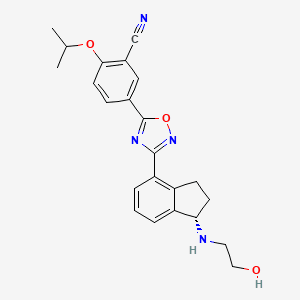
Ozanimod is a potent sphingosine 1‑phosphate (S1P) receptor modulator, which binds with high affinity to sphingosine 1‑phosphate receptors 1 and 5. Ozanimod has minimal or no activity on S1P
2
, S1P
3
, and S1P
4
.
In vitro
, ozanimod and its major active metabolites demonstrated similar activity and selectivity for S1P
1
and S1P
5
. The mechanism by which ozanimod exerts therapeutic effects in MS and UC is unknown, but may involve the reduction of lymphocyte migration into the central nervous system (CNS) and intestine.
The ozanimod-induced reduction of lymphocytes in the peripheral circulation has differential effects on leucocyte subpopulations, with greater decreases in cells involved in the adaptive immune response. Ozanimod has minimal impact on cells involved in innate immune response, which contribute to immunosurveillance.
Ozanimod is extensively metabolised in humans to form a number of circulating active metabolites including two major metabolites (see section 5.2). In humans, approximately 94% of circulating total active substances exposure are represented by ozanimod (6%) and the two major metabolites CC112273 (73%), and CC1084037 (15%) (see section 5.2).
Pharmacodynamic effects
Reduction of peripheral blood lymphocytes
In active-controlled MS and placebo-controlled UC clinical studies, mean lymphocyte counts decreased to approximately 45% of baseline by 3 months (approximate mean blood lymphocyte count 0.8 x 10
9
/L) and remained stable during treatment with ozanimod. After discontinuing ozanimod 0.92 mg, the median time to recovery of peripheral blood lymphocytes to the normal range was approximately 30 days, with approximately 80% to 90% of patients recovering to normal within 3 months (see sections 4.4 and 4.8).
Reduction in faecal calprotectin (FCP)
In patients with UC, treatment with ozanimod resulted in a decrease in the inflammatory marker, faecal calprotectin (FCP) during the induction period, which was then maintained throughout the maintenance period.
Heart rate and rhythm
Ozanimod may cause a transient reduction in HR on initiation of dosing (see sections 4.4 and 4.8). This negative chronotropic effect is mechanistically related to the activation of G‑protein‑coupled inwardly rectifying potassium (GIRK) channels via S1P
1
receptor stimulation by ozanimod and its active metabolites leading to cellular hyperpolarisation and reduced excitability with a maximal effect on HR seen within 5 hours post dose. Due to its functional antagonism at S1P
1
receptors, a dose escalation schedule with ozanimod 0.23 mg followed by 0.46 mg, and 0.92 mg successively desensitises GIRK channels until the maintenance dose is reached. After the dose escalation period, with continued administration of ozanimod, HR returns to baseline.
Potential to prolong the QT interval
In a randomised, positive - and placebo-controlled thorough QT study using a 14‑day dose-escalation regimen of 0.23 mg daily for 4 days, 0.46 mg daily for 3 days, 0.92 mg daily for 3 days, and 1.84 mg daily for 4 days in healthy subjects, no evidence of QTc prolongation was observed as demonstrated by the upper boundary of the 95% one-sided confidence interval (CI) that was below the 10 ms. Concentration-QTc analysis for ozanimod and the major active metabolites CC112273 and CC1084037, using data from another Phase 1 study showed the upper boundary of the 95% CI for model derived QTc (corrected for placebo and baseline) below 10 ms at maximum concentrations achieved with ozanimod doses ≥ 0.92 mg once daily.
Clinical efficacy and safety
Multiple sclerosis
Ozanimod was evaluated in two Phase 3 randomised, double-blind, double-dummy, parallel-group, active controlled clinical trials of similar design and endpoints, in patients with relapsing remitting MS (RRMS). Study 1 – SUNBEAM, was a 1‑year study with patients continuing assigned treatment beyond month 12 until the last enrolled patient completed the study. Study 2 -RADIANCE was a 2‑year study.
The dose of ozanimod was 0.92 mg and 0.46 mg given orally once daily, with a starting dose of 0.23 mg on days 1‑4, followed by an escalation to 0.46 mg on days 5‑7, and followed by the assigned dose on day 8 and thereafter. The dose of IFN β‑1a, the active comparator, was 30 mcg given intramuscularly once weekly.
Both studies included patients with active disease as defined by having at least one relapse within the prior year, or one relapse within the prior two years with evidence of at least a gadolinium-enhancing (GdE) lesion in the prior year and had an Expanded Disability Status Scale (EDSS) score from 0 to 5.0.
Neurological evaluations were performed at baseline, every 3 months, and at the time of a suspected relapse. MRIs were performed at baseline (Studies 1 and 2), 6 months (SUNBEAM), 1 year (Studies 1 and 2), and 2 years (RADIANCE).
The primary outcome of both SUNBEAM and RADIANCE was the annualised relapse rate (ARR) over the treatment period (minimum of 12 months) for SUNBEAM and 24 months for RADIANCE. The key secondary outcome measures included 1) the number of new or enlarging MRI T2 hyperintense lesions over 12 and 24 months; 2) the number of MRI T1 GdE lesions at 12 and 24 months; and 3) the time to confirmed disability progression, defined as at least a 1‑point increase from baseline EDSS sustained for 12 weeks. Confirmed disability progression was prospectively evaluated in a pooled analysis of Studies 1 and 2.
In SUNBEAM, 1346 patients were randomised to receive ozanimod 0.92 mg (n = 447), ozanimod 0.46 mg (n = 451), or IFN β‑1a IM (n = 448); 94% of ozanimod treated 0.92 mg, 94% of ozanimod treated 0.46 mg, and 92% of IFN β‑1a IM treated patients completed the study. In RADIANCE, 1313 patients were randomised to receive ozanimod 0.92 mg (n = 433), ozanimod 0.46 mg (n = 439), or IFN β‑1a IM (n = 441); 90% of ozanimod treated 0.92 mg, 85% of ozanimod treated 0.46 mg, and 85% of IFN β‑1a IM treated patients completed the study. Patients enrolled across the 2 studies had a mean age of 35.5 years (range 18‑55), 67% were female, mean time since MS symptom onset was 6.7 years. The median EDSS score at baseline was 2.5; approximately one-third of the patients had been treated with a disease-modifying therapy (DMT), predominately interferon or glatiramer acetate. At baseline, the mean number of relapses in the prior year was 1.3 and 45% of patients had one or more T1 Gd‑enhancing lesions (mean 1.7).
The results for SUNBEAM and RADIANCE are shown in Table 3. The efficacy has been demonstrated for ozanimod 0.92 mg with a dose effect observed for study endpoints shown in Table 3. Demonstration of efficacy for 0.46 mg was less robust since this dose did not show a significant effect for the primary endpoint in RADIANCE when considering the preferred negative binomial model strategy.
Table 3: Key clinical and MRI endpoints in RMS patients from Study 1 - SUNBEAM and Study 2 – RADIANCE
Endpoints
SUNBEAM
(≥ 1 year)*
RADIANCE
(2 year)
Ozanimod
0.92 mg
(n = 447)
%
IFN β-1a IM
30 mcg
(n = 448)
%
Ozanimod
0.92 mg
(n = 433)
%
IFN β-1a IM
30 mcg
(n = 441)
%
Clinical endpoints
Annualised relapse rate (Primary endpoint)
Relative reduction
0.181
0.350
0.172
0.276
48% (p < 0.0001)
38% (p < 0.0001)
Proportion relapse-free**
78%
(p = 0.0002)
1
66%
76%
(p = 0.0012)
1
64%
Proportion with 3‑month confirmed disability Progression (CDP)
†2
Hazard ratio (95% CI)
Proportion with 6‑month CDP
†2#
Hazard ratio (95% CI)
7.6% Ozanimod vs. 7.8% IFN β‑1a IM
0.95 (0.679, 1.330)
5.8% Ozanimod vs. 4.0% IFN β‑1a IM
1.413 (0.922, 2.165)
MRI endpoints
Mean number of new or enlarging T2 hyperintense lesions per MRI
3
Relative reduction
1.465
2.836
1.835
3.183
48% (p < 0.0001)
42% (p < 0.0001)
Mean number of T1 Gd enhancing lesions
4
Relative reduction
0.160
0.433
0.176
0.373
63% (p < 0.0001)
53% (p = 0.0006)
* Mean duration was 13.6 months
** Nominal p‑value for endpoints not included in the hierarchical testing and not adjusted for multiplicity
†
Disability progression defined as 1‑point increase in EDSS confirmed 3 months or 6 months later
#
In a post hoc analysis of 6‑month CDP which included data from the open-label extension (Study 3), the HR (95% CI) was found to be 1.040 (0.730, 1.482).)
1
Log rank test
2
Prospectively planned pooled analysis of Studies 1 and 2
3
Over 12 months for Study 1 and over 24 months for Study 2
4
At 12 months for Study 1 and at 24 months for Study 2
In SUNBEAM and RADIANCE, treatment with ozanimod 0.92 mg resulted in reductions in mean percent change from baseline in normalised brain volume compared to IFN beta‑1a IM (-0.41% versus -0.61%, and -0.71% versus -0.94%, respectively, nominal p‑value < 0.0001 for both studies).
The studies enrolled DMT naive and previously treated patients with active disease, as defined by clinical or imaging features. Post-hoc analyses of patient populations with differing baseline levels of disease activity, including active and highly active disease, showed that the efficacy of ozanimod on clinical and imaging endpoints was consistent with the overall population.
Long-term data
Patients with RRMS who completed the SUNBEAM, RADIANCE, Phase 2 extension or Phase 1 PK/PD studies could enter an open-label extension (Study 3 - DAYBREAK) and received ozanimod 0.92 mg once daily to assess the long-term safety and efficacy of ozanimod. In total, 2494 subjects were treated in DAYBREAK with ozanimod 0.92 mg once daily (736 patients switched from interferon beta‑1a IM 30 mcg once weekly, 877 switched from ozanimod 0.46 mg once daily, and 881 continued with ozanimod 0.92 mg once daily) with a median duration of treatment of 68 months up to a maximum of 81 months. The adjusted ARR for all subjects over the treatment period was 0.098 (95% CI: 0.082, 0.117) with 69.1% of patients remaining relapse free. Subjects who continued on ozanimod 0.92 mg into DAYBREAK had an ARR of 0.090 (95% CI: 0.073, 0.111). A total of 379 (15.2%) of subjects experienced 6‑month confirmed disability progression over the study.
Ulcerative colitis
The efficacy and safety of ozanimod were evaluated in two multicentre, randomised, double-blind, placebo-controlled clinical studies [TRUENORTH‑I (induction period) and TRUENORTH‑M (maintenance period)] in adult patients, aged less than 75 years, with moderately to severely active ulcerative colitis. TRUENORTH‑I included patients who were randomised 2:1 to ozanimod 0.92 mg or placebo. The 10‑week induction period (TRUENORTH‑I) was followed by a 42‑week, randomised, withdrawal maintenance period (TRUENORTH‑M) for a total of 52 weeks of therapy. Ozanimod was administered as monotherapy (i.e., without concomitant use of biologics and non-corticosteroid immunosuppressants) for UC. There are limited data available on UC patients ≥ 65 years of age
The study included patients with moderately to severely active ulcerative colitis defined at baseline (week 0) as a Mayo score of 6 to 12, including a Mayo endoscopy subscore ≥ 2.
TRUENORTH‑I (induction study)
In TRUENORTH‑I, patients were randomised to either ozanimod 0.92 mg given, orally once daily (n = 429) or placebo (n = 216) beginning with a dose titration (see section 4.2). Patients received concomitant aminosalicylates (e.g., mesalazine 71%; sulfasalazine 13%) and/or oral corticosteroids (33%) at a stable dose prior to and during the induction period.
There were 30% of patients who had an inadequate response, loss of response or intolerant to tumour necrosis factor (TNF) blockers. Of these patients with prior biologic therapy, 63% received at least two or more biologics including TNF blockers; 36% failed to ever respond to at least one TNF blocker; 65% lost response to a TNF blocker; 47% received an integrin receptor blocker (e.g., vedolizumab). There were 41% of patients who failed and/or were intolerant to immunomodulators. At baseline, patients had a median Mayo score of 9, with 65% of patients less than or equal to 9 and 35% having greater than 9.
The primary endpoint was clinical remission at week 10, and the key secondary endpoints at week 10 were clinical response, endoscopic improvement, and mucosal healing.
A significantly greater proportion of patients treated with ozanimod achieved clinical remission, clinical response, endoscopic improvement, and mucosal healing compared to placebo at week 10 as shown in Table 4.
Table 4: Proportion of patients meeting efficacy endpoints in the induction period from TRUENORTH‑I (at week 10)
Ozanimod 0.92 mg
(N = 429)
Placebo
(N = 216)
Treatment Difference %
a
(95% CI)
n
%
n
%
Clinical remission
b
79
18%
13
6%
12%
(7.5, 17.2)
f
Without prior TNF blocker exposure
66/299
22%
10/151
7%
Prior TNF blocker exposure
13/130
10%
3/65
5%
Clinical response
c
205
48%
56
26%
22%
(14.4, 29.3)
f
Without prior TNF blocker exposure
157/299
53%
44/151
29%
Prior TNF blocker exposure
48/130
37%
12/65
19%
Endoscopic improvement
d
117
27%
25
12%
16%
(9.7, 21.7)
f
Without prior TNF blocker exposure
97/299
32%
18/151
12%
Prior TNF blocker exposure
20/130
15%
7/65
11%
Mucosal healing
e
54
13%
8
4%
9%
(4.9, 12.9)
g
Without prior TNF blocker exposure
47/299
16%
6/151
4%
Prior TNF blocker exposure
7/130
5%
2/65
3%
CI = confidence interval; TNF = tumour necrosis factor.
a
Treatment difference (adjusted for stratification factors of prior TNF blocker exposure and corticosteroid use at baseline).
b
Clinical remission is defined as: RBS = 0, SFS ≤ 1 (and a decrease of ≥ 1 point from the baseline SFS), and endoscopy subscore ≤ 1 without friability.
c
Clinical response is defined as a reduction from baseline in the 9‑point Mayo score of ≥ 2 points and ≥ 35%, and a reduction from baseline in the RBS of ≥ 1 or an absolute RBS of ≤ 1 point.
d
Endoscopic improvement is defined as a Mayo endoscopic score ≤ 1 without friability.
e
Mucosal healing defined as both Mayo endoscopic score ≤ 1 point without friability and histological remission (Geboes score < 2.0, indicating no neutrophils in the epithelial crypts or lamina propria, no increase in eosinophils, and no crypt destruction, erosions, ulcerations, or granulation tissue)
f
p < 0.0001.
g
p < 0.001.
Rectal bleeding (RBS) and stool frequency (SFS) subscores
Decreases in rectal bleeding and stool frequency subscores were observed as early as week 2 (i.e., 1 week after completing the required 7‑day dose titration) in patients treated with ozanimod. A nominally significantly greater proportion of subjects achieved symptomatic remission, defined as RBS = 0, SFS ≤ 1 and a decrease from baseline of ≥ 1, with ozanimod 0.92 mg than with placebo at Week 5 (27% vs 15%) and at Week 10 of the Induction Period (37.5% versus 18.5%).
Patients who had a decrease from baseline in SFS and/or RBS of at least 1 point but did not achieve clinical response or clinical remission at week 10 of TRUENORTH‑I, had an increased rate of symptomatic remission after an additional 5 weeks of ozanimod treatment, 21% (26/126). The rate of symptomatic remission in these patients continued to increase through an additional 46 weeks of treatment, 50% (41/82).
TRUENORTH‑M (maintenance study)
In order to be randomised to treatment in the maintenance study (TRUENORTH‑M), patients had to have received ozanimod 0.92 mg and be in clinical response at week 10 of the induction period. Patients could have come from either TRUENORTH‑I or from a group who received ozanimod 0.92 mg open-label. Patients were (re)-randomised in a double-blinded fashion (1:1) to receive either ozanimod 0.92 mg (n = 230) or placebo (n = 227) for 42 weeks. The total study duration was 52 weeks, including both the induction and maintenance periods. Efficacy assessments were at week 52. Concomitant aminosalicylates were required to remain stable through week 52. Patients on concomitant corticosteroids were to taper their dose upon entering the maintenance period.
At study entry, 35% of patients were in clinical remission, 29% of patients were on corticosteroids and 31% of patients who were previously treated with TNF blockers.
As shown in the Table 5, the primary endpoint was the proportion of patients in clinical remission at week 52. Key secondary endpoints at week 52 were the proportion of patients with clinical response, endoscopic improvement, maintenance of clinical remission at week 52 in the subset of patients in remission at week 10, corticosteroid-free clinical remission, mucosal healing and durable clinical remission.
Table 5: Proportion of patients meeting efficacy endpoints in the maintenance period in TRUENORTH‑M (at week 52)
Ozanimod 0.92 mg
(N = 230)
Placebo
(N = 227)
Treatment difference %
a
(95% CI)
n
%
n
%
Clinical remission
b
85
37%
42
19%
19%
(10.8, 26.4)
i
Without prior TNF blocker exposure
63/154
41%
35/158
22%
Prior TNF blocker exposure
22/76
29%
7/69
10%
Clinical response
c
138
60%
93
41%
19%
(10.4, 28.0)
i
Without prior TNF blocker exposure
96/154
62%
76/158
48%
Prior TNF blocker exposure
42/76
55%
17/69
25%
Endoscopic improvement
d
105
46%
60
26%
19%
(11.0, 27.7)
j
Without prior TNF blocker exposure
77/154
50%
48/158
30%
Prior TNF blocker exposure
28/76
37%
12/69
17%
Maintenance of clinical remission at week 52 in the subset of patients in remission at week 10
e
41/79
52%
22/75
29%
24%
(9.1, 38.6)
k
Without prior TNF blocker exposure
37/64
58%
19/58
33%
Prior TNF blocker exposure
4/15
27%
3/17
18%
Corticosteroid-free clinical remission
f
73
32%
38
17%
15%
(7.8, 22.6)
j
Without prior TNF blocker exposure
55/154
36%
31/158
20%
Prior TNF blocker exposure
18/76
24%
7/69
10%
Mucosal healing
g
68
30%
32
14%
16%
(8.2, 22.9)
j
Without prior TNF blocker exposure
51/154
33%
28/158
18%
Prior TNF blocker exposure
17/76
22%
4/69
6%
Durable clinical remission
h
41
18%
22
10%
8%
(2.8, 13.6)
l
Without prior TNF blocker exposure
37/154
24%
19/158
12%
Prior TNF blocker exposure
4/76
5%
3/69
4%
CI = confidence interval; TNF = tumour necrosis factor.
a
Treatment difference (adjusted for stratification factors of clinical remission and concomitant corticosteroid use at week 10).
b
Clinical remission is defined as: RBS = 0 point and SFS ≤ 1 point (and a decrease of ≥ 1 point from the baseline SFS) and endoscopy subscore ≤ 1 point without friability.
c
Clinical response is defined as: A reduction from baseline in the 9‑point Mayo score of ≥ 2 points and ≥ 35%, and a reduction from baseline in the RBS of ≥ 1 point or an absolute RBS of ≤ 1 point.
d
Endoscopic improvement is defined as: Endoscopy subscore of ≤ 1 point without friability.
e
Maintenance of remission defined as clinical remission at week 52 in the subset of patients in clinical remission at week 10.
f
Corticosteroid-free remission is defined as clinical remission at week 52 while off corticosteroids for ≥ 12 weeks.
g
Mucosal healing is defined as both Mayo endoscopic score ≤ 1 without friability and histological remission (Geboes score < 2.0, indicating no neutrophils in the epithelial crypts or lamina propria, no increase in eosinophils, and no crypt destruction, erosions, ulcerations, or granulation tissue)
h
Durable clinical remission is defined as clinical remission at week 10 and at week 52 in all subjects who entered the maintenance period.
i
p < 0.0001.
j
p < 0.001.
k
p = 0.0025.
l
p = 0.0030
Steroid free mucosal healing and steroid-free (2‑component) symptomatic remission
A significantly greater proportion of patients continuously treated with ozanimod 0.92 mg vs re-randomised to placebo achieved corticosteroid-free (at least 12 weeks) symptomatic remission (42.2% ozanimod versus 30.4% placebo) and corticosteroid-free (at least 12 weeks) endoscopic improvement (40.0% ozanimod versus 23.3% placebo) at week 52.
Histologic remission at week 10 and 52
Histologic remission (defined as Geboes index score < 2.0 points), was assessed at week 10 of TRUENORTH‑I and at week 52 of TRUENORTH‑M. At week 10, a significantly greater proportion of patients treated with ozanimod 0.92 mg achieved histologic remission (18%) compared to patients treated with placebo (7%). At week 52, maintenance of this effect was observed with a significantly greater proportion of patients in histologic remission in patients treated with ozanimod 0.92 mg (34%) compared to patients treated with placebo (16%).
Long-term data
Patients who did not achieve clinical response at the end of the induction period, lost response in the maintenance period or completed the TRUENORTH study were eligible to enter an open label extension study (OLE) and received ozanimod 1 mg once daily to assess the long-term safety and efficacy of ozanimod. In total 878 subjects were enrolled and 877 treated in the OLE study and 284 (32.3%) completed the OLE treatment (week 238) with a median duration of treatment of 35 months up to a maximum of 89 months. Among patients who were clinical responders at OLE entry, clinical outcomes observed at week 46 were generally maintained through week 238. In patients who completed the respective visits, 73% of patients achieved clinical remission at week 46 and 67% maintained it at week 238, 96% achieved clinical response at week 46 and 93% maintained it at week 238. Histologic remission and mucosal healing showed a gradual increase from 41% and 34 % at week 46 to 66% and 57% at week 238, respectively. No new safety concerns were identified in this study extension in patients with ulcerative colitis.
Paediatric population
The European Medicines Agency has deferred the obligation to submit the results of studies with ozanimod in one or more subsets of the paediatric population in MS and UC (see section 4.2).
⚠️ Warnings
Any unused medicinal product or waste material should be disposed of in accordance with local requirements.