This information is for educational purposes only. It is not intended as medical advice. Always consult a qualified healthcare professional.
Rx
Zinforo
600 mg, Proszek do sporządzania koncentratu roztworu do infuzji
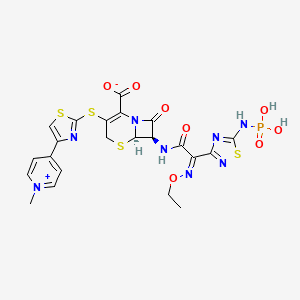
INN: Ceftarolinum fosamilum
Data updated: 2026-04-13
Available in:
🇨🇿🇩🇪🇬🇧🇫🇷🇵🇱🇸🇰🇺🇦
Form
Proszek do sporządzania koncentratu roztworu do infuzji
Dosage
600 mg
Route
dożylna
Storage
—
User Reviews
Reviews reflect personal experiences and are not medical advice. Always consult your doctor.
About This Product
Manufacturer
Pfizer Ireland Pharmaceuticals (Włochy)
Composition
Ceftarolinum fosamilum 600 mg
ATC Code
J01DI02
Source
URPL
Pharmacotherapeutic group: Antibacterials for systemic use, other cephalosporins and penems, ATC code: J01DI02
The active moiety after Zinforo administration is ceftaroline.
Mechanism of action
Ceftaroline is a cephalosporin antibacterial with
in vitro
activity against Gram-positive and -negative bacteria. The bactericidal action of ceftaroline is mediated through binding to essential penicillin-binding proteins (PBPs). Biochemical studies have shown that ceftaroline has high affinity for PBP2a of methicillin-resistant
Staphylococcus aureus
(MRSA) and PBP2x of penicillin non-susceptible
Streptococcus pneumoniae
(PNSP). As a result, minimum inhibitory concentrations (MICs) of ceftaroline against a proportion of these organisms tested fall into the susceptible range (see Resistance section below).
Resistance
Ceftaroline is not active against strains of
Enterobacterales
producing extended-spectrum beta-lactamases (ESBLs) from the TEM, SHV or CTX-M families, serine carbapenemases (such as KPC), class B metallo-beta-lactamases or class C (AmpC) cephalosporinases. Organisms that express these enzymes and which are therefore resistant to ceftaroline occur at very variable rates between countries and between healthcare facilities within countries. If ceftaroline is commenced before susceptibility test results are available then local information on the risk of encountering organisms that express these enzymes should be taken into consideration. Resistance may also be mediated by bacterial impermeability or drug efflux pump mechanisms. One or more of these mechanisms may co-exist in a single bacterial isolate.
Interaction with other antibacterial agents
In vitro
studies have not demonstrated any antagonism between ceftaroline in combination with other commonly used antibacterial agents (e.g. amikacin, azithromycin, aztreonam, daptomycin, levofloxacin, linezolid, meropenem, tigecycline, and vancomycin).
Susceptibility testing breakpoints
MIC (minimum inhibitory concentration) interpretive criteria for susceptibility testing have been established by the European Committee on Antimicrobial Susceptibility Testing (EUCAST) for ceftaroline fosamil and are listed here: https://www.ema.europa.eu/documents/other/minimum-inhibitory-concentration-mic-breakpoints_en.xlsx
Pharmacokinetic/pharmacodynamic relationship
As with other beta-lactam antimicrobial agents, the percent time above the minimum inhibitory concentration (MIC) of the infecting organism over the dosing interval (%T > MIC) has been shown to be the parameter that best correlates with the efficacy of ceftaroline.
Clinical efficacy against specific pathogens
Efficacy has been demonstrated in clinical studies against the pathogens listed under each indication that were susceptible to ceftaroline
in vitro
.
Complicated skin and soft tissue infections
Gram-positive micro-organisms
•
Staphylococcus aureus
(including methicillin-resistant strains)
•
Streptococcus pyogenes
•
Streptococcus agalactiae
•
Streptococcus anginosus
group (includes
S. anginosus
,
S. intermedius
, and
S. constellatus
)
•
Streptococcus dysgalactiae
Gram-negative micro-organisms
•
Escherichia coli
•
Klebsiella pneumoniae
•
Klebsiella oxytoca
•
Morganella morganii
Community-acquired pneumonia
No cases of CAP due to MRSA were enrolled into the studies. The available clinical data cannot substantiate efficacy against penicillin non-susceptible strains of
S. pneumoniae
.
Gram-positive micro-organisms
•
Streptococcus pneumoniae
•
Staphylococcus aureus
(methicillin-susceptible strains only)
Gram-negative micro-organisms
•
Escherichia coli
•
Haemophilus influenzae
•
Haemophilus parainfluenzae
•
Klebsiella pneumoniae
Antibacterial activity against other relevant pathogens
Clinical efficacy has not been established against the following pathogens although
in vitro
studies suggest that they would be susceptible to ceftaroline in the absence of acquired mechanisms of resistance:
Anaerobic micro-organisms
Gram-positive micro-organisms
•
Peptostreptococcus
spp.
Gram-negative micro-organisms
•
Fusobacterium
spp.
In vitro
data indicate that the following species are not susceptible to ceftaroline:
•
Chlamydophila
spp.
•
Legionella
spp.
•
Mycoplasma
spp.
•
Proteus
spp.
•
Pseudomonas aeruginosa
⚠️ Warnings
The powder must be reconstituted with water for injections and the resulting concentrate must then be immediately diluted prior to use. The reconstituted solution is a pale yellow solution that is free of any particles.
Standard aseptic techniques should be used for solution preparation and administration.
Zinforo powder should be reconstituted with 20 mL of sterile water for injections. The resulting solution should be shaken prior to being transferred to an infusion bag or bottle containing either sodium chloride 9 mg/mL (0.9%) solution for injection, dextrose 50 mg/mL (5%) solution for injection, sodium chloride 4.5 mg/mL and dextrose 25 mg/mL solution for injection (0.45% sodium chloride and 2.5% dextrose) or Lactated Ringer's solution. A 250 mL, 100 mL or 50 mL infusion bag can be used to prepare the infusion, based on the patient's volume requirements. The total time interval between starting reconstitution and completing preparation of the intravenous infusion should not exceed 30 minutes.
Infusion volumes for paediatric patients will vary according to the weight of the child. The infusion solution concentration during preparation and administration should not exceed 12 mg/mL ceftaroline fosamil.
Each vial is for single use only.
Any unused medicinal product or waste material should be disposed of in accordance with local requirements.