This information is for educational purposes only. It is not intended as medical advice. Always consult a qualified healthcare professional.
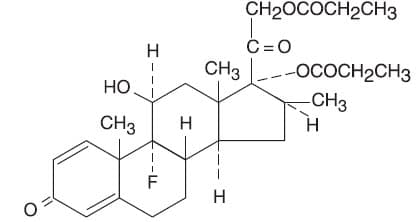
Betamethasone is an anti-inflammatory, antiallergic, and immunosuppressive agent belonging to the glucocorticoid class. Its pharmacological properties are based on binding to endogenous glucocorticoid receptors. Betamethasone is used for the treatment of allergic, rheumatic, dermatological, and hematological diseases, among others. The medications are administered orally, dermally, topically, and parenterally. Glucocorticoids may promote infectious diseases, cause gastric and intestinal ulcers, induce diabetes, and damage the skin with prolonged treatment. Therefore, the duration of therapy should be kept as short as possible. Betamethasone is a substrate of CYP3A4.
Betamethasone (ATC H02AB01) has anti-inflammatory, antiallergic, immunosuppressive, and antiproliferative properties. Its effects are based on binding to intracellular glucocorticoid receptors in the cytoplasm of cells. The resulting complex interacts with DNA. In addition, betamethasone also exerts extragenomic effects. The half-life ranges from 5 to 8 hours.
Mechanism of action of glucocorticoids, click to enlarge. Illustration © PharmaWiki