This information is for educational purposes only. It is not intended as medical advice. Always consult a qualified healthcare professional.
OTC
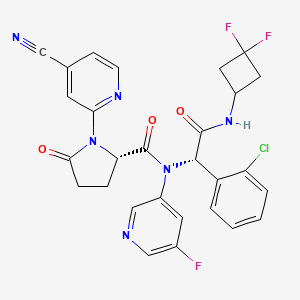
TIBSOVO
250MG, Tablet
INN: IVOSIDENIB
Data updated: 2026-05-02
Available in:
🇩🇪🇬🇧🇵🇹
Form
TABLET
Dosage
250MG
Route
ORAL
Storage
—
About This Product
Manufacturer
SERVIER PHARMACEUTICALS LLC
User Reviews
Reviews reflect personal experiences and are not medical advice. Always consult your doctor.
ATC Code
L01XX62
Source
FDA_OB · 211192
(
ARTG
)
Cholangiocarcinoma,TIBSOVO is indicated for the treatment of adult patients with locally advanced or metastatic cholangiocarcinoma with an isocitrate dehydrogenase-1 (IDH1) R132 mutation after at least one prior line of systemic therapy.,Acute myeloid leukaemia,TIBSOVO is indicated for the treatment of acute myeloid leukaemia (AML) that carries an IDH1 R132 mutation:, as monotherapy, or in combination with azacitidine, in newly diagnosed patients who are not eligible to receive intensive induction chemotherapy; or, as monotherapy in patients whose AML is relapsed and/or refractory to prior therapy.
⚠️ Warnings
• Ivosidenib can cause irregular heartbeat and patients must be regularly monitored by assessing the electrolytes level and ECG. Discontinue ivosidenib treatment if any symptoms and signs of abnormal heart rhythm occur.
• Patients may experience symptoms of differentiation syndrome such as fever, difficulty in breathing, low blood pressure, lung infection, and rashes along with high levels of white blood cells or
leukocytosis
anywhere between the first day and three months of ivosidenib treatment.
• Differentiation syndrome can be managed by administering dexamethasone 10 mg directly into the vein every 12 hours.
• If the presence of non-infectious leukocytosis is confirmed, patients should be treated with hydroxyurea or leukapheresis, a laboratory procedure to remove white blood cells from the blood.
• The dose of steroids (dexamethasone) and hydroxyurea can be reduced gradually for three days when the symptoms and signs of differentiation syndrome with leukocytosis are under control.
• If the side effects do not subside within 48 hours even after initiating steroid treatment, stop ivosidenib treatment temporarily until the side effects are reduced.
• Monitor the patients for any new signs or symptoms such as muscle weakness, burning or prickling sensation, numbness and pain either one side or both side of the body, changes in taste, vision or hearing during treatment with ivosidenib.
• During such situations treatment with ivosidenib should be permanently stopped; otherwise patients are vulnerable to develop a rare neurological autoimmune disorder called Guillain Barré syndrome.