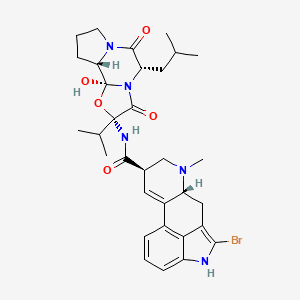
Pharmacotherapeutic group: dopamine agonist (ATC code N04B C01), prolactin inhibitor (ATC code G02C B01)
Bromocriptine, active ingredient bromocriptine, is an inhibitor of prolactin secretion and a stimulator of dopamine receptors. The areas of application of bromocriptine are divided into endocrinological and neurological indications. The pharmacological particulars will be discussed under each indication.
Endocrinological indications
Bromocriptine inhibits the secretion of the anterior pituitary hormone prolactin without affecting normal levels of other pituitary hormones. However, Bromocriptine is capable of reducing elevated levels of growth hormone (GH) in patients with acromegaly. These effects are due to stimulation of dopamine receptors.
In the puerperium prolactin is necessary for the initiation and maintenance of puerperal lactation. At other times increased prolactin secretion gives rise to pathological lactation (galactorrhoea) and/or disorders of ovulation and menstruation.
As a specific inhibitor of prolactin secretion, bromocriptine can be used to prevent or suppress physiological lactation as well as to treat prolactin-induced pathological states. In amenorrhoea and/or anovulation (with or without galactorrhoea), bromocriptine can be used to restore menstrual cycles and ovulation.
The customary measures taken during lactation suppression, such as the restriction of fluid intake are not necessary with bromocriptine. In addition, bromocriptine does not impair the puerperal involution of the uterus and does not increase the risk of thromboembolism.
Bromocriptine has been shown to arrest the growth or to reduce the size of prolactin- secreting pituitary adenomas (prolactinomas).
In acromegalic patients -- apart from lowering the plasma levels of growth hormone and prolactin – bromocriptine has a beneficial effect on clinical symptoms and on glucose tolerance.
Bromocriptine improves the clinical symptoms of the polycystic ovary syndrome by restoring a normal pattern of LH secretion.
Neurological Indications
Because of its dopaminergic activity, Bromocriptine, in doses usually higher than those for endocrinological indications, is effective in the treatment of Parkinson's disease, which is characterised by a specific nigrostriatal dopamine deficiency. The stimulation of dopamine receptors by bromocriptine can in this condition restore the neurochemical balance within the striatum.
Clinically, bromocriptine improves tremor, rigidity, bradykinesia and other Parkinsonian symptoms at all stages of the disease. Usually the therapeutic effect lasts over years (so far, good results have been reported in patients treated up to eight years). Bromocriptine can be given either alone or -- at early as well as advanced stages -- combined with other antiParkinsonian drugs. Combination with Levodopa treatment results in enhanced antiparkinsonian effects, often making possible a reduction of the Levodopa dose. Bromocriptine offers particular benefit to patients on Levodopa treatment exhibiting a deteriorating therapeutic response or complications such as abnormal involuntary movements (choreoatoid dykinesia and/or painful dystonia), end of- dose failure, and 'on-off' phenomenon.
Bromocriptine improves the depressive symptomatology often observed in Parkinsonian patients. This is due to its inherent antidepressant properties as substantiated by controlled studies in non-Parkinsonian patients with endogenous or psychogenic depression.
⚠️ Warnings
Any unused medicinal product or waste material should be disposed of in accordance with local requirements.