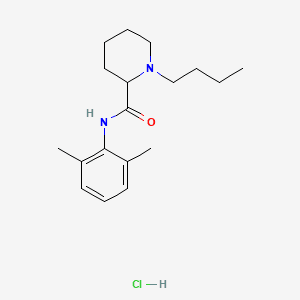
Local anaesthetics such as bupivacaine block the generation and conduction of nerve impulses, presumably by increasing the threshold for electrical excitation in the nerve, decreasing nerve impulse propagation, and reducing the rate of rise of the action potential.
Bupivacaine binds to the intracellular portion of sodium channels and blocks the influx of sodium into nerve cells, which prevents depolarisation.
In general, the progression of anaesthesia is related to the diameter, myelination, and conduction velocity of the affected nerve fibres.
Clinically, the order of loss of nerve function is as follows: pain; temperature; touch; proprioception; skeletal muscle tone.
The analgesic effects of bupivacaine are considered to be potentially due to its binding to prostaglandin E2 receptors, subtype EP1 (PGE2EP1), which inhibits prostaglandin production, thereby reducing fever, inflammation, and hyperalgesia.
⚠️ Warnings
Pregnancy
Pregnancy:
Injectable bupivacaine should not be administered during pregnancy unless the benefits are considered to outweigh the risks.
Breast-feeding
Breast-feeding:
Bupivacaine is excreted in breast milk, but in such small quantities that there is no risk of affecting the infant at therapeutic doses.
Driving
Driving:
Bupivacaine has a minor influence on the ability to drive or operate machinery.
To make sure you can safely receive bupivacaine, tell your doctor if you have any of the following conditions:
– anaemia (lack of red blood cells);
– kidney or liver disease;
– bleeding or blood clotting disorder;
– syphilis, poliomyelitis, a brain or spinal cord tumour;
– numbness or tingling;
– chronic back pain, headache caused by surgery;
– low or high blood pressure;
– curvature of the spine, or
– arthritis.
It is not known whether bupivacaine will harm the foetus.
Tell your doctor if you are pregnant.
Bupivacaine may pass into breast milk and may harm a nursing infant.
You should not breast-feed while using bupivacaine.