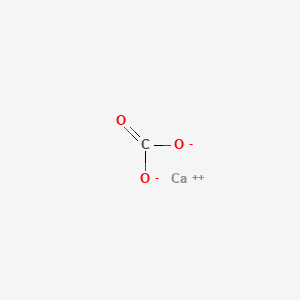
Pharmacotherapeutic group: Salts and ions for oral and parenteral administration ATC code: A12AA04
Mechanism of action
Based on its effects, calcium carbonate can be classified as a substitutional ion as well as an antacid, depending on the dose.
Calcium carbonate, due to its high calcium content (40%), is the drug of choice among calcium salts. Its therapeutic significance lies primarily in the oral treatment of less severe hypocalcaemia, in which up to 400–800 mg of elemental calcium can be administered orally per day. Dosage must be adjusted to prevent the development of hypercalcaemia and hypercalciuria.
Pharmacodynamic effects
Calcium is distributed predominantly to bones (approximately 90%). Absorption of calcium carbonate and its incorporation into bone are dependent on concurrent vitamin D activity.
⚠️ Warnings
Patients with achlorhydria should take the product between meals.
Long-term administration of calcium products in high doses may lead to calcium deposition in the kidneys. Monitoring of plasma calcium levels and urinary calcium excretion is recommended, particularly when vitamin D is administered concurrently.
Administration of calcium salts may cause constipation and flatulence.
This product contains lactose monohydrate. Patients with rare hereditary problems of galactose intolerance, congenital lactase deficiency, or glucose-galactose malabsorption should not take this product.