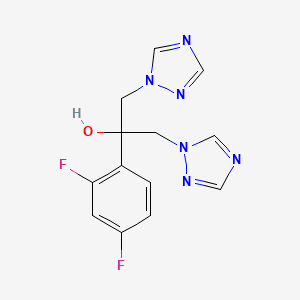
Fluconazole is an active substance belonging to the triazole antifungal class, used for the prevention and treatment of fungal infections. Its effects are based on the inhibition of the enzyme lanosterol 14α-demethylase, thereby blocking ergosterol synthesis in fungi. Fluconazole has a long half-life of approximately 30 hours and is taken once daily regardless of meals. Some conditions can be treated with a single dose. Fluconazole is an inhibitor of CYP450 isoenzymes and may cause corresponding drug interactions. The most common possible adverse effects include abdominal pain, diarrhoea, nausea, vomiting, elevated liver enzymes, skin rashes, and headache.
Fluconazole (ATC J02AC01) has antifungal (fungistatic) properties. Its effects are based on the inhibition of the enzyme lanosterol 14α-demethylase in fungal cells. This interrupts the conversion of lanosterol to ergosterol, leading to an accumulation of 14α-methylsterols and disruption of the fungal cell membrane structure.