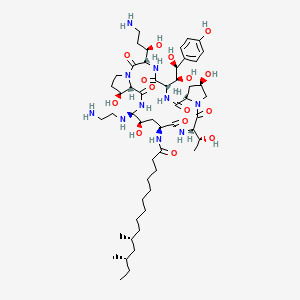
Caspofungin inhibits the synthesis of beta-(1,3)-D-glucan, an essential component of the cell wall of Aspergillus species and Candida species.
Beta-(1,3)-D-glucan is not present in mammalian cells.
The primary target is beta-(1,3)-glucan synthase.
⚠️ Warnings
Pregnancy
Pregnancy:
Caspofungin should not be used during pregnancy unless strictly necessary.
Breast-feeding
Breast-feeding:
It is not known whether caspofungin is excreted in human milk. Available pharmacodynamic/toxicological data in animals have shown excretion of caspofungin in milk. Women receiving caspofungin should not breast-feed.
It is very important that the doctor monitors your or your child's progress while taking caspofungin to ensure that the medicine is working properly.
Blood tests may be required to check for undesirable effects.
You should contact your doctor immediately if you or your child experience any symptoms of liver problems, including dark-coloured urine or pale stools, nausea, vomiting, loss of appetite, pain in the upper stomach, or yellowing of the skin or the whites of the eyes.
Caspofungin may cause a serious type of allergic reaction called anaphylaxis.
Anaphylaxis can be fatal and requires immediate medical attention.
You should contact your doctor immediately if you or your child develop a skin rash, itching, hoarseness, difficulty breathing, difficulty swallowing, or any swelling of the hands, face, or mouth after receiving caspofungin.
Do not take any other medicines that have not been discussed with the doctor.
This includes prescription and non-prescription (OTC) medicines, and herbal or vitamin supplements.