This information is for educational purposes only. It is not intended as medical advice. Always consult a qualified healthcare professional.
Rx
Cefazolin
1 g, Proszek do sporządzania roztworu do wstrzykiwań / do infuzji
INN: Cefazolinum
Data updated: 2026-04-13
Available in:
🇨🇿🇩🇪🇬🇧🇫🇷🇵🇱🇵🇹🇸🇰🇺🇦
Form
Proszek do sporządzania roztworu do wstrzykiwań / do infuzji
Dosage
1 g
Route
dożylna
Storage
As with other cephalosporins, cefazolin tends to darken depending on storage conditions; within the stated recommendations, however, product potency is not adversely affected. Before reconstitution protect from light and store at 20° to 25° C (68° to 77°F) [See USP Controlled Room Temperature]. CLINITEST is a registered trademark of Miles, Inc. CLINISTIX is a registered trademark of Bayer Corporation. Manufactured by: Qilu Pharmaceutical Co., Ltd. High Tech Zone Jinan, 250101, China Manufactured for: Apotex Corp. Weston, Florida, USA 33326 Code number: 34040001011F Code number: 34160026811G
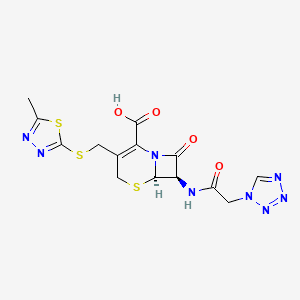
DESCRIPTION Cefazolin for Injection, USP is a semi-synthetic cephalosporin for parenteral administration. It is the sodium salt of 3-{[(5-methyl-1,3,4-thiadiazol-2-yl)thio]-methyl}-8-oxo-7-[2-(1H-tetrazol-1-yl) acetamido]-5-thia-1-azabicyclo [4.2.0]oct-2-ene-2-carboxylic acid. Structural Formula: C 14 H 13 N 8 NaO 4 S 3 M.W. 476.5 The pH of the reconstituted solution is between 4 and 6. Cefazolin for Injection, USP is a sterile white to cream powder supplied in vials. Each vial contains, cefazolin sodium equivalent to 1 gram of cefazolin. The sodium content is approximately 48 mg (2.1 mEq)/1 gram of cefazolin sodium. The color of Cefazolin for Injection, USP solutions may range from pale yellow to yellow without a change in potency. Cefazolin for Injection, USP is to be administered by intramuscular or intravenous routes. Cefazolin structural formula
⚠️ Warnings
WARNINGS BEFORE THERAPY WITH CEFAZOLIN FOR INJECTION IS INSTITUTED, CAREFUL INQUIRY SHOULD BE MADE TO DETERMINE WHETHER THE PATIENT HAS HAD PREVIOUS HYPERSENSITIVITY REACTIONS TO CEFAZOLIN, CEPHALOSPORINS, PENICILLINS, OR OTHER DRUGS. IF THIS PRODUCT IS GIVEN TO PENICILLIN‑SENSITIVE PATIENTS, CAUTION SHOULD BE EXERCISED BECAUSE CROSS‑HYPERSENSITIVITY AMONG BETA‑LACTAM ANTIBIOTICS HAS BEEN CLEARLY DOCUMENTED AND MAY OCCUR IN UP TO 10% OF PATIENTS WITH A HISTORY OF PENICILLIN ALLERGY. IF AN ALLERGIC REACTION TO CEFAZOLIN FOR INJECTION OCCURS, DISCONTINUE TREATMENT WITH THE DRUG. SERIOUS ACUTE HYPERSENSITIVITY REACTIONS MAY REQUIRE TREATMENT WITH EPINEPHRINE AND OTHER EMERGENCY MEASURES, INCLUDING OXYGEN, IV FLUIDS, IV ANTIHISTAMINES, CORTICOSTEROIDS, PRESSOR AMINES, AND AIRWAY MANAGEMENT, AS CLINICALLY INDICATED. Pseudomembranous colitis has been reported with nearly all antibacterial agents, including cefazolin, and may range in severity from mild to life-threatening. Therefore, it is important to consider this diagnosis in patients who present with diarrhea subsequent to the administration of antibacterial agents. Treatment with antibacterial agents alters the normal flora of the colon and may permit overgrowth of clostridia. Studies indicate that a toxin produced by Clostridium difficile is a primary cause of “antibiotic‑associated colitis.” After the diagnosis of pseudomembranous colitis has been established, therapeutic measures should be initiated. Mild cases of pseudomembranous colitis usually respond to drug discontinuation alone. In moderate to severe cases, consideration should be given to management with fluids and electrolytes, protein supplementation, and treatment with an oral antibacterial drug clinically effective against C. difficile colitis.